
Othello: Themes
A complete study guide to the seven major themes in Shakespeare's Othello: gender and misogyny, appearance vs reality, love and betrayal, reputation and honour, manipulation and deceit, prejudice and race, and jealousy and trust. Each guide shows how Shakespeare develops the theme across the play, with close reading, key quotes, and modern verse translation.
A revision and essay-planning resource for GCSE, A-Level, AP English, IB, and undergraduate Shakespeare. Select a theme below to begin.

Jealousy and Trust
The green-eyed monster: how Iago turns Othello's perfect trust into murderous jealousy.
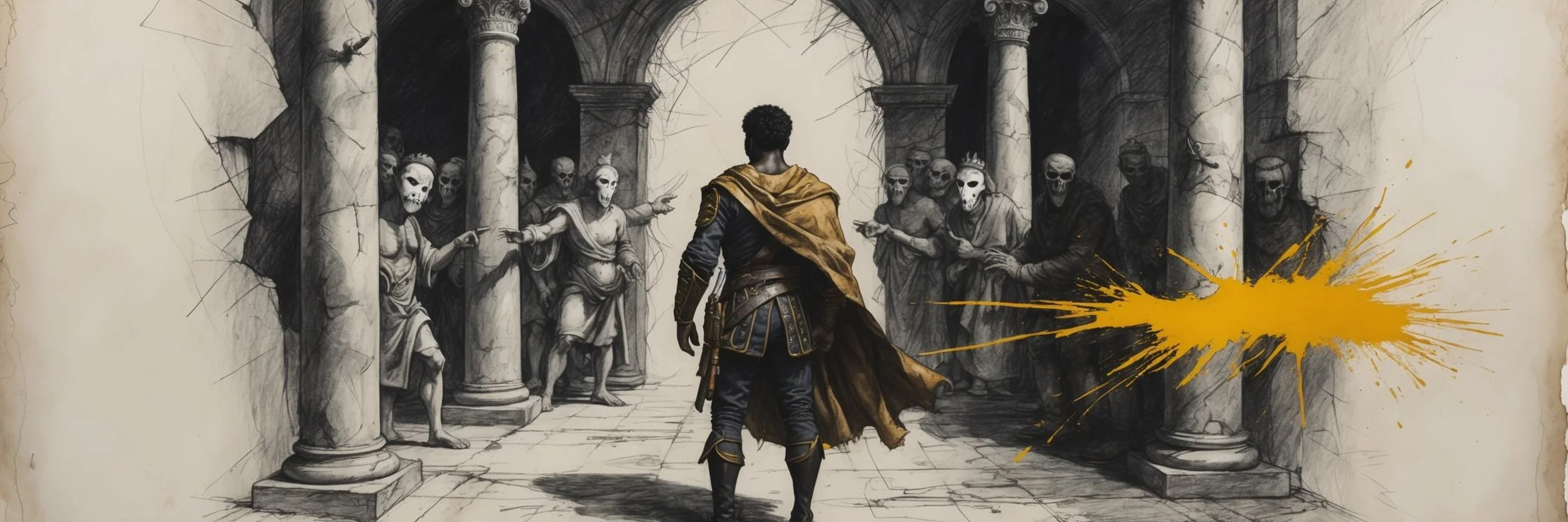
Prejudice and Race
Venice's racial prejudice: Iago weaponises it, Brabantio voices it, Othello turns it on himself.

Manipulation and Deceit
Iago's plot, line by line: how the play's great manipulator works, and why nobody sees it.

Reputation and Honour
Reputation as currency: Othello's service, Cassio's lost name, and "honest" Iago's two-faced creed.

Love and Betrayal
A marriage built on wonder, destroyed by a lie: Othello, Desdemona, and the kiss that ends it.
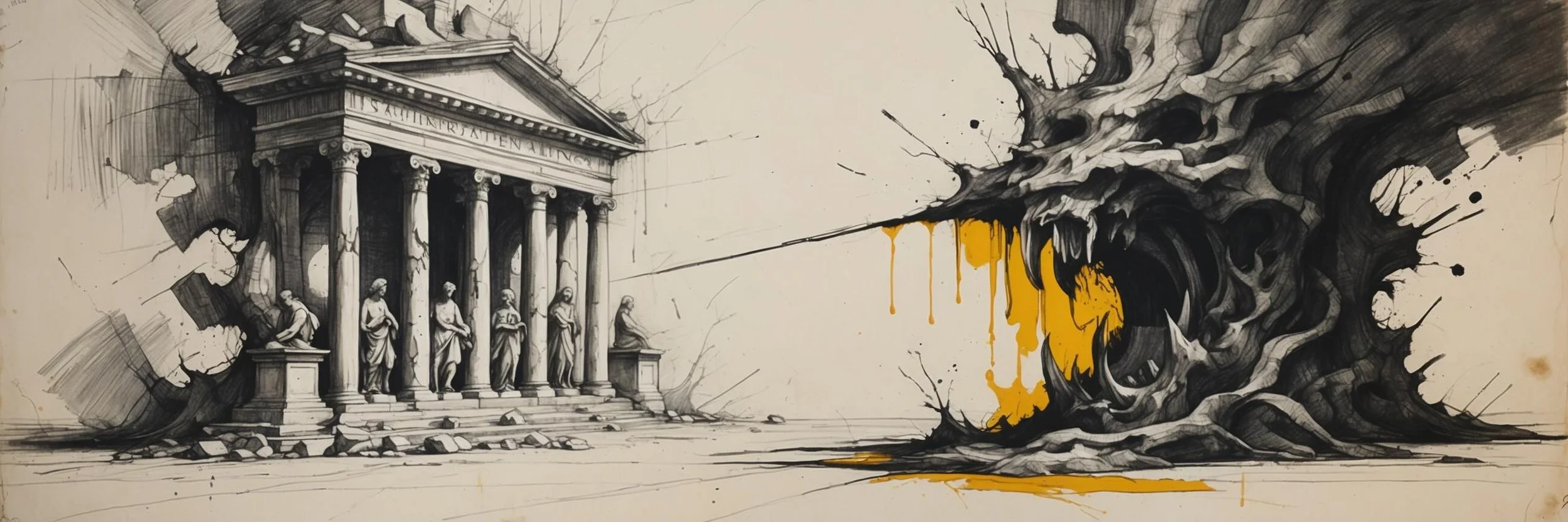
Appearance vs Reality
"I am not what I am": honest Iago, the ocular proof, and a handkerchief that lies.
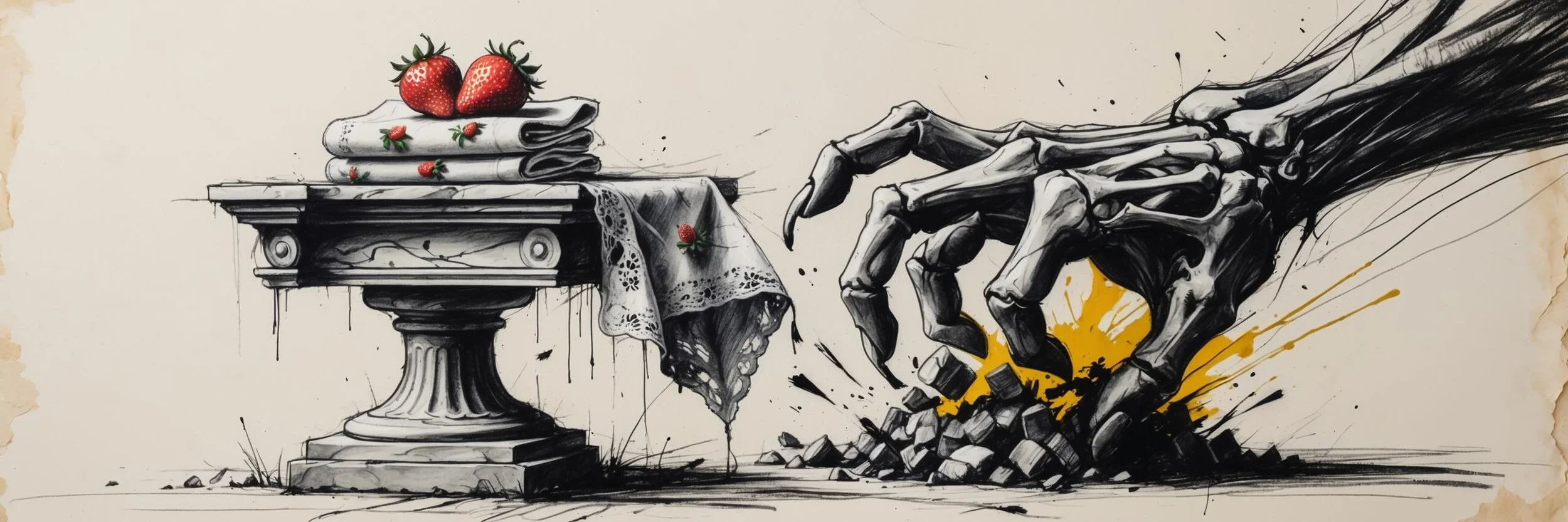
Gender and Misogyny
Desdemona, Emilia and Bianca against the whore-frame: the play's women, and what speaking costs.
Othello Themes — Frequently Asked Questions
What are the main themes in Othello?
Othello has seven major themes that interlock to produce the tragedy. Jealousy and trust is the engine: Iago turns Othello's total trust into murderous jealousy. Prejudice and race examines the racial language of Venice and what happens when Othello starts to believe it. Manipulation and deceit follows Iago's plot step by step, from Roderigo's purse to the final silence. Reputation and honour weighs the good name that Cassio loses, Iago fakes, and Othello kills for. Love and betrayal traces the marriage from courtship to the final kiss. Appearance vs reality covers "honest Iago", the ocular proof, and the handkerchief. Gender and misogyny looks at how the play's three women are judged, silenced, and destroyed. Each theme works through specific scenes, characters and language patterns, and each connects with the others to make the catastrophe feel both planned and preventable.
How does Shakespeare present jealousy in Othello?
Through one image and one experiment. The image is Iago's "green-eyed monster", which eats the love it lives on. The experiment is Othello himself: a man whose trust is total, so his collapse is total too. In A1S3 he bets his life on Desdemona's faith. By the end of A3S3, after a single scene of Iago's hints, he has vowed her death. Emilia explains why no evidence was needed: jealous souls "are not ever jealous for the cause, but jealous for they are jealous". The handkerchief only feeds a monster already born. See Jealousy and Trust in Othello for the full analysis.
How does the play deal with race and prejudice?
The play opens with racial abuse — "an old black ram" — shouted in the dark before Othello has even appeared. The man who then walks on stage is dignified and calm, the opposite of the caricature. Brabantio supplies the respectable version of the same prejudice: his daughter could not love a Black man, so it must be witchcraft. The tragedy is what happens when Othello absorbs this thinking himself. By A3S3 he is saying "Haply, for I am black" — listing his colour as the first reason his wife might stray. His final speech, where he kills the Turk in himself, completes the pattern. See Prejudice and Race in Othello for the full analysis.
How does Iago manipulate the other characters?
By using their virtues, not their weaknesses. Othello's open trust, Desdemona's kindness, Cassio's good manners and Emilia's wish to please her husband are the levers — Iago's plan is to "out of her own goodness make the net that shall enmesh them all". He barely lies. He arranges true things — a dropped handkerchief, a real plea for Cassio — so they tell a false story. The audience hears every plan in his soliloquies, which is why the play feels so tense: we know everything, and the characters know nothing. Exposed at the end, he refuses to explain and never speaks again. See Manipulation and Deceit in Othello for the full analysis.
Why is reputation so important in Othello?
Because in the play's Venice, what is said about you works as fact. Othello's standing rests entirely on his service record. Cassio, dismissed after the drunken brawl in A2S3, cries that he has lost "the immortal part" of himself. Iago argues both sides — reputation is worthless when he consoles Cassio, and the "immediate jewel" of the soul when he poisons Othello — and both speeches serve his plot. The deepest irony is "honest Iago": the play's least honest man holds its best reputation. Othello dies asking only to be reported accurately. See Reputation and Honour in Othello for the full analysis.
Is Othello a love story?
It begins as one — and the love is real. Desdemona defies her father and all of Venice to marry Othello, and the reunion at Cyprus in A2S1 is some of Shakespeare's happiest love poetry. But Othello's love has no middle setting: "when I love thee not, chaos is come again". A love that absolute cannot survive a doubt, and Iago knows it. The terrible truth of the play is that nobody betrays anybody — the only infidelity is invented. Desdemona dies protecting her husband; Othello, who "loved not wisely but too well", dies upon a kiss. See Love and Betrayal in Othello for the full analysis.
How does Othello explore appearance vs reality?
The theme is announced in the first scene, when Iago says "I am not what I am". Everyone trusts the man who has just told the audience he cannot be trusted. Othello demands "the ocular proof" of his wife's guilt, but seeing proves nothing: Iago stages every appearance — the handkerchief, the eavesdropped laughter in A4S1 — and Othello supplies the false meaning. Everything he sees is real; every conclusion he draws is wrong. The one person who finally sees clearly, Emilia, pays for the truth with her life. See Appearance vs Reality in Othello for the full analysis.
How are women treated in Othello?
As property, and as suspects. Brabantio calls Desdemona's marriage a theft; Iago jokes at the harbour that all women are false; and once Othello calls his wife "whore" in A4S2, nothing she says can clear her — the accusation turns every fact into evidence. The play's three women answer in different ways. Desdemona stays loyal to the end. Bianca, called a strumpet on no evidence, insists she is honest. And Emilia, in the willow scene of A4S3, argues that wives fall because husbands fail them — then breaks the rule of obedience in the final scene: "I am bound to speak". Both wives are killed by their husbands. See Gender and Misogyny in Othello for the full analysis.