
Home → Plays → Hamlet → Characters → The Ghost
Character Analysis: The Ghost
Character Profile – At a Glance
Role: The apparition of the recently deceased King Hamlet; father of Prince Hamlet.
Key Traits: Majestic, tormented, martial (warlike), demanding, and ambiguous.
The Core Conflict: Claims to be trapped in Purgatory and seeks revenge on Claudius for his murder and the corruption of Gertrude.
Key Function: Serves as the catalyst for the entire plot by revealing the murder and commanding Hamlet to seek revenge.
Key Actions: Appears to the guards and Horatio, reveals the truth of the murder to Hamlet, commands revenge, and reappears in the Closet Scene to refocus Hamlet's mission.
Famous Quote: "Revenge his foul and most unnatural murder." (Act 1, Scene 5).
The Outcome: Its demands drive the action of the play, leading to the destruction of the Danish court.
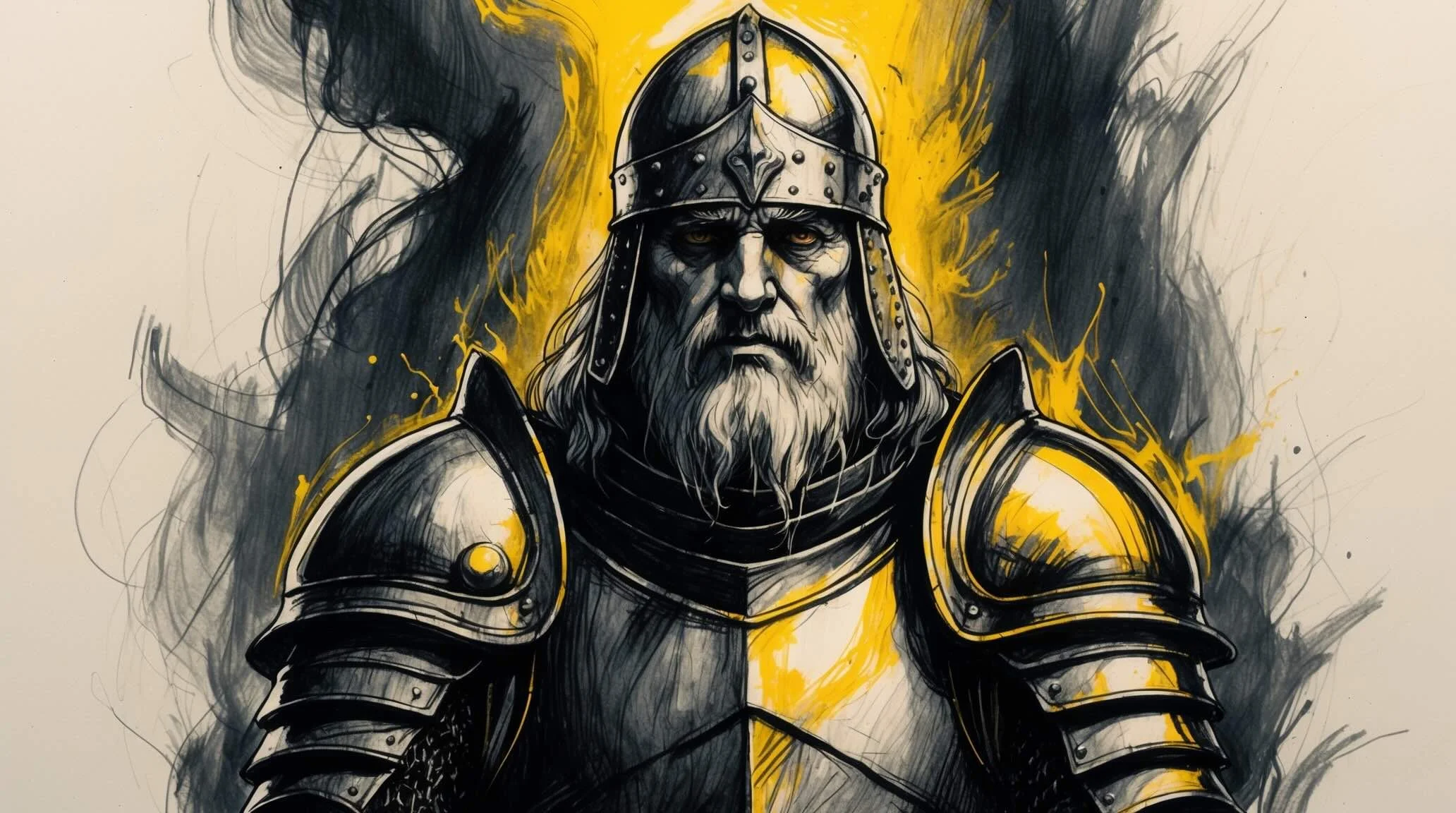
The Catalyst of the Tragedy
The Ghost of King Hamlet is the inciting incident of the play. Its appearance on the battlements of Elsinore (Act 1, Scene 1) immediately establishes an atmosphere of dread and disorder, signifying that "Something is rotten in the state of Denmark" (Act 1, Scene 4).
The Ghost appears in "complete steel," the very armour he wore in combat against Norway. This martial image reinforces King Hamlet's reputation as a warrior king, contrasting sharply with the politically manoeuvring Claudius. It also foreshadows the conflict to come.
The Ghost's central function is to reveal the truth hidden beneath the facade of the court: that he was murdered by his brother.
Original:
The serpent that did sting thy father’s life
Now wears his crown. (The Ghost to Hamlet – Act 1, Scene 5)Shakespeare Retold (Modern Verse):
The snake who killed your father with a bite
Now wears his crown.
This revelation provides the motivation for Hamlet's actions and sets the entire revenge plot in motion.
The Ambiguity of the Apparition: Purgatory or Demon?
While the Ghost claims to be the spirit of King Hamlet, its nature remains profoundly ambiguous, reflecting the theological debates of the Elizabethan era.
The Ghost claims to be in Purgatory, suffering until its sins are purged away.
Original:
I am thy father’s spirit,
Doom'd for a certain term to walk the night,
And for the day confined to fast in fires,
Till the foul crimes done in my days of nature
Are burnt and purged away. (The Ghost – Act 1, Scene 5)Shakespeare Retold (Modern Verse):
I am your father’s spirit,
Doomed for a certain time to walk the night;
By day I starve, confined to purgatory
Until the crimes committed whilst I lived
Are cleansed and purged away.
Purgatory was a Catholic doctrine. However, Protestant doctrine (officially adopted in England) rejected Purgatory, arguing that spirits were generally demons impersonating the dead to lure the living into sin and damnation.
Hamlet is acutely aware of this ambiguity. His hesitation stems partly from the fear that the Ghost may be a "devil" seeking to damn his soul.
Original:
The spirit that I have seen
May be the devil: and the devil hath power
To assume a pleasing shape; yea, and perhaps
Out of my weakness and my melancholy,
As he is very potent with such spirits,
Abuses me to damn me. (Hamlet – Act 2, Scene 2)Shakespeare Retold (Modern Verse):
The ghost I saw
Might be the devil, and the devil can
Mutate to something kind; and yes, perhaps,
Out of my weakness and my maudlin thoughts,
Because the devil’s strong in states like that,
He tries to trick me.
This uncertainty necessitates Hamlet's plan to use The Mousetrap (Act 3, Scene 2) to confirm the Ghost's honesty.
The Command for Revenge
The Ghost's command to Hamlet is explicit: "Revenge his foul and most unnatural murder" (Act 1, Scene 5). It emphasises the injustice of his death, having been murdered without receiving the last rites ("Unhousel'd, disappointed, unaneled").
However, the instructions are contradictory and morally complex. The Ghost demands vengeance against Claudius but also insists that Hamlet must not harm his mother, Gertrude.
Original: But, howsoever thou pursuest this act,
Taint not thy mind, nor let thy soul contrive
Against thy mother aught: leave her to heaven... (The Ghost – Act 1, Scene 5)Shakespeare Retold (Modern Verse):
But, how you choose to seek revenge for this,
Don’t taint the thought or actions you pursue
Against your mother, though; leave her to God…
This command places Hamlet in an impossible position. He is asked to commit a violent act (murder) while keeping his mind untainted. Furthermore, the Ghost expresses significant bitterness towards Gertrude's "incestuous" betrayal, fuelling Hamlet's obsession with her sexuality despite the command to leave her alone.
“The Ghost in Hamlet is a crucial hinge between the theological debates of the Reformation and the enduring human need for contact with the dead. It embodies the profound uncertainty about the afterlife that haunted early modern England.”
The Ghost's Reappearance: The Closet Scene
The Ghost appears only once more, during the Closet Scene (Act 3, Scene 4), when Hamlet is violently confronting Gertrude.
Its purpose here is to refocus Hamlet, who has become distracted by his mother's sexuality and has yet to kill Claudius.
Original:
Do not forget: this visitation
Is but to whet thy almost blunted purpose. (The Ghost – Act 3, Scene 4)Shakespeare Retold (Modern Verse):
Do not forget! My visit here
Is just to reinforce your fading purpose.
Significantly, Gertrude cannot see the Ghost in this scene. This raises further questions about the Ghost's nature: is it a hallucination born of Hamlet's intense emotion, or does its visibility depend on the spiritual state of the observer? This ambiguity is never fully resolved, leaving the Ghost as a powerful, unsettling presence throughout the play.
Key Quotes by The Ghost
Quote 1:
Original:
I am thy father’s spirit,
Doom'd for a certain term to walk the night... (The Ghost – Act 1, Scene 5)Shakespeare Retold (Modern Verse):
I am your father’s spirit,
Doomed for a certain time to walk the night;
Quote 2:
Original:
The serpent that did sting thy father’s life
Now wears his crown. (The Ghost – Act 1, Scene 5)Shakespeare Retold (Modern Verse):
The snake who killed your father with a bite
Now wears his crown.
Quote 3:
Original:
Ay, that incestuous, that adulterate beast...
…won to his shameful lust
The will of my most seeming-virtuous queen. (The Ghost – Act 1, Scene 5)Shakespeare Retold (Modern Verse):
Yes, that incestuous, adulterous beast…
…succeeded in his lust,
Seducing my habitually noble queen.
Quote 4:
Original:
...Taint not thy mind, nor let thy soul contrive
Against thy mother aught: leave her to heaven... (The Ghost – Act 1, Scene 5)Shakespeare Retold (Modern Verse):
Don’t taint the thought or actions you pursue
Against your mother, though; leave her to God…
Key Takeaways
The Ghost is the catalyst for the play's action, revealing the murder and commanding Hamlet to seek revenge.
Its appearance immediately signals the disruption of the natural order and the hidden corruption in Denmark.
The nature of the Ghost is profoundly ambiguous, reflecting the theological uncertainties (Catholic Purgatory vs. Protestant demonic deception) of the era.
The Ghost's contradictory commands place an immense moral and psychological burden on Hamlet, driving his hesitation and his obsession with his mother's sexuality.
Study Questions and Analysis
-
The reality of the Ghost is ambiguous, but the text provides strong evidence that it is an objective phenomenon, at least initially. It is witnessed by multiple characters – Marcellus, Bernardo, and the skeptical Horatio – before Hamlet even sees it (Act 1, Scene 1). This collective witnessing validates its existence.
However, its appearance in the Closet Scene (Act 3, Scene 4) is visible only to Hamlet, not Gertrude. This suggests that the Ghost's visibility may be selective, or that this specific appearance might be a manifestation of Hamlet's intense psychological state.
-
This is the central ambiguity that torments Hamlet. The Ghost claims to be the spirit of his father, suffering in Purgatory (Act 1, Scene 5). This aligns with a Catholic belief.
However, in Protestant doctrine (the official religion of Elizabethan England), Purgatory did not exist, and spirits were often viewed as demons sent to deceive the living into damnation. Hamlet fears this, worrying the spirit "May be the devil" (Act 2, Scene 2). While Claudius's reaction to The Mousetrap confirms the Ghost told the truth about the murder, the Ghost's ultimate nature (and its demand for bloody revenge) remains theologically uncertain.
-
The Ghost gives Hamlet two primary commands (Act 1, Scene 5). The first and central command is to "Revenge his foul and most unnatural murder" – meaning, to kill Claudius.
The second command is contradictory: "Taint not thy mind, nor let thy soul contrive / Against thy mother aught: leave her to heaven." Hamlet is instructed to carry out a violent act of revenge without becoming morally corrupted and to punish the murderer without punishing the adulterous wife. This places an immense psychological burden on him.
-
The Ghost's appearance in "complete steel" (Act 1, Scene 1) is significant for several reasons. Visually, it emphasises King Hamlet's identity as a warrior, contrasting him with the politically manoeuvring Claudius.
It also foreshadows conflict and the disruption of the state. Horatio notes it is the same armour he wore when fighting the King of Norway, interpreting it as a bad omen for Denmark's future. Furthermore, the martial appearance lends authority to its command for revenge, framing it as a matter of honour and duty.
-
In the Closet Scene (Act 3, Scene 4), the Ghost appears to Hamlet but is invisible to Gertrude, leading her to believe Hamlet is truly mad. The reason for this is ambiguous.
One interpretation is that the Ghost is a hallucination, a product of Hamlet's agitated mind. Another interpretation is that the Ghost chooses to whom it appears, perhaps seeking only to communicate with Hamlet ("to whet thy almost blunted purpose"). A theological interpretation suggests that Gertrude's moral blindness or guilt prevents her from seeing the spirit, while Hamlet's awareness of the truth allows him to perceive it.
-
The Ghost's command to "Revenge his foul and most unnatural murder" (Act 1, Scene 5) stands in direct conflict with Christian doctrine, which forbids murder and reserves the right of vengeance for God.
By demanding blood revenge, the Ghost (whether honest spirit or demon) is urging Hamlet to commit a mortal sin that risks damning his soul. This creates a profound moral dilemma for Hamlet, who is trapped between the traditional duty of a son to avenge his father (an honour-based code) and the Christian imperative to leave justice to divine authority.
-
The Ghost provides a terrifying description of the afterlife, claiming to be in Purgatory (Act 1, Scene 5). It describes being "confined to fast in fires" until its sins are "burnt and purged away."
This suffering is intensified because King Hamlet was murdered without receiving the last rites, meaning he died with his sins unforgiven ("Unhousel'd, disappointed, unanel'd"). This revelation highlights the play's preoccupation with mortality and the fate of the soul, and it explains why Hamlet is so concerned with ensuring Claudius is damned when he kills him.