
Hamlet Themes: Corruption
Corruption – At a Glance
The Core Concept: The play portrays Denmark as a state infected by moral and political corruption, stemming from Claudius's usurpation of the throne.
The Catalyst: The murder of King Hamlet by poison is the initial act of corruption that destabilises the entire kingdom.
Key Imagery: Pervasive imagery of disease, rot, poison, and decay is used to symbolise the moral sickness of Elsinore.
Political Impact: The corruption at the top of the hierarchy leads to a breakdown of trust, characterized by spying, manipulation, and hypocrisy.
The Outcome: The hidden corruption spreads like a disease, ultimately destroying the royal family and requiring an external force (Fortinbras) to restore order.
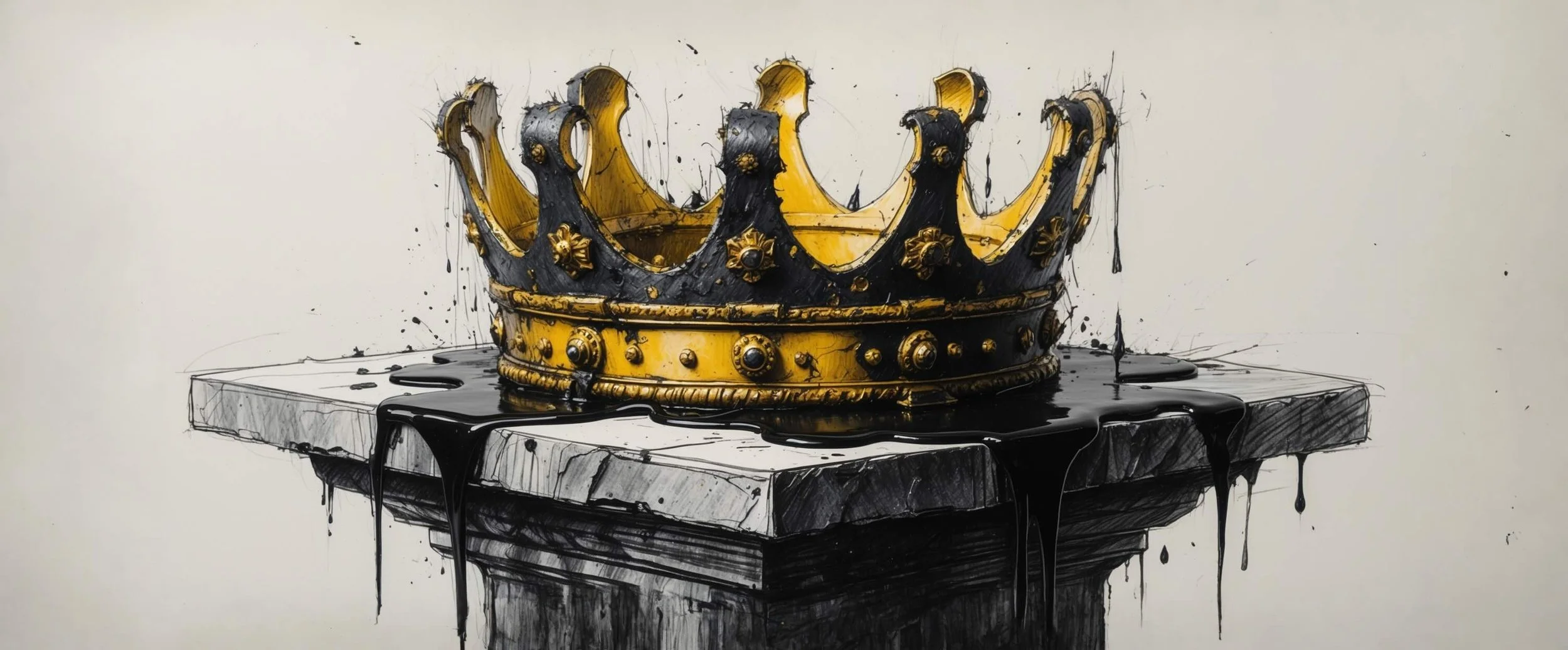
The Rotten State of Denmark: Political Corruption
The theme of corruption is introduced immediately and defines the atmosphere of Elsinore. The famous line, spoken by the guard Marcellus, encapsulates the pervasive sense of decay: ‘Something is rotten in the state of Denmark.’ (Marcellus – Act 1, Scene 4)
This "rottenness" is not abstract; it is the direct result of Claudius's corrupt actions. He murdered his brother, usurped the throne, and hastily married the Queen. This disruption of the natural order and legitimate succession infects the entire political landscape.
Hamlet views the world through this lens of corruption, describing Denmark as:
Original:
...an unweeded garden,
That grows to seed; things rank and gross in nature
Possess it merely. (Hamlet – Act 1, Scene 2)Shakespeare Retold (Modern Verse):
It’s a neglected garden,
Once planted, but now overrun with weeds,
Destroying what it was.
The political corruption manifests in the hypocrisy and manipulation that characterise the court. Characters like Polonius prioritise political manoeuvring over honesty, employing spying and deception as standard tools of statecraft. Rosencrantz and Guildenstern betray their friendship with Hamlet for the King's favour. In this corrupt environment, authenticity is impossible.
Imagery of Poison, Disease, and Decay
Shakespeare constantly utilises imagery of disease, poison, and physical decay to symbolise the moral corruption of Elsinore. The connection between moral sickness and physical illness is pervasive.
Poison is a central motif. King Hamlet is murdered by poison poured into his ear – a potent symbol of how insidious corruption enters and destroys the body politic. The Ghost describes how the poison corrupted his blood (Act 1, Scene 5).
This imagery extends to the language used throughout the play. Claudius is described as a "canker" (a disease) and a "mildew’d ear." Hamlet is obsessed with the idea that hidden corruption will inevitably reveal itself, stating that "foul deeds will rise, / Though all the earth o'erwhelm them, to men’s eyes" (Act 1, Scene 2).
Moral Corruption and its Impact
The corruption extends beyond the political realm to the personal morality of the characters.
Gertrude's hasty and "incestuous" marriage is viewed by Hamlet as a profound moral corruption. He is disgusted by her sexuality and her apparent lack of grief, seeing it as a betrayal of his father's memory. In the Closet Scene (Act 3, Scene 4), he uses the language of disease to confront her, warning against ignoring the infection:
Original:
...It will but skin and film the ulcerous place,
Whiles rank corruption, mining all within,
Infects unseen. (Hamlet to Gertrude – Act 3, Scene 4)Shakespeare Retold (Modern Verse):
For that will only hide the real infection,
Which, left unchecked, will spread throughout your soul,
Corrupting from within.
The impact of this corrupt environment is devastating. It contributes to Hamlet's melancholy and inaction, as he feels paralysed by the overwhelming sickness of the world around him. It also leads to the destruction of the innocent; Ophelia, unable to navigate the hypocrisy and trauma inflicted upon her, descends into madness and death.
“In Hamlet, the images of sickness, disease, and the like... are descriptive of the unwholesome condition of Denmark morally.”
The Catastrophe of Corruption
The play concludes with the total collapse of the corrupt state. Fittingly, the final catastrophe (Act 5, Scene 2) is achieved through the same means that initiated the corruption: poison.
Gertrude is poisoned accidentally by the cup meant for Hamlet. Laertes and Hamlet are both fatally wounded by the poisoned foil. Claudius is killed by both the foil and the poisoned wine. The imagery of the beginning of the play is realised in the end; the poison has spread and destroyed them all.
The restoration of order requires the purging of this corruption. Only an external force, the morally untainted Fortinbras, can take control and heal the "rotten" state of Denmark.
Key Quotes on Corruption
Quote 1:
Original:
O, my offence is rank, it smells to heaven;
It hath the primal eldest curse upon’t,
A brother’s murder. (Claudius – Act 3, Scene 3)Shakespeare Retold (Modern Verse):
This crime of mine now stinks to highest heaven!
It’s cursed like Cain who executed Abel,
So murdering his brother.
Quote 2:
Original:
I am justly kill'd with mine own treachery. (Laertes – Act 5, Scene 2)Shakespeare Retold (Modern Verse):
I’m rightly dying by my own betrayal.
Quote 3:
Original:
The time is out of joint. O cursed spite,
That ever I was born to set it right! (Hamlet – Act 1, Scene 5)Shakespeare Retold (Modern Verse):
Affairs are misaligned: Oh dreadful spite
That’s made me be the one to put it right!
Key Takeaways – Corruption
Corruption is portrayed as a contagious disease that spreads from the individual (Claudius) to infect the entire state (Denmark).
Shakespeare uses pervasive imagery of poison, rot, and disease to symbolise the moral and political decay of Elsinore.
The corrupt environment fosters hypocrisy, spying, and manipulation, leading to a total breakdown of trust and authenticity.
The catastrophic conclusion, achieved through poison, represents the necessary purging of the corruption before order can be restored by Fortinbras.
Study Questions and Analysis
-
This famous line, spoken by Marcellus in (Act 1, Scene 4), serves as the thematic anchor for the play's exploration of corruption. It suggests that the appearance of the Ghost is not just a supernatural event, but a symptom of a deeper moral and political sickness.
The "rottenness" refers specifically to Claudius's hidden crimes: the murder of his brother and his usurpation of the throne. Shakespeare uses the imagery of decay to imply that this corruption at the head of the state is polluting the entire kingdom, disrupting the natural order and leading Denmark towards ruin.
-
Poison is a powerful symbol for the insidious and destructive nature of corruption and revenge. It represents how deceit and sin spread subtly and destroy from the inside out.
The initial crime involves poison poured into King Hamlet's ear (Act 1, Scene 5), symbolising how the body politic was corrupted. Furthermore, the play concludes with a proliferation of poison: the poisoned cup and the poisoned foil (Act 5, Scene 2). This signifies that the cycle of revenge and the corruption of the court ultimately lead to the self-destruction of all involved. The very tool used to gain power becomes the instrument of downfall.
-
Shakespeare uses pervasive imagery of disease, decay, and rot to diagnose the moral and political health of Denmark. Hamlet describes the country as an "unweeded garden" (Act 1, Scene 2) possessed by "things rank and gross."
Claudius is referred to as a "canker" and a "mildew’d ear." This language suggests that the corruption is not just abstract; it is a palpable disease infecting the body politic. The constant references to ulcers, sickness, and rot (Act 3, Scene 4) emphasise that the moral sickness of the leaders is destroying the societal fabric, making the appearance of stability a facade masking deep internal decay.
-
Claudius is the source of the corruption in Denmark. His initial actions – murdering his brother (fratricide), seizing the throne (regicide), and marrying his sister-in-law (viewed as incest) – violate the natural, moral, and political order.
He maintains his power through further corruption: manipulation, spying, and deceit. He corrupts Rosencrantz and Guildenstern by turning them into spies, and he manipulates Laertes into adopting dishonourable tactics for revenge. Claudius himself acknowledges the depth of his sin, stating, "O, my offence is rank, it smells to heaven" (Act 3, Scene 3), directly linking his moral corruption with the imagery of rot and decay.
-
Yes, Hamlet is significantly corrupted by his experiences and his quest for revenge. While he begins the play as a morally sensitive intellectual, the pervasive corruption of Elsinore and the burden of his mission force him to adopt increasingly ruthless and deceitful tactics.
His feigned madness, while strategic, leads to the cruel mistreatment of Ophelia. His impulsive murder of Polonius (Act 3, Scene 4) is a rash act of violence. Most notably, his callous orchestration of the deaths of Rosencrantz and Guildenstern demonstrates a significant moral decline. He cannot purge the corruption of Denmark without becoming infected by it himself, highlighting the insidious nature of the theme.
-
Ophelia is a tragic victim of the court's corruption. While she is personally innocent, she is destroyed by the manipulative and dishonest environment surrounding her.
She is used as a pawn by her father, Polonius, and Claudius to spy on Hamlet (Act 3, Scene 1), forcing her into a position of deceit that contradicts her nature. The corruption of the men in her life – Hamlet's cruelty, her father's manipulation, and Claudius'svillainy – deprives her of agency and stability. Her eventual madness and death are direct consequences of the toxic political and moral atmosphere created by the corruption of others.
-
The corruption of Denmark is resolved only through catastrophic violence that purges the infected elements of the court. The final scene (Act 5, Scene 2) results in the deaths of the entire royal family – Claudius, Gertrude, Laertes, and Hamlet.
This bloodbath is necessary to cleanse the state. The resolution is not achieved through internal reform, but through the arrival of an external, untainted force: Fortinbras of Norway. His assumption of the throne symbolises the restoration of order and the end of the "rottenness" that plagued Denmark under Claudius's reign.