
Henry V: Plot Summary
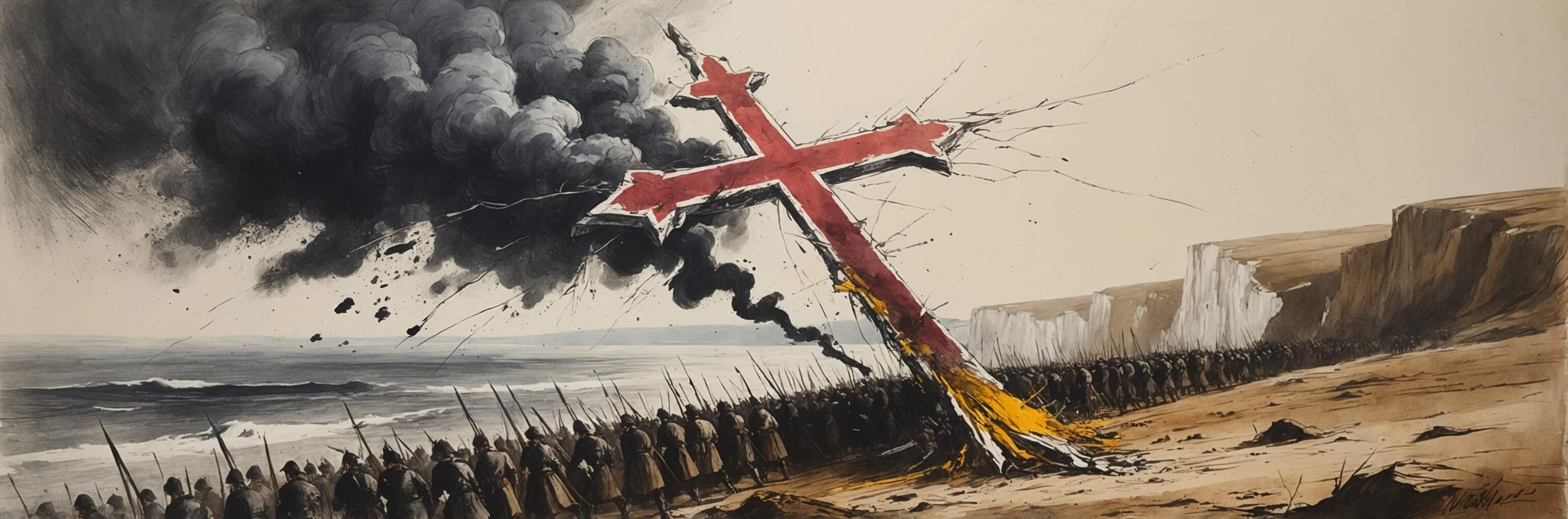
Plot Profile – At a Glance
- The Setting: England and France, 1414–1420 – from the English court to the siege of Harfleur, the field of Agincourt, and the French royal palace.
- The Protagonist: King Henry V, the once-wild Prince Hal of the Henry IV plays, now a formidable young king.
- The Antagonist: France – no single villain, but the Dauphin supplies the insult and the French army the overwhelming odds.
- The Inciting Incident: The Archbishop of Canterbury declares Henry's claim to the French crown lawful – and the Dauphin answers it with a mocking gift of tennis balls.
- The Core Conflict: Henry's pursuit of the French crown by invasion, against a larger army and his own conscience about what the war costs.
- The Climax: The Battle of Agincourt in Act 4, where the sick, outnumbered English destroy the French army.
- The Outcome: The Treaty of Troyes: Henry is named heir to France and marries Princess Katharine – and the Epilogue admits it was all lost in the next reign.
- Genre: History play.
Urged on by the Church and insulted by the French Dauphin's gift of tennis balls, the young King Henry V claims the crown of France and invades to take it. He unmasks traitors at Southampton, batters the town of Harfleur into surrender, and – with a sick, hungry, hopelessly outnumbered army – wins one of history's most famous victories at Agincourt. The play ends in peace, with Henry wooing the French princess Katharine and being named heir to France. A Chorus opens every act, asking the audience to imagine the fleets and battlefields the stage cannot show – and closes the play by admitting that everything Henry won was lost by his son.
Act 1: The Church and the Tennis Balls
The Chorus opens the play wishing for "a Muse of fire" and asks the audience to imagine the armies of England and France crammed inside a wooden theatre. At court, the Archbishop of Canterbury – anxious about a bill that would strip the Church's wealth – delivers a long legal argument that the ancient Salic Law cannot bar Henry's claim to the French crown, and takes the moral risk on himself: "The sin upon my head, dread sovereign!" Ambassadors arrive from the French Dauphin with a mocking gift of tennis balls, a jibe at Henry's wild youth. Henry's reply is cold and terrifying: the Dauphin's joke has turned the balls to "gun-stones", and thousands will have cause to curse it. England prepares for war.
Act 2: Traitors and Farewells
The Chorus declares the youth of England on fire – then the play cuts to Eastcheap, where Henry's disreputable old tavern companions Pistol, Nym and Bardolph squabble and pack for France, hoping to profit from the war. Word comes that Sir John Falstaff, the old knight the new King rejected, is dying; the Hostess movingly describes his death, how he "babbled of green fields", and blames the King for breaking his heart. At Southampton, Henry stages a trap for three trusted noblemen – Cambridge, Scroop and Grey – who have taken French gold to kill him, and sends them to execution. In France, the French King orders his nobles to prepare, remembering what English armies have done before.
Act 3: Once More Unto the Breach
The English besiege the port town of Harfleur. Henry drives his men back into the shattered wall – "Once more unto the breach, dear friends, once more" – and ends the assault with the great cry "God for Harry, England, and Saint George!" The army's captains – the Welsh Fluellen, the English Gower, the Irish Macmorris and the Scots Jamy – quarrel in the trenches, Macmorris demanding "What ish my nation?" When the town still holds out, Henry threatens it with horrors his soldiers will not be able to stop; Harfleur surrenders, and he orders mercy. In the French palace, Princess Katharine takes a comically indecent English lesson from her gentlewoman Alice. The exhausted English march for Calais as the huge French army closes in – and Bardolph is hanged, on Henry's own rules, for robbing a church.
Act 4: Agincourt
The Chorus paints the night before the battle: fires, whispers, and "a little touch of Harry in the night". Henry borrows a cloak and walks his camp in disguise, debating with the soldiers Bates and Williams, who tell him bluntly what kings owe the men who die for them. Alone, he broods on ceremony and prays for his army. At dawn, facing odds of five to one, he answers the wish for reinforcements with the Saint Crispin's Day speech: "We few, we happy few, we band of brothers". The English archers shatter the French charge. In the chaos Henry orders the French prisoners killed; the fleeing French massacre the boys guarding the English luggage. By evening the impossible has happened: ten thousand French dead against an English list of barely thirty. Henry gives the victory to God and orders the Non nobis sung.
Act 5: The Leek and the Wooing
Peace. Fluellen settles an old score, cudgelling the braggart Pistol and making him eat the leek he mocked; Pistol, the last of the Eastcheap crew, slinks home to England to steal. At the French palace the Duke of Burgundy laments what the war has done to France's gardens and children, and the treaty is agreed: Henry will marry Princess Katharine and be named heir to the French throne. In the play's famous final scene, the soldier-king woos the princess across the language barrier – she protesting "I cannot speak your England" – until she yields, and the two kingdoms are joined. Then the Chorus steps out one last time to remind the audience that Henry died young, and his infant son lost France and plunged England into civil war.
Key Takeaways
- A war built on words: The Church's legal case and the Dauphin's insult launch the invasion – the play never lets us forget who talked the war into being.
- The Chorus frames everything: Every act opens with a narrator asking the audience to imagine what the stage cannot show – and the scenes that follow rarely match the billing.
- Agincourt is the climax: A sick, outnumbered army wins an impossible victory, and Henry credits God with all of it.
- The comedy has a body count: Falstaff dies offstage, Bardolph and Nym are hanged, and the Boy is murdered – the tavern world of Henry IV is closed down for good.
- Victory undone: The play ends with marriage and a united crown – and an Epilogue admitting the next reign lost everything.
Henry V Plot Summary – Frequently Asked Questions
How does Henry V end?
The play ends in peace, marriage and a quiet sting. After Agincourt, the English and French courts meet to seal the Treaty of Troyes. The Duke of Burgundy delivers a long lament for war-ruined France, and the terms are agreed offstage while Henry conducts the play's famous final scene: the wooing of Princess Katharine. The marriage is already a condition of the treaty, but Henry courts her anyway – in plain soldier's English against her broken, newly learned phrases – until she accepts him. The French King names Henry heir to the throne of France, and the two kingdoms are to be joined under one crown.
Then the Chorus closes the play with a deliberate deflation. In fourteen lines it reminds the audience that Henry died young; that his infant son, Henry VI, was crowned king of both countries; and that his advisers "lost France and made his England bleed" – the civil Wars of the Roses that Shakespeare's audience had already watched in the Henry VI plays. The play's triumph is real, and the play itself tells you it did not last.
Why does Henry invade France?
The official reason is legal. Henry claims the French crown through his great-great-grandmother Isabella, daughter of a French king. The French bar the claim by the ancient Salic Law, which forbids inheritance through the female line. In the play's second scene the Archbishop of Canterbury demolishes that law at enormous length – it does not apply to France, the French kings themselves inherited through women, and so Henry's claim stands. When Henry asks whether he may "with right and conscience" make the claim, Canterbury answers, "The sin upon my head, dread sovereign!"
The play plants two complications. First, the audience has just heard Canterbury privately admit that the Church needs this war – a bill before Parliament threatens its lands, and a French campaign will bury it. Second, the Dauphin's mocking gift of tennis balls arrives in the same scene, converting a legal claim into a personal insult that demands an answer. Law, money and wounded pride all point the same way, and the fleet sails.
What happens at the Battle of Agincourt?
Agincourt fills Act 4 and is the play's climax. The English army – sick with dysentery, starving, and outnumbered roughly five to one – is intercepted by the French on its march to Calais. The night before, Henry walks his camp in disguise, arguing with his own soldiers about a king's responsibility; at dawn he delivers the Saint Crispin's Day speech, transforming the odds into a privilege: the fewer men, the greater share of honour, and every man who fights is his brother.
The battle itself happens mostly offstage, in the theatre's usual way – alarums, skirmishes, and the French lords crying that all is lost. Two darker events sit inside the victory: Henry, hearing the French have reinforced, orders every soldier to kill his prisoners; and the fleeing French raid the English camp and murder the boys guarding the luggage. When the herald Montjoy concedes the day, the casualty lists are read: ten thousand French dead, against an English list naming four men and counting all the rest at just five and twenty. Henry forbids all boasting, gives the victory entirely to God, and orders the Non nobis and Te Deum sung on the field.
Does Falstaff appear in Henry V?
No – and his absence is one of the play's boldest strokes. Sir John Falstaff, the fat knight who dominated both Henry IV plays and was publicly rejected by Hal at the end of the second, never comes on stage. Instead, in Act 2 his old companions gather at the tavern as word comes that he is dying, and the Hostess describes his death in one of the most famous speeches in the play: he went away "an it had been any christom child", fumbled with the sheets, and "babbled of green fields".
The Hostess is in no doubt about the cause – "The king has killed his heart" – and the play lets the charge stand. His world follows him piece by piece: Bardolph and Nym are hanged in France for theft, the Boy is murdered at Agincourt, the Hostess herself dies at home, and only Pistol survives to limp back to England. The comic underworld of the earlier plays is deliberately dismantled as the new king's story is told.
Why does Henry order the French prisoners killed?
It happens at the height of Agincourt, and the play gives it a deliberately uncomfortable shape. In Act 4, Scene 6, word comes that the French have regrouped and reinforced; Henry, still in the middle of a battle his tiny army could yet lose, orders that "every soldier kill his prisoners" – disarmed men who could rearm if the fighting turned. Only in the next scene do we learn that the fleeing French have raided the English baggage camp and murdered the boys guarding it – the atrocity that Gower then cites as the reason for the King's order, and Fluellen condemns as "expressly against the law of arms".
So the play shows the order given before the excuse for it arrives, and leaves the two events side by side without comment. Editors and directors have argued ever since about whether the sequence is a deliberate irony or an accident of the text, and productions handle it very differently – some cut it, some stage it in full. What the play itself refuses to do is tidy the question away: the glorious victory and the killing of prisoners belong to the same afternoon.
How many acts and scenes does Henry V have?
Henry V has five acts containing twenty-three scenes: two in Act 1, four in Act 2, seven in Act 3, eight in Act 4, and two in Act 5. What makes its structure unique in Shakespeare is the frame around them: a Chorus speaks a prologue before every act and an epilogue after the last – six choric speeches in all. No other Shakespeare play uses a narrator so extensively.
The shape of the acts follows the campaign: Act 1 makes the case for war in the English court; Act 2 clears the decks (the traitors, Falstaff's death, the French warnings); Act 3 is the siege of Harfleur and the march; Act 4 – the longest – is the night before and the day of Agincourt; and Act 5 is the peace, the leek, and the wooing. The Chorus bridges every gap, hurrying the audience across the Channel and asking them to imagine the armies the stage cannot hold.
Who dies in Henry V?
For a play about a famous battle, the named deaths are strikingly lopsided – and several of the most affecting happen offstage. On the English side: Falstaff dies in his bed in London, reported by the Hostess; Bardolph and Nym are hanged in France for looting; the Boy is murdered with the other luggage-guards at Agincourt; and the Duke of York and the Earl of Suffolk die in the battle itself, their deaths movingly reported by Exeter. The Hostess, too, dies at home before the play ends – Pistol learns of it in Act 5. The three traitors, Cambridge, Scroop and Grey, are executed at Southampton in Act 2.
On the French side the dead are counted rather than mourned: the herald's list runs to ten thousand, including the Constable of France, Grandpré and Rambures, and the play adds the mass killing of the French prisoners on Henry's order. The gap between the two lists – ten thousand French against an English tally of four named men and some twenty-five others – is what makes Agincourt seem miraculous, and Henry immediately assigns the miracle to God.