
Macbeth Themes: Kingship
Kingship – At a Glance
Central Conflict: The stark contrast between a legitimate, divinely appointed monarch and a ruthless, usurping tyrant.
The Core Question: What are the moral, political, and spiritual qualities required to be a legitimate ruler?
Impact on the Nation: Under a true King, the country flourishes like a garden. Under a tyrant, Scotland becomes a diseased body and a slaughterhouse.
Key Dynamic: The contrast between three rulers: Duncan (the trusting, benevolent King), Macbeth (the paranoid, violent tyrant), and Edward the Confessor / Malcolm (the healing, holy restorers of order).
The Outcome: Tyranny is ultimately unsustainable. The natural and political order can only be restored by the rightful heir who possesses the "king-becoming graces."
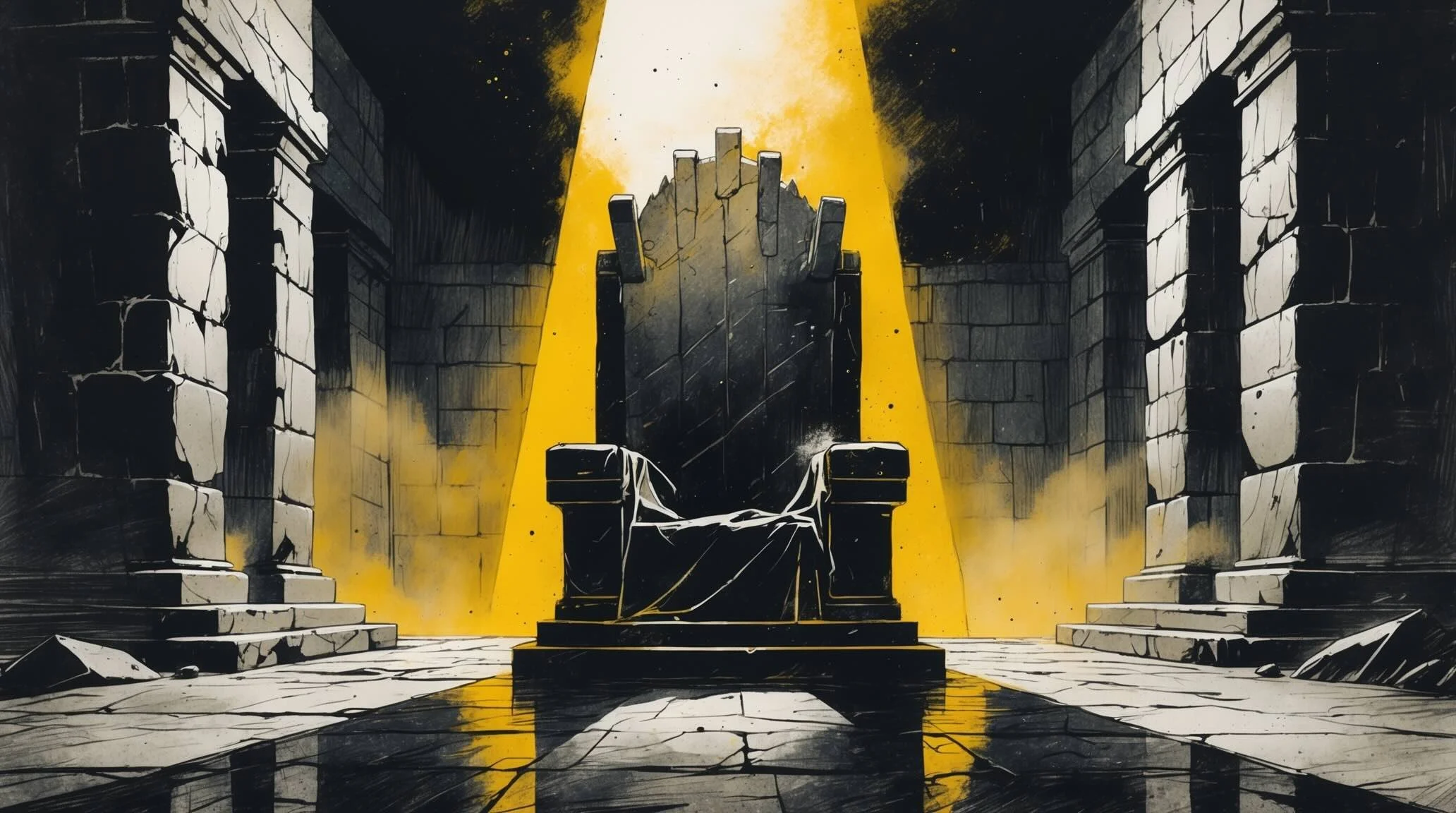
The Evolution of Kingship
Shakespeare uses the throne of Scotland to explore the political philosophy of his era, specifically the Divine Right of Kings (a concept heavily promoted by his patron, King James I).
1. The Divine Right (Duncan)
King Duncan is presented as the model of legitimate, Christian kingship. He rules through love, loyalty, and a natural, fatherly grace. His position on the throne is sanctioned by God, which is why his murder is not just treason, but sacrilege. Even Macbeth acknowledges Duncan’s flawless rule before killing him:
Original:
Besides, this Duncan
Hath borne his faculties so meek, hath been
So clear in his great office, that his virtues
Will plead like angels, trumpet-tongued, against
The deep damnation of his taking-off. (Macbeth – Act 1, Scene 7)
Shakespeare Retold (Modern Verse):
Besides, this Duncan
Has led with gentle kindness, and he's been
So clear in his revered role, his virtues
Will state their case, like angels playing trumpets,
Duncan represents the "Great Chain of Being" intact. However, his one flaw as a King is his absolute trust in outward appearances, leaving him vulnerable to deception from his most valued thanes.
2. The Usurping Tyrant (Macbeth)
Once Macbeth seizes the crown, Kingship is immediately corrupted into tyranny. Because he lacks the Divine Right to rule, he cannot command the genuine loyalty of his subjects. He must rule through terror, espionage, and brute force.
Original:
Those he commands move only in command,
Nothing in love: now does he feel his title
Hang loose about him, like a giant's robe
Upon a dwarfish thief. (Angus – Act 5, Scene 2)
Shakespeare Retold (Modern Verse):
His soldiers only act because he tells them,
They don’t do it for love. He feels his title
Is slipping from him, like a giant’s robe
Slips off a looting dwarf.
The motif of ill-fitting clothing highlights the illegitimacy of his reign. Under Macbeth, Scotland is not governed; it is held hostage. It is frequently described as bleeding, weeping, and diseased.
3. The Healing Restorers (Malcolm and Edward)
To highlight the cure for tyranny, Shakespeare introduces King Edward of England (the Confessor), a ruler so holy he can literally heal the sick with his touch. Malcolm, Duncan’s rightful heir, learns from Edward’s example. In Act 4, Malcolm lists the qualities of a true king:
Original:
The king-becoming graces,
As justice, verity, temperance, stableness,
Bounty, perseverance, mercy, lowliness,
Devotion, patience, courage, fortitude… (Malcolm – Act 4, Scene 3)
Shakespeare Retold (Modern Verse):
The goodwill of a king,
Like justice, ethics, moderation, peace,
Riches, perseverance, mercy, kindness,
Devotion, patience, courage, fortitude…
Malcolm represents the synthesis of a perfect king. He has his father's royal blood and goodness, but he has also learned the necessity of political caution and military strength. He restores order to the throne by the end of the play.
“Macbeth is a play about the disruption of the natural order. Duncan’s kingship is a part of this natural order, and his murder is a breach in nature.”
Key Quotes on Kingship
Quote 1: The Fatal Flaw of Trust
Original:
There's no art
To find the mind's construction in the face:
He was a gentleman on whom I built
An absolute trust. (Duncan – Act 1, Scene 4)
Shakespeare Retold (Modern Verse):
One is unable
To know another's thoughts by how they look:
He was a gentleman in whom I'd built
An absolute trust.
Analysis: Duncan speaks this about the treacherous first Thane of Cawdor, moments before Macbeth (the new Thane of Cawdor) enters. It highlights Duncan’s benevolence but also his political naivety. A good man does not always make a perfectly secure king.
Quote 2: The Suffering Nation
Original:
Bleed, bleed, poor country!
Great tyranny, lay thou thy basis sure,
For goodness dare not cheque thee. (Macduff – Act 4, Scene 3)
Shakespeare Retold (Modern Verse):
Bleed, bleed, poor country!
You tyrant! You have built a firm foundation
That good folk dare not challenge.
Analysis: Macduff personifies Scotland as a wounded body. This reflects the Elizabethan belief that the health of a nation is directly tied to the legitimacy and morality of its ruler. A corrupt king creates a diseased kingdom.
Quote 3: The Ultimate Rejection
Original:
Fit to govern!
No, not to live. O nation miserable,
With an untitled tyrant bloody-scepter'd. (Macduff – Act 4, Scene 3)
Shakespeare Retold (Modern Verse):
Fit to rule!
You are unfit to live. Oh, wretched nation,
Whose unelected king is a bloody tyrant,
Analysis: During Malcolm's "test" of Macduff's loyalty, Macduff reaches his breaking point. He defines the absolute boundary of true kingship: a ruler who lacks moral virtue has no right to govern, and an illegitimate tyrant has no right to even live.
Key Takeaways – Kingship
The Divine Right: A legitimate King is appointed by God. Usurping the throne is treated as a sin against Heaven, not just a political crime.
The Macrocosm: The state of the kingdom mirrors the state of the king. Duncan brings harvest and growth; Macbeth brings disease and slaughter.
Kingship vs Tyranny: A King rules for the benefit of his subjects (love and loyalty). A tyrant rules only for his own benefit and security (fear and force).
Study Questions and Analysis
-
The Divine Right of Kings was a political and religious doctrine stating that monarchs derive their authority directly from God, not from their subjects. In Macbeth, Duncan embodies this right. Because his rule is divinely sanctioned, his murder is viewed as an act of profound sacrilege that throws the entire universe out of balance.
-
King Edward the Confessor (of England) serves as the ultimate foil to Macbeth. While Macbeth is a tyrant who brings death and disease to his people, Edward is a holy king whose touch miraculously cures the sick (the "King's Evil"). Edward brings divine grace to his country, whereas Macbeth brings hellish chaos.
-
Malcolm tests Macduff by pretending to be a worse tyrant than Macbeth, claiming to be full of lust and greed. He does this to ensure Macduff is loyal to the country of Scotland, not just looking for a political alliance for personal gain. When Macduff weeps for his nation and rejects Malcolm, Malcolm knows Macduff is trustworthy.
-
Scotland is heavily personified as a suffering, physical body. Characters describe it as "bleeding," "weeping," and suffering under a "yoke." By Act 5, Malcolm and his army are described as the "medicine" needed to purge the diseased "sickly weal" (state) of the tyrant infecting it.
-
Listed by Malcolm, the "king-becoming graces" are the virtues essential for a good ruler. They include justice, verity (truth), temperance, stableness, bounty (generosity), perseverance, mercy, and devotion. Macbeth lacks all of these, demonstrating he is entirely unfit for the crown.
-
While Duncan is morally flawless and entirely benevolent, he has a fatal political weakness: he is too trusting. He fails to see the treason in the first Thane of Cawdor, and immediately makes the same mistake by bestowing absolute trust upon Macbeth. He judges people by their outward appearances, leaving his kingdom vulnerable to deception.