
Macbeth Themes: Gender
Gender – At a Glance
Central Conflict: The dangerous equation of masculinity with unchecked violence, and the rejection of feminine compassion.
The Core Question: What does it truly mean to be a "man," and what are the consequences of rejecting one's natural gendered traits?
Impact on Characters: Lady Macbeth destroys her psyche by attempting to suppress her female nature, while Macbeth loses his humanity by embracing a toxic, hyper-violent form of masculinity.
Key Dynamic: The contrast between Macbeth/Lady Macbeth (who view compassion as feminine weakness) and Macduff (who proves that true manhood requires both courage and emotional vulnerability).
The Outcome: The play demonstrates that severing oneself from natural human emotion—whether labelled male or female—leads to moral and psychological ruin.
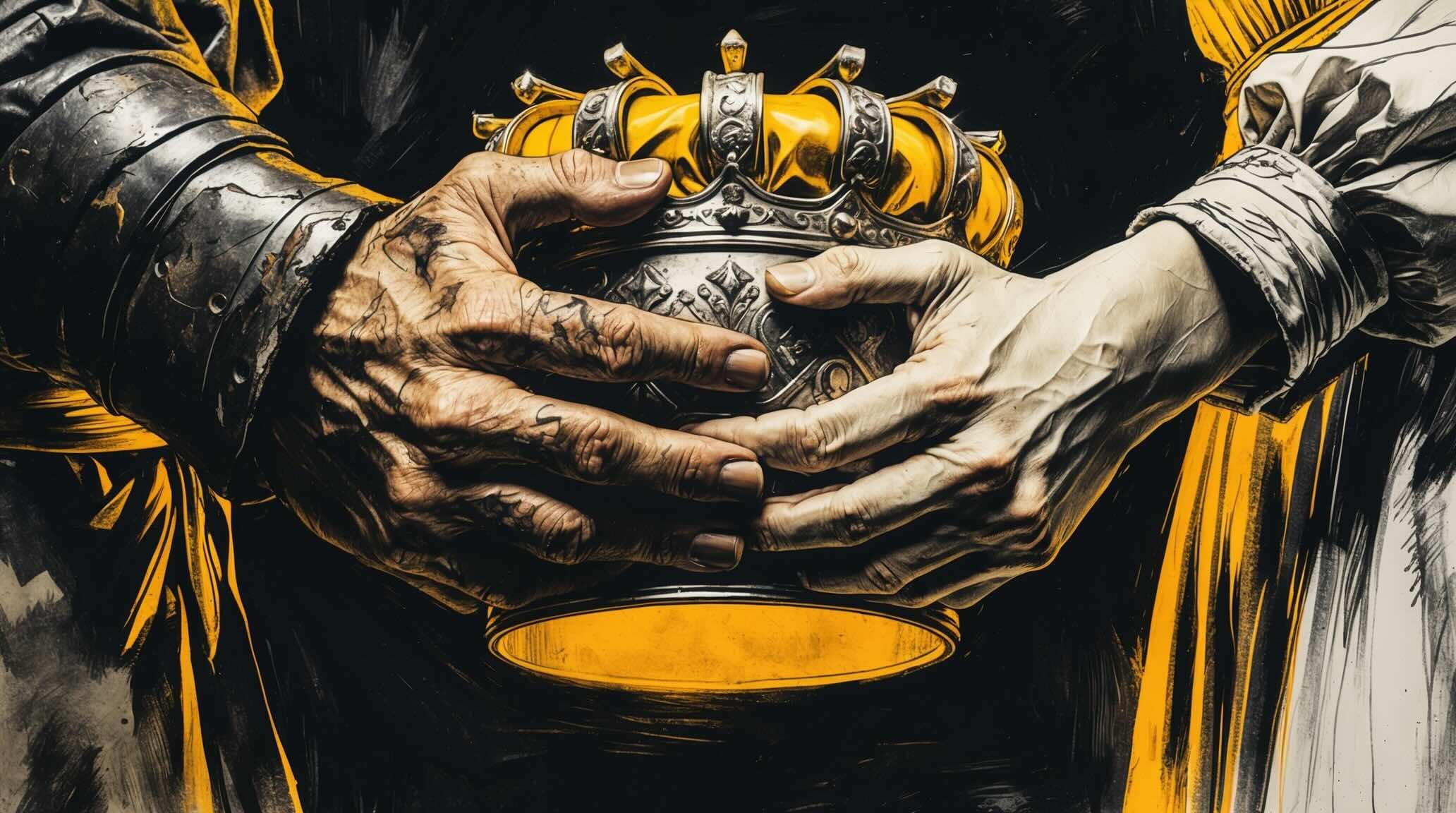
The Evolution of Gender
In Macbeth, Shakespeare subverts Jacobean expectations of gender. He explores how the strict, societal definitions of "masculine" and "feminine" can be manipulated to horrific ends.
1. The Subversion of the Feminine (Lady Macbeth)
In Shakespeare's era, women were expected to be gentle, nurturing, and subservient. Lady Macbeth actively rejects these traits, viewing them as obstacles to political power. To achieve her ambitions, she calls upon dark forces to strip away her biological and emotional femininity:
Original:
Come, you spirits
That tend on mortal thoughts, unsex me here,
And fill me from the crown to the toe top-full
Of direst cruelty! (Lady Macbeth – Act 1, Scene 5)
Shakespeare Retold (Modern Verse):
Come, evil spirits
That make me think of death, make me more manly,
And fill me from my head down to my toes
With awful cruelty!
By asking to be "unsexed," she wishes to be emptied of compassion (the "milk of human kindness") and filled with ruthless, masculine aggression. She even fantasises about violently rejecting motherhood (dashing the brains out of her own nursing infant) to prove her resolve.
2. The Weaponisation of Masculinity (The Manipulation)
Lady Macbeth understands that Macbeth’s greatest vulnerability is his pride in his manhood. When his conscience prevents him from killing Duncan, she does not argue politics or logic; she attacks his masculinity, equating murder with courage:
Original:
When you durst do it, then you were a man;
And, to be more than what you were, you would
Be so much more the man. (Lady Macbeth – Act 1, Scene 7)
Shakespeare Retold (Modern Verse):
If you dared do it, then you'd be a man;
And if you did it, you'd be more a man
Than you have ever been.
This manipulation is fatally effective. Macbeth absorbs this toxic definition of masculinity, believing that to be a true man, he must act with absolute, unfeeling violence. He later uses this exact same psychological tactic to manipulate the murderers into killing Banquo in Act 3, questioning their manhood if they refuse to seek bloody revenge.
3. The Redefinition of Manhood (Macduff)
Shakespeare does not leave this toxic version of masculinity unchallenged. In Act 4, when Macduff learns that his wife and children have been slaughtered, Malcolm urges him to "dispute it like a man" (meaning, take immediate violent revenge). Macduff provides the play's most profound correction on the nature of gender:
Original:
I shall do so;
But I must also feel it as a man:
I cannot but remember such things were,
That were most precious to me. (Macduff – Act 4, Scene 3)
Shakespeare Retold (Modern Verse):
I will do so;
But I must also feel it like a man.
I cannot help but think about the things
That were most precious to me.
Macduff redefines manhood. He asserts that a true man is not just a remorseless killer; a true man is capable of deep grief, love, and vulnerability. This healthy balance of courage and compassion is what ultimately defeats Macbeth's hollow, violent masculinity.
“In Macbeth, masculinity is equated with violence and cruelty... Lady Macbeth equates her own femininity with weakness and prays to the spirits to ‘unsex’ her.”
Key Quotes on Gender
Quote 1: The Boundary of Manhood
Original:
I dare do all that may become a man;
Who dares do more is none. (Macbeth – Act 1, Scene 7)
Shakespeare Retold (Modern Verse):
I dare to do all things that make a good man;
Those who dare more aren’t men.
Analysis: Early in the play, Macbeth holds a healthy, moral view of masculinity. He argues that a true man operates within the bounds of honour and morality. Committing an unnatural murder to seize power would push him outside those bounds, making him a monster, not a man.
Quote 2: The Male Ideal
Original:
Bring forth men-children only;
For thy undaunted mettle should compose
Nothing but males. (Macbeth – Act 1, Scene 7)
Shakespeare Retold (Modern Verse):
Give birth to males,
For your undaunted temperament should make
Nothing but males.
Analysis: Macbeth is so impressed by his wife’s ruthless, cold-blooded resolve that he declares her spirit is too masculine to ever give birth to a female child. It highlights how deeply they both conflate cruelty with masculinity.
Quote 3: Dramatic Irony and Female Stereotypes
Original:
O gentle lady,
'Tis not for you to hear what I can speak:
The repetition, in a woman's ear,
Would murder as it fell. (Macduff – Act 2, Scene 3)
Shakespeare Retold (Modern Verse):
Oh gentle lady,
You mustn’t hear what I have got to say,
For if a gentle woman were to hear it,
She’d die hearing the words.
Analysis: This is a moment of intense dramatic irony. Macduff tries to protect Lady Macbeth from hearing about Duncan's murder, believing her fragile female nature couldn't handle the shock. The audience, however, knows she is the very architect of the butchery.
Key Takeaways – Gender
Toxic Masculinity: Macbeth adopts a destructive view of manhood where violence and lack of empathy are the ultimate virtues. This philosophy turns him into a tyrant.
The Danger of Subversion: Lady Macbeth’s attempt to discard her natural female compassion fractures her psyche. Nature cannot simply be "unsexed" without catastrophic psychological consequences.
The Weird Sisters: The Witches themselves blur gender lines. Banquo notes they "should be women," but their beards forbid him from interpreting them so. Their ambiguous gender aligns with their role as agents of unnatural chaos.
Study Questions and Analysis
-
Lady Macbeth exploits Jacobean societal norms regarding masculinity. When Macbeth hesitates to murder Duncan, she does not debate the morality of the act; instead, she attacks his pride by calling him a coward and questioning his manhood. She essentially makes committing treason the ultimate test of his masculinity.
-
She asks to be "unsexed" because she views her natural female traits—specifically maternal nurturing and the "milk of human kindness"—as weaknesses that will hinder their political ambition. She wants to be filled with "direst cruelty," a trait the play associates with male warriors.
-
While Macbeth equates manhood purely with violence and the suppression of emotion, Macduff shows that true masculinity includes emotional vulnerability. When he learns of his family's murder, he agrees to take revenge ("dispute it like a man") but insists he must first "feel it as a man" by weeping and mourning his profound loss.
-
The Witches possess an ambiguous gender, symbolising their unnatural existence outside the normal human order. Banquo observes, "you should be women, / And yet your beards forbid me to interpret / That you are so." Their physical blurring of gender reflects their moral blurring of "fair" and "foul."
-
Milk is a symbol of maternal nurturing and feminine compassion. Lady Macbeth fears her husband is "too full o' the milk of human kindness" to murder the king. Later, she begs the dark spirits to "take my milk for gall" (turn her motherly nourishment into bitter poison), severing her final tie to traditional womanhood.
-
Yes. In Act 1, he believes a man must have moral boundaries: "I dare do all that may become a man; / Who dares do more is none." By Act 3, having been manipulated by his wife, he completely internalises the toxic version of manhood, using the exact same taunts to convince the murderers to kill Banquo.