
Macbeth Themes: Appearance
Appearance vs Reality – At a Glance
Central Conflict: The tension between what characters project to the outside world and the dark truths hidden within their hearts.
The Core Question: In a world where "fair is foul," can anyone's outward behaviour or spoken words ever be truly trusted?
Impact on Characters: The need to constantly maintain a "false face" isolates Macbeth and Lady Macbeth, breeding a paranoia that eventually shatters their sanity.
Key Dynamic: The contrast between Duncan (who takes appearances at face value) and the Macbeths (who masterfully manipulate their outward appearance to conceal treason).
The Outcome: The truth inevitably surfaces. The psychological strain of deception breaks Lady Macbeth, and the Witches' verbal illusions shatter, exposing Macbeth to his doom.
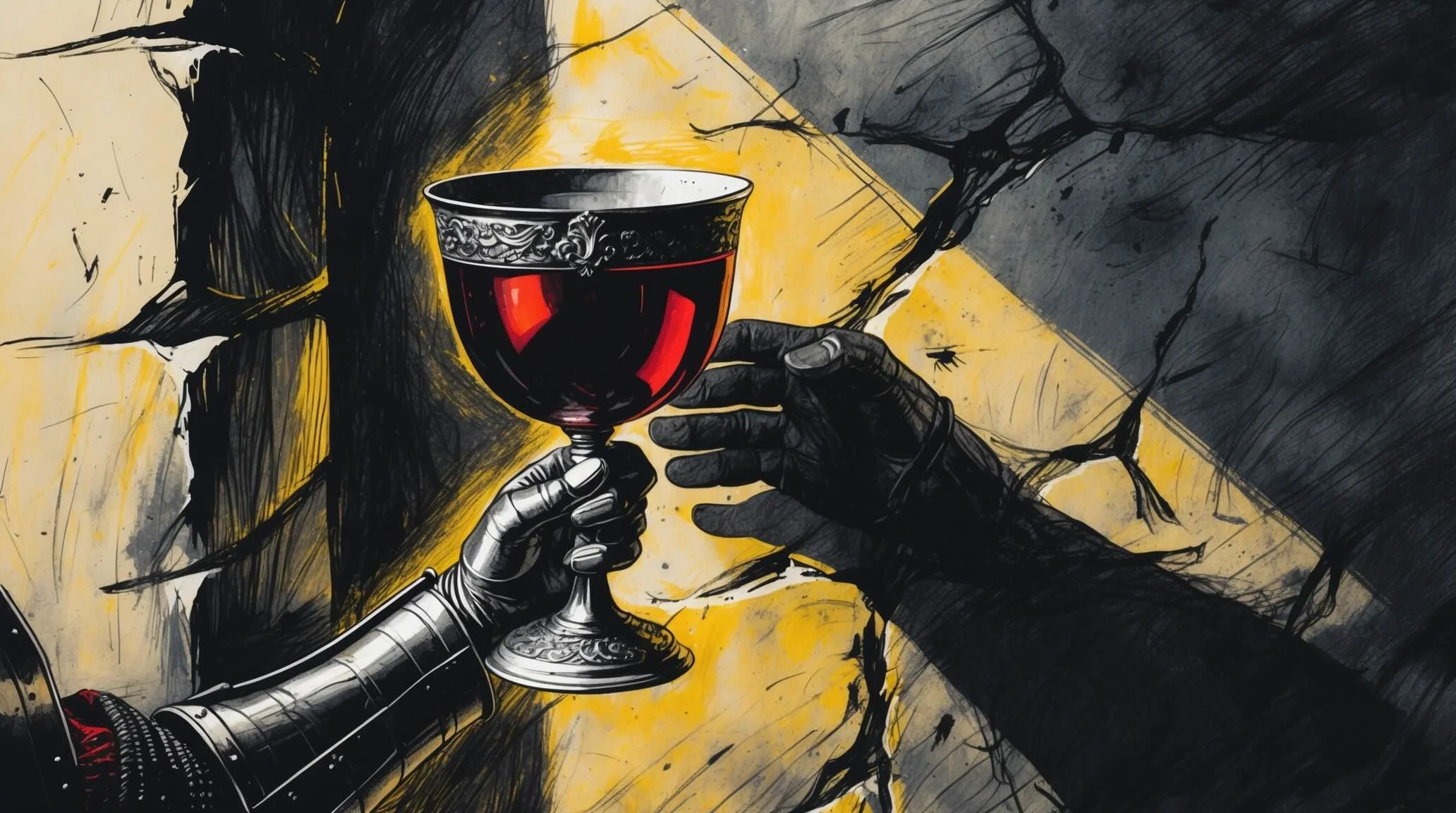
The Evolution of Appearance vs Reality
Shakespeare establishes early on that Macbeth takes place in a fractured moral universe where nothing is as it seems, making deception the primary weapon of both the supernatural and the mortal characters.
1. The Equivocation of Evil (The Witches)
The play opens with a paradox that serves as the thesis statement for the entire tragedy. The Witches declare that the natural order has been inverted:
Original:
Fair is foul, and foul is fair:
Hover through the fog and filthy air. (The Witches – Act 1, Scene 1)
Shakespeare Retold (Modern Verse):
What’s fair is foul; what’s foul is fair;
Let’s fly through foggy, filthy air.
This establishes a world of "equivocation"—the use of ambiguous language to conceal the truth. The Witches never outright lie to Macbeth, but they use deceptive appearances to trick him into destroying himself. The "fog" physically represents this inability to see the truth clearly.
2. The Art of the False Face (The Macbeths)
While the Witches manipulate words, the Macbeths manipulate social conventions. Duncan's fatal flaw is his inability to "find the mind's construction in the face." Lady Macbeth actively coaches her husband on how to exploit this trusting nature by playing the role of the perfect, loyal hosts while plotting regicide:
Original:
Look like the innocent flower,
But be the serpent under 't. (Lady Macbeth – Act 1, Scene 5)
Shakespeare Retold (Modern Verse):
Look like a flower,
But be the snake below.
This is the ultimate expression of the theme. The Macbeths weaponise hospitality. By the end of Act 1, Macbeth has fully embraced this duality, concluding that his "False face must hide what the false heart doth know."
3. The Collapse of the Illusion (Paranoia and Truth)
The tragedy of the play is that maintaining a false reality is psychologically unsustainable. Once King, Macbeth tries to project the image of a jovial, secure monarch at his banquet. However, the reality of his bloody actions breaks through the facade:
Original:
Prithee, see there!
Behold! Look! Lo! How say you?
Why, what care I? If thou canst nod, speak too. (Macbeth – Act 3, Scene 4)
Shakespeare Retold (Modern Verse):
Please, look, there!
You see it, look! What do you say to that?
Why should I care? If you can nod, then speak, too.
Banquo’s ghost shatters the illusion of Macbeth's secure kingship in front of all his lords. From this point on, the facade crumbles. Lady Macbeth’s sleepwalking reveals the bloody reality she tried to hide, and the Witches' final prophecies—which appeared to promise invincibility—are revealed to be fatal illusions.
“The atmosphere of Macbeth... is one of obscurity and doubt. We are in a world where ‘fair is foul and foul is fair’, where nothing is but what is not.”
Key Quotes on Appearance vs Reality
Quote 1: The Mask
Original:
And make our faces vizards to our hearts,
Disguising what they are. (Macbeth – Act 3, Scene 2)
Shakespeare Retold (Modern Verse):
And make our faces mask what’s in our hearts,
Disguising truth.
Analysis: A "vizard" is a mask. Here, Macbeth has taken over the role of the deceiver from his wife. He understands that to survive the paranoia of their new reign, they must wear literal and metaphorical masks over their true feelings, showing how completely he has adopted the art of the false face.
Quote 2: The Hidden Threat
Original:
There's daggers in men's smiles: the near in blood,
The nearer bloody. (Donalbain – Act 2, Scene 3)
Shakespeare Retold (Modern Verse):
The smiling men have daggers. Nearer the dead king,
The nearer we are to death.
Analysis: Following their father's murder, Duncan's sons immediately recognise the dangerous reality of their environment. Unlike their father, who trusted outward appearances, Donalbain understands that public displays of grief and loyalty ("smiles") are currently being used as disguises for murderous intent.
Quote 3: The Illusions Shatter
Original:
I pull in resolution, and begin
To doubt the equivocation of the fiend
That lies like truth. (Macbeth – Act 5, Scene 5)
Shakespeare Retold (Modern Verse):
I’m cancelling my plan, for I am starting
To doubt the vagueness of the witches’ message
That twists the truth.
Analysis: This is the moment the ultimate illusion breaks. Upon hearing that Birnam Wood is seemingly moving towards his castle, Macbeth realises the Witches have used equivocation against him. The supernatural promises appeared to be absolute truths, but the reality was a linguistic trick designed to destroy him.
Key Takeaways – Appearance vs Reality
Equivocation: The supernatural forces use double meanings to trick Macbeth, proving that words can appear truthful while hiding a fatal reality.
Weaponised Hospitality: The Macbeths use the sacred laws of hospitality as a mask to lower their victims' defences.
The Toll of Deception: The effort required to maintain a "false face" creates a paranoid, isolated existence that ultimately destroys the mental health of both Macbeth and Lady Macbeth.
Study Questions and Analysis
-
This paradox, chanted by the Witches, means that appearances can be entirely deceiving. What appears good, beautiful, or noble ("fair") is actually evil and corrupt ("foul"), and vice versa. It sets the tone for a play where trusted friends commit murder and holy prophecies lead to damnation.
-
They actively construct false personas. Lady Macbeth tells Macbeth to "look like the innocent flower, / But be the serpent under 't." When King Duncan arrives at their castle, they play the role of humble, loving servants, using the appearance of extreme loyalty to mask their murderous reality.
-
Equivocation is the use of ambiguous language to conceal the truth. The Witches are masters of this. They tell Macbeth that "none of woman born" shall harm him, and that he will not be defeated until "Birnam Wood" moves. These appear to be guarantees of invincibility, but the reality is they are linguistic tricks designed to lead him to his death.
-
Shakespeare frequently uses clothing to represent social status and titles. When Macbeth is made Thane of Cawdor, he asks why he is dressed in "borrowed robes." By the end of the play, his title of King is described as hanging loose on him "like a giant's robe / Upon a dwarfish thief," highlighting that his outward appearance of royalty does not match the reality of his illegitimate, petty nature.
-
King Duncan is a benevolent ruler, but he is dangerously naive. He admits there is "no art / To find the mind's construction in the face," meaning you cannot tell what someone is thinking just by looking at them. He fully trusted the traitorous first Thane of Cawdor, and ironically, makes the exact same mistake by fully trusting the new Thane of Cawdor: Macbeth.
-
Their guilt is exposed when their subconscious minds can no longer maintain the "false face." Macbeth’s guilt conjures Banquo’s ghost in front of his lords, shattering his appearance of a sane, jovial king. Lady Macbeth’s guilt manifests in her sleepwalking, where she acts out the reality of washing blood from her hands, completely destroying her daytime facade of ruthless strength.