
Macbeth: Characters
Macbeth character analysis for all 8 main characters — Macbeth, Lady Macbeth, King Duncan, Banquo, Macduff, Malcolm, The Witches and more. Each profile explores the character's psychology, motivation, and tragic flaw, supported throughout by a modern verse translation and key quotes.
A complete character study guide and revision resource for GCSE, A-Level, AP English, IB, and undergraduate Shakespeare — equally useful to teachers and actors. Select a character below to begin.
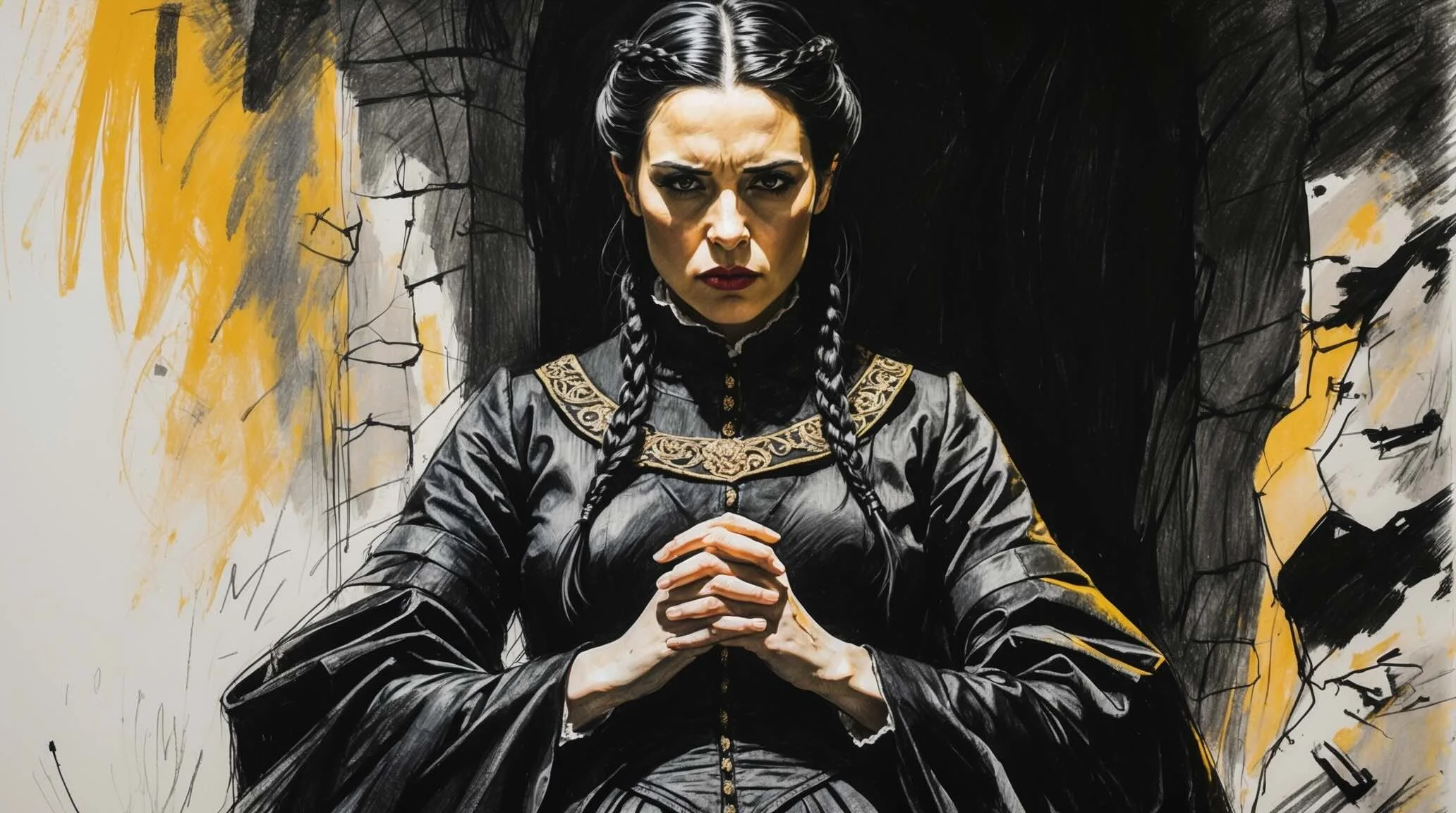
Lady Macbeth
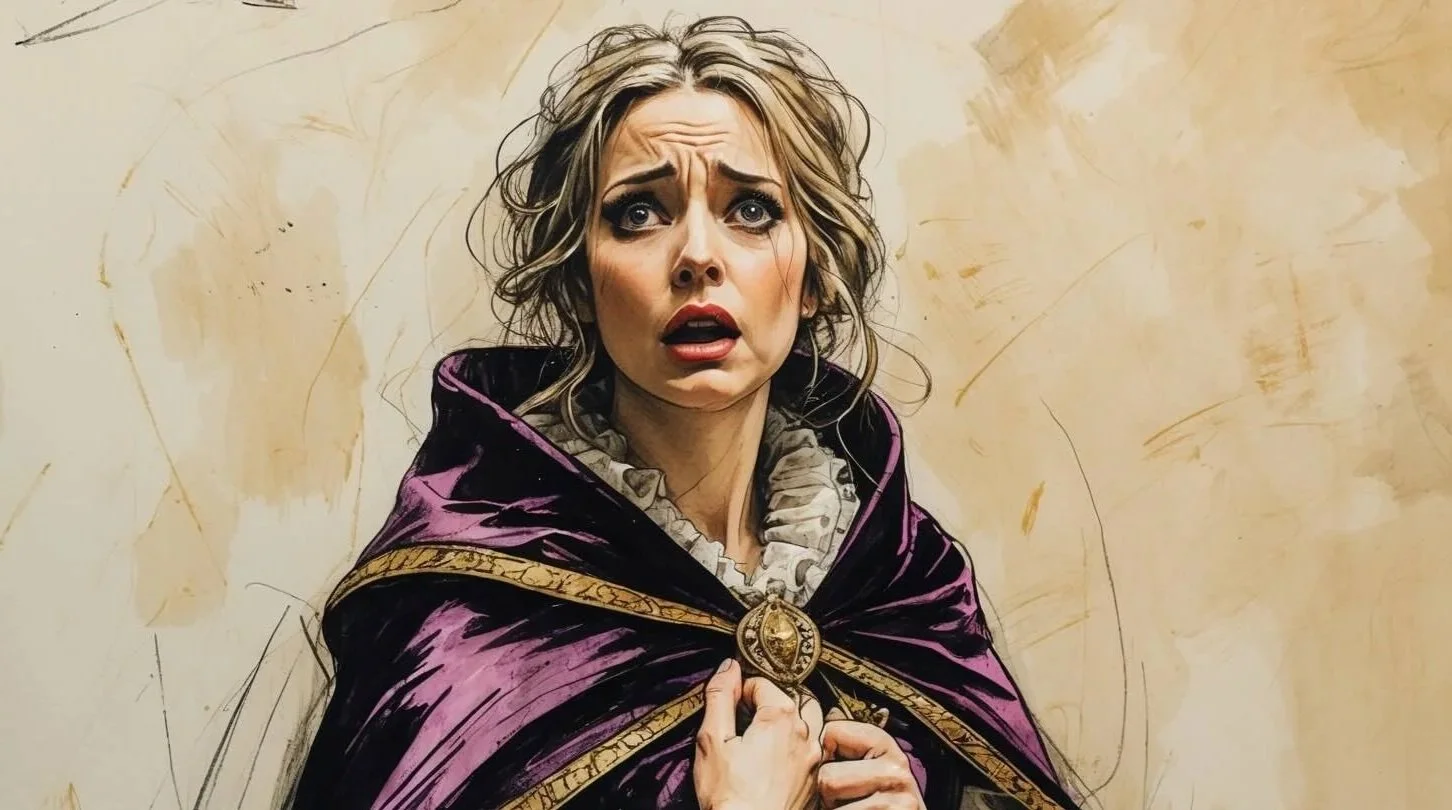
Macbeth's wife and chief manipulator, the driving force behind the murder of King Duncan.
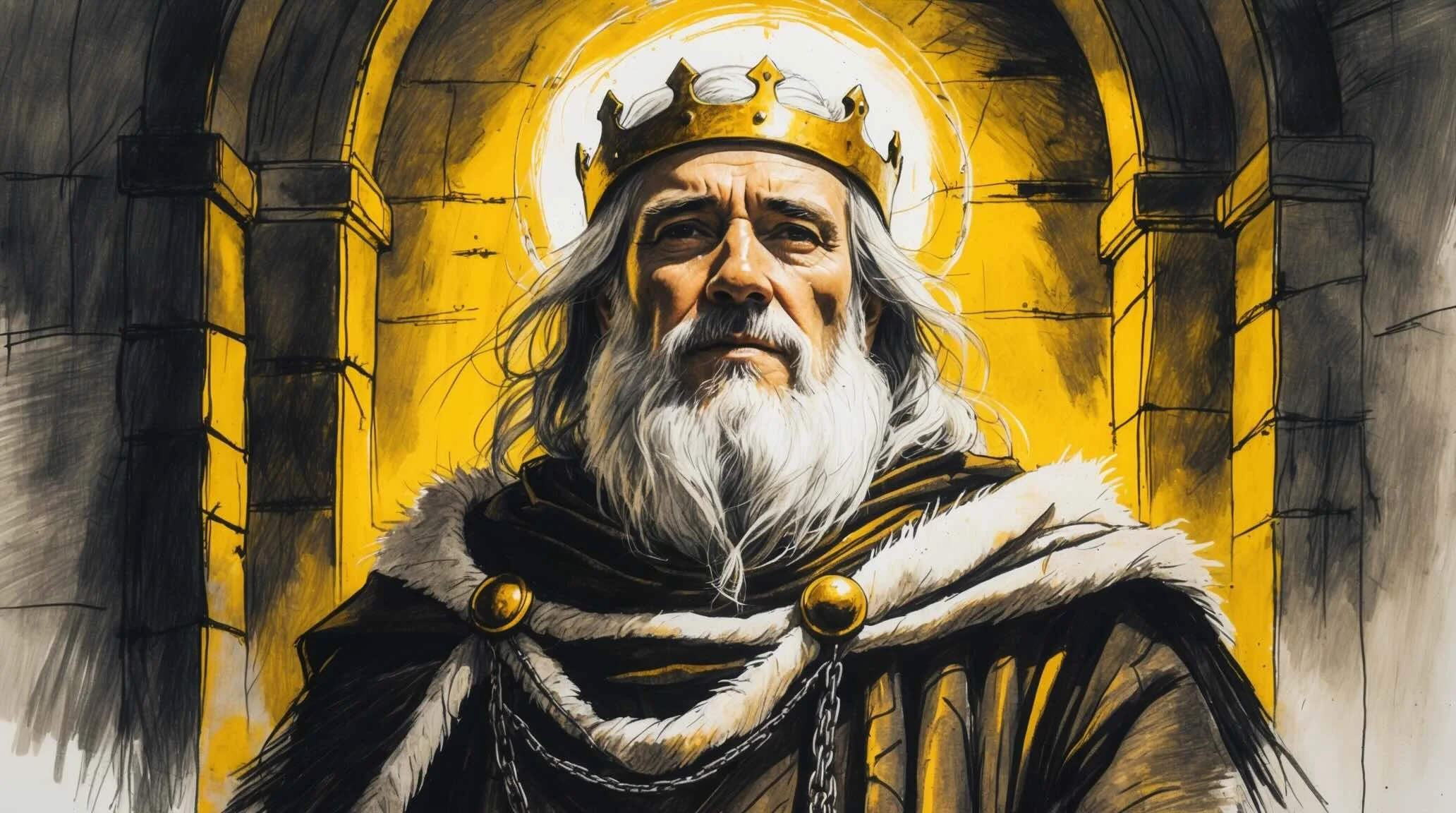
King Duncan
The benevolent, divinely-ordained King of Scotland and the victim of Macbeth's regicide.

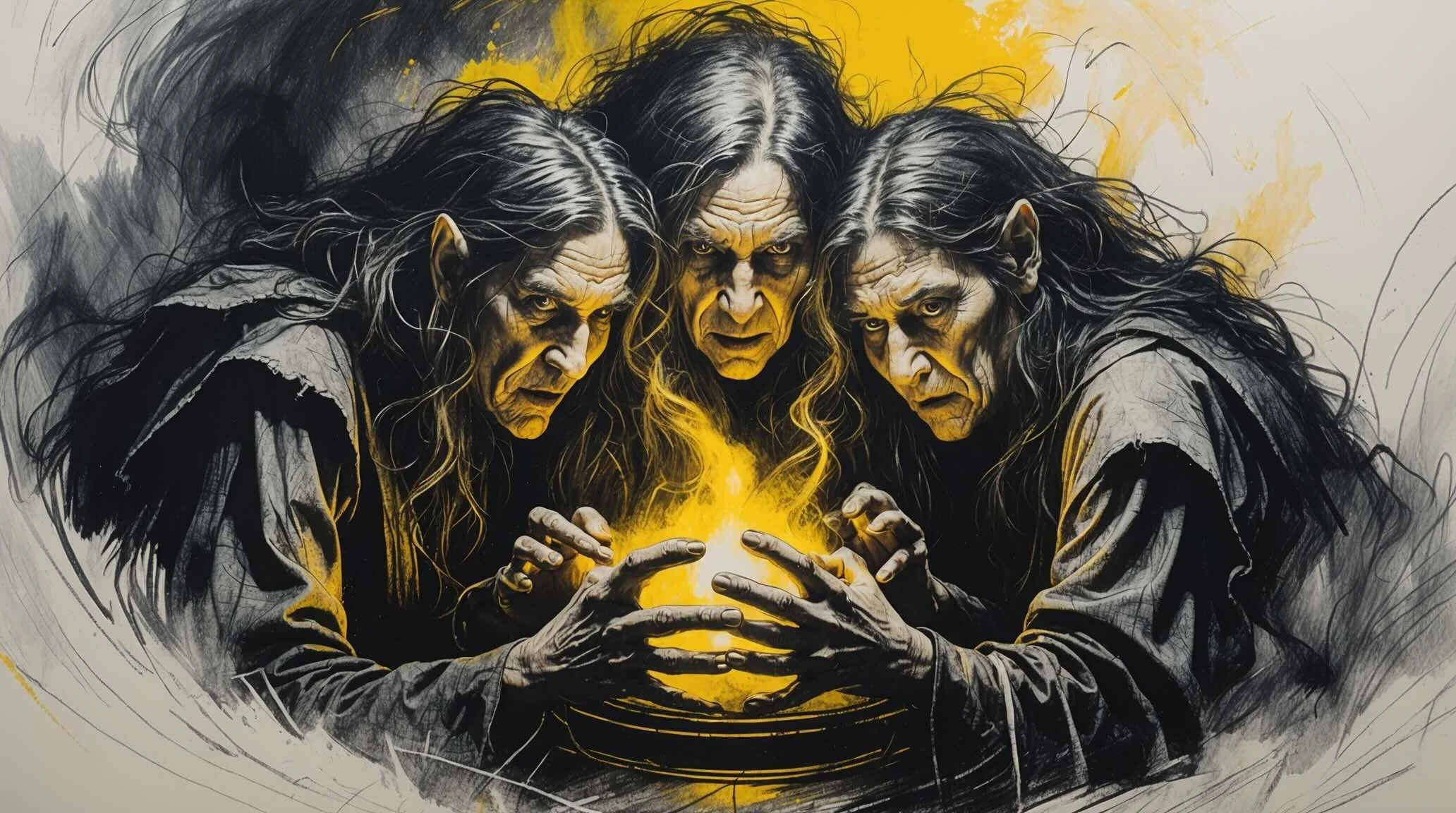
The Witches
Three Weird Sisters whose prophecies catalyse Macbeth's ambition and seal his fatal overconfidence.
Supporting Cast
Beyond the eight figures who carry the main action, Macbeth is populated by Scottish thanes, soldiers, household servants, English invaders, and supernatural figures whose presence shapes the play in ways the central drama does not always make explicit. The wider cast is grouped below by their function within the play's twin Scotlands — Duncan's legitimate kingdom and Macbeth's usurper state — and the worlds that touch them.
Duncan's Court
Donalbain
Duncan's younger son, who flees to Ireland after his father's murder. His brief decision — "There's daggers in men's smiles" — is the play's most direct piece of writing on the speed with which legitimate succession can collapse under the threat of further violence.
The Sergeant
The bleeding officer (sometimes called the Captain) who in 1.2 gives Duncan the report of Macbeth's heroism at the battle against the rebels — "brave Macbeth, well he deserves that name." His report is the play's first construction of Macbeth's reputation; the irony is exact.
The Old Man
The peasant figure in 2.4 who converses with Ross about the unnatural events following Duncan's murder — horses eating each other, the falcon killed by an owl. His chorus-like role gives the play its only voice from outside the noble class.
The Scottish Thanes
Ross
The most-deployed messenger in the play, appearing across every act. He delivers the Cawdor news to Macbeth in 1.3, reports Duncan's murder to Macduff in 2.4, warns Lady Macduff too late in 4.2, and brings Macduff the news of his family's slaughter in 4.3. The closest thing the play has to a chorus.
Lennox
The nobleman whose 3.6 monologue, delivered to an unnamed Lord, is the play's most direct staging of the moment a regime's lies stop being believable. His ironic recital of Macbeth's official version of events is the clearest evidence that the nobility know.
Angus
Minor Scottish noble, present with Ross in 1.3 to deliver the Cawdor news, and reappearing in Act 5 with Malcolm's invading army. His description of Macbeth — "now does he feel / His secret murders sticking on his hands" — is one of the play's sharpest portraits of the usurper's collapse.
Menteith
Scottish noble who joins Malcolm's invading army in Act 5. His role is largely structural — together with Caithness, he embodies the noble class's mass defection from Macbeth in the play's closing movements.
Caithness
Scottish noble in Malcolm's invading army in Act 5. His description of Macbeth's defensive disarray at Dunsinane — "now minutely revolts upbraid his faith-breach" — captures the regime's last days from the outside.
Macbeth's Court
Seyton
Macbeth's officer in Act 5, the figure who answers his calls and announces Lady Macbeth's death. His name — homophonous with "Satan" — has invited speculation since the eighteenth century. His brief, dutiful presence frames the "Tomorrow, and tomorrow, and tomorrow" speech.
The Porter
The drunk porter who answers the gate after Duncan's murder in 2.3, playing at being the gatekeeper of hell. His extended comic riff — equivocators, French hose, the porter of hell-gate — is one of Shakespeare's most studied pieces of dark comic relief.
The Doctor
The Scottish doctor in 5.1 who observes Lady Macbeth's sleepwalking alongside the Gentlewoman. His verdict that "more needs she the divine than the physician" is the play's clearest acknowledgement that the moral wound is beyond medical reach.
The Gentlewoman
Lady Macbeth's attendant in the sleepwalking scene. Her reluctance to repeat what she has heard her mistress say — "I will not report after her" — is the play's most disciplined piece of writing on what loyalty to a destroyed master looks like.
The Murderers
Hired by Macbeth to kill Banquo and Fleance in 3.3, and later (in 4.2) sent to slaughter the Macduff household at Fife. The identity of the Third Murderer who unexpectedly joins the first two is one of Shakespeare's most enduring textual puzzles — variously identified by critics as Macbeth himself, Ross, or simply Macbeth's distrustful insurance.
The Macduff Family
Macduff's Son
The witty young boy of 4.2 who fences verbally with his mother before the murderers arrive, asking with childlike directness whether his absent father is a traitor. His death — "He has killed me, mother. Run away, I pray you!" — is one of the most carefully constructed child-deaths in Shakespeare.
The Messenger to Lady Macduff
The unnamed figure who arrives in 4.2 to warn Lady Macduff to flee, moments before the murderers do. His warning comes too late; the timing is the play's most pointed staging of the limits of ordinary decency against organised political violence.
The English Invasion
Siward
Earl of Northumberland, general of the English forces, and uncle of Malcolm. His stern reception of Young Siward's death — "Had I as many sons as I have hairs, / I would not wish them to a fairer death" — is the play's most direct piece of writing on military stoicism.
Young Siward
Siward's son, killed by Macbeth in single combat at 5.7. His brief confrontation — "Thou liest, abhorrèd tyrant" — and his death "like a man" produces the elder Siward's stoic acceptance and the play's clearest contrast with the Macduff son's murder.
The English Doctor
The figure in 4.3 who briefly describes Edward the Confessor's miraculous healing of the "king's evil." His five-line interlude establishes the divinely sanctioned English court against which Macbeth's poisoned Scotland is being measured.
The Supernatural
Hecate
The goddess of witchcraft who appears in 3.5 and 4.1, rebuking the Three Witches for trading with Macbeth without her authorisation. Many modern scholars consider her scenes Thomas Middleton's interpolations rather than Shakespeare's; the Folio text includes them either way.
The Three Apparitions
The Armed Head, the Bloody Child, and the Crowned Child holding a tree, who deliver the second-round prophecies in 4.1: "Beware Macduff"; "None of woman born / Shall harm Macbeth"; "Macbeth shall never vanquished be until / Great Birnam Wood to high Dunsinane Hill / Shall come against him." Each is structurally calibrated — prophetically true and lethally misleading.
The Show of Kings
The dumb-show procession in 4.1 of eight kings descended from Banquo, the last carrying a glass showing more kings to come. The vision, addressed flatteringly to James I (descended through the Stuart line from the historical Banquo), is one of Shakespeare's most direct pieces of court-politics writing.
Others
Fleance
Banquo's son, who escapes the assassins in 3.3 with his father's dying words ringing after him: "Fly, good Fleance, fly, fly, fly!" Never seen again in the play. The prophecy that Banquo's descendants will be kings hinges entirely on his unwitnessed survival.
Servants and Messengers
The various unnamed figures who carry word between the play's locations: the servant who brings Lady Macbeth the news of Duncan's arrival in 1.5, the messenger who reports Birnam Wood moving in 5.5, the attendants throughout. Each delivers plot but has no character of his own.
Frequently Asked Questions
Who is the main character of Macbeth?
The play's title names its protagonist. Macbeth is a Scottish thane and successful general. His meeting with the Witches on the heath leads to his murder of King Duncan, his seizing of the Scottish throne, and his growing tyranny.
But Shakespeare gives several characters significant roles, and no analysis of the play can ignore them.
Lady Macbeth is the manipulator. In 1.7 she pushes past Macbeth's hesitation and makes the regicide happen. The two are a married pair whose joint psychology drives the first half of the play.
Banquo is the moral foil. His silent presence threatens the new regime, and his ghost appears at the banquet to shatter Macbeth's composure in front of the court.
Macduff is the avenger who becomes Macbeth's main antagonist and eventually kills him in single combat. Malcolm is the legitimate heir. The play's final scene puts him on the throne.
The Witches are the supernatural figures whose prophecies set the whole tragedy in motion.
Of all Shakespeare's tragic protagonists, Macbeth makes the most direct journey from sympathetic warrior to despised tyrant. His soliloquies provide some of the most-quoted writing in English drama.
Is Lady Macbeth more responsible than Macbeth for King Duncan's murder?
It depends on what "responsibility" means.
Lady Macbeth is the engineer of the murder. She reads Macbeth's letter and immediately plans the regicide. She calls on the spirits to "unsex" her in her most exposed soliloquy. And at 1.7, when Macbeth has decided not to proceed, she challenges his manhood until he changes his mind.
Without her intervention, the murder would not have happened on the night Duncan was a guest in their castle.
Macbeth, however, holds the dagger. He makes the choice to enter Duncan's chamber. He commits the act.
The play refuses to let either figure claim the other forced them. Macbeth's dagger soliloquy in 2.1 names the moral rules he is choosing to break. Lady Macbeth's sleepwalking collapse in 5.1 shows that her conscience was never as buried as her 1.5 invocations had claimed.
A.C. Bradley's 1904 reading argued that responsibility is genuinely shared. Macbeth supplies the inclination. Lady Macbeth supplies the push. The murder requires both.
Shakespeare's choice is to refuse to assign the blame cleanly — a refusal that has produced four centuries of critical debate.
Why does Macbeth murder Banquo?
The 3.1 soliloquy is the clearest piece of evidence the play gives us about Macbeth's motives.
Banquo heard the Witches' prophecies alongside Macbeth in 1.3. The prophecies addressed to Banquo named him as the father of a "line of kings." Despite Macbeth becoming king, the Scottish throne would eventually pass to Banquo's descendants — not to any son of Macbeth's.
Macbeth's soliloquy names the problem. He has paid the moral price of regicide and will receive none of the dynastic reward. "Upon my head they placed a fruitless crown / And put a barren sceptre in my gripe."
The second reason is political. Banquo is the only living witness to the Witches' prophecies. His "royalty of nature" — Macbeth's own phrase — makes him a permanent threat to the legitimacy Macbeth has been trying to establish.
The irony is that the murder fails. Banquo dies. His son Fleance escapes. The prophecy holds. And Banquo's ghost appears at Macbeth's banquet to shatter the new king's composure in front of the assembled Scottish nobles.
The murder causes exactly the political damage it was meant to prevent.
Who kills Macbeth at the end of the play?
Macduff, Thane of Fife, kills Macbeth in single combat at 5.8.
The mechanism is the Witches' equivocal prophecy. The apparitions in 4.1 had assured Macbeth that "none of woman born / Shall harm Macbeth." Macbeth had read this as complete invulnerability.
Macduff reveals at 5.8 that he was "from his mother's womb / Untimely ripped" — delivered by Caesarean section. On the prophecy's literal terms, he is not "of woman born."
The moment combines the personal and the political. Macduff has been wronged personally — in 4.2, Macbeth ordered the slaughter of Lady Macduff and the Macduff children. The 4.3 scene where grief turns into vengeance gives the play its most directly motivated avenger.
He has also been wronged politically. Macbeth has stolen the throne that legitimate succession had given to someone else. Macduff's combat with him is how the play stages the restoration.
The 5.9 closing scene confirms what is politically at stake. Macduff carries Macbeth's severed head onto the stage, proclaims Malcolm king of Scotland, and the legitimate political order is formally restored.
What role do the Witches play in Macbeth's downfall?
The Witches — or Weird Sisters — are the supernatural catalysts of the whole tragic action. But the play insists on the limit of their power.
In 1.3 they predict Macbeth's rise to the throne and Banquo's line of royal descendants. In 4.1 they deliver the equivocal prophecies — "beware Macduff," "none of woman born shall harm Macbeth," "Macbeth shall never vanquish'd be until Great Birnam Wood to high Dunsinane Hill shall come against him." All of these are eventually unravelled in the final act.
They do not, however, force any action. Banquo hears similarly tempting prophecies and does not act on them the way Macbeth does. The contrast is the clearest evidence that the response to prophecy is the listener's choice, not something the prophecy commands.
The deeper question is what the Witches actually are.
One reading sees them as external supernatural agents — the Jacobean theological reading, drawing on King James I's 1597 Daemonologie.
Another reading sees them as an outward expression of ambitions Macbeth already had. Marjorie Garber reads them this way, describing the play's "uncanny" mode.
The play allows both readings and does not, finally, choose between them.
Why is Lady Macduff killed?
Lady Macduff and her children are murdered in 4.2 on Macbeth's explicit orders. This fact sets her death apart from the murders that precede it.
King Duncan was killed for the crown. Banquo was killed to prevent the prophecy of his royal descendants. Both murders, however indefensible, had clear political reasons.
The Macduff slaughter doesn't fit this pattern. Lady Macduff and her children pose no threat to Macbeth's throne. They are not in the line of succession. They cannot, on any reading, become political rivals.
The murder is therefore not about strategy — it's about terror. An act of state violence aimed at the family of the thane Macduff, who has fled to England to join Malcolm's restoration army.
What this murder does in the play is mark the moral threshold at which Macbeth crosses from tragic protagonist to outright tyrant. Before 4.2, his murders can still be read as tragic. After 4.2, the violence serves no political purpose, and the audience's response shifts to match.
The murder is also the trigger for Macduff's eventual revenge. It turns his political opposition into the personal avenger who will kill Macbeth in 5.8.
Who becomes king of Scotland after Macbeth's death?
Malcolm, eldest son of King Duncan and Prince of Cumberland, becomes king of Scotland in the play's closing scene.
The arrangement is exact. Duncan had named Malcolm as his heir in 1.4 — the announcement that gave Macbeth his first clear sense of the obstacle between him and the throne.
After Duncan's murder, Malcolm fled to England, suspected of involvement but actually protecting himself from the unidentified assassins. He spent the intervening time at the court of Edward the Confessor, gathering the political and military resources he would need for the restoration.
His preparation is shown in three scenes. The 4.3 testing scene with Macduff shows Malcolm's political maturity. His 5.4 order to camouflage his army with branches from Birnam Wood shows his strategic intelligence. And his 5.9 closing speech shows his fluent grasp of the political language of legitimate restoration.
Malcolm promotes the surviving thanes to earls (the first such elevation in Scottish history). He calls back the exiled friends Macbeth's tyranny had driven away. He promises justice for the "cruel ministers" of the previous regime. And he invites the court to his coronation at Scone.
The political order that Macbeth's regicide had disrupted is, by the play's final exit, formally restored — built around the legitimate succession Duncan had named at the start.