Othello: Act 2, Scene 2 – Analysis
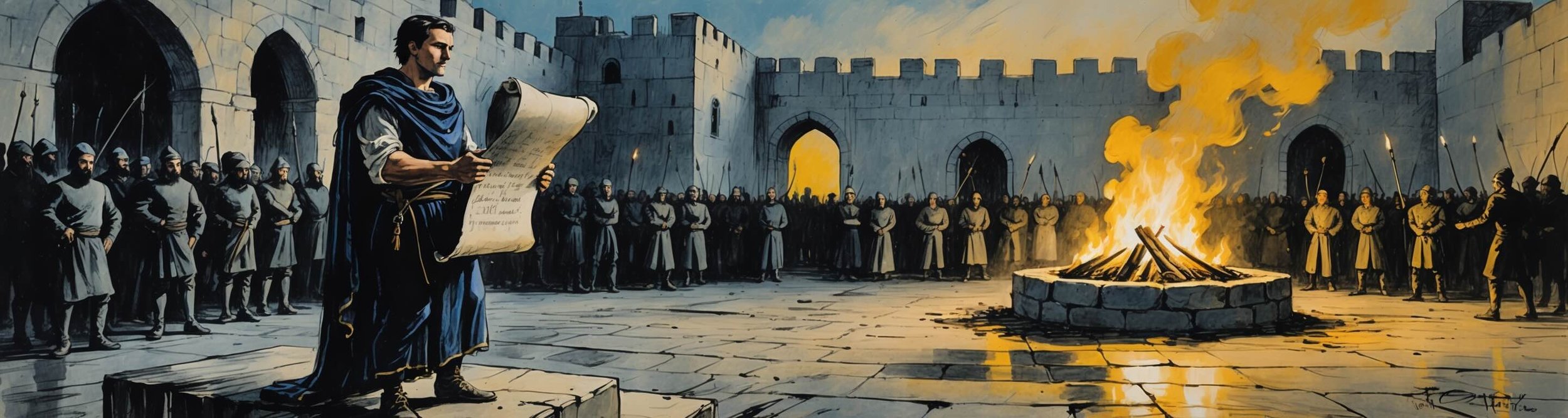
Scene Profile – At a Glance
- Location: A street in Cyprus.
- What Happens: A herald reads out Othello's proclamation of a public holiday, celebrating both the destruction of the Turkish fleet and his marriage, with feasting and bonfires from five o'clock until eleven.
- Key Characters: The Herald.
- Dramatic Function: A brief, festive interlude that announces the celebration which Iago will turn into his opportunity in the very next scene.
- Famous Quote:
"Heaven bless the isle of Cyprus and our noble general Othello!"
(Herald, Act 2, Scene 2) - Why It Matters: This is the play's high point of public joy. The party it announces is the trap into which Cassio – and Othello's marriage – will fall.
Scene Summary
The scene is a single, short proclamation. A herald steps into a Cyprus street, followed by a crowd, and reads out an order issued in Othello's name. There are two things to celebrate: the Turkish fleet that threatened the island has been destroyed, and the general has married. Othello wants the whole garrison to make merry.
The herald declares a public holiday. Everyone is free to dance, light bonfires, and feast as they please, with the kitchens open and the festivities running from five o'clock in the afternoon until the bell strikes eleven. He ends with a blessing on Cyprus and on Othello, and the crowd disperses to enjoy the night.
A Proclamation of Joy
This is the only moment in the play where public happiness is announced openly and without irony being voiced on stage. The herald's prose is bright and generous, throwing open the kitchens and inviting the whole island to celebrate. Two pieces of good news are folded together: a military victory and a private marriage, the safety of Cyprus and the happiness of its new commander.
Original
every man put himself into triumph; some to dance, some to make bonfires, each man to what sport and revels his addiction leads him...
(Herald, Act 2, Scene 2)
Shakespeare Retold (Modern Verse)
everyone must celebrate; you may choose to dance, or light a bonfire; do whatever takes your fancy and whatever makes you happy.
The warmth of the language is exactly what makes the scene so unsettling in hindsight. Every freedom the herald grants – the open feasting, the licence to do "what sport and revels his addiction leads him" – is a freedom Iago will exploit. The proclamation hands the garrison wine and an excuse, and the next scene shows what a man like Iago can do with both. Shakespeare places this burst of communal joy at the very edge of the tragedy, so that the celebration of Othello's marriage becomes the cover for its first wound.
Language and Technique
- Prose proclamation: The herald speaks in plain public prose, not verse – the register of an official announcement read aloud to a crowd.
- Yoking two causes: The speech ties the victory over the Turks to Othello's marriage, presenting his private happiness as a matter of public celebration.
- Structural irony: The licence to "feast" and "revel" set up here becomes the means by which Iago gets Cassio drunk in the very next scene.
- Specific timing: The exact hours, "from this present hour of five till the bell have told eleven", give the holiday a clear, public frame that the disaster will then interrupt.
Key Quotes from Act 2, Scene 2
Quote 1It is Othello's pleasure, our noble and valiant general, that, upon certain tidings now arrived, importing the mere perdition of the Turkish fleet, every man put himself into triumph...
(Herald, Act 2, Scene 2)
Shakespeare Retold (Modern Verse)
It is our noble and brave general Othello’s wish that when a certain situation occurs, as has now happened, following the absolute destruction of the Turkish fleet, everyone must celebrate...
All offices are open, and there is full liberty of feasting from this present hour of five till the bell have told eleven.
(Herald, Act 2, Scene 2)
Shakespeare Retold (Modern Verse)
All kitchens and restaurants will be open and you are free to feast from the current time of five o’clock until the bell has struck eleven.
Key Takeaways
- A single proclamation: The whole scene is one herald's speech announcing a public holiday in Othello's name.
- Two causes for joy: The celebration marks both the destruction of the Turkish fleet and Othello's marriage to Desdemona.
- The high point: This is the play's last moment of uncomplicated public happiness before the collapse begins.
- A trap in disguise: The feasting and "full liberty" announced here become the cover Iago uses to get Cassio drunk in the next scene.
Study Questions and Analysis
What is the dramatic function of this short scene?
The scene exists almost entirely to set a mood and mark a pause. In a few lines of prose it establishes that Cyprus is safe, the Turkish threat gone, and Othello secure and celebrated – the high-water mark of the play's public happiness. It gives the audience a moment of relief and festivity before the long descent that follows.
It is Othello's pleasure, our noble and valiant general, that, upon certain tidings now arrived, importing the mere perdition of the Turkish fleet, every man put himself into triumph...
(Herald, Act 2, Scene 2)
Shakespeare Retold (Modern Verse)
It is our noble and brave general Othello’s wish that when a certain situation occurs, as has now happened, following the absolute destruction of the Turkish fleet, everyone must celebrate...
But the scene also has a practical job. The holiday it announces – the open kitchens, the wine, the licence to revel – is the precise occasion Iago needs. By having a herald formally declare a night of free feasting, Shakespeare provides the realistic conditions for the drunken brawl of the next scene, so the celebration of Othello's marriage and the first step in its destruction belong to the same night.
How does the scene create structural irony?
The irony lies in placement. This is the only proclamation of joy in the play, and Shakespeare sets it immediately before the action turns dark. The herald invites the whole island to celebrate Othello's marriage at the very moment Iago is preparing to poison it, so the festivity is shadowed for an audience who can feel what is coming.
All offices are open, and there is full liberty of feasting from this present hour of five till the bell have told eleven.
(Herald, Act 2, Scene 2)
Shakespeare Retold (Modern Verse)
All kitchens and restaurants will be open and you are free to feast from the current time of five o’clock until the bell has struck eleven.
The "full liberty of feasting" sounds like generosity, but it is also the loosening of discipline that Iago counts on. Every cheerful detail – the dancing, the bonfires, the open kitchens – reads differently once we know how the night ends. The scene's brightness is exactly what gives the tragedy that follows its weight; we have been shown the happiness Othello stands to lose before he begins to lose it.
Why does Shakespeare include such a brief, festive scene at all?
Partly for rhythm. A tragedy needs contrast, and after the storm and arrival in Cyprus this moment of communal celebration lets the audience breathe and lets the stakes register: this is the world, settled and joyful, that the rest of the play will tear apart. The brevity is the point – the happiness is allowed to exist for only a handful of lines.
It also does important work on Othello's reputation. The herald speaks in Othello's name, and the whole island obeys; his authority and good standing have never been higher, which makes the speed of his fall all the sharper. By ending the proclamation with a blessing on Cyprus and its general, Shakespeare leaves the audience with an image of Othello as a beloved, trusted leader – the public figure of reputation and honour whose private undoing the next scenes begin.