Appearance vs Reality
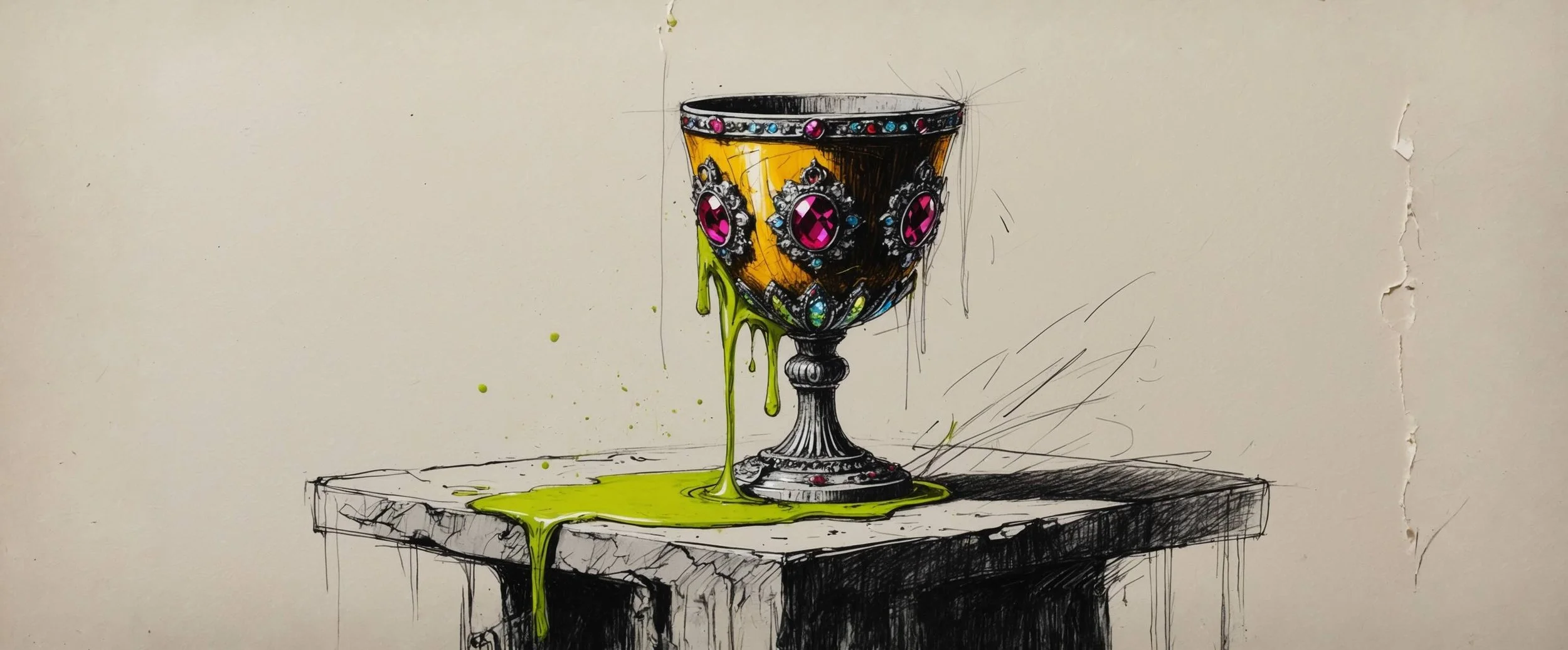
Theme Profile – At a Glance
- Focus: The use of masks, lies, and spying to uncover truths or protect secrets, creating a world where "seems" is contrasted with "is."
- Key Characters: Prince Hamlet, King Claudius, Polonius, and Rosencrantz & Guildenstern.
- The Core Conflict: In a court where everyone is watching everyone else, characters must use artifice to survive, yet this constant dishonesty leads to a total breakdown of trust and security.
- Key Manifestations: Hamlet’s "antic disposition"; the play-within-a-play ("The Mousetrap"); Polonius spying behind tapestries; the rigged duel in the final act.
- Famous Quote:
"Seems, madam! nay it is; I know not 'seems.'
'Tis not alone my inky cloak, good mother,
Nor customary suits of solemn black...
But I have that within which passeth show."
(Act 1, Scene 2) - The Outcome: While deception is used as a tool for justice, it ultimately proves lethal for the deceivers. The intricate web of plots backfires, ensuring that those who live by the mask die when it is stripped away.
The Mask of Madness
The most significant act of deception in the play is Hamlet’s "antic disposition." Following his encounter with The Ghost, Hamlet adopts the guise of madness as a defensive shield. This performance allows him to speak dangerous truths under the cover of lunacy and observe the court without being seen as a political threat.
Original
How strange or odd soe'er I bear myself,
As I perchance hereafter shall think meet
To put an antic disposition on...
(Act 1, Scene 5)
Shakespeare Retold (Modern Verse)
However strange or odd I may appear –
For I believe, from here on, that I must
Start acting like a troubled lunatic...
Hamlet’s choice to deceive is born of necessity, yet it carries a heavy cost. His performance is so convincing that it shatters his relationship with Ophelia and creates a state of constant paranoia for Claudius. The Prince becomes a master of wordplay, using double meanings and "indirections" to navigate a world where a direct path is impossible.
The Surveillance State
Elsinore is a kingdom of watchers. Under the direction of Polonius, spying is treated as a professional necessity and a mark of "wisdom." Deception is not merely a personal choice in Denmark; it is the official language of the state. Characters are rarely what they appear to be, and every private conversation is potentially being monitored.
Original
At such a time I'll loose my daughter to him:
Be you and I behind an arras then;
Mark the encounter...
(Act 2, Scene 2)
Shakespeare Retold (Modern Verse)
Next time he does, I’ll send my daughter to him,
While you and I can hide behind the curtain,
Listening in.
This systemic corruption of trust turns friends into enemies. Rosencrantz & Guildenstern arrive under the guise of friendship, but their true mission is to spy for the King. This pervasive atmosphere of corruption and surveillance ensures that no character can ever truly be "true" to themselves or others, leading directly to the play's tragic conclusion.
Artifice as a Tool for Truth
Ironically, in a world built on lies, it is through further artifice that the truth is finally revealed. Hamlet recognises that "The Mousetrap" play is a form of deception that can bypass Claudius's psychological defences. He uses the "fiction" of the stage to mirror the "reality" of the murder, forcing the King's hidden guilt into the open.
Original
The play's the thing
Wherein I'll catch the conscience of the king.
(Act 2, Scene 2)
Shakespeare Retold (Modern Verse)
The play’s the thing
I'll use to know the conscience of the king.
This highlights a central paradox: the only way to navigate a deceptive world is to become a master of deception oneself. Hamlet uses "The Mousetrap" to overcome his own hesitation, seeking empirical proof before committing to revenge. However, the final act demonstrates that when deception is weaponised, it eventually consumes the architect. The rigged fencing match, the ultimate act of courtly artifice, results in the destruction of everyone involved.
"Hamlet is a play about a man who is required to be a man of action, but who is also a man of masks. In Elsinore, the truth is a dangerous commodity that must be hidden behind a performance."
— Jan Kott, Shakespeare Our Contemporary, 1964
Key Quotes on Deception
Quote 1
Seems, madam! nay it is; I know not 'seems.'
'Tis not alone my inky cloak, good mother,
Nor customary suits of solemn black...
But I have that within which passeth show.
(Act 1, Scene 2)
Shakespeare Retold (Modern Verse)
It doesn’t ‘seem’, Mother: it IS! Not ‘seems’.
It’s not just that my coat is dark, dear Mother,
Nor that I dress in solemn suits of black...
But I’ve within me grief you cannot see.
Quote Analysis: Early in the play, Hamlet rejects the "seems" of the court. He argues that his outward appearance of mourning is a genuine reflection of his internal state, unlike the performative grief of Queen Gertrude and Claudius. This quote establishes the play's obsession with the divide between outward appearance and inner reality.
One may smile, and smile, and be a villain;
At least I'm sure it may be so in Denmark.
(Act 1, Scene 5)
Shakespeare Retold (Modern Verse)
That one can smile, and smile, and be a villain;
At least I’ll know it’s possible in Denmark.
Quote Analysis: Following his conversation with the Ghost, Hamlet realizes that Claudius's charming, regal facade is a total lie. He notes that in Elsinore, a welcoming smile is often the mask of a murderer, highlighting the dangerous untrustworthiness of the entire Danish court.
The harlot's cheek, beautied with plastering art,
Is not more ugly to the thing that wanders it
Than is my deed to my most painted word:
O heavy burthen!
(Act 3, Scene 1)
Shakespeare Retold (Modern Verse)
The hooker’s face, plastered in lurid makeup,
Is just as ugly with cosmetic dressing
As are my actions to my outward speech.
Oh, what a burden!
Quote Analysis: In a rare moment of private honesty, Claudius compares his own "painted words" to a prostitute's makeup. He acknowledges that his articulate, diplomatic speech is merely a layer of "plaster" covering the "ugly" reality of his crime, connecting deception directly to moral decay.
Why, as a woodcock to mine own springe, Osric;
I am justly kill'd with mine own treachery.
(Act 5, Scene 2)
Shakespeare Retold (Modern Verse)
A stupid bird ensnared in its own trap!
I’m rightly dying by my own betrayal.
Quote Analysis: Laertes’s dying words serve as the ultimate moral summary of the theme. He admits that he has been caught in his own trap. This "springe" metaphor illustrates the fatal nature of deception; those who plot behind masks are eventually destroyed by the very tools they used to deceive others.
Key Takeaways
- The "Seems" Paradox: The play constantly questions the validity of outward appearances, suggesting that in a corrupt world, everyone is performing a role.
- Survival Strategy: Deception is presented as a necessary survival tactic. Hamlet must feign madness to investigate the King, while Claudius must feign nobility to keep the crown.
- The Surveillance state: Through characters like Polonius and Rosencrantz & Guildenstern, the play critiques a society where trust is replaced by espionage and manipulation.
- The Fatal Backfire: The theme concludes with the idea that deception is a circular force. Every major plot based on lies—from the murder of King Hamlet to the final duel—eventually rebounds to destroy the deceiver.
Study Questions and Analysis
Why is "The Mousetrap" the only effective way to uncover the truth?
In a court where everyone is lying, words have lost their meaning. Hamlet realizes that direct questioning will only result in more lies. By using a theatrical performance (a safe, fictional deception), he bypasses Claudius's conscious control and triggers an involuntary, physical reaction that "catches the conscience" and provides the truth that words cannot.
How does Hamlet's use of deception differ from Claudius's?
Hamlet uses deception to reveal a hidden crime and achieve justice, whereas Claudius uses it to hide a crime and maintain illegitimate power. However, the play suggests that both forms are corrosive. Hamlet's "antic disposition" causes collateral damage (the death of Polonius and Ophelia's madness), proving that even "good" deception has a high human cost.
What role does the "arras" play as a symbol of deception?
The arras (tapestry) represents the barrier between appearance and reality. Polonius constantly hides behind it to spy, turning the architecture of the palace into a tool for deceit. Fittingly, it is behind this very symbol of deception that Polonius is killed, illustrating that those who hide in the shadows are eventually struck by them.
How are Rosencrantz and Guildenstern victims of their own deception?
They attempt to "play" Hamlet like a musical instrument, using their past friendship as a mask for their espionage. Because they are clumsy deceivers, Hamlet easily outmanoeuvres them. By carrying the sealed letter (a hidden mandate for death), they unwittingly carry the instrument of their own execution, dying in England without ever knowing why.
Analyze the "nunnery" scene through the lens of deception.
This scene is a collision of multiple deceits. Ophelia is pretending to be alone while her father spies; Hamlet is pretending to be mad; and Claudius is pretending to be a concerned guardian. The tragedy is that Ophelia, the least deceitful person present, is destroyed by the weight of everyone else's lies.
How does the final duel represent the climax of this theme?
The duel is presented as a friendly exhibition match — a piece of courtly theatre. However, every element is a lie: the unbated sword, the poisoned tip, and the poisoned cup. The collapse of this deception leads to a "havoc" where the truth is finally revealed only when it is too late to save anyone.
What does Horatio's role as the "truth-teller" mean for the end of the play?
Horatio is the only character who refuses to participate in the court's deception. Because he is "true," he is the only one allowed to survive. His final duty is to provide an honest account of the tragedy to the world, ensuring that the web of lies that destroyed Elsinore is permanently dismantled by the truth.