
Macbeth Themes: Ambition
Ambition – At a Glance
Central Conflict: Macbeth’s internal war between his moral conscience and his "vaulting ambition" to seize the crown.
The Core Question: Is the attainment of power worth the destruction of one's soul and sanity?
Impact on Macbeth: Ambition acts as a sickness, transforming a "valiant cousin" into a "dead butcher" and stripping him of sleep, honour, and humanity.
Key Dynamic: The contrast between Macbeth (ambitious but initially moral), Lady Macbeth (ambitious and ruthless), and Banquo (ambitious but restrained by honour).
The Outcome: The crown proves "fruitless." Ambition achieves the title but destroys the peace necessary to enjoy it, leading to a nihilistic end.
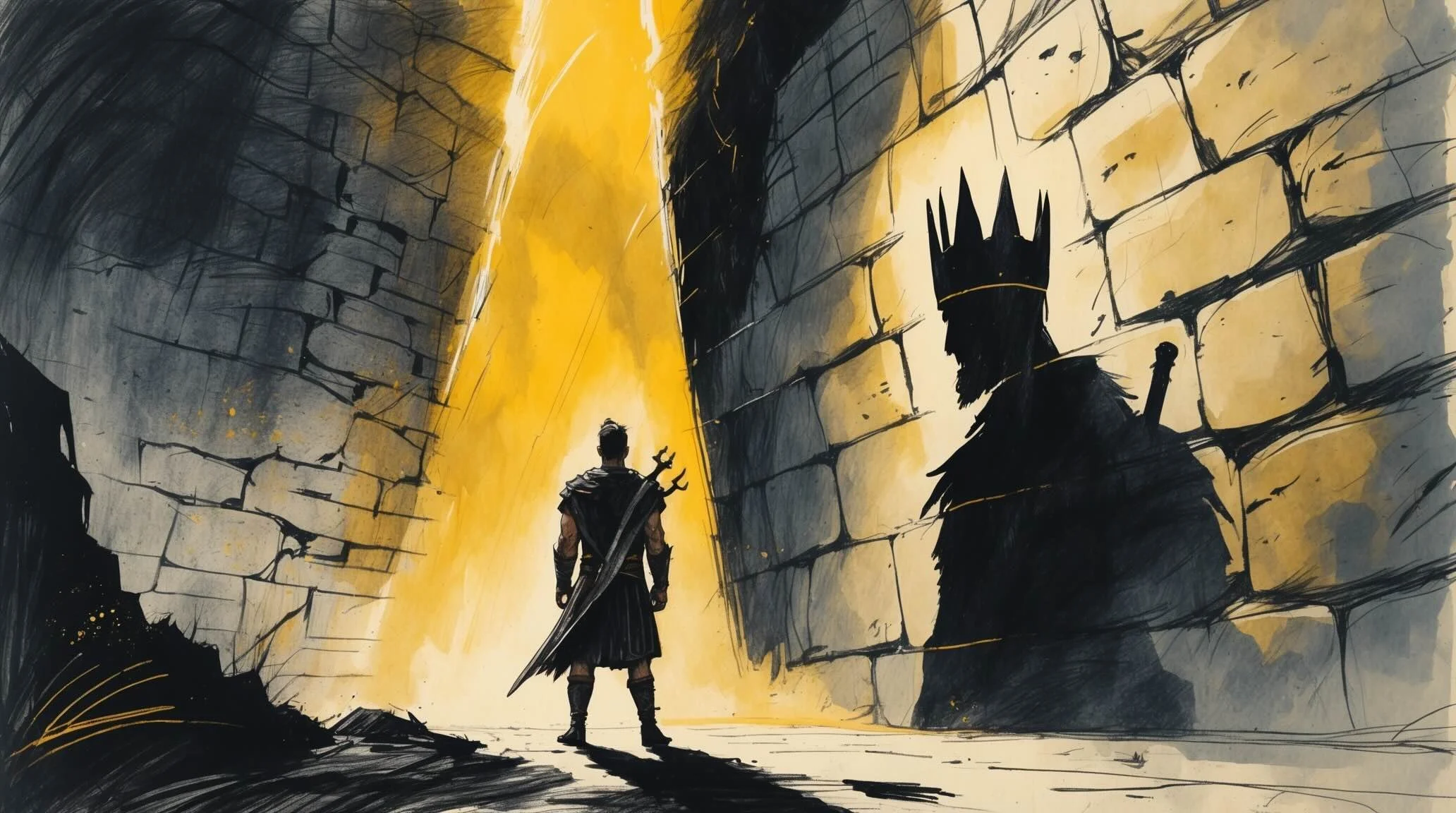
The Evolution of Ambition
Shakespeare presents ambition not as a static trait, but as a progressive disease that consumes the host. We can trace this evolution through three distinct stages of Macbeth's life.
1. The Fatal Flaw (The Admission)
In Act 1, ambition is merely a temptation. Macbeth is fully aware that he has no justifiable reason to kill Duncan. He is not motivated by revenge or justice, but purely by his own desire for advancement. In his pivotal soliloquy, he admits that this desire is dangerous and likely to lead to disaster:
Original:
I have no spur
To prick the sides of my intent, but only
Vaulting ambition, which o'erleaps itself
And falls on the other. (Macbeth – Act 1, Scene 7)
Shakespeare Retold (Modern Verse):
There’s no more
That’s motivating me to act, except
Ambition, like a man mounting his horse
And falling off the other side.
Macbeth personifies ambition as an unruly horse. He acknowledges that his desire is "vaulting"—jumping too high—and predicts his own downfall ("falls on the other") before he even commits the crime. This proves he is not blindly led by fate, but chooses to follow his ambition despite knowing the consequences.
2. The Security Trap (The Paranoia)
By Act 3, the nature of ambition shifts. Having achieved the crown, Macbeth finds no satisfaction in it. The ambition to gain power is replaced by a desperate, paranoid ambition to maintain it. He realises that a stolen crown brings constant fear:
Original:
To be thus is nothing,
But to be safely thus. (Macbeth – Act 3, Scene 1)
Shakespeare Retold (Modern Verse):
There’s no point being king
Unless a safe king.
"Safely" becomes the operative word. This shift justifies all his future atrocities, including the murder of Banquo. Macbeth realises that for his ambition to be satisfied, he must eliminate all potential threats, turning his reign into a tyranny.
3. The Hollow Victory (The Futility)
The tragedy concludes with the realisation of ambition’s ultimate futility. In Act 5, facing his own death and the suicide of his wife, Macbeth realises that the power he sacrificed his soul for is meaningless. It has bought him neither happiness nor legacy:
Original:
Life's but a walking shadow... it is a tale
Told by an idiot, full of sound and fury,
Signifying nothing. (Macbeth – Act 5, Scene 5)
Shakespeare Retold (Modern Verse):
Life’s just a mirage… It’s a story
Told by an idiot, full of sound and anger
That has no meaning.
This is the graveyard of ambition. After all the violence ("sound and fury"), Macbeth is left with a life that signifies "nothing." The "fruitless crown" has brought him only isolation and spiritual death.
“Guilty ambition, seconded by diabolic malice and issuing in murder, opens the action in Macbeth.”
Key Quotes on Ambition
Quote 1: The Nature of Ambition
Original:
Thou wouldst be great;
Art not without ambition, but without
The illness should attend it. (Lady Macbeth – Act 1, Scene 5)Shakespeare Retold (Modern Verse):
You do strive for greatness,
And you have high ambition, but without
The ruthlessness that's needed.Analysis: Lady Macbeth identifies the problem immediately: Macbeth has the desire ("ambition") but lacks the ruthlessness ("illness") required to seize the crown. This quote establishes that in this world, ambition must be paired with evil to succeed.
Quote 2: The Concealment
Original:
Stars, hide your fires;
Let not light see my black and deep desires. (Macbeth – Act 1, Scene 4)Shakespeare Retold (Modern Verse):
Stars, do not shine,
So folk can't see these dark desires of mine;Analysis: Spoken before he even meets Lady Macbeth, this proves Macbeth’s ambition is innate. He acknowledges his desires are "black" (evil) and "deep" (entrenched), and he actively tries to hide them from the moral order ("light").
Quote 3: Total Corruption
Original:
For mine own good,
All causes shall give way. (Macbeth – Act 3, Scene 4)Shakespeare Retold (Modern Verse):
For my safety,
Nothing must stop me now.Analysis: By the middle of the play, ambition has completely eroded Macbeth’s morality. He no longer cares about the kingdom or his subjects; his own "good" is the only thing that matters, justifying any destruction necessary to preserve it.
Key Takeaways – Ambition
Ambition is the engine of the play, ignited by the Witches but fuelled by Macbeth and Lady Macbeth.
Shakespeare presents ambition as a "sickness" or fever that consumes the host.
Security vs. Power: Achieving the ambition (becoming King) offers no satisfaction, only the paranoid need to secure the title.
The play acts as a warning against disrupting the Great Chain of Being (the natural order) for personal gain.
Study Questions and Analysis
-
Macbeth's fatal flaw is "vaulting ambition." While he possesses many noble qualities (bravery, conscience), his overwhelming desire for power overrides his moral judgment, leading to his tragic downfall.
-
Lady Macbeth acts as the catalyst. When Macbeth hesitates ("We will proceed no further in this business"), she challenges his masculinity and courage. She translates his desire into action, providing the ruthless resolve he initially lacks.
-
The play suggests Macbeth has free will. The Witches prophecy that he will be King, but they do not force him to kill Duncan to achieve it. Banquo receives a similar prophecy but chooses not to act; Macbeth chooses murder, proving his ambition is his own choice.
-
The "fruitless crown" Act 3, Scene 1 symbolises the futility of Macbeth's ambition. Because he has no children, he has damned his soul only to pave the way for Banquo's descendants. His ambition is "barren" because it cannot create a dynasty.
-
Ambition is often symbolised by clothing (titles that do not fit, like "borrowed robes") and the dagger (a manifestation of his guilty intent). It is also linked to illness, as the Macbeths' mental state deteriorates the more they feed their ambition.
-
Banquo represents "ambition with morality." He hopes the prophecies are true ("May they not be my oracles as well?"), but unlike Macbeth, he refuses to "play most foully" for them. He keeps his "bosom franchised and allegiance clear," highlighting Macbeth's lack of restraint.
-
Yes. By Act 5, Macbeth expresses deep nihilism. He realises that instead of the "honour, love, obedience, troops of friends" that should accompany old age, his ambition has brought him only "curses" and isolation.
-
Macbeth's ambition violates the "Great Chain of Being." By killing a divinely appointed King (Duncan), he commits a sin against God and nature. The play suggests that ambition which disrupts the natural order inevitably leads to chaos and destruction.