
Home → Plays → Romeo and Juliet → Characters
Romeo and Juliet: Characters
Romeo and Juliet character analysis for all 10 main characters — Romeo, Juliet, Friar Laurence, the Nurse, Mercutio, Tybalt, Lord Capulet, Lady Capulet, Paris, and Benvolio. Each profile explores the character's psychology, motivation, and tragic flaw, supported throughout by a modern verse translation and key quotes.
A complete character study guide and revision resource for GCSE, A-Level, AP English, IB, and undergraduate Shakespeare — equally useful to teachers and actors. Select a character below to begin.

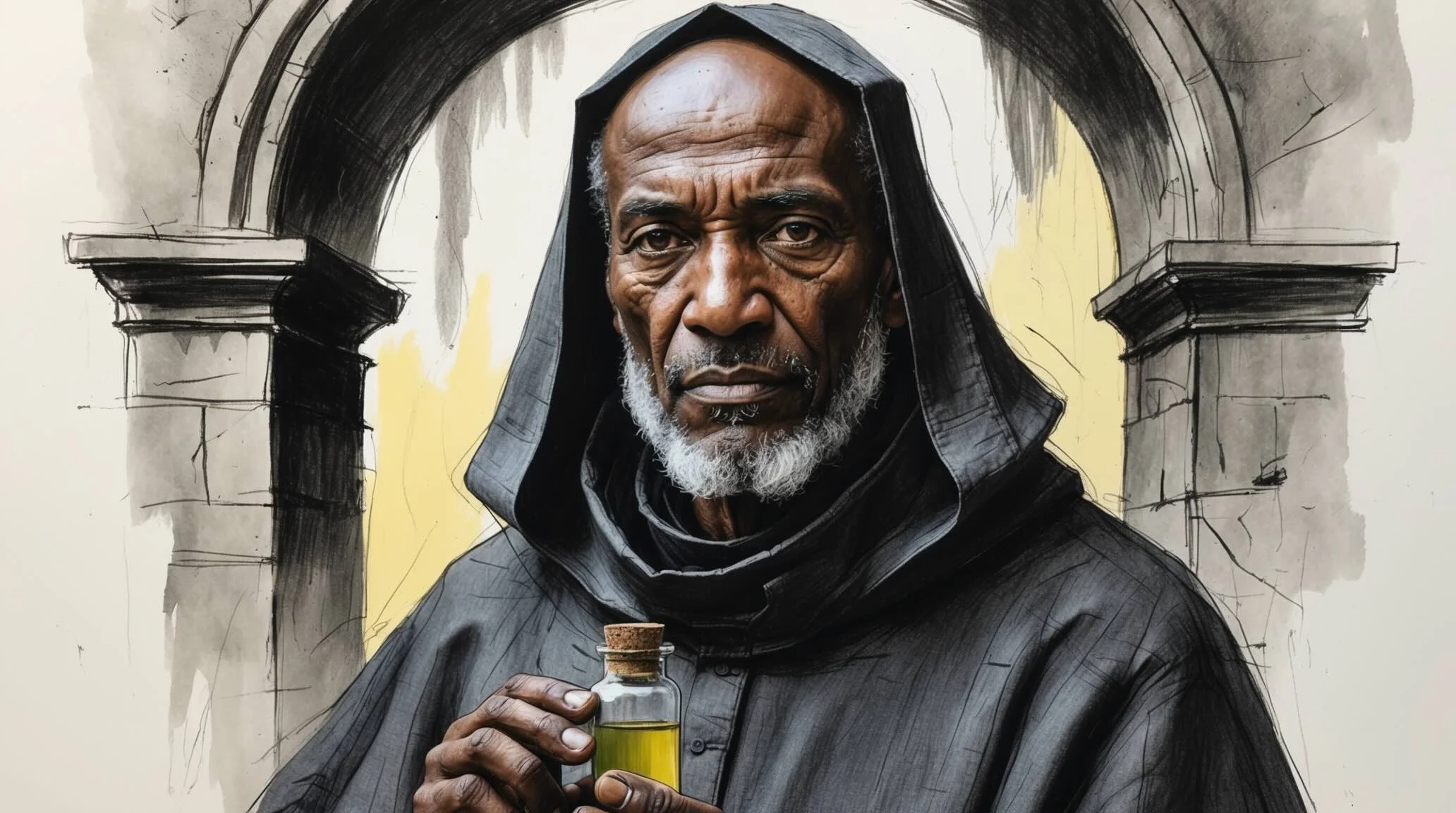
Friar Laurence
Franciscan friar and herbalist, confessor to Romeo, and the priest who marries the lovers in secret.
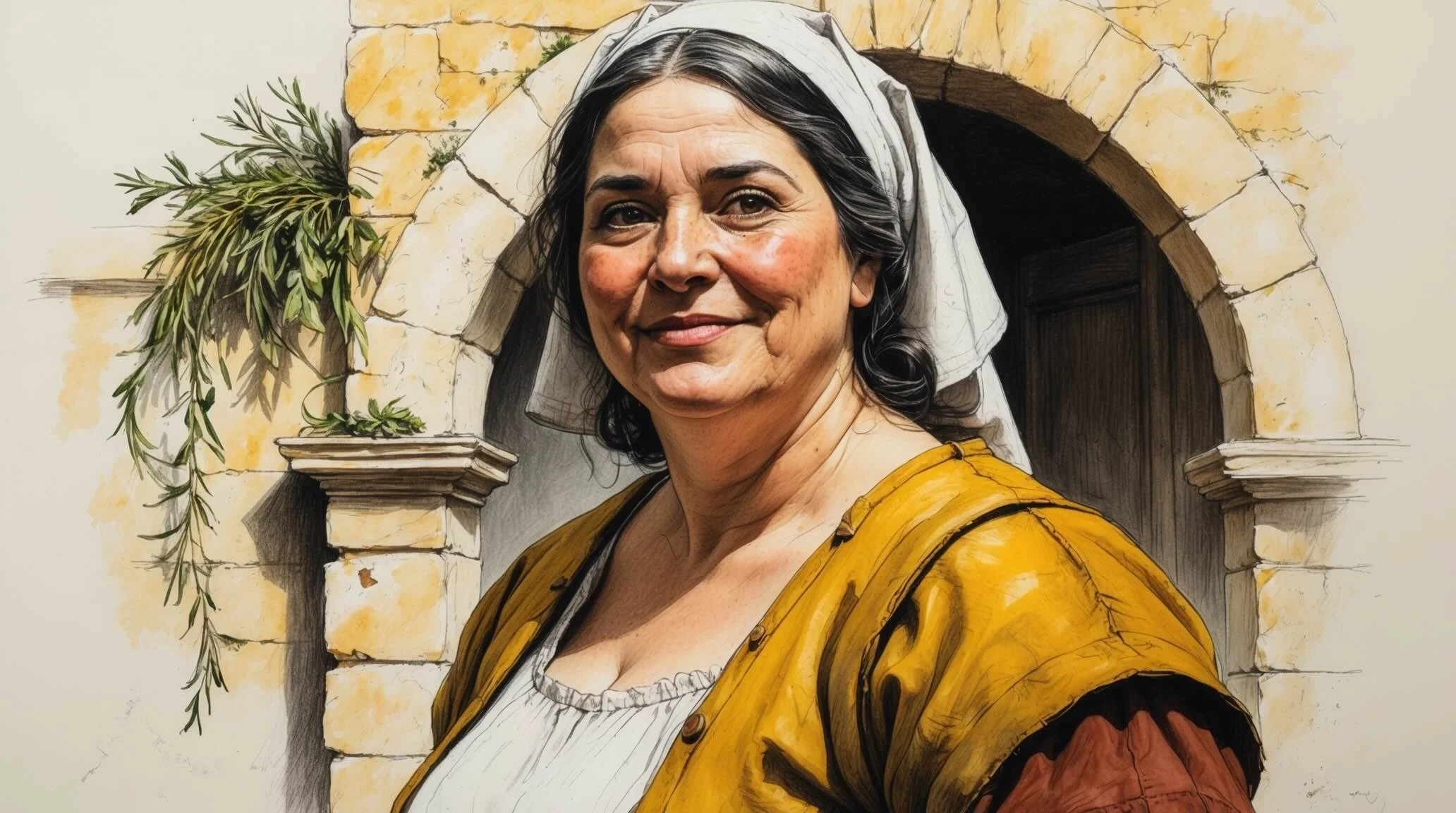
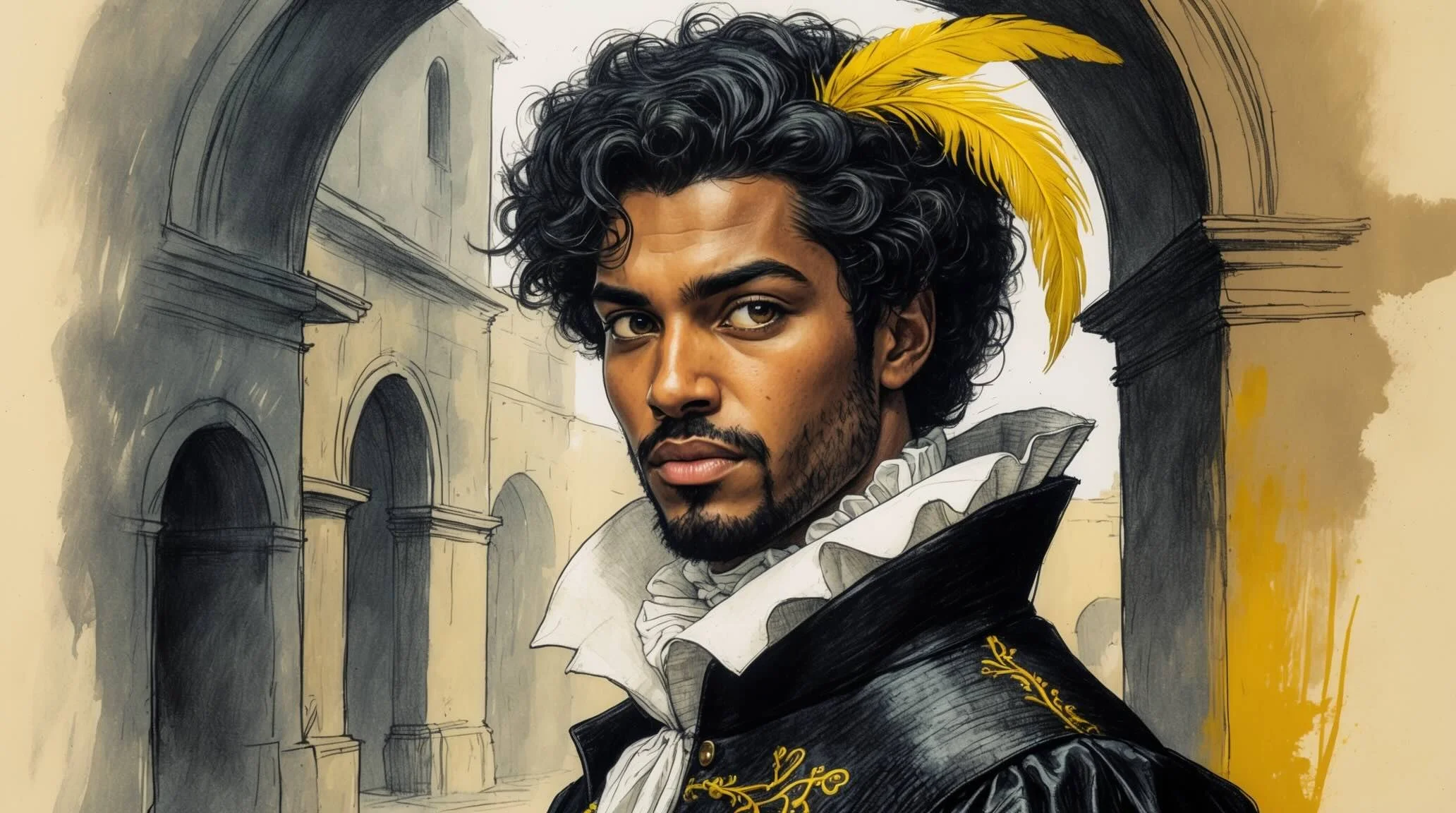

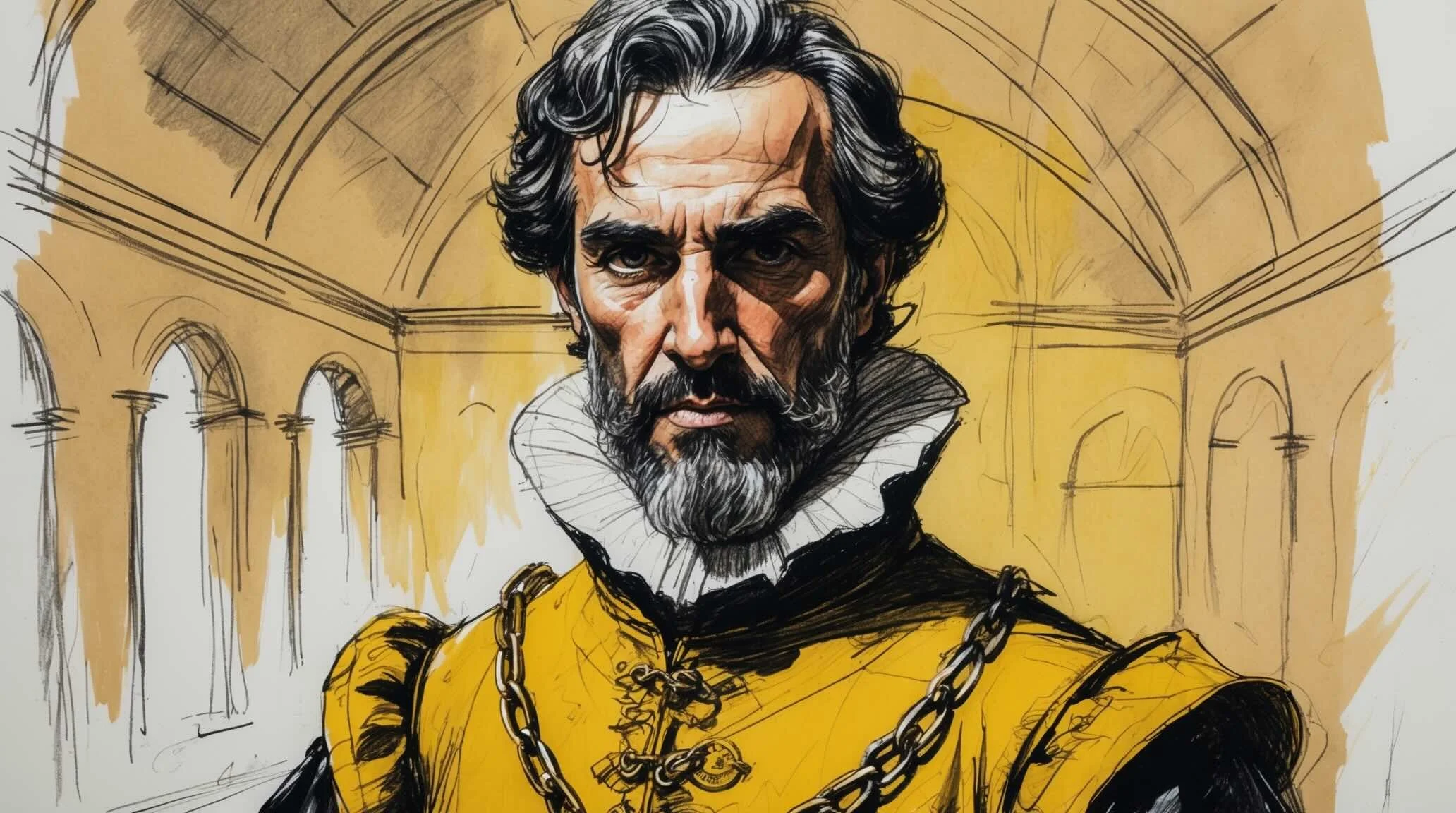
Lord Capulet
Patriarch of the Capulets, Juliet's father, Tybalt's uncle, and host of the masked ball.
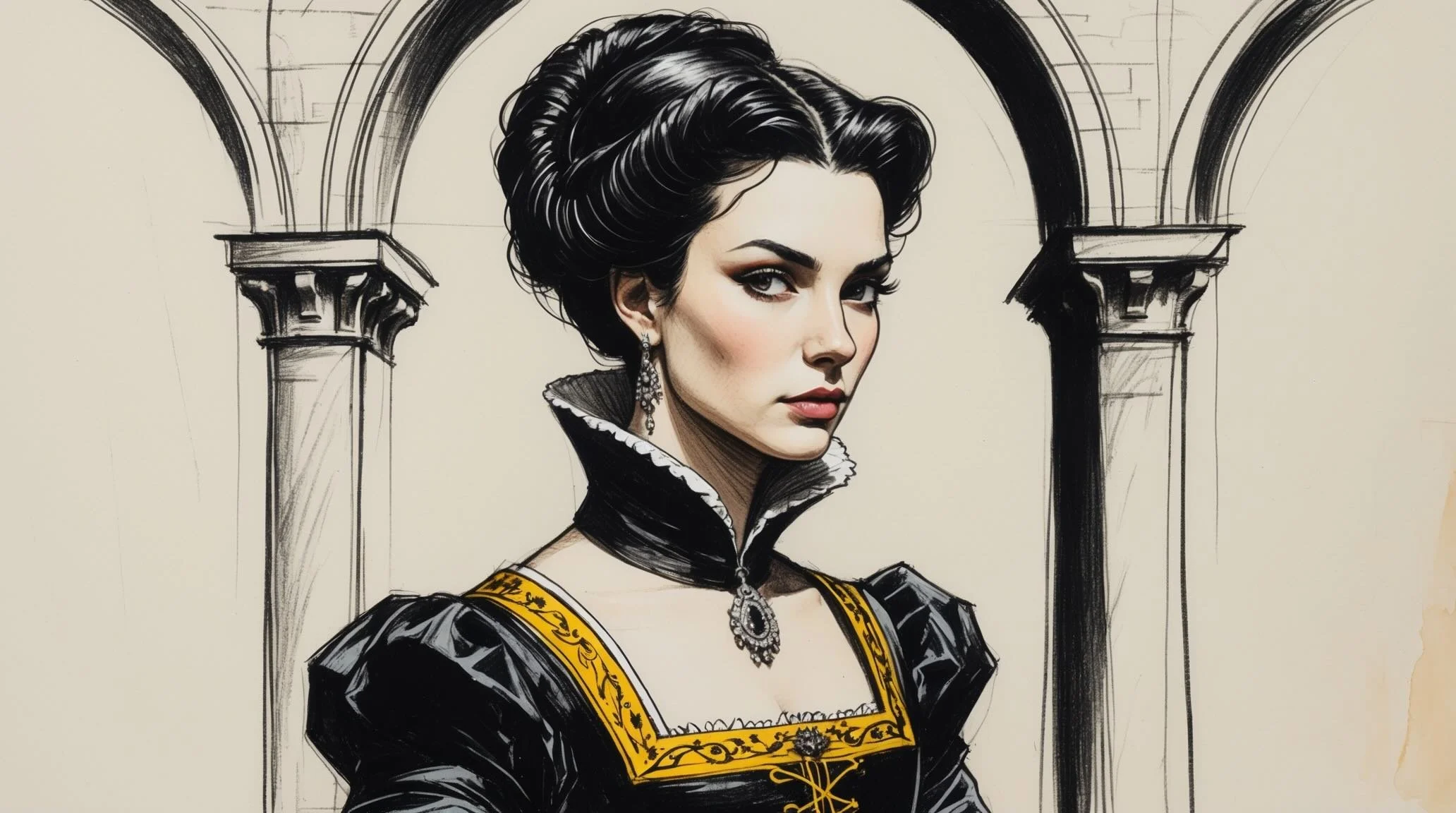
Lady Capulet
Wife to Lord Capulet, mother to Juliet, mistress of the Capulet household, and aunt to Tybalt.
Supporting Cast
Beyond the eight figures who carry the main action, Romeo and Juliet is populated by the two rival households whose grievance the lovers cannot escape, the civic and religious authorities trying to manage the feud's consequences, and the working-class figures whose lives intersect with the tragedy. The wider cast is grouped below by household and affiliation within Verona.
The Montague Household
Lord Montague
Romeo's father, who appears in the opening brawl and again at the closing tomb scene. His promise in 5.3 to raise a gold statue of Juliet — matched immediately by Capulet's promise to do the same for Romeo — is the play's most uncomfortable image of reconciliation: the feud's deaths converted into competitive monuments.
Lady Montague
Romeo's mother, who appears briefly in 1.1. Her off-stage death from grief at Romeo's banishment, reported in 5.3, is the play's only fatality from a purely emotional cause and one of its most quietly devastating losses.
Abram
Servant to the Montagues, who participates in the opening street brawl. His exchange with Sampson and Gregory — the famous "Do you bite your thumb at us, sir?" — establishes within the play's first sixty lines that the feud has saturated the working class.
Balthasar
Romeo's personal servant, who delivers the news of Juliet's apparent death to Romeo in Mantua in 5.1, accompanies him back to the Capulet tomb in 5.3, and witnesses both his master's suicide and the catastrophe's aftermath. The play's most heavily burdened messenger.
The Capulet Household
Lord Capulet
Juliet's father, the play's most consequential antagonist. His shifting position on the Paris marriage — initially cautious ("she is yet a stranger in the world"), eventually ferocious ("hang, beg, starve, die in the streets") — is the structural pivot that drives Juliet to the Friar's desperate plot.
Lady Capulet
Juliet's mother, whose relationship to her daughter is one of the play's most precisely calibrated portraits of cold maternity. The Nurse, not Lady Capulet, raised Juliet; the 1.3 scene makes this explicit, and the play never lets the audience forget it.
Sampson
Capulet's swaggering servant who opens the play in 1.1 with the boast of pushing Montague's "maids to the wall." His verbal provocation, escalating from suggestive vulgarity to drawn swords within sixty lines, establishes the feud's class register.
Gregory
Sampson's more cautious companion in the opening brawl, the tactical straight man who lets Sampson's swagger ricochet off him. His instinct to wait until the law is on their side before striking is the closer-to-modern voice in the play's working-class scene.
Peter
Servant to the Nurse, who attends her at the marketplace in 2.4 and at the chaotic aftermath of Juliet's apparent death in 4.5, where he banters with the wedding musicians. His comic register is the Nurse's structural complement — both attempt humour while the tragedy hardens around them.
Cousin Capulet
The "Second Capulet" of the feast scene in 1.5, whose brief exchange with Capulet about how long it has been since they last masqued ("'Tis more, 'tis more") is the play's most direct piece of writing on the passage of generations within the household.
Petruchio
Tybalt's silent companion at the Capulet feast, named in stage directions but given no lines. His named-but-mute role is the play's small structural acknowledgement that the feud's foot-soldiers are interchangeable.
Verona Beyond the Feud
Prince Escalus
The Prince of Verona, the play's civic authority. His three appearances — reprimanding the brawl in 1.1, banishing Romeo in 3.1, and pronouncing "All are punished" over the bodies in 5.3 — frame the tragedy as a public failure rather than a private one. His closing line is also the play's verdict on himself.
Friar John
The Franciscan brother who fails to deliver Friar Laurence's letter to Romeo in Mantua, having been quarantined in a plague-stricken house. The play's most devastating off-stage event: the entire tragedy's resolution turns on a piece of post that never arrives.
The Apothecary
The impoverished pharmacist in Mantua who sells Romeo the poison in 5.1, against the law and against his own better judgement. His "my poverty, but not my will, consents" is the play's most direct piece of writing on the structural complicity of the poor in the violence of the rich.
The Musicians
The wedding musicians (Simon Catling, Hugh Rebeck, and James Soundpost — named for parts of stringed instruments) hired for Juliet and Paris, who arrive after her apparent death to find the household in mourning. Their comic exchange with Peter in 4.5 — a debate over what music "Heart's ease" means — is Shakespeare's most carefully judged tonal shift in the play.
The Servingman
The illiterate Capulet servingman sent in 1.2 to invite guests to the feast. His admission that he cannot read the guest list prompts him to ask the first literate stranger he meets — Romeo — for help. The accidental mechanism by which Romeo learns the feast is happening at all.
The Watch
The watchmen who arrive at the Capulet tomb in 5.3 after Romeo and Paris have died. They discover the bodies, dispatch officers to fetch the Capulets, the Montagues, and the Prince, and provide the procedural framework within which the catastrophe is publicly acknowledged.
Paris's Page
The young attendant who accompanies Paris to the Capulet tomb in 5.3, whistles a warning when Romeo arrives, witnesses Paris's death at Romeo's hand, and runs to fetch the Watch. The play's youngest witness to its violence.
Others
The Chorus
The framing voice who speaks the prologues to Acts 1 and 2. The Act 1 prologue's opening sonnet — "Two households, both alike in dignity" — is one of the most quoted passages in Shakespeare; the Act 2 prologue, also a sonnet, is rarely performed today but survives in the printed text.
Rosaline
Romeo's pre-Juliet love object, who never appears on stage and never speaks a line. She is referenced as a Capulet kinswoman, invited to the feast that Romeo crashes, and forgotten the moment he sees Juliet across the room. The play's most studied piece of writing on the difference between love as performance and love as reality.
Frequently asked questions about the characters in Romeo and Juliet
Who are the main characters in Romeo and Juliet?
The play has ten significant figures. Romeo is the young Montague heir and the play's protagonist. His impulsive love and equally impulsive violence drive the tragic action. Juliet is the thirteen-year-old Capulet daughter and the play's co-protagonist. Many modern critics consider her the play's true centre of gravity. Her rapid maturation across five days is one of the most carefully built character arcs in Shakespeare.
Friar Laurence is the herbalist priest who marries the lovers in secret and devises the sleeping-potion plan whose failure causes the catastrophe. The Nurse is Juliet's lifelong carer — the earthy comic counterpart to Lady Capulet's formal maternity. Her eventual advice that Juliet accept Paris is the moment that finalises Juliet's isolation.
Mercutio is Romeo's witty friend and a kinsman to the Prince — the play's most inventive voice. He is killed by Tybalt in 3.1, the moment that turns the comedy into a tragedy. Tybalt is Juliet's hot-headed cousin and the play's main personal antagonist. His lethal pride turns the feud into the chain of deaths that follows.
Lord Capulet is Juliet's father and the play's most consequential domestic antagonist. His shifting stance on the Paris marriage — initially cautious, eventually ferocious — drives Juliet to the Friar's desperate plot. Lady Capulet is Juliet's mother, whose formal coldness and detachment from her daughter's emotional life make her one of Shakespeare's most carefully drawn portraits of failed maternity.
Paris is the conventional suitor whose arranged-marriage suit is the foil to Romeo's chosen love. He is killed by Romeo in the Capulet tomb. Benvolio is Romeo's cousin and the play's main peacemaker. His calm rationality contrasts with Mercutio's wit and Tybalt's aggression.
The two lovers carry the play's verse and its emotional centre. The other eight figures provide the rival households, the civic authorities, and the foils the play uses to make its argument about love, violence, and the social orders that destroy them.
Who is the protagonist of Romeo and Juliet?
The play has two protagonists, and the arrangement is one of its most distinctive features.
Romeo and Juliet share the dramatic centre, the language, and the outcome equally. Both undergo radical transformation across the play's five days. Both defy their families. Both choose death over separation. The play's title places them in shared possession of the tragedy. Romeo turns from a conventional poser into a committed lover; Juliet turns from a protected daughter into a desperate strategist.
It is one of the most carefully managed dual-protagonist structures in Shakespeare.
Harold Bloom, in Shakespeare: The Invention of the Human (1998), argues that Juliet is in fact the play's true centre of gravity. Her linguistic and emotional development outpaces Romeo's. Her famous 2.2 balcony speech ("What's in a name? That which we call a rose...") is the play's most rigorous piece of philosophical writing.
The reading has been broadly accepted by modern criticism. Juliet has the longer arc, the more sustained interior life, and the crucial 4.3 potion soliloquy in which she contemplates her own death with adult clarity.
Hazlitt's 1817 reading framed the matter differently. He identified Romeo and Juliet as "the only tragedy which Shakespeare has written entirely on a love-story." For Hazlitt, the play's true subject is the love itself rather than either figure individually.
The two readings are compatible. Juliet is the more analytically interesting figure, but the play's emotional argument is carried by the pair together. Modern criticism has largely settled on this dual-protagonist reading, with Juliet given somewhat more analytical weight than Romeo.
Who is the antagonist of Romeo and Juliet?
Romeo and Juliet has no single personal antagonist. The absence is one of the play's most important decisions.
The forces ranged against the lovers are spread out — across institutions, individuals, and bad luck — in a way that means no one figure can carry the blame on their own.
The institutional antagonist is the ancient feud between Capulets and Montagues. The play doesn't bother to explain where the feud started — the point is that the cause has been forgotten while the violence continues. The Prince's opening reprimand in 1.1 tells us the feud has been disturbing Verona for generations. Sampson and Gregory biting their thumbs in the play's first eighty lines tells us it has even spread to the working class.
The lovers' tragedy is the result of an arrangement they didn't create and can't escape.
The personal antagonists are spread out too. Tybalt is the closest the play comes to a single figure ranged against the lovers. His pride turns what could have been the feud's grumbling continuation into the chain of deaths that follows from 3.1.
Lord Capulet, however, is the more consequential antagonist. His shifting stance on the Paris marriage, ferocious in 3.5 ("hang, beg, starve, die in the streets"), is what drives Juliet to the desperate plot the Friar will mismanage.
Paris is not an antagonist by intention but by position — the conventional suitor whose presence makes Juliet's chosen love impossible.
The play's final antagonist is bad luck itself. Friar John's quarantined letter. The timing of Romeo's arrival at the tomb. The moment-by-moment failures of communication that the catastrophe depends on.
This spreading out of the blame is itself the play's argument about how social tragedies happen.
What role does fate play in Romeo and Juliet?
This is one of the most-debated questions in modern criticism of the play. The textual evidence supports two contradictory readings at once.
The Prologue's opening declaration — that Romeo and Juliet are "star-cross'd lovers" whose "death-mark'd love" will unfold "fearful" in the next two hours — establishes from the very start that the tragedy is fated rather than chosen.
The lovers themselves use the same vocabulary. Romeo's 1.4 premonition: "my mind misgives / Some consequence yet hanging in the stars." His 5.1 declaration: "then I defy you, stars!" Juliet's 3.5 vision of Romeo "as one dead in the bottom of a tomb." The framework of fate is built into the surface of the play.
But the counter-evidence is just as strong. The catastrophe depends on a precise sequence of avoidable human decisions.
Lord Capulet's ultimatum to Juliet about Paris. Friar Laurence's choice to use the sleeping-potion strategy rather than confess the secret marriage. Friar John's quarantine. Romeo's haste to drink the apothecary's poison before Juliet wakes. Juliet's choice to use Romeo's dagger rather than wait.
Change any one of these decisions and the play ends differently. The structure tells us the deaths come from human failures, not from cosmic destiny.
Susan Snyder's 1970 essay "Romeo and Juliet: Comedy into Tragedy," and her later The Comic Matrix of Shakespeare's Tragedies (1979), are the canonical modern readings of this tension.
Snyder argues that the play deliberately uses the conventions of romantic comedy through Act 2 and then forces them — at Mercutio's death in 3.1 — into tragedy. The fate-rhetoric, she suggests, is partly the play's way of explaining the genre shift to itself. The lovers blame the stars because the tragic outcome needs explaining. The structure exposes the human choices the stars-rhetoric hides.
The play never finally resolves the question. Critics have read it as a tragedy of medieval fate and as a study of human failure. Both readings are supported by the text, and that ambiguity is part of what Shakespeare deliberately built into the play.
Who are the foils to Romeo and Juliet?
Romeo and Juliet are surrounded by an unusually well-developed set of foils. Each lover is paired with contrasting figures that throw their characteristic qualities into relief.
Romeo's principal foils are Mercutio and Benvolio. Mercutio rejects romantic sentiment cynically ("if love be rough with you, be rough with love"). Benvolio offers calm rationality and tries to keep the peace.
Where Romeo speaks the language of romantic oxymoron and immediate commitment, Mercutio undercuts him with bawdy realism and Benvolio counsels patience. The Romeo who emerges in his scenes with Juliet is the figure both foils have failed to predict.
Paris functions as a structural foil rather than a rhetorical one. He is the conventional suitor whose arranged-marriage suit is everything Romeo's chosen love is not.
The 1.2 conversation between Paris and Capulet about the wedding ("younger than she are happy mothers made") shows us exactly the marriage Juliet will refuse for Romeo. The 5.3 tomb scene, in which Romeo kills Paris before drinking the poison, completes the foil's purpose.
Juliet's foils are her mother and the Nurse. Each contrasts with her in a different way.
Lady Capulet is formal and emotionally absent. The 1.3 scene in which she calls the Nurse back into the room to help her speak to Juliet is one of Shakespeare's most carefully drawn portraits of failed maternity.
The Nurse, by contrast, is earthy, talkative, and pragmatic. The 1.3 reminiscence about Juliet's weaning is the longest single comic speech in the play. The Nurse's eventual advice in 3.5 that Juliet accept Paris ("I think it best you married with the County") is the moment that finalises Juliet's isolation.
Both women counsel the compromise — emotional, then practical — that Juliet ultimately refuses. The contrast between them is part of how the play shows Juliet's solitary maturation.
Who dies in Romeo and Juliet?
By the end of the play, six of the principal figures are dead. The arrangement of the deaths is one of the play's most carefully calibrated dramatic sequences.
Mercutio dies first, killed by Tybalt in 3.1. In Susan Snyder's reading, this is the moment that converts the comedy into a tragedy by silencing the play's most inventive voice. His dying curse — "a plague o' both your houses" — names the cause of his own death and predicts the deaths that will follow.
Tybalt dies minutes later, killed by Romeo in the immediate revenge that produces Romeo's banishment and sets the catastrophe in motion.
Paris dies in 5.3, killed by Romeo at the entrance to the Capulet tomb in a confrontation neither figure understands. Paris thinks Romeo has come to desecrate Juliet's body. Romeo thinks Paris has come to interfere with his suicide.
Lady Montague dies offstage between Acts 4 and 5, reportedly of grief at Romeo's banishment — the only death in the play from purely emotional cause.
Romeo dies at the tomb by the apothecary's poison, moments before Juliet wakes. Juliet dies by Romeo's dagger when the Friar's arrival forces her to choose between staying with the dead Romeo or leaving.
The survivors face the political reckoning. Friar Laurence, the Nurse, the surviving Capulets, Lord Montague, Benvolio, and the Prince are present at the closing scene. The Prince's "all are punished" is the play's verdict on the spread-out responsibility the deaths have exposed.
The death toll places Romeo and Juliet alongside Hamlet as one of Shakespeare's most catastrophic tragedies. But the pattern is different.
Where Hamlet's deaths cluster in the final scene's poisoned-sword-and-cup sequence, Romeo and Juliet spreads its deaths across the action. The path from Mercutio's wit-cut-short to the lovers' suicides is part of the play's emotional shape.
How does the Romeo and Juliet character set compare to Shakespeare's other tragedies?
Romeo and Juliet has the youngest principal cast of any Shakespearean tragedy.
Juliet is thirteen. Romeo is only slightly older. The action turns on figures who are, by the standards of the other tragedies, strikingly young. Hamlet is thirty (per the gravedigger's evidence in 5.1). Othello is a mature general. Macbeth and Lear are established kings.
The youth of the principals is part of the play's argument. The tragedy is what happens when adult institutional violence is applied to figures who have not yet developed the social armour to survive it.
The cast is also unusual in being two-sided. Where Hamlet shows us a single court and Macbeth shows us a single kingdom, Romeo and Juliet shows us two warring households of roughly equivalent size — Montagues and Capulets, each with father, mother, son or daughter, and servants.
The symmetry between the houses is one of Shakespeare's most studied pieces of comparative dramaturgy. The lovers' tragedy is what happens when this symmetry produces forbidden love rather than political stability.
The play also has more sharply differentiated supporting figures than any other Shakespearean tragedy. The Nurse, Friar Laurence, Mercutio, Tybalt, Lord Capulet, and Benvolio each have a voice so distinctive that performance traditions have built around them.
Mercutio in particular is, by some accounts, one of Shakespeare's most-stolen scenes. Dryden's 1672 "Defence of the Epilogue" reports a claim attributed to Shakespeare himself — that he was "forced to kill him in the third act, to prevent being killed by him." Whether or not Shakespeare actually said it, the line captures the writer's problem: Mercutio is so strong he threatens to take over the play.
Susan Snyder's 1970 reading of the play's mid-act tonal shift — comedy through Mercutio's death, tragedy thereafter — depends on the unusually developed cast around the lovers. The character set is, in this sense, more fully developed than the other tragedies require.