Romeo and Juliet: Act 3, Scene 4 – Analysis
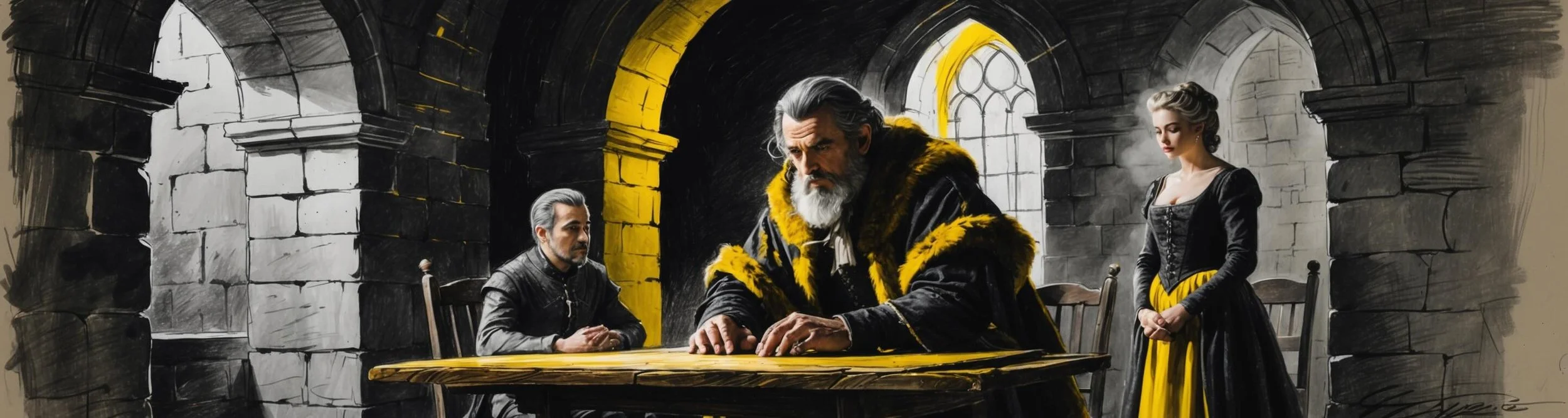
Scene Profile – At a Glance
- Location: A room in the Capulet house, late at night.
- What Happens: Capulet, Lady Capulet and Paris talk after Tybalt's death. Judging the grieving household ready for good news, Capulet abruptly promises Juliet to Paris and fixes the wedding for Thursday – without asking her.
- Key Characters: Lord Capulet, Paris, Lady Capulet.
- Dramatic Function: Capulet's well-meant haste sets the marriage trap that drives the rest of the tragedy – Juliet is already secretly married to Romeo.
- Famous Quote:
"These times of woe afford no time to woo."
(Paris, Act 3, Scene 4) - Why It Matters: The wedding Capulet fixes here is impossible – Juliet is already wed – so this short, calm scene quietly lights the fuse for the whole catastrophe.
Scene Summary
It is late at night in the Capulet house, after the day of Tybalt's death and Romeo's banishment. Lord Capulet, Lady Capulet and Paris are still up, talking. Capulet apologises that the family's grief has left no time to put Paris's suit to Juliet, and admits he would have been in bed an hour ago but for his guest. Paris graciously agrees that mourning is no time for courtship and prepares to leave.
Then Capulet changes his mind. Sure that he can speak for his daughter, he promises Paris that Juliet will marry him, and – after a moment's confusion about the days – fixes the wedding for that Thursday, only a few days away. He plans a small, quiet affair because of the recent death, sends Lady Capulet to tell Juliet the news, and bids Paris a warm goodnight as he calls for a light to his bedroom.
Capulet Decides Juliet's Future
The scene begins in a mood of weary grief. Capulet tells Paris that the household has been too caught up in mourning Tybalt to raise the question of marriage, and that the hour is late.
Original
Things have fall'n out, sir, so unluckily,
That we have had no time to move our daughter...
(Capulet, Act 3, Scene 4)
Shakespeare Retold (Modern Verse)
Things have occurred, sir, with so much misfortune,
We’ve had no time to pressurise our daughter.
Within a dozen lines, that hesitation vanishes. Capulet talks himself round, deciding that the family's sorrow actually makes this the right moment to settle Juliet's future: a wedding will lift the gloom, and he is confident his daughter will do as she is told. What looks like a small, sensible domestic decision is in fact the engine of the catastrophe. Capulet does not consult Juliet, does not suspect she might already love elsewhere, and certainly does not know that she is, at this very moment, secretly married to Romeo. The audience knows all of it, and that gap between what Capulet thinks he is arranging and what is actually true is the source of the scene's quiet dread.
Thursday
Having promised Juliet to Paris, Capulet pins the wedding to a date. He fumbles briefly over the days – Wednesday is too soon – and lands on Thursday, barely two days off.
Original
O' Thursday let it be: o' Thursday, tell her,
She shall be married to this noble earl.
(Capulet, Act 3, Scene 4)
Shakespeare Retold (Modern Verse)
Let’s make it Thursday; tell her that on Thursday
She shall be married to this noble earl.
The speed is the point. Capulet means well: he wants to comfort a grieving family and honour a worthy suitor. But by naming a day so close, he turns a vague hope into a hard deadline, and that deadline is what forces every desperate decision that follows – Juliet's flight to the Friar, the sleeping potion, the mistimed message, the tomb. His instinct for haste here mirrors the lovers' own rashness, and it sits at the heart of the play's anxiety about acting too fast. He even asks Paris, "Do you like this haste?" – a question the play answers, devastatingly, in the affirmative for no one.
Language and Technique
- Dramatic irony: Capulet arranges a marriage the audience knows is impossible, since Juliet is already secretly wed to Romeo – every confident word he speaks lands as foreboding.
- The language of haste: The talk of days – Wednesday, Thursday, "this haste" – turns a quiet scene into a ticking clock, tightening the play's pressure on time.
- Commerce and ownership: Capulet calls his offer a "desperate tender" of his "child's love", speaking of Juliet as property he can trade without consulting her.
- Calm before the storm: The hushed, tired, courteous tone makes the scene unnervingly gentle – the catastrophe is set in motion almost casually, between goodnights.
Key Quotes from Act 3, Scene 4
Quote 1These times of woe afford no time to woo.
(Paris, Act 3, Scene 4)
Shakespeare Retold (Modern Verse)
These times of woe are not the time to woo.
Sir Paris, I will make a desperate tender
Of my child's love: I think she will be ruled...
(Capulet, Act 3, Scene 4)
Shakespeare Retold (Modern Verse)
Sir Paris, I will make a forceful offer
Of my child’s love: I think she will obey...
Will you be ready? Do you like this haste?
(Capulet, Act 3, Scene 4)
Shakespeare Retold (Modern Verse)
Will you be ready? Is this not too fast?
Key Takeaways
- Capulet promises Juliet to Paris: He decides his daughter's marriage without consulting her, confident she will obey.
- The wedding is fixed for Thursday: A deadline only days away that forces every desperate plan to come.
- Dramatic irony drives the scene: The audience knows Juliet is already secretly married to Romeo, so the plan is doomed from the start.
- Well-meant haste sets the trap: Capulet means kindness, but his rush lights the fuse for the whole catastrophe and his rage to come.
Study Questions and Analysis
Why does Capulet suddenly decide to marry Juliet to Paris in this scene?
At the start of the scene Capulet seems to set the match aside, telling Paris that grief over Tybalt has left no time to raise it. Within a few lines, though, he reverses himself and promises Juliet to Paris outright. His reasoning is that a wedding will be a comfort in a grieving house and that his daughter is bound to obey him.
Sir Paris, I will make a desperate tender
Of my child's love: I think she will be ruled...
(Capulet, Act 3, Scene 4)
Shakespeare Retold (Modern Verse)
Sir Paris, I will make a forceful offer
Of my child’s love: I think she will obey...
Critics have read the reversal in different ways. Coppélia Kahn, in her 1981 study Man's Estate: Masculine Identity in Shakespeare, sees Capulet's behaviour through the patriarchal logic of Verona, in which a daughter is property to be disposed of in the family interest; the "tender" of his "child's love" is the language of a transaction he assumes is his to make. Others read it more sympathetically as grief and good intention misfiring – a frightened, mourning father reaching for the comfort of a settled future. Both readings hold at once, and that is the scene's power: Capulet is not a villain here but a loving, controlling father whose certainty that he knows best is precisely what makes him dangerous.
How does dramatic irony work in Act 3, Scene 4?
The whole scene runs on what the audience knows and the characters do not. We have just watched Juliet marry Romeo in secret in A2S6, and seen the couple part after their wedding night. So when Capulet calmly promises Juliet to Paris and fixes the day, every confident word is undercut by our knowledge that the marriage is impossible – she already has a husband.
This is dramatic irony at its most effective: the gap between the speaker's certainty and the audience's knowledge generates dread rather than comedy. Capulet believes he is solving a problem; we can see he is creating one. His assurance that Juliet "will be ruled" is not just wrong but the opposite of the truth, since she has already defied him in the most serious way imaginable. The effect is to make a quiet, almost tender domestic scene unbearably tense, because we alone understand where it is heading.
What does this scene contribute to the theme of haste in the play?
Romeo and Juliet is, among other things, a tragedy about speed – the danger of acting before there is time to think. Capulet's decision here is one of the clearest examples. Having promised Juliet to Paris, he names the wedding day with startling suddenness, brushing aside even Paris's tactful suggestion that mourning is no time to court.
Will you be ready? Do you like this haste?
(Capulet, Act 3, Scene 4)
Shakespeare Retold (Modern Verse)
Will you be ready? Is this not too fast?
The phrase "this haste" names the play's central anxiety directly. Friar Laurence has already warned that "they stumble that run fast", yet almost every character rushes – Romeo into love, the lovers into marriage, and now Capulet into a wedding date. Susan Snyder, in her essay 'Romeo and Juliet: Comedy into Tragedy' (1970), notes how relentlessly the second half of the play accelerates, and Capulet's two-day deadline is the mechanism of that acceleration: it leaves no room for the truth to come out or for the Friar's plan to work, so the rush itself becomes a cause of the disaster. The theme of time and haste is dramatised not just by the lovers but by the well-meaning adults around them.
How does this scene prepare for Capulet's rage in the next scene?
The two scenes are designed as a hinge. In A3S4 Capulet is calm, generous and utterly sure of himself: he assumes Juliet will obey, treats the marriage as settled, and sends Lady Capulet to deliver the good news. He has no reason to imagine resistance, because in his world a daughter does as her father decides.
That certainty is exactly what makes his explosion in A3S5 so violent. When Juliet refuses the marriage he has just arranged, she is not simply declining a suitor; she is overturning his whole sense of his authority, in front of the household, having apparently agreed to nothing he could have foreseen. Marjorie Garber, in Shakespeare After All (2004), reads Capulet as a father whose love is inseparable from his need for control, and the structure here bears that out: the warmth of this scene and the fury of the next are two faces of the same possessiveness. By making Capulet so confident and benevolent in A3S4, Shakespeare ensures that his rage, when it comes, feels like the betrayal of a man who believed he was being kind.