Henry V: Act 1, Scene 1 – Analysis
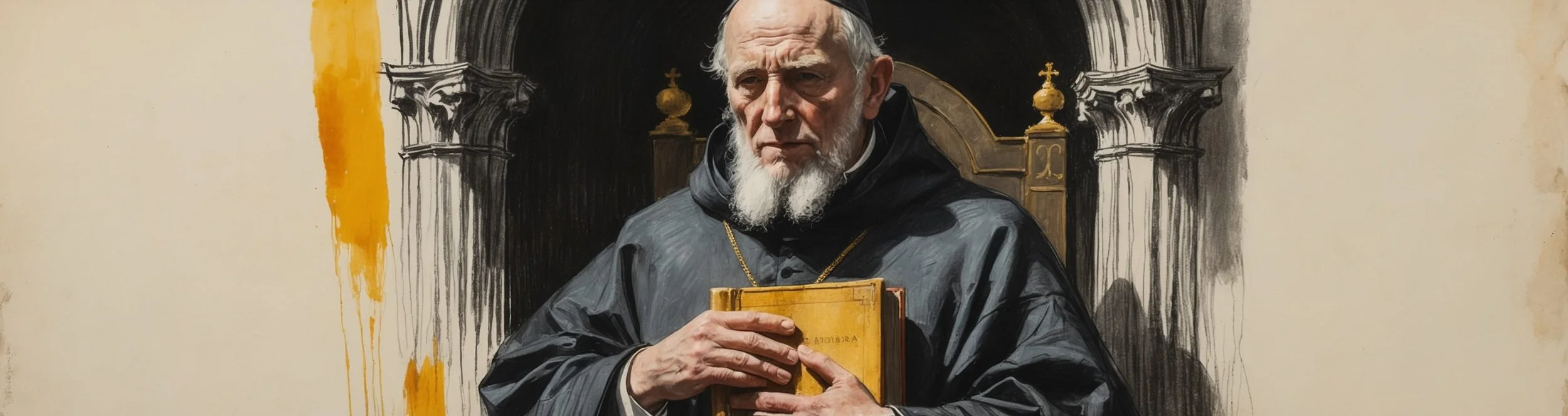
Scene Profile – At a Glance
- Location: An ante-chamber in the royal palace, London.
- What Happens: The Archbishop of Canterbury and the Bishop of Ely discuss a bill that would strip the Church of half its wealth – and the astonishing reformation of the wild prince into a model king.
- Key Characters: The Archbishop of Canterbury and the Bishop of Ely.
- Dramatic Function: The play’s back room. Before we meet the King, we hear two churchmen agree to fund his war – for reasons of their own.
- Famous Quote:
"The strawberry grows underneath the nettle
And wholesome berries thrive and ripen best
Neighboured by fruit of baser quality..."
(Ely, Act 1, Scene 1) - Why It Matters: Everything that follows – the legal case, the invasion, Agincourt – is set in motion here, in a private conversation about money.
Scene Summary
Two of the most senior churchmen in England, the Archbishop of Canterbury and the Bishop of Ely, meet privately. Canterbury reports alarming news: a bill first proposed in the last king’s reign has been revived in Parliament. If it passes, the Church will lose the better half of its possessions – lands left to it in pious men’s wills would be taken to fund the King’s armies, support the poor, and swell the royal treasury.
The conversation turns to the young King himself, and both men marvel at his transformation. As a prince he was wild, given over to riots and low company; the moment his father died, that wildness seemed to die with him. Canterbury describes a king who can now debate theology, politics and war so masterfully that his youth seems impossible – and Ely supplies the famous explanation: the strawberry grows best beneath the nettle, and the prince’s judgement must have ripened in secret beneath the cover of his wildness.
Then Canterbury reveals his counter-move. To head off the bill, he has offered the King, on the Church’s behalf, a greater sum towards his war in France than the clergy has ever granted a king at one time. The offer was interrupted before it could be settled – but the King, he reports, seems inclined to press his claim to the French crown, and Canterbury has promised to prove that claim lawful. The two bishops leave to hear the French ambassador received at court.
A Bill and a Bargain
The play’s first spoken scene is about money, and the play makes no attempt to hide it. Canterbury lays out the stakes in the language of a man reading an account book: if the bill passes, the Church loses half of everything.
Original
It must be thought on. If it pass against us,
We lose the better half of our possession...
(Canterbury, Act 1, Scene 1)
Shakespeare Retold (Modern Verse)
We have to think about it. If it passes,
We will lose more than half of our possessions...
What follows is the quiet transaction on which the whole war is built. Canterbury’s remedy for the bill is an enormous donation to the King’s French campaign – the Church buying its safety by funding a war – and, alongside the money, a legal argument proving the King entitled to fight it. Neither bishop says anything so crude as “we need this war”; they do not have to. The play simply lets the audience hear the motive one scene before it hears the argument, so that when Canterbury takes the pulpit in Scene 2, we already know what the sermon is for.
The Reformation Miracle
Between the bill and the bargain sits an extraordinary passage of praise. The churchmen describe the King’s transformation from wild prince to model monarch as something close to a religious event.
Original
Consideration, like an angel, came
And whipped the offending Adam out of him,
Leaving his body as a paradise,
To envelop and contain celestial spirits.
(Canterbury, Act 1, Scene 1)
Shakespeare Retold (Modern Verse)
Reflection, like an angel sent from heaven,
Consumed him, booting Adam out of Eden,
To leave his body like a paradise
Where holy spirits live in harmony.
The language is the language of conversion: an angel arrives, original sin is whipped out, the body becomes a paradise. Audiences of the Henry IV plays knew the wild prince at first hand, so this scene works as the official version of a story they had watched happen – and the official version is noticeably tidier than the memory. Canterbury goes on to marvel that the King can reason in divinity like a prelate, debate policy like a statesman, and discourse of war like a soldier. The praise is surely sincere; it is also being spoken by a man calculating what this king is worth to the Church. Admiration and self-interest arrive in the same breath, and the play declines to separate them.
The Strawberry Under the Nettle
Ely’s contribution is the scene’s most famous image, and the play’s first theory of Henry: the goodness was there all along, growing in secret under the cover of wildness.
Original
And so the prince obscured his contemplation
Under the veil of wildness; which, no doubt,
Grew like the summer grass, fastest by night,
Unseen, yet crescive in his faculty.
(Ely, Act 1, Scene 1)
Shakespeare Retold (Modern Verse)
And, similarly, the prince disguised his thoughts
Behind his wild behaviour, which I’m sure,
Like summer grass, grew fastest overnight,
Unseen, as his abilities expanded.
It is a gardener’s explanation of a political mystery – sweetness ripening best beside something that stings – and it flatters everyone: the King planned his own reformation, and the wild years were camouflage rather than truth. Whether the play endorses that theory is another matter. If the wildness was a veil deliberately worn, then the King has been a performer from the start, and his famous sincerity is a managed effect. The bishops mean the image as praise; it doubles, quietly, as the play’s first warning that with this king, appearance is a tool.
Language and Technique
- Money vocabulary: The scene opens in the language of accounts – bills, possessions, sums, value – so the war’s first context is financial, not heroic.
- Conversion imagery: The King’s reform is described as a miracle: an angel, Adam whipped out, a flood of reformation. Religious language dresses a political change.
- The garden image: The strawberry beneath the nettle explains hidden growth – sweetness ripening under cover of something that stings. It makes deception sound natural and wholesome.
- Hyperbole: "Never was such a sudden scholar made" – the praise is deliberately too complete, inviting us to wonder at it.
- Two-hander structure: A private duet before the public court scene: the play lets us behind the scenes first, so we watch Scene 2 knowing the script was pre-arranged.
Key Quotes from Act 1, Scene 1
Quote 1
Original
Hear him but reason in divinity,
And all-admiring with an inward wish
You would desire the king were made a prelate...
(Canterbury, Act 1, Scene 1)
Shakespeare Retold (Modern Verse)
When listening to him talk of religion,
You would be so impressed that secretly
You’d want our king to be ordained a priest...
Quote Analysis: Canterbury’s catalogue of the King’s talents begins with theology: hear him reason in divinity and you would want him made a prelate. From a churchman this is the highest compliment available – and a revealing one. What impresses the Archbishop most is that the King speaks the Church’s own language fluently. The play will show exactly that skill in action for five acts: Henry reasons in divinity with his soldiers, with his enemies and with God, and it is always persuasive. The bishops admire the instrument; the play watches what it is used for.
Original
The courses of his youth promised it not.
(Canterbury, Act 1, Scene 1)
Shakespeare Retold (Modern Verse)
His conduct as a youth did not suggest it.
Quote Analysis: One line carrying the whole weight of the Henry IV plays. The "courses of his youth" – the taverns, the thieves, Falstaff – are dismissed in a single breath as a false start that predicted nothing. For the churchmen this is relief; for the audience, who watched those years, it is a quiet provocation. Did the wildness really promise nothing? The prince of the earlier plays told us himself that he was performing it. The line invites us to test the official story of miraculous change against the memory of a young man who planned his own legend.
Original
As touching France, to give a greater sum
Than ever at one time the clergy yet...
(Canterbury, Act 1, Scene 1)
Shakespeare Retold (Modern Verse)
Concerning France, by giving far more money
Than any clergymen have ever offered...
Quote Analysis: The offer that buys the play’s war: a greater sum for the French campaign than the clergy has ever given a king at once. The sentence is carefully placed – after the praise, before the legal case – so the money sits in the middle of everything the Church says about this king. Nothing corrupt is stated; a donation to a lawful war is perfectly respectable. But the audience has heard the bill discussed, and can do the arithmetic the bishops never say aloud: the war will cost the Church a fortune, and save it a bigger one.
Key Takeaways
- The war begins backstage: Before any court scene, two churchmen agree to fund and justify the French campaign.
- The motive is fiscal: A parliamentary bill threatens half the Church’s wealth; a war in France will bury it.
- The King is a marvel: Both bishops genuinely admire Henry’s transformation and his command of any subject.
- The praise cuts two ways: If the wildness was a veil, the King has always been a performer – the play’s first hint of its appearance-and-reality theme.
Study Questions and Analysis
Why does Henry V open with two bishops instead of the King?
Because the play wants the audience to see the machinery before the performance. Scene 2 will be the grand public occasion – the King asking solemnly whether he may claim France with a clear conscience, and the Archbishop assuring him that he may. This scene shows that occasion being arranged in advance: the legal answer has been prepared, the donation promised, and the motive (the bill against Church lands) frankly discussed.
The effect on everything that follows is deliberate and double. Henry’s question in Scene 2 may be entirely sincere – nothing here proves otherwise – but the audience can never hear Canterbury’s answer as disinterested expertise, because we have watched him rehearse it for private reasons. Shakespeare did not have to begin this way; the source play begins with the tennis balls. Opening with the bishops is a choice, and it colours the whole war.
What is the bill Canterbury and Ely are worried about?
A revived parliamentary proposal to confiscate the Church’s temporal lands – property left to the Church in laymen’s wills, as distinct from its spiritual endowments. Canterbury itemises what the Crown would do with the proceeds: maintain earls, knights and esquires to the King’s honour, relieve the poor and sick, and add a substantial yearly sum to the King’s coffers. As he puts it, the Church would "lose the better half of our possession".
The detail is historical – such a bill was mooted under Henry IV and revived early in Henry V’s reign – and Shakespeare takes it straight from Holinshed’s chronicle. What matters dramatically is the timing: the threat to the Church’s wealth and the Church’s enthusiasm for the French war arrive in the same conversation, and Canterbury’s enormous donation offer connects them. The play never says the war exists to save the Church’s lands; it simply shows the two facts holding hands.
Is Henry’s reformation presented as genuine?
The bishops certainly believe it – their astonishment is real, and nothing in the play contradicts the change itself. The prince who haunted taverns is gone; the king who replaces him is disciplined, articulate and formidably capable. The question the scene plants is not whether the change happened but what kind of change it was: miracle, or unveiling?
Original
Never was such a sudden scholar made;
Never came reformation in a flood,
With such a heady currance, scouring faults...
(Canterbury, Act 1, Scene 1)
Shakespeare Retold (Modern Verse)
No one’s become so studious so quickly;
A swollen river never has repaired,
With such a torrent, faults cut out like rocks...
Canterbury reaches for miracle – consideration came "like an angel" and whipped the offending Adam out of him. Ely reaches for nature – the strawberry ripening beneath the nettle, goodness growing hidden under wildness. The second image quietly implies that the wildness was cover, which any audience of the Henry IV plays knew from the prince’s own mouth: he promised to throw off his loose behaviour when it would look most impressive. Harold C. Goddard, in The Meaning of Shakespeare (1951), built a whole reading of the play on that continuity – the reformed king as the wild prince’s greatest performance – while A. C. Bradley, in his 1909 essay The Rejection of Falstaff, had already registered what the transformation cost: "our hearts go with Falstaff to the Fleet". The scene supports both the wonder and the suspicion, and the rest of the play keeps them running side by side.
What does "the strawberry grows underneath the nettle" mean?
Literally, it is Elizabethan garden lore: strawberries were thought to thrive planted among nettles, wholesome fruit ripening best beside something base and stinging. Ely applies it to the prince: his "contemplation" – his judgement and seriousness – must have been growing all along, hidden beneath the wildness, "unseen, yet crescive" (growing) like summer grass at night.
Original
The strawberry grows underneath the nettle
And wholesome berries thrive and ripen best
Neighboured by fruit of baser quality...
(Ely, Act 1, Scene 1)
Shakespeare Retold (Modern Verse)
A strawberry bush grows underneath a nettle,
And healthy berries thrive and ripen best
When growing next to mediocre fruit....
It is the scene’s key image because it makes concealment sound organic and innocent. Nobody chooses where a strawberry grows; but a prince does choose his companions, and the image quietly converts years of apparent dissolution into a strategy that ripened on schedule. For essays, it pairs perfectly with Henry’s own later habit of veils and disguises – the borrowed cloak before Agincourt, the "plain soldier" wooing – as the play’s first statement that with this king, what you see has been arranged.
How does this scene change the way we watch the rest of the play?
It installs a permanent second perspective. Every public scene that follows – the solemn legal advice, the pious framing of the war, the victory given to God – plays out in front of an audience that has been backstage. We know the Church needed this war; we know the legal case was promised before it was asked for; we know the King’s advisers have financial skin in the game. None of that makes the war unjust or the King insincere, but it means nothing official can be taken purely at face value again. Stephen Greenblatt, in Shakespearean Negotiations (1988), caught this double effect in a famous sentence: "The play deftly registers every nuance of royal hypocrisy, ruthlessness, and bad faith" – and yet, on his reading, the play also absorbs every doubt it raises, so that the celebration of the King survives the exposure.
That is why the scene, easily cut in performance and often skipped by students, rewards close attention in an exam. It is the play’s method in miniature: show the glorious surface and the practical machinery, refuse to say which is the truth, and leave the audience holding both. Any essay on kingship, religion or appearance versus reality in this play can anchor its argument here, in the conversation the King never hears.