Macbeth: Act 1, Scene 1 – Analysis
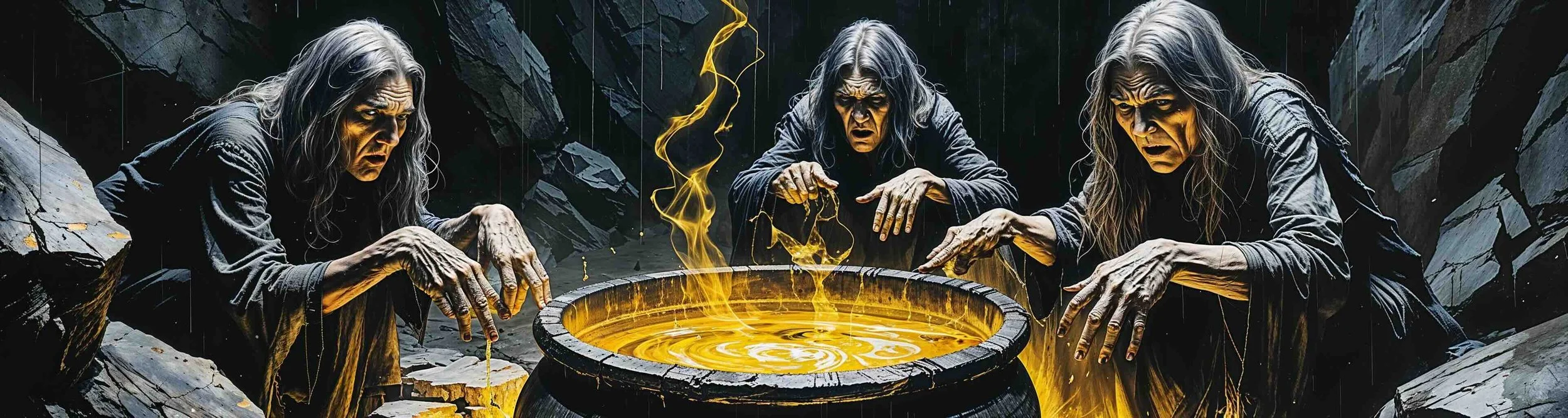
Scene Profile – At a Glance
- Location: An open, desolate place – a "desert place" of thunder and lightning.
- What Happens: Three Witches meet in the storm, agree to gather again on the heath, and arrange to meet Macbeth there once the battle is over.
- Key Characters: The Witches (and the absent Macbeth, named but not present).
- Dramatic Function: A short, electric opening that sets the play's supernatural, morally inverted tone before a single human enters.
- Famous Quote:
Fair is foul, and foul is fair:
Hover through the fog and filthy air.
(The Witches, Act 1, Scene 1) - Why It Matters: In twelve lines Shakespeare establishes the witches, the world of moral confusion, and Macbeth as their target. Everything that follows grows from this scene.
Scene Summary
The play opens in thunder and lightning as three Witches gather in a bleak, open place. They speak in short, chanting lines, asking when they will meet again and agreeing on the moment: once the "hurlyburly" of battle is finished, when the fighting has been "lost and won". The time is set for before sunset, and the place is fixed as the heath.
Their purpose is named at once: they will meet there with Macbeth. Called away by their attendant spirits – a cat named Graymalkin, a toad named Paddock – the Witches close the scene with a paradoxical chant, "Fair is foul, and foul is fair", before vanishing into the fog. The audience has met the play's supernatural forces and learned their first target before any mortal has appeared.
A World Turned Upside Down
The scene is deliberately tiny, but every word does work. By opening with the Witches rather than with Duncan or Macbeth, Shakespeare hands the play's first words to the forces of disorder. Their meter is unsettling too – not the steady iambic pentameter of the human court but a clipped, sing-song chant that sounds like a spell. The audience is destabilised before the story even begins.
Original
When shall we three meet again
In thunder, lightning, or in rain?
(The Witches, Act 1, Scene 1)
Shakespeare Retold (Modern Verse)
When will we three meet again?
In thunder, lightning, or in rain?
The famous closing couplet seals the scene's logic. "Fair is foul, and foul is fair" announces a world in which moral categories have been switched: good will look like evil and evil like good. It is a warning to the audience to distrust appearances, and it plants the play's central problem – the gap between what things seem and what they are – before Macbeth speaks a line. Tellingly, his own first words in the next scene will unknowingly echo it.
Language and Technique
- Trochaic tetrameter: The Witches chant in a falling, four-beat rhythm, not the rising pentameter of the human characters – their speech sounds like an incantation.
- Paradox: "Fair is foul, and foul is fair" yokes opposites together, signalling a world where moral values are inverted.
- Pathetic fallacy: The "thunder, lightning" and "fog and filthy air" make the weather itself a sign of the disorder to come.
- Foreshadowing: Naming Macbeth in the very first scene marks him out as the Witches' target before the audience has even met him.
Key Quotes from Act 1, Scene 1
Quote 1When the hurlyburly's done,
When the battle's lost and won.
(The Witches, Act 1, Scene 1)
Shakespeare Retold (Modern Verse)
When the raucous battle’s done,
When someone’s lost, and someone’s won.
Fair is foul, and foul is fair:
Hover through the fog and filthy air.
(The Witches, Act 1, Scene 1)
Shakespeare Retold (Modern Verse)
What’s fair is foul; what’s foul is fair;
Let’s fly through foggy, filthy air.
Key Takeaways
- The supernatural comes first: Opening with the Witches gives the forces of disorder the play's first word and sets an ominous tone.
- Appearances cannot be trusted: "Fair is foul, and foul is fair" warns the audience that good and evil will be hard to tell apart.
- Macbeth is the target: The Witches name Macbeth before he appears, marking him out from the start.
- Form mirrors meaning: The chanting, spell-like rhythm sets the Witches apart from the human world of the court.
Study Questions and Analysis
Why does Shakespeare open the play with the Witches?
Beginning with the Witches, rather than with the king or Macbeth, lets the supernatural set the terms for everything that follows. Before we meet a single human being, the stage belongs to forces of disorder, storm and prophecy. This shapes how we read the rest of the play: when Macbeth appears, he is already a man marked out by these creatures, and his rise feels shadowed by something uncanny from the very first moment.
The choice also creates suspense. The Witches arrange to meet Macbeth but tell us nothing about why, so the audience watches his entrance in the next scenes already wondering what these beings want with him. Shakespeare withholds explanation and lets atmosphere do the work, so dread arrives before any plot.
What does "Fair is foul, and foul is fair" mean?
The line announces a world in which moral opposites have changed places: what looks good may be evil, and what looks evil may be good. It is a warning against trusting appearances, and it sets up one of the play's great preoccupations – the distance between how things seem and how they really are. The same idea drives Lady Macbeth's later advice to "look like the innocent flower, but be the serpent under't".
It also blurs the line between the Witches and Macbeth. When he enters the next scene with the words "So foul and fair a day I have not seen", he unknowingly repeats their paradox, suggesting that he is already, in some sense, tuned to their wavelength before they have even spoken to him.
Are the Witches in control of Macbeth's fate?
The scene raises the question without answering it. The Witches clearly know things: they can predict the end of the battle and they name Macbeth as their target. This makes them look like agents of destiny who already know how the story ends. Yet at no point in the play do they actually force Macbeth to do anything; they predict and they tempt, but the choices remain his.
Shakespeare keeps this deliberately open, and critics have long divided over it. The opening scene gives the supernatural enormous presence, but it stops short of saying that the Witches cause what happens. That tension – between fate and free will, between prophecy and choice – is one the rest of the tragedy never fully resolves, and it begins here.