Macbeth: Act 1, Scene 6 – Analysis
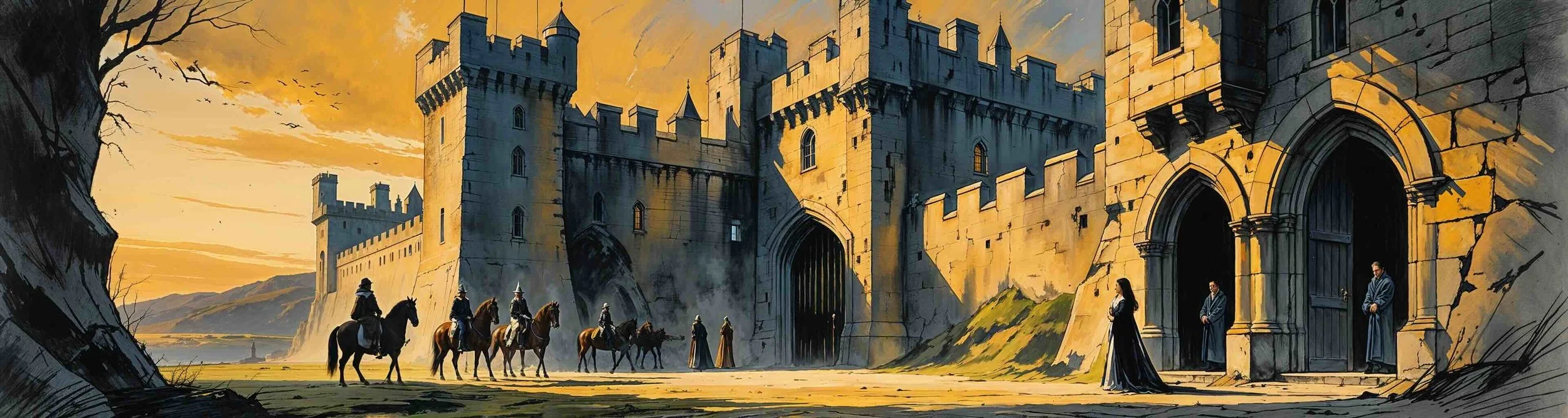
Scene Profile – At a Glance
- Location: Before Macbeth's castle at Inverness, as evening falls.
- What Happens: Duncan and his train arrive at Macbeth's castle. The king admires its peaceful setting, and Banquo notes the nesting martlets as a sign of healthy air. Lady Macbeth greets them with elaborate courtesy and leads Duncan inside.
- Key Characters: King Duncan, Banquo, Lady Macbeth (with Malcolm, Macduff and others).
- Dramatic Function: A short scene of calm, gracious hospitality – heavy with dramatic irony – that sets up the murder to come.
- Famous Quote:
This castle hath a pleasant seat; the air
Nimbly and sweetly recommends itself...
(Duncan, Act 1, Scene 6) - Why It Matters: Duncan walks willingly into the trap, praising the beauty of the place where he will be killed. The serenity is the cruellest irony in the play.
Scene Summary
Duncan arrives at Inverness with his sons and nobles, and is struck by how pleasant Macbeth's castle is. The air, he says, is sweet and gentle, recommending itself to the senses. Banquo agrees, pointing to the martlets – house martins that nest in churches and steeples – whose presence here suggests the air is "delicate" and the place wholesome.
Lady Macbeth comes out to receive them. Duncan greets her warmly as his "honoured hostess", playfully apologising for the trouble his visit causes. She responds with elaborate, deferential courtesy, insisting that no service she could offer would be enough to repay the honour the king does her house.
Duncan asks after Macbeth, noting that he had hoped to arrive before him but that Macbeth's love spurred him home faster. He takes Lady Macbeth's hand and asks to be led to his host, declaring how dearly he loves Macbeth. The scene ends as Lady Macbeth conducts the king into the castle – and, the audience knows, towards his death.
The Deadly Peace
The whole scene runs on dramatic irony. Duncan and Banquo describe the castle in the language of peace, fertility and natural harmony, while the audience knows that murder has already been planned within its walls. Shakespeare places this serene interlude immediately after Lady Macbeth's "unsex me" invocation, so that the calm is poisoned for us even as the characters relax into it.
Original
This guest of summer,
The temple-haunting martlet, does approve,
By his loved mansionry, that the heaven's breath
Smells wooingly here...
(Banquo, Act 1, Scene 6)
Shakespeare Retold (Modern Verse)
This migrating bird,
The house martin, that nests in steeples, likes it
So much it builds its home here, on the winds
That lure it in.
Banquo's martlet is a bird associated with churches and holy places, and its nesting here seems to bless the castle as wholesome. The irony is exquisite and bitter: the very image of natural, sacred peace is attached to the house where a king will be slaughtered in his sleep. Shakespeare uses beauty as a mask, exactly as Lady Macbeth urged – the "innocent flower" concealing the serpent – so that the loveliest language in the scene only sharpens the horror to come.
Hospitality as Deceit
Lady Macbeth's performance as hostess is a masterclass in the false face she described in the previous scene. Every word is gracious and deferential, the picture of loyal welcome, while she has already resolved to murder her guest. The gap between her courtly language and her intent is the engine of the scene's tension.
Original
All our service
In every point twice done and then done double
Were poor and single business to contend
Against those honours deep and broad wherewith
Your majesty loads our house...
(Lady Macbeth, Act 1, Scene 6)
Shakespeare Retold (Modern Verse)
My service
If doubled, then if doubled once again,
Would still be insignificant compared
To such a great an honour that we have
Our king within our house...
The hospitality of host to guest was, for Shakespeare's audience, a near-sacred bond – which makes Lady Macbeth's smooth ceremony deeply sinister. She offers service "twice done and then done double", piling up courtesy precisely to disguise the violence beneath. The audience hears every polished phrase as a lie, and the warmer her welcome, the colder the betrayal it conceals. This is "fair is foul" enacted as social ritual.
Language and Technique
- Dramatic irony: Duncan praises the castle's sweetness and safety just as he enters the place where he will be murdered.
- Natural imagery: The "temple-haunting martlet" and "delicate" air present the castle as wholesome and blessed, masking its true danger.
- Religious resonance: The martlet's link to temples and the language of heaven's "breath" lend a sacred calm that the coming crime will violate.
- Courtly hyperbole: Lady Macbeth's exaggerated protestations of service dramatise the false face she has vowed to wear.
- Structural contrast: The scene's serenity sits between two scenes of dark plotting, so its calm reads as ominous rather than restful.
Key Quotes from Act 1, Scene 6
Quote 1This castle hath a pleasant seat; the air
Nimbly and sweetly recommends itself
Unto our gentle senses.
(Duncan, Act 1, Scene 6)
Shakespeare Retold (Modern Verse)
This castle's in a lovely spot; the breeze
Is so delightful here, it leaves one feeling
Relaxed and mellow.
Give me your hand;
Conduct me to mine host: we love him highly,
And shall continue our graces towards him.
(Duncan, Act 1, Scene 6)
Shakespeare Retold (Modern Verse)
Give me your hand
And take me to my host. I love him dearly
And will continue my politeness with him.
Key Takeaways
- Dramatic irony saturates the scene: Duncan praises the safety and sweetness of the place where he will be murdered.
- Beauty masks danger: The martlets and "delicate" air make the castle seem blessed, hiding its true purpose.
- Lady Macbeth performs the false face: Her elaborate courtesy is exactly the "innocent flower" disguise she described.
- Hospitality is betrayed: The sacred bond between host and guest is turned into a trap.
- Duncan trusts to the end: He enters hand in hand with his hostess, loving and unsuspecting.
Study Questions and Analysis
Why is this peaceful scene so important to the play?
The calm of this scene is precisely what makes it powerful. Coming straight after Lady Macbeth's invocation of dark spirits and just before the murder itself, the serenity is unbearable: the audience watches Duncan admire the loveliness of the castle, knowing his death has already been arranged inside it. The peace is not a relief but a source of dread.
The scene also deepens the tragedy of Duncan. His warmth, trust and pleasure in his surroundings show him at his most likeable and most vulnerable. By letting us see a good king walk contentedly into a trap, Shakespeare makes the coming murder feel like a violation of something gentle and sacred, not merely a political killing. The brief idyll raises the moral stakes of the crime.
How does the imagery of the martlet contribute to the scene?
Banquo's description of the "temple-haunting martlet" nesting in the castle does important atmospheric work. The martlet was associated with churches and holy places, so its presence implies that the air is pure and the setting wholesome, even blessed. It paints the castle as a place of natural and spiritual health.
This is, of course, the cruellest possible irony. The imagery of sacred, nesting peace is attached to the building where a king will be butchered in his sleep. Shakespeare uses the loveliest language in the scene to describe the deadliest place, so that the beauty itself becomes sinister. The martlet's blessing is a false sign – another instance of fair masking foul – and it reinforces the play's warning that appearances cannot be trusted.
How does Lady Macbeth behave as a hostess, and why does it matter?
Lady Macbeth is the model of gracious hospitality, greeting Duncan with elaborate, self-effacing courtesy and insisting that no service could repay the honour of his visit. Her performance is flawless – and that is exactly the point. Having vowed in the previous scene to "look like the innocent flower, but be the serpent under't", she now puts the disguise into practice before our eyes.
It matters because hospitality was, for Shakespeare's audience, a sacred duty: a host was bound to protect a guest, and a king above all. Lady Macbeth's smooth ceremony turns that sacred bond into a weapon, using the forms of welcome to lull her victim. The scene shows that the Macbeths' real threat lies not in open force but in their mastery of appearances – the ability to make betrayal look like devotion.