Macbeth: Act 3, Scene 2 – Analysis
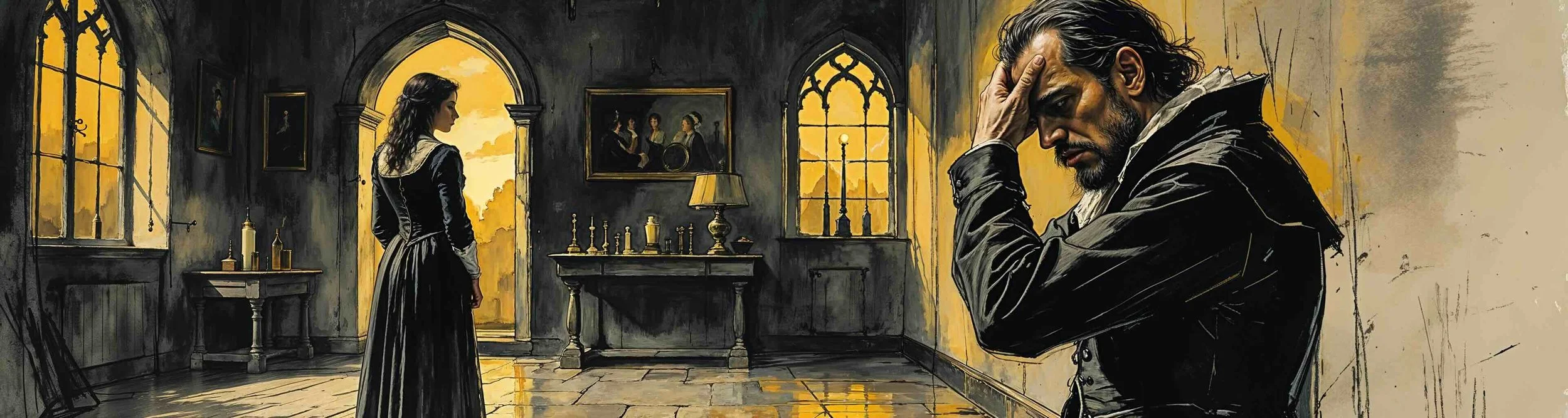
Scene Profile – At a Glance
- Location: The royal palace at Forres.
- What Happens: Lady Macbeth and Macbeth confess, separately and then together, that the crown has brought them no peace. Macbeth hints at a fresh horror to come that night but keeps the details of Banquo's murder from his wife.
- Key Characters: Macbeth and Lady Macbeth.
- Dramatic Function: The scene charts the couple's growing isolation. Their roles begin to reverse, and Macbeth takes sole command of the bloodshed.
- Famous Quote:
O, full of scorpions is my mind, dear wife!
(Macbeth, Act 3, Scene 2) - Why It Matters: This short scene shows guilt poisoning the marriage. The partners who once shared everything now share only fear, and Macbeth begins to act without his wife.
Scene Summary
Lady Macbeth learns from a servant that Banquo has left court but will return that night. Left alone, she admits in a brief, weary aside that the crown has not brought the happiness she expected. The desire has been satisfied, yet there is no content; it would be safer, she reflects, to be the murdered than to live in this "doubtful joy".
When Macbeth enters, she urges him to stop brooding and to be cheerful with his guests that evening. But Macbeth is consumed by anxiety. He tells her they have only wounded the threat, not destroyed it, and that he envies the dead Duncan, who at least sleeps peacefully beyond the reach of "treason".
Macbeth reveals that his mind is "full of scorpions" and reminds her that Banquo and Fleance still live. When Lady Macbeth asks what he intends, he tells her to stay innocent of the plan until it is done. He then summons "seeling night" to cover the coming deed, and the scene ends with the couple going in together, bound by a secret she now only half shares.
"Nought's Had, All's Spent"
Lady Macbeth's solitary couplet is one of the play's quietest and most devastating moments. The fierce, driving woman of the early acts is, for a few lines, exhausted and disillusioned. She has helped win the throne and found it empty. The crown has cost everything and delivered nothing.
Original
Nought's had, all's spent,
Where our desire is got without content:
(Lady Macbeth, Act 3, Scene 2)
Shakespeare Retold (Modern Verse)
If nothing's gained when time's expired,
Unhappy, though you've got what you desired,
The balance of the line – "Nought's had, all's spent" – sums up the whole bargain of the tragedy: total expenditure for no gain. Crucially, she speaks these words alone, and hides them from her husband. The couple who once schemed in perfect partnership now keep their despair private. This is the first clear sign that their union is fracturing under the weight of what they have done.
The Living Torture
Macbeth's response to his wife's plea for cheerfulness is to envy the dead. In one of the play's most haunting reflections, he contrasts his own sleepless dread with the perfect rest of the man he murdered. Duncan, beyond all harm, sleeps well; Macbeth, who killed for the crown, cannot sleep at all.
Original
Duncan is in his grave;
After life's fitful fever he sleeps well;
Treason has done his worst...
(Macbeth, Act 3, Scene 2)
Shakespeare Retold (Modern Verse)
Duncan's in his grave;
After his restless life, he's resting now.
Betrayals now are done...
The irony is total. Macbeth has gained the crown and lost his peace; Duncan has lost the crown and his life, and gained an eternal rest. "Life's fitful fever" describes existence itself as a sickness from which only death brings relief. The murderer now looks on his victim with something close to longing, a measure of how completely the prize has poisoned him.
"Full of Scorpions Is My Mind"
The emotional centre of the scene is Macbeth's confession of his mental torment, and his decision to keep his wife in the dark about the murder he has planned. The reversal of their earlier roles is now complete: where Lady Macbeth once urged him on and managed the details, he now commands the action and shields her from it.
Original
O, full of scorpions is my mind, dear wife!
Thou know'st that Banquo, and his Fleance, lives.
(Macbeth, Act 3, Scene 2)
Shakespeare Retold (Modern Verse)
My mind is full of scorpions, dear wife!
You know Banquo and his son Fleance live.
The image of scorpions captures a mind that stings itself, swarming with poisonous thoughts that give no rest. When Lady Macbeth asks what is to be done, Macbeth's reply – "Be innocent of the knowledge, dearest chuck" – is tender and terrible at once. He protects her by excluding her, and in doing so he takes full ownership of the killing. From this point the marriage is no longer a true partnership in crime.
Language and Technique
- Animal imagery: The "scorpions" in Macbeth's mind and the "snake" they have "scotched, not killed" turn his fears into venomous, living things.
- Personification of night: Macbeth invokes "seeling night" to "scarf up the tender eye of pitiful day", begging darkness to hide the murder.
- Rhyming couplets: Both Macbeths slip into couplets at moments of grim resolution, lending their despair a sealed, fatalistic finality.
- Dramatic irony: Macbeth envies the peace of Duncan, the man he murdered, an irony only the audience fully weighs.
- Role reversal: Lady Macbeth's commanding voice fades while Macbeth seizes control, marked by his refusal to share his plan.
Key Quotes from Act 3, Scene 2
Quote 1We have scotched the snake, not killed it:
She'll close and be herself, whilst our poor malice
Remains in danger of her former tooth.
(Macbeth, Act 3, Scene 2)
Shakespeare Retold (Modern Verse)
We've slashed the snake, not killed it:
Its wounds will heal, recovering, whilst our spite
Remains in danger from its former poison.
Than on the torture of the mind to lie
In restless ecstasy.
(Macbeth, Act 3, Scene 2)
Shakespeare Retold (Modern Verse)
Than being tortured by our lying minds
In endless madness.
Come, seeling night,
Scarf up the tender eye of pitiful day;
And with thy bloody and invisible hand
Cancel and tear to pieces that great bond
Which keeps me pale!
(Macbeth, Act 3, Scene 2)
Shakespeare Retold (Modern Verse)
Come, blinding night,
Blindfold the eyes of this pathetic day,
And with your bloody and invisible hand,
Kill Banquo, so I can destroy the thing
That keeps me pale!
Key Takeaways
- The crown brings no peace: Both Macbeths privately admit that achieving their desire has left them empty and afraid.
- The marriage is fracturing: Each hides despair from the other, and Macbeth refuses to share his murderous plan.
- Roles reverse: Lady Macbeth's controlling voice weakens while Macbeth takes sole command of the violence.
- Guilt becomes torment: The "scorpions" of Macbeth's mind and his envy of the dead show conscience turning to mental agony.
- More blood is coming: Macbeth hints at "a deed of dreadful note" that night, preparing the audience for Banquo's murder.
Study Questions and Analysis
What does Lady Macbeth's opening speech reveal?
Lady Macbeth's brief aside before her husband enters is a turning point in her character. The woman who steeled herself to murder is now quietly disillusioned, admitting that the crown has brought no happiness. The desire has been satisfied "without content", and she even suggests it would be safer to be the dead than to live in fearful "doubtful joy".
'Tis safer to be that which we destroy
Than by destruction dwell in doubtful joy.
(Lady Macbeth, Act 3, Scene 2)
Shakespeare Retold (Modern Verse)
It's better for the one whose blood's been spilt
Than dwelling in your overwhelming guilt.
The fact that she speaks this alone, and then composes herself to comfort Macbeth, is the heart of the moment. She still plays the strong partner in public, but the audience now knows her resolve is hollow. This private crack is the first step on the long road to her sleepwalking and death, when the guilt she here keeps hidden will finally break her.
What does the scorpion image tell us about Macbeth?
The line "full of scorpions is my mind" is one of the play's most vivid pictures of a guilty conscience. Scorpions sting and swarm, and Macbeth imagines his own thoughts as poisonous creatures crawling inside his skull, giving him no rest. The image conveys both torment and self-destruction: the mind is attacking itself.
It also marks how far Macbeth has changed. The crown has not made him secure; it has filled his head with venom. A. C. Bradley, in Shakespearean Tragedy (1904), stressed Macbeth's extraordinary imagination, and here that imagination has become a curse, turning every fear into a living horror. The scorpions look forward to the banquet of the next scene, where his tormented mind will conjure the ghost of the very man he is about to have killed.
How does the balance of power between the Macbeths shift in this scene?
Earlier in the play Lady Macbeth was the driving force, planning Duncan's murder and shaming her husband into action. Here the dynamic reverses. Macbeth has planned Banquo's death alone and deliberately keeps it from her, telling her to "be innocent of the knowledge" until the deed is done.
Be innocent of the knowledge, dearest chuck,
Till thou applaud the deed.
(Macbeth, Act 3, Scene 2)
Shakespeare Retold (Modern Verse)
It's better you don't know of that, my darling,
Then you can clap the deed.
The affectionate "dearest chuck" only sharpens the change: Macbeth is gentle but firmly in charge, treating his wife as someone to be protected rather than consulted. The partnership of equals that planned the first murder has dissolved. From here the two move on separate paths – Macbeth deeper into tyranny, Lady Macbeth deeper into the private guilt that will eventually destroy her.
Why does Macbeth envy the dead Duncan?
Macbeth's reflection that Duncan "sleeps well" in his grave is one of the play's bleakest ironies. Having murdered Duncan to gain the crown, Macbeth now finds that the crown has robbed him of sleep and peace, while his victim rests beyond all harm. Death, which Macbeth inflicted, looks to him like a release he cannot have.
The speech reframes the whole bargain of ambition. Duncan has lost his life but escaped the "torture of the mind"; Macbeth has gained a kingdom but entered a living hell of fear and sleeplessness. By envying the man he killed, Macbeth shows that the punishment for his crime is already underway – not in any external justice, but in the workings of his own tormented conscience.