Macbeth: Act 4, Scene 2 – Analysis
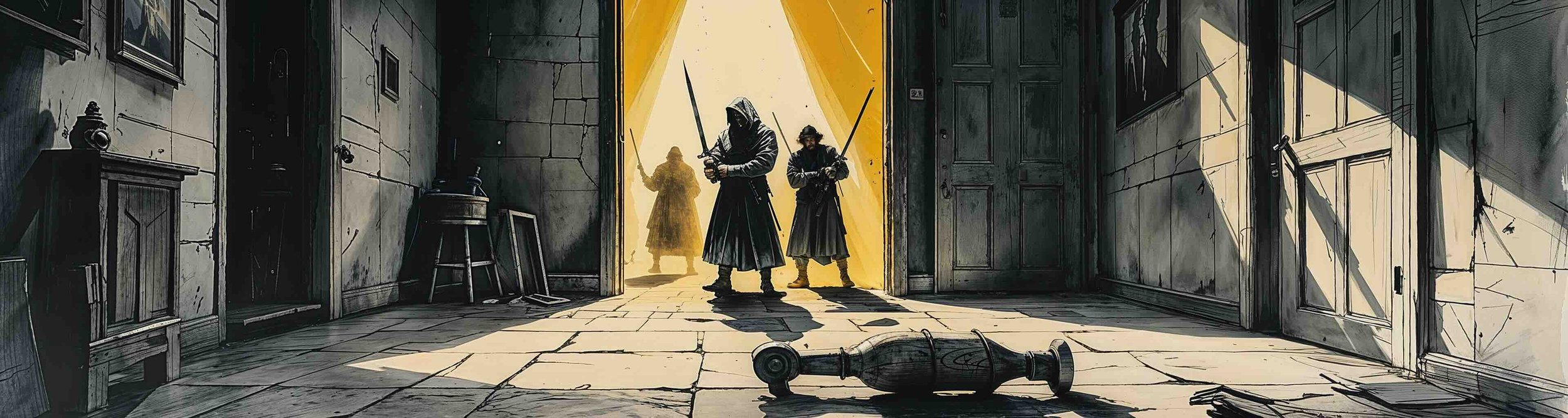
Scene Profile – At a Glance
- Location: Macduff's castle at Fife.
- What Happens: Lady Macduff bitterly questions why her husband has fled to England, leaving his family undefended. Ross tries to reassure her before slipping away. She and her young son share a teasing exchange about traitors. A messenger warns her to flee; moments later murderers arrive and kill the boy and his mother.
- Key Characters: Lady Macduff, her son, Ross, the Messenger, and the Murderers.
- Dramatic Function: The play's most shocking act of violence. It shows tyranny reaching the innocent and gives Macduff the personal wound that will drive Macbeth's downfall.
- Famous Quote:
All is the fear and nothing is the love;
As little is the wisdom, where the flight
So runs against all reason.
(Lady Macduff, Act 4, Scene 2) - Why It Matters: The murder of a mother and child on stage makes Macbeth's tyranny unforgivable and turns the audience decisively against him.
Scene Summary
At Macduff's castle in Fife, Lady Macduff is angry and frightened. Her husband has fled to England without explanation, and she cannot understand how leaving his wife and children unprotected can be anything but cowardice. Ross, her cousin, urges patience and defends Macduff as noble and wise, but he is clearly uneasy and soon takes his leave, close to tears.
Left alone with her young son, Lady Macduff tells him, half in earnest and half in play, that his father is dead and a traitor. The boy refuses to accept it and the two share a quick, witty exchange about what traitors are and who hangs them. His sharp, childish logic is touching precisely because we know what is coming.
A messenger hurries in, a stranger who risks himself to warn her that danger is close and that she must flee at once with her children. Before she can act, the murderers arrive. They demand to know where Macduff is, brand him a traitor, and when the boy defends his father they stab him. He dies telling his mother to run, and she flees the stage crying "Murder!" as the killers pursue her.
Lady Macduff's Anger
The scene opens not with grief but with fury. Lady Macduff cannot reconcile her husband's flight with love or sense, and she says so in the play's most clear-eyed indictment of a man who has put his cause before his family. Her bitterness is the emotional engine of the scene: it makes her sympathetic, human and entirely undeserving of what follows.
Original
All is the fear and nothing is the love;
As little is the wisdom, where the flight
So runs against all reason.
(Lady Macduff, Act 4, Scene 2)
Shakespeare Retold (Modern Verse)
He's run from fear; it's not to do with love.
It's not to do with wisdom either, running
When there's no reason for it.
Her image of the wren defending her nest against the owl is devastating: even the smallest bird will fight for its young, yet Macduff has flown. Whether she is right is left deliberately uncertain – Ross hints that Macduff acts from wisdom, not cowardice – but her grievance is real and her position is impossible. Shakespeare lets her be both unfair and entirely justified, which is precisely what makes her death land so hard.
The Mother and Son
The exchange between Lady Macduff and her son is one of the most affecting in the play, a pocket of warmth dropped into a scene of dread. Much of the boy's banter is in quick prose, marking it as everyday domestic talk rather than high tragic verse, and his cheeky logic about traitors and honest men is genuinely funny. The comedy is a trap: it makes us love the child just before he is killed.
Original
Then the liars and swearers are fools, for there are liars and swearers enow to beat the honest men and hang up them.
(Son, Act 4, Scene 2)
Shakespeare Retold (Modern Verse)
Then those that break their oaths are fools, for there are more oath-breakers to outnumber the honest men and hang them up.
The boy's joke is sharper than he knows: in a world ruled by Macbeth, the liars really do outnumber and overpower the honest. His childish riddle accidentally describes the political reality that is about to destroy him. Shakespeare gives the most innocent character the clearest sight of the moral inversion gripping Scotland, then has that same world swallow him whole.
The Murder
The warning comes too late. A nameless messenger, risking his own life, tells Lady Macduff to flee, but the murderers are already upon her. The scene's final movement is brutally swift: a demand for Macduff, an insult, and a child stabbed defending his father's name. Shakespeare stages what other plays would only report, forcing the audience to watch the innocent die.
Original
He has killed me, mother:
Run away, I pray you!
(Son, Act 4, Scene 2)
Shakespeare Retold (Modern Verse)
He has killed me, mother:
Run away, I beg you!
The boy's dying words are pure selflessness: even as he is stabbed he thinks of his mother's escape. It is the most heartbreaking line in the scene and the clearest measure of Macbeth's crime. There is no political gain here, no rival removed – only the murder of a child too young to threaten anyone. By making us witness it, Shakespeare ensures that whatever sympathy we once felt for Macbeth is now spent. From this point the play is a hunt, and we want the hunter caught.
Language and Technique
- Bird imagery: The wren defending her nest against the owl turns the whole scene into a fable of the weak preyed on by the strong – and the family are the small birds.
- Prose for the child: The son's banter is largely in prose, marking it as natural family talk and heightening the contrast with the verse around it.
- Dramatic irony: The boy's joke that liars "outnumber" honest men exactly describes Macbeth's Scotland, and the audience knows his danger before he does.
- On-stage violence: Shakespeare shows the murder rather than reporting it, denying the audience any distance from the cruelty.
- Pathos through ordinariness: The scene's domestic warmth – teasing, riddles, a mother and child – is what makes its destruction unbearable.
Key Quotes from Act 4, Scene 2
Quote 1His flight was madness: when our actions do not,
Our fears do make us traitors.
(Lady Macduff, Act 4, Scene 2)
Shakespeare Retold (Modern Verse)
It's mad to run, for even when we're guiltless,
Our fear makes us look guilty.
I have done no harm. But I remember now
I am in this earthly world; where to do harm
Is often laudable, to do good sometime
Accounted dangerous folly...
(Lady Macduff, Act 4, Scene 2)
Shakespeare Retold (Modern Verse)
I have done nothing wrong. But I remember
I'm living in this world, where doing harm
Is often praised, but when someone does good
It's deemed a dangerous, silly act.
Thou liest, thou shag-haired villain!
(Son, Act 4, Scene 2)
Shakespeare Retold (Modern Verse)
You're lying, you shaggy-haired villain!
But cruel are the times, when we are traitors
And do not know ourselves, when we hold rumour
From what we fear, yet know not what we fear...
(Ross, Act 4, Scene 2)
Shakespeare Retold (Modern Verse)
They're damning days, when we're accused as traitors
But don't know what we've done, believing rumours
Based out of fear, but don't know what we're scared of,
Key Takeaways
- Tyranny reaches the innocent: The on-stage murder of a wife and child shows that Macbeth's violence now spares no one.
- The audience turns against Macbeth: Killing a mother and child for no gain extinguishes any remaining sympathy for him.
- Macduff's flight is ambiguous: Lady Macduff calls it cowardice; the play leaves open whether it was fear or strategy, but his family pays the price.
- Moral inversion is complete: In this Scotland, harm is praised and goodness is treated as dangerous folly.
- The scene drives the plot: This atrocity gives Macduff the personal cause that will bring Macbeth down.
Study Questions and Analysis
Why does Shakespeare show the murder of Lady Macduff and her son on stage?
Elizabethan and Jacobean drama often kept violence offstage, reported by a messenger. Here Shakespeare does the opposite: he makes the audience watch a mother and a small child be threatened and killed. The choice is deliberate and shocking, and it serves a clear dramatic purpose.
Up to this point Macbeth's victims have been adults entangled in the world of power – Duncan, Banquo, the grooms. The slaughter at Fife is different: it has no strategic value, since Macduff has already escaped, and its targets are wholly innocent. By forcing us to see it, Shakespeare removes any lingering sympathy for Macbeth and reframes him as a tyrant rather than a tragic over-reacher. The scene also raises the emotional stakes for the rest of the play, so that when Macduff later confronts Macbeth, the audience longs for the vengeance as keenly as he does.
Is Macduff a coward for leaving his family?
The scene is built around this question and refuses to settle it. Lady Macduff makes the case for cowardice with real force: even a wren fights for its nest, yet her husband has fled and left his children to the owl. From her point of view, no cause can justify abandoning a wife and small children to a murderer.
But the play also gives the other side. Ross insists Macduff is "noble, wise, judicious", and the larger plot vindicates the choice – Macduff goes to England to raise the army that will free Scotland, a greater good that he could not pursue while guarding his own door. The tragedy is that both readings are true at once: his flight is politically necessary and personally catastrophic. Shakespeare lets Lady Macduff's grievance stand unanswered, so that the audience feels the human cost of a decision the plot will later call right.
What is the effect of the exchange between Lady Macduff and her son?
The conversation is a deliberate change of register: warm, teasing and largely in prose, it gives us a real family before that family is destroyed. The boy is quick and funny, riddling about traitors and honest men, and his mother's affectionate "poor monkey" makes the relationship feel lived-in and ordinary.
If he were dead, you'ld weep for him: if you would not, it were a good sign that I should quickly have a new father.
(Son, Act 4, Scene 2)
Shakespeare Retold (Modern Verse)
If he were dead, you'd weep for him; but if you didn't cry, it is a sign I'd quickly have another father.
The cleverness is the cruelty. By making us laugh with the boy and warm to his mother, Shakespeare ensures that their deaths a few lines later are unbearable. The prose marks the talk as everyday and intimate, a deliberate contrast with the high verse of dread that surrounds it. Innocence is sketched in detail precisely so that we feel its destruction.
How does this scene present tyranny?
The scene shows tyranny not as grand villainy but as a climate of fear that poisons ordinary life. People are called traitors without knowing why; rumour governs everything; even Ross, a kinsman, dare not speak openly and leaves close to tears. The atmosphere of suspicion is as frightening as the murder itself.
Lady Macduff names the heart of it: she lives in a world "where to do harm / Is often laudable, to do good sometime / Accounted dangerous folly". Under Macbeth, virtue has become a liability and cruelty a path to reward. The murder of an innocent family is the logical end point of that inversion. Terry Eagleton, in William Shakespeare (1986), reads the play's tyranny as a kind of violence done to the natural and social order; this scene shows that order collapsing into a place where the strong simply devour the weak.
Why is the nameless messenger important?
The messenger is a small but telling figure. He is a stranger who owes Lady Macduff nothing, yet he risks his own safety to warn her, calling himself "too savage" for frightening her but unable to stay silent. In a scene about flight and self-protection, he is the one person who does the dangerous, decent thing.
His warning matters dramatically because it raises hope and then dashes it. For a moment escape seems possible; then the murderers arrive before Lady Macduff can act, and the chance is gone. The messenger also stands as a flicker of conscience in a corrupted world – proof that ordinary goodness still exists, even as Macbeth's regime crushes it. His brief appearance makes the murder feel even crueller, because we have just been shown that someone tried to prevent it.
How does the wren imagery work in this scene?
Lady Macduff compares herself to "the poor wren, / The most diminutive of birds", which will still fight to defend her young against the owl. The image sets up the central contrast of the scene: the small and weak who protect their own, against the large predator who hunts them.
The bitterness is that her husband, the natural defender, has flown, leaving the nest undefended. By casting the family as small birds, Shakespeare makes their vulnerability vivid and their destruction feel like a violation of nature itself – the owl taking the wren's chicks. The imagery connects to the play's wider concern with the unnatural: just as Macbeth has overturned the proper order of king and subject, here the proper order of the natural world, where even the smallest creature shields its young, is broken. The predator wins, and the nest is destroyed.