Macbeth: Act 5, Scene 6 – Analysis
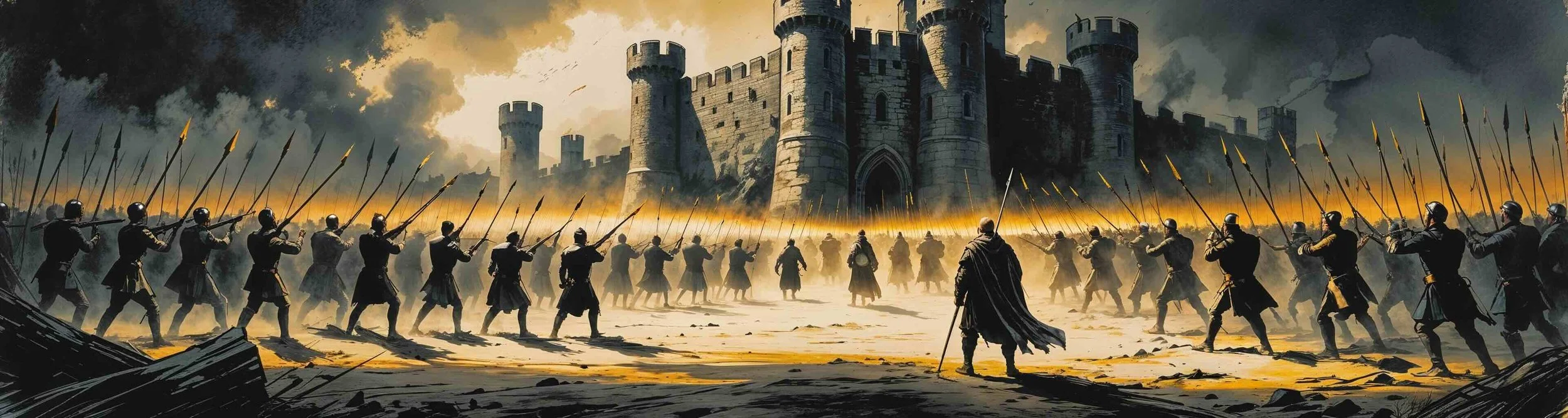
Scene Profile – At a Glance
- Location: Before the castle at Dunsinane, as the army arrives.
- What Happens: Malcolm orders the soldiers to throw down their leafy branches and reveal themselves. He arranges the battle order, and Macduff calls for the trumpets to sound as the assault begins.
- Key Characters: Malcolm, Siward, and Macduff.
- Dramatic Function: A brief, propulsive scene that launches the final battle – the camouflage is dropped and the fighting begins.
- Famous Quote:
"Make all our trumpets speak; give them all breath,
Those clamorous harbingers of blood and death."
(Macduff, Act 5, Scene 6) - Why It Matters: The disguise is over. From here the play moves to open combat and Macbeth's reckoning.
Scene Summary
The army has reached Dunsinane. Malcolm judges them near enough and orders the soldiers to throw down the leafy boughs that disguised their numbers and show themselves as they truly are. He sets the order of battle: Siward and his son will lead the first attack, while Macduff and Malcolm take on whatever remains to be done.
Siward bids them farewell and vows that if they meet the tyrant's full force that night, they deserve to lose only if they fail to fight. Macduff calls for the trumpets to sound with all their breath – those "clamorous harbingers of blood and death" – and the assault begins.
The Disguise Thrown Down
This short scene completes the action begun in Scene 4. The branches cut from Birnam Wood, carried as camouflage, have done their work, and now Malcolm orders them dropped so the army can fight openly as itself.
Original
Now near enough: your leafy screens throw down.
And show like those you are.
(Malcolm, Act 5, Scene 6)
Shakespeare Retold (Modern Verse)
We're near enough to ditch our screens of leaves,
And show them who we are.
The moment carries quiet thematic weight. Throughout the play, disguise and false appearance have served evil – the "innocent flower" hiding the serpent, faces masking foul hearts. Here, disguise is used only as a brief tactic, then deliberately cast aside so the army can "show like those you are". Malcolm's forces hide nothing about themselves; their true faces are their strength. It is the opposite of Macbeth's whole career, and it signals the return of an order in which appearance and reality match once more.
The Trumpets of Blood and Death
With the disguise gone, the scene gives the signal for open war. Macduff, the man with the deepest personal cause against Macbeth, calls the trumpets to full voice.
Original
Make all our trumpets speak; give them all breath,
Those clamorous harbingers of blood and death.
(Macduff, Act 5, Scene 6)
Shakespeare Retold (Modern Verse)
Let all our trumpets sound; fill them with breath,
Forewarning them of pending blood and death.
The rhyming couplet rings out like a fanfare, closing the scene on a note of grim resolve. The trumpets are "harbingers of blood and death" – heralds announcing the slaughter to come – and it is fitting that Macduff, whose wife and children Macbeth murdered, gives the order. The bloodshed ahead is justice as much as battle. The brevity of the scene, ending on this clarion call, hurls the audience straight into the fighting.
Language and Technique
- Appearance and reality: "Show like those you are" reverses the play's pattern of deceptive faces; the loyal army fights openly as itself.
- Rhyming couplet: Macduff's closing "breath / death" couplet works like a fanfare, ending the scene on a decisive, ringing note.
- Sound imagery: The "clamorous" trumpets fill the stage with noise, dragging the audience into the chaos of battle.
- Personification: Trumpets are "harbingers of blood and death", heralds that announce the slaughter to come.
- Brevity as momentum: The scene's shortness propels the play into the rapid combat scenes that follow.
Key Quotes from Act 5, Scene 6
Quote 1Do we but find the tyrant's power to-night,
Let us be beaten, if we cannot fight.
(Siward, Act 5, Scene 6)
Shakespeare Retold (Modern Verse)
If we are faced with all that tyrant's might,
We'll only lose when no one's left to fight.
Shall, with my cousin, your right-noble son,
Lead our first battle...
(Malcolm, Act 5, Scene 6)
Shakespeare Retold (Modern Verse)
Will, with my cousin, your most noble son, lead
Our first wave of attack...
Key Takeaways
- The disguise is dropped: The boughs from Birnam are thrown down and the army fights openly as itself.
- Order against tyranny: "Show like those you are" reverses the play's pattern of deceptive appearance.
- The battle order is set: Siward and his son lead the first attack; Macduff and Malcolm take the rest.
- The assault begins: Macduff's call for the trumpets launches the final fighting.
- A note of cost: Young Siward's place in the vanguard sets up the loss to come.
Study Questions and Analysis
Why is the dropping of the branches significant?
On the surface it is a simple military move: the camouflage has got the army close to the castle, and now it is no longer needed. But the gesture also carries the play's larger meaning. Disguise and false appearance have run all through Macbeth – the witches' riddles, the "innocent flower" that hides a serpent, faces that mask murderous hearts – and almost always in the service of evil.
Here, by contrast, Malcolm's soldiers use disguise only briefly and then deliberately throw it off to "show like those you are". Honesty and open identity belong to the rightful side; concealment belonged to Macbeth. The thrown-down branches mark the return of a world in which appearance and reality are meant to align, the very harmony Macbeth's reign destroyed.
How does this scene present Malcolm and his allies as the rightful side?
Everything about the scene contrasts Malcolm's force with Macbeth's. The orders are clear and the army obeys willingly; the soldiers fight openly, without trickery; and the leaders speak of honour, with Siward vowing they deserve to lose only if they fail to fight.
This careful staging matters because the play needs the audience to feel that overthrowing a king is, in this case, just. By showing Malcolm's side as orderly, brave, and honest – the embodiment of true kingship and loyal service – Shakespeare frames the coming battle not as rebellion but as restoration. The trumpets that end the scene sound for justice, and the cause they announce is the freeing of Scotland from tyranny.
What is the effect of ending the scene on Macduff's couplet?
The scene closes with Macduff's ringing call for the trumpets, "those clamorous harbingers of blood and death", in a tight rhyming couplet. The rhyme gives the line the finality of a fanfare and launches the audience straight into the battle.
It matters that Macduff gives this order. He is the man Macbeth wronged most deeply, having slaughtered his wife and children, and so the trumpets of "blood and death" sound with a personal edge of vengeance as well as a soldier's resolve. The couplet's brevity and force compress the whole turn of the play into two lines: the time for disguise and waiting is over, and the reckoning has begun.