Macbeth: Act 5, Scene 7 – Analysis
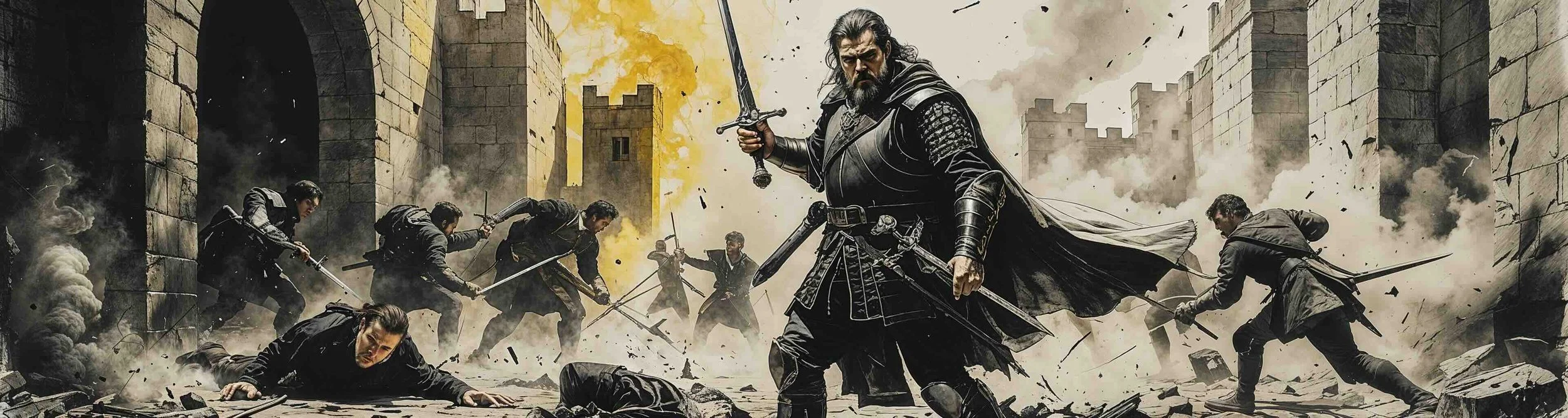
Scene Profile – At a Glance
- Location: Another part of the battlefield before Dunsinane.
- What Happens: Macbeth, trapped like a baited bear, kills Young Siward, then exults that no man born of woman can harm him. Macduff searches the field for Macbeth alone, and Siward reports that the castle has surrendered.
- Key Characters: Macbeth, Young Siward, Macduff, Malcolm, and Siward.
- Dramatic Function: The battle closes in. Macbeth's last prophecy still seems to hold as he kills Young Siward, while Macduff hunts the one death he is owed.
- Famous Quote:
"They have tied me to a stake; I cannot fly,
But, bear-like, I must fight the course."
(Macbeth, Act 5, Scene 7) - Why It Matters: Macbeth is reduced to a cornered animal, fighting on only because escape is impossible.
Scene Summary
Macbeth enters alone, comparing himself to a bear chained to a stake for baiting: he cannot run, so he must fight the course. He clings to the one prophecy left to him – that he need fear no man born of woman. Young Siward confronts him and demands his name; when Macbeth gives it, the young man calls him a hateful tyrant and attacks. They fight, and Young Siward is killed. Macbeth, triumphant, declares that a man born of woman can never frighten him.
Macbeth leaves, and Macduff enters, following the noise of battle. He calls on the tyrant to show his face, vowing that if Macbeth is killed by anyone but him, the ghosts of his murdered wife and children will haunt him forever. He refuses to waste his sword on hired soldiers and goes off to find Macbeth. Finally Malcolm and Siward enter: the castle has surrendered with little resistance, many of Macbeth's men have changed sides, and victory is all but won. Siward leads Malcolm into the castle.
Tied to a Stake
Macbeth's opening image fixes his situation exactly. The audience would have known bear-baiting – a bear chained to a post and set upon by dogs – as a popular and brutal entertainment, and Macbeth casts himself as the bear.
Original
They have tied me to a stake; I cannot fly,
But, bear-like, I must fight the course.
(Macbeth, Act 5, Scene 7)
Shakespeare Retold (Modern Verse)
Like bearbaiting, I'm on a stake, and trapped,
But, like the bear, I have to fight.
The comparison is full of pity and contempt at once. A baited bear is dangerous but doomed, an animal tormented for sport with no hope of escape. Macbeth, who began the play as a celebrated general and rose to be king, has been reduced to this: cornered, surrounded, fighting only because he cannot flee. His courage is real, but it is now the brute persistence of a trapped beast rather than the valour of a hero. The crown has brought him here.
The Last Prophecy Holds
For one final moment, the witches' words still seem to protect him. Young Siward, brave and untested, challenges Macbeth and pays for it with his life, and Macbeth reads the killing as proof that he remains invincible.
Original
But swords I smile at, weapons laugh to scorn,
Brandished by man that's of a woman born.
(Macbeth, Act 5, Scene 7)
Shakespeare Retold (Modern Verse)
So I laugh at your sword, like every weapon
That's brandished by a man a woman bore.
The dramatic irony is heavy. Macbeth takes Young Siward's death as confirmation that no weapon can touch him, growing more confident at the very moment the audience knows his confidence is about to be destroyed. The one man on the field who does not fit the prophecy – Macduff, "from his mother's womb untimely ripped" – is hunting him even now. Macbeth's last comfort is a trap, and his swagger here only sharpens the shock of the reckoning to come.
Language and Technique
- Bear-baiting imagery: "Tied me to a stake... bear-like" reduces Macbeth to a cornered, doomed animal fighting only because it cannot escape.
- Dramatic irony: Macbeth's triumph over Young Siward feeds a confidence the audience knows is built on a misread prophecy.
- Stichomythia: The clipped, line-by-line exchange between Macbeth and Young Siward gives their confrontation a fast, combative rhythm.
- Revenge motif: Macduff's vow that his family's ghosts will haunt him unless he kills Macbeth himself fuses personal grief with the battle's justice.
- Reported collapse: Siward's news that the castle is "gently rendered" shows Macbeth abandoned, his men changing sides around him.
Key Quotes from Act 5, Scene 7
Quote 1What's he
That was not born of woman? Such a one
Am I to fear, or none.
(Macbeth, Act 5, Scene 7)
Shakespeare Retold (Modern Verse)
Where's he
Not born by woman? He's the only one
I have to fear, or no one.
If thou be'st slain and with no stroke of mine,
My wife and children's ghosts will haunt me still.
(Macduff, Act 5, Scene 7)
Shakespeare Retold (Modern Verse)
If you are killed and it's not me who kills you,
My wife and children's ghosts will always haunt me.
This way, my lord; the castle's gently rendered:
The tyrant's people on both sides do fight...
(Siward, Act 5, Scene 7)
Shakespeare Retold (Modern Verse)
This way; the castle has surrendered meekly;
The soldiers of Macbeth fight on both sides...
Key Takeaways
- Macbeth cornered: He likens himself to a baited bear, fighting on because he cannot escape.
- The prophecy still seems true: He kills Young Siward and reads it as proof no man can harm him.
- Dramatic irony: His confidence peaks just as the one man who can kill him closes in.
- Macduff's personal cause: He hunts Macbeth alone, owing his murdered family the tyrant's death.
- The castle falls: Dunsinane surrenders as Macbeth's men desert to the other side.
Study Questions and Analysis
What does the bear-baiting image tell us about Macbeth?
Comparing himself to a bear "tied to a stake", Macbeth captures his own situation with brutal accuracy. Bear-baiting was a familiar Elizabethan blood-sport: a chained bear, unable to flee, was set upon by dogs until it died. By casting himself as the bear, Macbeth admits he is trapped and doomed, fighting on only because there is no way out.
The image measures how far he has fallen. He entered the play as a heroic general, brave by choice and praised by his king; now his courage is the desperate ferocity of a cornered animal tormented for others' sport. There is something pitiable in it, but also a kind of grim endurance – he will not surrender, even baited and surrounded. The crown he murdered for has led him to this stake, and he meets it the only way he knows how, by fighting "the course".
Why does Shakespeare include the killing of Young Siward?
Young Siward's death serves several purposes at once. Dramatically, it keeps Macbeth dangerous right to the end – he is still a formidable killer, not yet beaten – and it lets the "no man born of woman" prophecy appear to hold one last time, sharpening the irony before Macduff overturns it.
It also matters for the play's wider pattern of sacrifice and honour. Young Siward dies bravely, facing the tyrant without flinching, and his death is later mourned with stern dignity by his father, who is proud that the wounds were "on the front". The episode reminds us that Macbeth's defeat is bought with real lives, and that the courage Macbeth once embodied now belongs to the young men fighting against him. His final victory in single combat is also, fittingly, his last.
How does this scene build tension before the final confrontation?
Shakespeare keeps Macbeth and Macduff apart while making their meeting feel inevitable. Macbeth exits triumphant, certain no weapon can harm him; moments later Macduff enters hunting him, vowing to kill no one else. The audience can see the collision coming but is made to wait for it.
The tension is heightened by everything we know that the characters do not share. Macbeth's confidence rests on a prophecy the audience understands is a trap; Macduff's strange birth, which will spring that trap, hangs unspoken over his every line. Add Siward's news that the castle has fallen, and the scene narrows the play to one remaining question: when these two men finally meet, what will happen? By delaying the answer across the short, fast scenes of this act, Shakespeare makes the eventual duel feel both unbearable and certain.