Power and Ambition
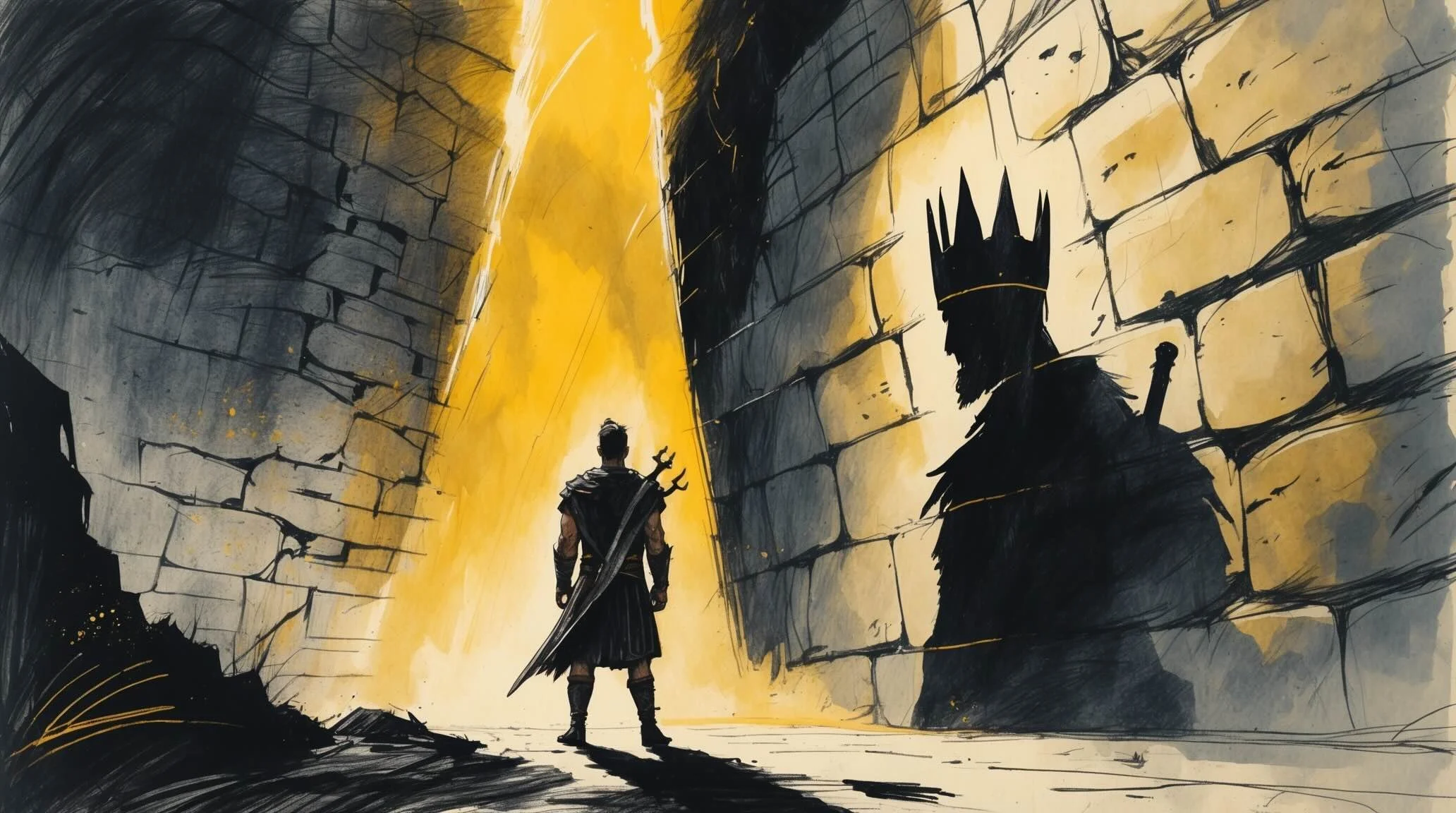
Theme Profile – At a Glance
- The Core Concept: The destructive and corrupting power of unchecked desire for power, illustrating how sacrificing morality for political gain inevitably leads to psychological and physical destruction.
- Key Characters: Macbeth, Lady Macbeth, Banquo, and Malcolm.
- Related Themes: Guilt, Kingship, Fate, and Appearance.
- Famous Quote:
"I have no spur
To prick the sides of my intent, but only
Vaulting ambition, which o'erleaps itself
And falls on the other."
(Act 1, Scene 7)
The Catalyst of Tragedy
In the Aristotelian tradition, a tragic hero must possess a fatal flaw (hamartia) that brings about their downfall. For Macbeth, this flaw is unmistakably his profound, all-consuming ambition. Shakespeare makes it explicitly clear that Macbeth is not inherently evil; he is a celebrated, courageous warrior who understands the moral weight of his actions. When he considers murdering King Duncan, he meticulously lists the reasons against it, concluding that the only driving force he possesses is "vaulting ambition."
Original
I have no spur
To prick the sides of my intent, but only
Vaulting ambition, which o'erleaps itself
And falls on the other.
(Act 1, Scene 7)
Shakespeare Retold (Modern Verse)
There’s no more
That’s motivating me to act, except
Ambition, like a man mounting his horse
And falling off the other side.
This equestrian metaphor perfectly encapsulates the theme. Ambition is presented as a wild horse that Macbeth cannot control. By attempting to jump too high (seizing a crown that does not belong to him), he guarantees that he will fall and destroy himself. This internal struggle highlights that his ambition is a conscious choice, making his subsequent surrender to it deeply tragic rather than merely villainous.
The Toxic Partnership of Ambition
Macbeth's ambition, while potent, is initially tempered by his moral conscience and fear of consequence. It requires the relentless psychological manipulation of Lady Macbeth to fully ignite it. She acts as the ultimate catalyst, possessing an ambition that is initially far more ruthless and pragmatic than her husband's.
Original
Art not without ambition, but without
The illness should attend it: what thou wouldst highly,
That wouldst thou holily;
(Act 1, Scene 5)
Shakespeare Retold (Modern Verse)
And you have high ambition, but without
The ruthlessness that's needed. Things you do,
You do with decency;
Lady Macbeth recognises that true political ambition in their corrupt world requires an "illness"—a willingness to commit evil acts. She attacks Macbeth's gender and courage, effectively weaponising his ambition against his morality. However, their shared pursuit of power ultimately destroys their partnership. Once the crown is secured, their shared ambition curdles into individual paranoia, isolating them from the world and, tragically, from each other.
The Contrast of Noble Aspiration
Shakespeare is careful not to present all forms of desire for power as inherently evil. The play provides clear foils to the Macbeths' toxic ambition through characters like Banquo and Malcolm. Banquo hears a similarly tantalising prophecy from The Witches—that his descendants will be kings. While he admits to having "cursed thoughts" and a desire for the prophecy to come true, he refuses to sacrifice his "bosom franchised and allegiance clear" to achieve it.
Original
In the great hand of God I stand; and thence
Against the undivulged pretence I fight
Of treasonous malice.
(Act 2, Scene 3)
Shakespeare Retold (Modern Verse)
God’s on my side, protecting me; and so,
I’ll fight to find the secrecies behind
This treasonous action.
Similarly, Malcolm possesses the ambition to reclaim his father's throne, but his desire is rooted in the restoration of the natural order and divine kingship, not selfish greed. By contrasting Macbeth with these characters, the play argues that ambition is only destructive when it is decoupled from morality and the natural laws of the universe.
The Hollow Crown and Nihilism
The supreme irony of the play is that Macbeth's ambition yields none of the rewards he anticipated. He sacrifices his soul, his honour, and his peace of mind to attain the crown, only to discover that the power he seized is entirely hollow. Because his rule is illegitimate, he lives in constant terror of losing it, leading to a frantic, blood-soaked reign of tyranny.
Original
Upon my head they placed a fruitless crown,
And put a barren sceptre in my gripe...
(Act 3, Scene 1)
Shakespeare Retold (Modern Verse)
They crowned me, but my children won’t succeed me.
They handed me a useless royal sceptre...
To protect his ill-gotten gains, Macbeth must continuously feed his ambition with more violence, ordering the murders of Banquo and Macduff's family. This endless cycle of bloodshed completely desensitises him. By the time his ambition has run its full course, he has been stripped of all human emotion, viewing life merely as a "tale told by an idiot... signifying nothing." The ultimate punishment for his ambition is a completely meaningless existence.
"Macbeth’s ambition is a terrifying force precisely because it is accompanied by a profound moral imagination; he knows the exact price of his damnation, yet his desire for the crown compels him to pay it, guaranteeing his psychological and spiritual ruin."
— A.C. Bradley, Shakespearean Tragedy (1904)
Key Quotes
Quote 1
To be thus is nothing;
But to be safely thus.
(Act 3, Scene 1)
Shakespeare Retold (Modern Verse)
There’s no point being king
Unless a safe king.
Quote Analysis: Having achieved his ultimate goal of becoming king, Macbeth immediately realises it brings him no peace. His ambition mutates from a desire to attain power into a paranoid, desperate need to secure it, driving him to plot the murder of his closest friend, Banquo.
Quote 2
I am in blood
Stepp'd in so far that, should I wade no more,
Returning were as tedious as go o'er.
(Act 3, Scene 4)
Shakespeare Retold (Modern Verse)
I’ve so much blood
Upon my hands that, should I choose to backtrack,
It would be like repeating all I’ve done.
Quote Analysis: At this critical juncture, Macbeth realises the inescapable trap his ambition has created. He is standing in a river of blood; he cannot undo his crimes to find salvation, so he resolves to push forward into complete tyranny, cementing his permanent surrender to evil.
Key Takeaways
- The Fatal Flaw: Unchecked ambition is the primary catalyst for the tragedy, causing a noble hero to willingly damn his own soul.
- The Necessity of "Illness": The play argues that absolute political ambition often demands the sacrifice of human morality and empathy.
- The Illusion of Reward: The power gained through immoral ambition is entirely hollow, bringing only paranoia, guilt, and isolation rather than satisfaction.
- Contrast with Noble Duty: Characters like Banquo and Malcolm demonstrate that a desire for greatness is only healthy when constrained by honour and natural law.
Study Questions and Analysis
Q1: Is ambition presented as inherently evil in the play? +
No. Ambition itself is not evil; it is the willingness to abandon morality to achieve it that is destructive. Malcolm is highly ambitious to reclaim the throne, but his ambition serves the greater good and the restoration of natural order, making it a noble pursuit.
Q2: How does Lady Macbeth's ambition differ from her husband's? +
Initially, her ambition is far more resolute, cold, and practical. She is willing to immediately suppress her humanity to achieve their goals, while Macbeth is hesitant and plagued by conscience. However, his ambition eventually outgrows hers, turning him into an independent, unfeeling tyrant while her suppressed guilt destroys her.
Q3: Why does Macbeth's ambition not bring him happiness? +
Because he violated his own deeply held moral convictions to achieve it. He knows he murdered a good, divinely appointed king. Consequently, his reign is plagued by profound guilt, sleeplessness, and the constant, paranoid fear that someone will usurp him just as he usurped Duncan.
Q4: How does Banquo act as a foil regarding ambition? +
Banquo hears a prophecy that his sons will be kings. He clearly has ambition and hope for his bloodline, but he actively chooses to keep his "allegiance clear" to the current King. He refuses to act treasonously to speed up the prophecy, highlighting Macbeth's moral failure.
Q5: What role do the Witches play in Macbeth's ambition? +
The Witches do not force Macbeth to be ambitious; they simply hold a mirror to his darkest, unspoken desires. They provide the spark of prophecy, but it is his own latent, pre-existing ambition that provides the fuel for the tragedy.
Q6: What does the metaphor "vaulting ambition" signify? +
It is an image from horsemanship. Macbeth compares himself to an inexperienced rider who tries to vault too enthusiastically onto a horse, overshoots the saddle, and falls hard on the other side. It perfectly predicts that his overreaching ambition will be the exact cause of his ruin.
Q7: How does the theme of ambition connect to the play's ending? +
By the end, Macbeth's ambition has alienated everyone. He dies completely alone, surrounded by enemies, leading a meaningless existence. The play concludes that power achieved without moral foundation is inherently self-destructive and ultimately hollow.