Richmond
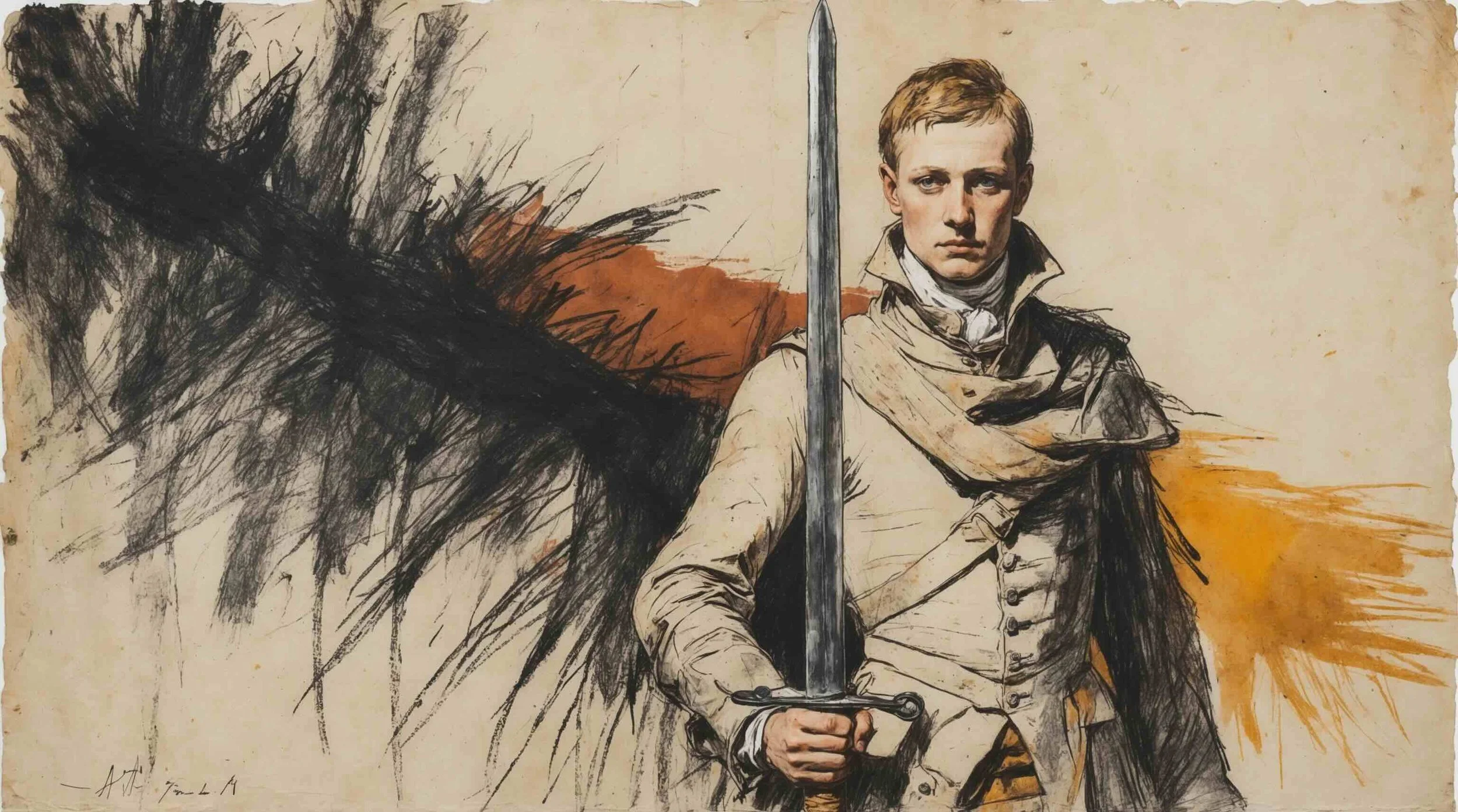
Character Profile – At a Glance
- Role: Henry Tudor, Earl of Richmond: the last Lancastrian claimant, in exile in Brittany since boyhood. He is talked about for four acts, arrives in the fifth, kills Richard at Bosworth and becomes Henry VII.
- Key Traits: Pious, calm, plain-spoken and untroubled. He prays before he sleeps, sleeps well, and speaks to his soldiers about God, wives and children. He has no wit, no doubts and no inner life, and the play does not give him one.
- The Core Conflict: Richmond has no conflict of his own; he is the answer to everyone else’s. His task is to be the clean hand that ends the play, and his difficulty – for actors and readers – is that Shakespeare has made Richard so much more interesting.
- Key Actions: Is named in prophecy by Henry VI and remembered by Richard (A4S2). Is reported at sea and then landed at Milford (A4S4). Receives Queen Elizabeth’s consent to marry her daughter through Stanley (A4S5). Marches to Tamworth and addresses his army (A5S2). Meets Stanley by night, prays, and is blessed by the ghosts of Richard’s victims (A5S3). Gives his oration and fights at Bosworth. Kills Richard, is crowned by Stanley, and proclaims the union of York and Lancaster (A5S5).
- Famous Quote:
"The day is ours, the bloody dog is dead."
(Act 5, Scene 5) - The Outcome: Wins. Crowned Henry VII on the field, he pardons the defeated, orders the dead buried, announces his marriage to Elizabeth of York and asks God to say amen to peace.
The Wretched, Bloody, and Usurping Boar
Richmond does not speak until A5S2, and his first speech is to his army. Everything about it is the opposite of Richard. Where Richard confided in the audience, Richmond addresses "fellows in arms"; where Richard’s images were of his own body, Richmond’s are of the country’s.
Original
The wretched, bloody, and usurping boar,
That spoiled your summer fields and fruitful vines,
Swills your warm blood like wash and makes his trough
In your embowelled bosoms...
(Act 5, Scene 2)
Shakespeare Retold (Modern Verse)
The boar that stole this land unlawfully,
That wrecked your summer fields and fertile vineyards,
That gargles with your blood and makes a trough
By disembowelling you...
The boar was Richard’s badge, and the play has used it before: Stanley dreamt of it, Hastings laughed at the dream and died. Richmond turns the badge into a picture of a pig in a trough of English blood, and the picture is doing political work. The war he is about to fight is presented not as a claim to a throne but as the removal of an animal.
Notice that Richmond never mentions his own right. He speaks of tyranny, of spoiled fields, of the centre of the isle, of peace. The historical Henry Tudor’s claim was famously thin, and Shakespeare deals with the problem by never raising it. Richmond is defined by what he is against, and the play’s study of power and ambition has, by this point, made that enough.
O Thou Whose Captain I Account Myself
On the night before the battle the play cuts between the two camps, and the contrast is the meaning. Richard is short-tempered, checks the watch, calls for ink and paper and a bowl of wine, and cannot rest. Richmond dismisses his lords, and prays.
Original
O Thou whose captain I account myself,
Look on my forces with a gracious eye;
Put in their hands thy bruising irons of wrath,
That they may crush down with a heavy fall
The usurping helmets of our adversaries;
Make us thy ministers of chastisement,
That we may praise thee in the victory!
(Act 5, Scene 3)
Shakespeare Retold (Modern Verse)
Oh God, as I’m a captain under you,
I ask that you look kindly on my forces;
Give them destructive swords to use in anger
So that they may completely overwhelm
Our enemy unlawfully in power;
Make us your holy agents of revenge,
So we can praise you in our victory!
The prayer is not private. It is a statement of what Richmond’s army is for: an instrument of God’s chastisement, crushing "usurping helmets" with "bruising irons of wrath". The vocabulary is Old Testament, and it asks nothing for Richmond himself except that his soldiers may praise God afterwards. Then he lies down and sleeps.
The ghosts who follow visit both tents, cursing Richard and blessing Richmond, and Richmond sleeps through them and wakes refreshed. It is the play’s one clear statement about the theme of conscience and guilt: a clean conscience sleeps. Whether the audience finds that statement satisfying, after four acts in Richard’s company, is another matter, and the play seems to know it.
God and Our Good Cause Fight Upon Our Side
Richmond’s oration to his soldiers is set directly against Richard’s, and Shakespeare has written both so that they can be compared line for line. Richard calls the enemy vagabonds, scum and rags of France; Richmond does not describe his enemy’s soldiers at all, only their leader.
Original
For what is he they follow? Truly, gentlemen,
A bloody tyrant and a homicide;
One raised in blood, and one in blood established;
One that made means to come by what he hath,
And slaughtered those that were the means to help him;
A base foul stone, made precious by the foil
Of England’s chair, where he is falsely set;
One that hath ever been God’s enemy.
(Act 5, Scene 3)
Shakespeare Retold (Modern Verse)
For who is he they follow? Let me tell you,
A bloody tyrant and a murderer;
Who took the throne, and kept the throne, by bloodshed;
Who had manipulated men to get there,
And then he killed the men that helped him do it;
He’s like a worthless stone made rich by gold
From England’s throne where he is sat by cheating;
He is eternal enemy to God.
It is an indictment, and every clause of it is true: Richard came to the throne by blood, kept it by blood, used men as means and killed them afterwards. The image of the "base foul stone" made precious by the setting of England’s throne is the nearest Richmond comes to wit, and it is a lawyer’s image, not a jester’s. He is stating a case.
What follows is a set of promises: fight for God and God will guard you; kill the tyrant and sleep in peace; fight for your wives and they will welcome you home. The structure is if-then, five times over, and it is the rhetoric of a man who wants to be understood rather than admired. The play’s treatment of language and rhetoric ends here, with plain speech beating brilliant speech, and it is hard not to feel that Shakespeare intended the victory and did not entirely enjoy it.
We Will Unite the White Rose and the Red
The last speech of the play belongs to Richmond, and it is the speech an Elizabethan audience had been waiting for: the marriage that ended the Wars of the Roses and founded the dynasty under which they were sitting. Richmond names himself and Queen Elizabeth’s daughter as the true heirs of the two houses, and asks God to bless their children.
Original
O now let Richmond and Elizabeth,
The true succeeders of each royal house,
By God’s fair ordinance conjoin together!
And let their heirs (God, if thy will be so)
Enrich the time to come with smooth-faced peace,
With smiling plenty, and fair prosperous days!
(Act 5, Scene 5)
Shakespeare Retold (Modern Verse)
But now let Richmond and Elizabeth,
The rightful heirs of Lancaster and York,
Be married with the blessings of our God!
And let their children – if God gives them some –
Enrich the future with a gentle peace,
With happiness, and much prosperity!
The reigning Queen, Elizabeth I, was one of those children’s children, and the speech is addressed past the stage to her. This is the "Tudor myth" in its purest form: a century of civil war brought to an end by a marriage, with heaven smiling and peace living again. Richmond speaks it without irony, and the play gives him the last word.
Two things complicate the picture. The first is the line "What traitor hears me, and says not amen?", which is a threat wrapped in a prayer and reminds us that the new order will have its own enemies. The second is everything that has gone before: the audience has spent the evening enjoying a villain, and the man who replaces him is a good deal less fun. The play’s treatment of fate and free will concludes with providence winning, and leaves the audience to decide how it feels about that.
"His instrument, obviously and inevitably, is Richmond; and that this instrument should be largely passive, truly an instrument … was also inevitable in the sort of drama Shakespeare was writing."
— E. M. W. Tillyard, Shakespeare’s History Plays, 1944
Key Quotes
Quote 1
True hope is swift and flies with swallow’s wings,
Kings it makes gods, and meaner creatures kings.
(Act 5, Scene 2)
Shakespeare Retold (Modern Verse)
True hope flies fast upon a swallow’s wings;
Kings rise to God-like status, folk to kings.
Quote Analysis: The couplet that closes Richmond’s first scene, and his only aphorism. Hope with swallow’s wings is a conventional image, but the second line is sharper than it looks: hope makes kings into gods and lesser men into kings, which is exactly what is about to happen to Richmond. He is a "meaner creature" – an earl with a doubtful claim – and by the end of the play he will be a king. Whether Richard was a king made into a god by hope, and unmade by its loss, is a question the line leaves hanging.
The weary sun hath made a golden set,
And by the bright tract of his fiery car
Gives token of a goodly day tomorrow.
(Act 5, Scene 3)
Shakespeare Retold (Modern Verse)
The fading sun creates a golden sunset,
And by the brightness of its fiery path,
It’s a good omen for success tomorrow.
Quote Analysis: Richmond reads the sunset as an omen and gets it right. The next morning Richard looks for the sun and cannot find it: "the sun will not be seen today", he says, and reflects that it should have shone on him. The play arranges the weather so that the same sky means victory to one man and defeat to the other. Richmond’s confidence is not arrogance; it is the calm of a man who assumes heaven is on his side and turns out to be correct.
The sweetest sleep and fairest-boding dreams
That ever ent’red in a drowsy head
Have I since your departure had, my lords.
Methought their souls whose bodies Richard murdered
Came to my tent and cried on victory.
(Act 5, Scene 3)
Shakespeare Retold (Modern Verse)
I’ve had the sweetest sleep and finest dreams
That ever have consumed a sleepy head
Since you all left me here to sleep, my lords.
I thought the souls of those who Richard murdered
Came to my tent and shouted that I’d win.
Quote Analysis: Richmond’s account of the night, spoken as he wakes. The ghosts who told Richard to despair and die have told Richmond to live and flourish, and he reports it as a pleasant dream. The contrast with Richard’s waking – sweating, calling for another horse, interrogating himself – could not be starker, and Shakespeare places the two speeches within a hundred lines of each other so that no one can miss it. The souls of the murdered have chosen a side.
God and your arms be praised, victorious friends,
The day is ours, the bloody dog is dead.
(Act 5, Scene 5)
Shakespeare Retold (Modern Verse)
Praise God and praise your swords; we are victorious,
This day belongs to us, the dog is dead.
Quote Analysis: The first words after the battle. Richmond thanks God, then his soldiers, and then announces the death of Richard in a phrase that reduces him to an animal: the boar of Act 5 has become a dog. It is the play’s epitaph on its protagonist, and it is a single half-line. Everything Richard was – the wit, the performances, the confidences to the audience – is dismissed in five words by a man who never heard any of it.
Key Takeaways
- Talked About, Then Present: Richmond is a name in prophecies and messengers’ reports for four acts. He speaks for the first time in A5S2.
- The Opposite of Richard: Plain where Richard is brilliant, pious where Richard is blasphemous, asleep where Richard is awake. Every scene he has is built for contrast.
- God’s Instrument: He describes his army as heaven’s ministers of chastisement and never mentions his own claim. The play lets him win on those terms.
- The Tudor Ending: His final speech announces the marriage that founded the dynasty of Shakespeare’s own queen. The audience has to decide whether it prefers him to the man he killed.
Study Questions and Analysis
Who is Richmond and what is his claim to the throne?
Henry Tudor, Earl of Richmond, was the son of Edmund Tudor and Margaret Beaufort, and through his mother a descendant of John of Gaunt by his mistress Katherine Swynford. The Beaufort line had been legitimised by Act of Parliament but barred from the succession, and Henry’s claim to the crown of England was, by any strict reckoning, poor. He had spent fourteen years in exile in Brittany and France, and was known in England chiefly as the last Lancastrian left standing.
The play knows all this and lets Richard say it:
And who doth lead them but a paltry fellow,
Long kept in Britain at our mother’s cost?
A milksop, one that never in his life
Felt so much cold as over shoes in snow?
(King Richard, Act 5, Scene 3)
Shakespeare Retold (Modern Verse)
And who’s their leader? Just a worthless chap
Who’s been in Brittany, paid by our country?
A pansy, one who never in his life
Has felt the cold, except snow in his shoes?
A milksop kept abroad at someone else’s expense: it is a fair summary of the historical Henry, and Shakespeare puts it in the mouth of the man the audience is meant to distrust. What Richmond has instead of a claim is a cause, a marriage and a prophecy. Henry VI, we are told in A4S2, once prophesied that the boy would be king; Queen Elizabeth agrees to give him her daughter; and the ghosts of Richard’s victims tell him to live and flourish. Peter Saccio’s Shakespeare’s English Kings (1977) sets out how carefully Shakespeare avoids the question of Henry’s title, and how necessary that avoidance was in a play written for the granddaughter of the man in question.
Why is Richmond kept offstage until Act 5?
Because his function is to end the play, not to be in it. For four acts Richmond exists as a rumour: a name in a prophecy, a threat in a messenger’s mouth, a reason for Richard to want Queen Elizabeth’s daughter. Richard’s first real fear is expressed as a set of questions to Stanley:
Is the chair empty? Is the sword unswayed?
Is the King dead? The empire unpossessed?
What heir of York is there alive but we?
And who is England’s king but great York’s heir?
Then tell me, what makes he upon the seas?
(King Richard, Act 4, Scene 4)
Shakespeare Retold (Modern Verse)
Is the throne empty? Is the sword kept sheathed?
Is the King dead? And is the country unclaimed?
What royal heir of York lives on but me?
And who’s the King of England but York’s heir?
So tell me, what’s he doing on the seas?
"What makes he upon the seas?" is a good question and Richard knows the answer. The technique is one Shakespeare uses often: the more a character is talked about before he appears, the larger he seems when he does. It also protects Richmond from comparison. If he shared the stage with Richard for three acts, the audience would notice how much duller he is; arriving late, he is simply the ending.
E. M. W. Tillyard’s Shakespeare’s History Plays (1944) argued that Richmond’s passivity was "inevitable in the sort of drama Shakespeare was writing" – a drama of providence, in which God’s instrument must not have a personality that competes with God’s plan. A. P. Rossiter’s "Angel with Horns" (1961) took the same fact and drew the opposite conclusion: the play’s energy is entirely with Richard, and the official ending is delivered by a man the audience has no reason to love. Both are right about the structure. They differ about whether Shakespeare meant it.
How do Richmond’s and Richard’s orations to their armies differ?
In everything, and the play sets them side by side so that the difference cannot be missed. Richmond’s oration is built on God, cause, wives and children, and on the character of the enemy’s leader. Richard’s is built on contempt for the enemy’s soldiers:
Remember whom you are to cope withal:
A sort of vagabonds, rascals, and runaways,
A scum of Britains and base lackey peasants,
Whom their o’ercloyed country vomits forth
To desperate adventures and assured destruction.
(King Richard, Act 5, Scene 3)
Shakespeare Retold (Modern Verse)
Remember who you’re due to face in battle:
A bunch of vagrants, rascals, fugitives,
Scumbags from Brittany, and lowlife peasants
Who have been spat out by their sickly country
In futile expeditions that they’ll fail in.
Richard’s speech is the better piece of writing. It has energy, a vivid picture of Brittany vomiting its beggars across the Channel, and a splendid sneer at Richmond as a milksop who never got snow in his shoes. It also has no argument except appetite: fight, or these men will take your lands and your wives. Richmond’s speech, by contrast, gives his soldiers five reasons and a promise to share the spoils, and ends by offering his own corpse as the ransom if he fails.
Wolfgang Clemen’s A Commentary on Shakespeare’s Richard III (1968) treats the two orations as the play’s final rhetorical set piece, a formal contest in which the tyrant’s style is exposed by being placed against its opposite. Nicholas Brooke’s Shakespeare’s Early Tragedies (1968) notices that Richard’s speech is also the last time he addresses anyone with the old confidence, and that it is undercut before it begins by his own admission that the sun will not shine on him. The audience hears the swagger and knows it is hollow.
What is the significance of the ghosts blessing Richmond?
The ghost scene in A5S3 is the play’s judgement, delivered by the dead. Eleven of Richard’s victims file through, and each speaks first to Richard, telling him to despair and die, and then turns to Richmond’s tent with a blessing. The two princes speak together:
Sleep, Richmond, sleep in peace and wake in joy.
Good angels guard thee from the boar’s annoy!
Live and beget a happy race of kings!
Edward’s unhappy sons do bid thee flourish.
(Ghosts of the Princes, Act 5, Scene 3)
Shakespeare Retold (Modern Verse)
Sleep, Richmond, peacefully, and wake up happy.
Angels protect you if the boar gets snappy!
Live on, raise children who’ll be happy kings!
Edward’s unhappy sons want you to prosper.
"Live and beget a happy race of kings" is the Tudor dynasty being prophesied by its victims’ predecessors. The children Richard murdered are asking heaven to give Richmond children; the wrong done to the house of York is to be repaired by the marriage of Richmond to York’s heir. This is the theme of prophecy and curses turned from curse into blessing, and it is the only time in the play that the supernatural speaks for anyone but the dead.
E. M. W. Tillyard (1944) read the scene as the moment providence shows its hand. Jan Kott’s Shakespeare Our Contemporary (1964) read it as theatre rather than theology: the ghosts are a device for showing the audience which way the Grand Mechanism is turning, and the blessings on Richmond are the machine announcing its next king. The scene works either way, because it is built to. The ghosts speak in a formal, repetitive style that feels like ritual, and ritual can be read as faith or as form depending on the reader.
Is Richmond a convincing character or a symbol?
He is a symbol who is given just enough character to be played. Richmond has no soliloquy, no private doubt, no relationship the play develops beyond a few lines with his stepfather. What he has is a manner – calm, courteous, brief – and one moment that is close to human:
I’ll strive with troubled thoughts to take a nap,
Lest leaden slumber peize me down tomorrow,
When I should mount with wings of victory.
(Act 5, Scene 3)
Shakespeare Retold (Modern Verse)
I’ll try to sleep, although my mind is spinning,
So that a lack of sleep won’t weigh me down,
Preventing me from winning victory.
"Troubled thoughts" is the only admission in the part that Richmond feels the weight of what he is doing, and it is followed at once by the prayer and the sleep. Actors tend to build the role out of this line, playing Richmond as a young man aware that he may be dead by noon, and it is a reasonable choice; the text allows it without insisting on it.
Robert Ornstein’s A Kingdom for a Stage (1972) argued against reading the histories as providential pageants, and Richmond is the character on whom that argument is hardest to sustain, because he is written as a pageant figure: he arrives, prays, wins and speaks the moral. Phyllis Rackin’s Stages of History (1990) suggests that the history plays keep more than one idea of history in play at once, and Richmond is where the providential idea is voiced most plainly. The most honest thing to say in an essay is that Shakespeare gave Richmond exactly as much life as the ending needed and no more, and that a play whose villain is this alive could not afford a hero who competed with him.
What is Stanley’s role in Richmond’s victory?
Stanley, Earl of Derby, is Richmond’s stepfather and the play’s great fence-sitter. Richard does not trust him and holds his son George hostage to guarantee his loyalty; Stanley sends messages to Richmond promising help, and then explains, by night in Richmond’s camp, why the help cannot be open:
I, as I may – that which I would I cannot –
With best advantage will deceive the time,
And aid thee in this doubtful shock of arms;
But on thy side I may not be too forward,
Lest being seen, thy brother, tender George,
Be executed in his father’s sight.
(Stanley, Act 5, Scene 3)
Shakespeare Retold (Modern Verse)
I cannot help as much as I would like to,
But I will find a way to play for time
And help you fight this undecided battle;
But my support cannot be obvious
Else Richard sees, and then your brother George
Will be beheaded right in front of me.
On the day, Stanley refuses Richard’s order to bring his troops, Richard orders George beheaded, Norfolk persuades him to wait until after the battle, and Stanley’s men join Richmond. The historical Stanleys did something very like this, and their intervention at Bosworth was decisive. Shakespeare keeps the politics and softens the calculation: his Stanley is a father in an impossible position rather than a magnate waiting to see who wins.
The point for Richmond is that his victory is not his alone. He wins because the play’s honest men – Stanley, and the soldiers Richard has terrorised – finally have somewhere to go. Richard says as much in his own oration, in reverse: he must whip the stragglers back to sea because he cannot count on the men in front of him. Peter Saccio (1977) notes how much the real battle turned on the Stanleys’ late arrival, and how Shakespeare compresses a day of manoeuvre into a single decision about a boy’s life. The theme of appearance and reality has its final turn here: Stanley deceives Richard in order to be true to Richmond, and the play calls it loyalty.
Is the ending of the play a restoration or the start of a new cycle?
The play says restoration, and says it firmly. Richmond’s last speech announces peace, marriage, pardon and the burial of the dead, and calls on God to say amen. But it also contains this:
And then as we have ta’en the sacrament,
We will unite the White Rose and the Red.
Smile heaven upon this fair conjunction,
That long have frowned upon their enmity!
What traitor hears me, and says not amen?
(Act 5, Scene 5)
Shakespeare Retold (Modern Verse)
And then, as we have sworn a holy oath,
We will unite the Lancasters and Yorks.
And may God smile upon this happy union,
Who long has frowned on how both sides have fought!
What traitor hears me, but does not agree?
"What traitor hears me, and says not amen?" is a question with a threat in it. The new king has just won a civil war and is already looking for the next enemy. An audience that has watched Richard use the word "traitor" to kill Hastings may notice the echo.
E. M. W. Tillyard’s Shakespeare’s History Plays (1944) took the ending at face value, as the moment God’s plan for England is completed and the Tudor peace begins. Jan Kott’s Shakespeare Our Contemporary (1964) took the opposite view, and his description of the histories is worth quoting: "Each of these great historical tragedies begins with a struggle for the throne, or for its consolidation. Each ends with the monarch’s death and a new coronation." On Kott’s reading Richmond is not the end of the mechanism but its next turn. Phyllis Rackin’s Stages of History (1990) argues that the plays hold both possibilities open, and that is probably the safest position for an essay. The text gives Richmond the last word and gives Richard the play, and it leaves the reader to decide which one to believe.