
Home → Plays → Richard III → Themes
Richard III: Themes
Richard III themes analysis for all 7 major themes – power and ambition, manipulation and deceit, fate vs free will, conscience and guilt, appearance vs reality, prophecy and curses, and language and rhetoric. Each guide examines how Shakespeare develops the theme across the play, supported by close reading, key quotes, and modern verse translation.
A complete themes study guide and revision resource for GCSE, A-Level, AP English, IB, and undergraduate Shakespeare. Ideal for essay planning, exam preparation, and class discussion. Select a theme below to begin.
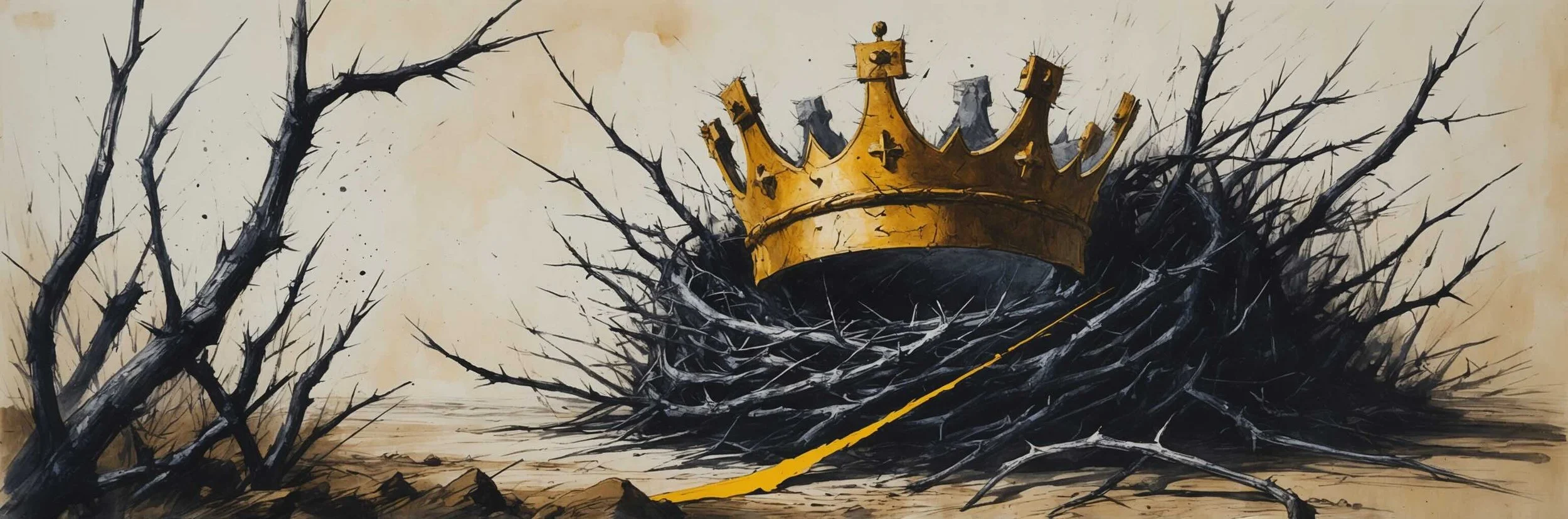
Power and Ambition
How Richard wins the crown by seeming not to want it, and why winning and keeping it are different skills.
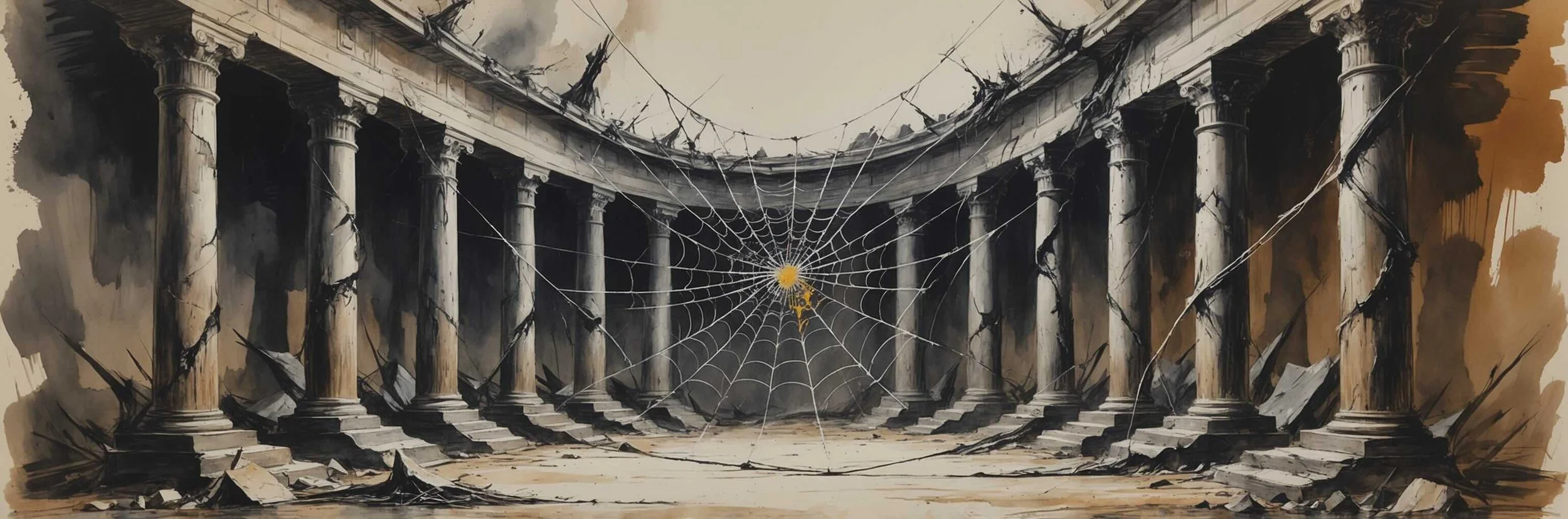
Manipulation and Deceit
Richard tells each victim the story they already believe, and the audience watches every trick set up.
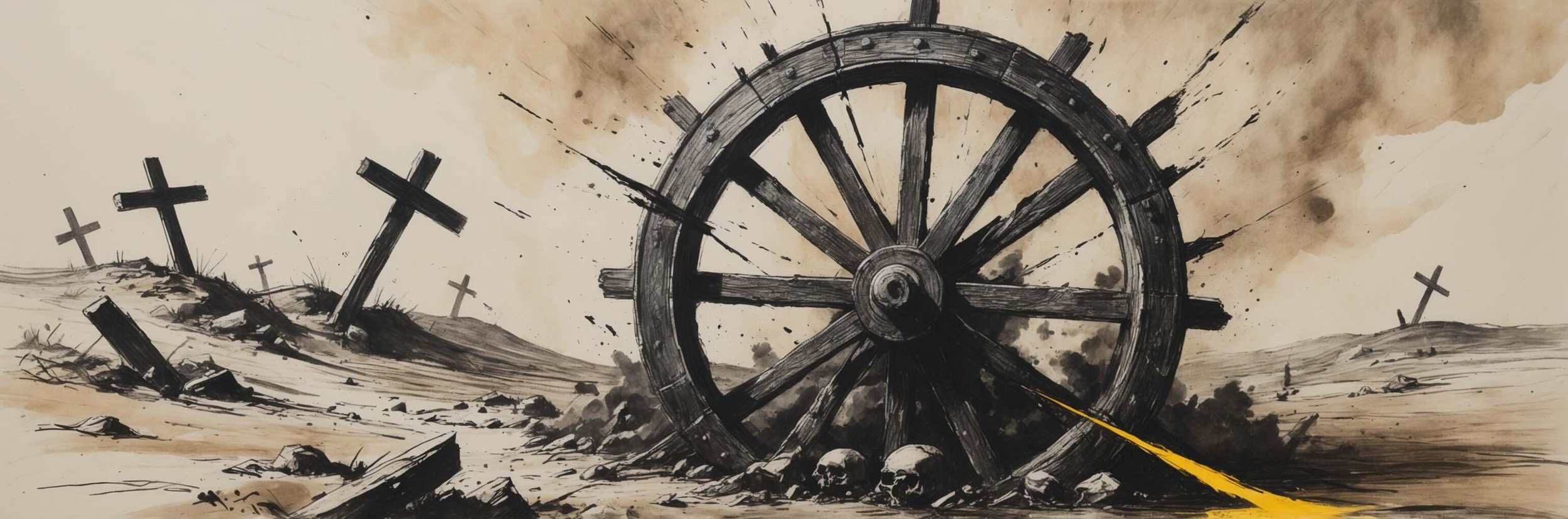
Fate vs Free Will
Margaret's curses all come true, and every victim was warned and chose not to listen.
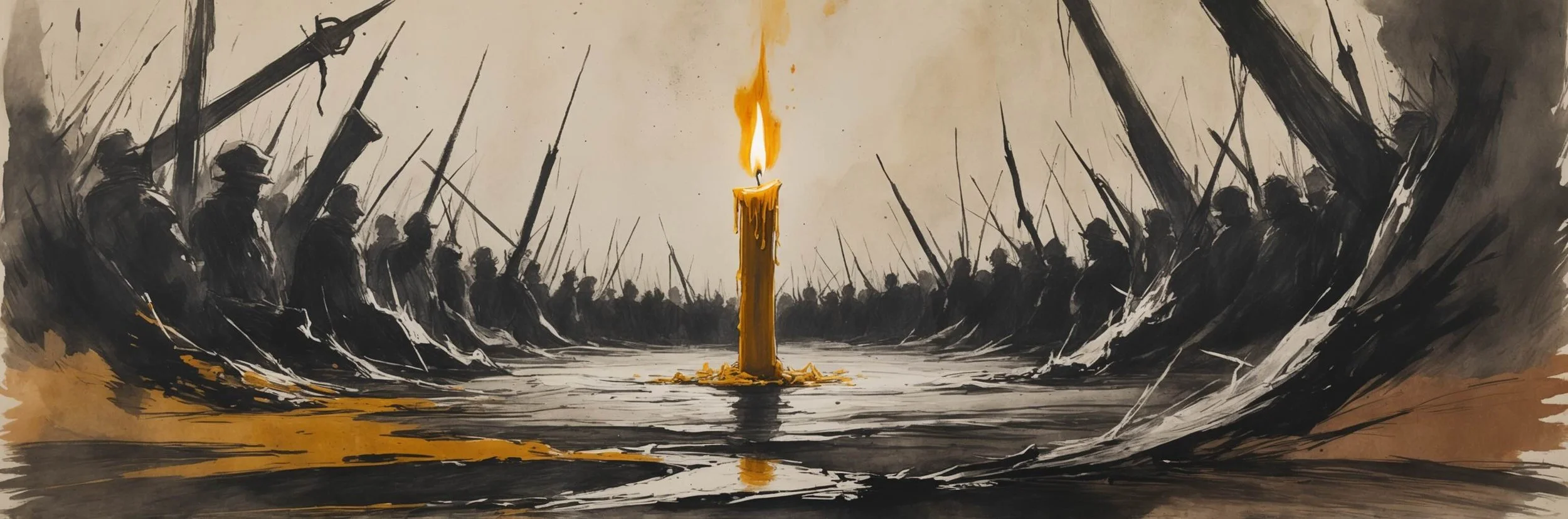
Conscience and Guilt
Everyone who does wrong in the play is made to feel it, except the one man who feels it last and refuses.
Appearance vs Reality
Richard lives in the gap between what people see and what is true, and the audience is let backstage.
Prophecy and Curses
A forged prophecy, Margaret's curses, three dreams and eleven ghosts: what is spoken in this play comes true.
Language and Rhetoric
Richard's quick, punning style against the women's formal curses: which way of speaking wins the play.
Richard III Themes – Frequently Asked Questions
What are the main themes in Richard III?
Richard III has seven major themes, and they all run through one man. power and ambition follows how a crown is won by seeming not to want it, and why the skills that win it cannot keep it. manipulation and deceit is the method: Richard tells each victim the story they are already ready to believe. fate vs free will turns on a single word, "determined", which means both resolved and fixed in advance. conscience and guilt asks who feels what they have done, and finds that almost everyone does except Richard, until one night. appearance vs reality is the gap between what the court sees and what is true, with the audience let in on the truth from the first speech. prophecy and curses is the play's structure: what Margaret speaks in Act 1 comes to pass in order. And language and rhetoric is the contest between Richard's quick, punning style and the women's formal curses, which his wins for four acts and theirs wins in the fifth.
The seven guides below share a spine: a Theme Profile, four close-read sections each anchored by a verse pair from the play file with its modern verse translation, a critic's pull-quote, four Key Quotes with analysis, Key Takeaways, and seven study questions with verified critic citations.
How does Shakespeare present power and ambition in Richard III?
As something that must never admit itself. Nobody in the play says they want the crown. Richard plots for it in his first speech, "And leave the world for me to bustle in!", and then spends two acts arranging to be begged to accept it; Richmond never mentions his claim; Buckingham asks only for the earldom he was promised. The show at Baynard's Castle in A3S7, with the prayer book and the two bishops and the three refusals, is the theme's centrepiece: ambition performed as reluctance.
The second half of the theme is what the crown does to the man who gets it. As Duke of Gloucester Richard is unbeatable; as king, from A4S2, he has only orders, and the orders drive Buckingham away in a single scene, "I am not in the giving vein today." The soliloquies shrink, the jokes stop, and at Bosworth he stakes the kingdom on a throw and refuses a horse. Jan Kott, in 1964, called the histories' machinery the "Grand Mechanism" – a staircase of kings, each thrown down by the next – and Richard's climb is the clearest picture of it in Shakespeare.
See Power and Ambition for the full analysis.
How does Richard manipulate the other characters?
By becoming, for each of them, the person they need him to be, and by never inventing a resentment he can borrow. To Clarence he is the loyal brother who blames the Queen; to Hastings the fellow enemy of the Woodvilles; to Lady Anne the lover driven mad by her beauty; to the Lord Mayor a holy man dragged to the throne. He tells the audience the trick in A1S3 – "And seem a saint, when most I play the devil." – and then performs it in front of people who have every reason to know better.
The theme has a turning point. Richard's deceptions work while nobody has seen them before; by Act 4 everyone has. He tries the Anne speech again on Queen Elizabeth in A4S4 and she takes each oath apart in turn; Stanley deceives him back; the citizens stay silent. The manipulator ends up manipulated, by a woman using his own technique of the answer that is not an answer.
See Manipulation and Deceit for the full analysis.
Is Richard III about fate or free will?
Both, and the play refuses to choose. The case for fate is the curses: everything Margaret calls down in A1S3 is paid in order, and each victim names her as it lands. The case for free will is that every victim was warned – Stanley's dream, Clarence's dream, the citizens in the street, Margaret's warning to Buckingham – and chose not to listen. Hastings laughs at the boar on the morning he dies; Buckingham dismisses curses as breath and dies quoting one.
Richard states the whole question in one word in his first speech: "I am determined to prove a villain" Determined means resolved, and it means made that way, and the play holds both senses open to the end. Even Bosworth is double: the ghosts promise Richmond victory, and Stanley's withheld troops deliver it. E. M. W. Tillyard, in 1944, read the play as the working out of God's plan; later critics have found the machinery too neat to be anything but a playwright's. The strongest essays hold both views and test them against the text.
See Fate vs Free Will for the full analysis.
Does Richard have a conscience?
He has one and refuses it, and the play is built so that almost everyone else feels theirs first. The two murderers debate conscience in prose before they kill Clarence, and one of them refuses his fee afterwards; Clarence prays that God will punish him alone; Edward IV confesses that he signed his brother's warrant; Tyrrel reports that the men who smothered the princes wept; Buckingham agrees with his own sentence on All Souls' Day. Conscience in this play always arrives after the deed, and it arrives for everyone.
Richard's turn comes on the night before Bosworth. The ghosts file through his tent, he wakes – "O coward conscience, how dost thou afflict me!" – and argues with himself in broken half-lines: is there a murderer here, does he love or hate himself, is he a villain. By dawn he has decided that "Conscience is but a word that cowards use" and goes out to die unrepentant. Whether that is strength or the last and worst of his defeats is the question the theme leaves with the reader.
See Conscience and Guilt for the full analysis.
How does Richard III explore appearance vs reality?
Through a court that knows what Richard is and keeps treating what he seems as if it were what he is. Hastings tells the council in A3S4 that no man hides his feelings less than Richard, "For by his face straight shall you know his heart.", and is beheaded before dinner. The Duchess of York, Richard's own mother, says the opposite in A2S2: deceit has stolen a gentle shape "And with a virtuous visor hide deep vice!". The play sides with the mother.
The theme is unusually physical. Strawberries send a bishop out of the room; a withered arm is offered as proof of witchcraft; a prayer book and two churchmen dress a usurper as a saint. And the audience is the only party allowed on both sides of the gap: Richard announces every performance to us before he gives it, which is why the pleasure of the first four acts feels guilty in the fifth. The Scrivener, alone with a forged indictment in A3S6, says the quiet part aloud: everyone can see the device, and no one will say so.
See Appearance vs Reality for the full analysis.
What is the role of prophecy and curses in Richard III?
They are the play's table of contents. The first prophecy is a forgery – Richard's planted rumour that G will murder Edward's heirs – and it comes true anyway, because G is for Gloucester. Then Margaret arrives in A1S3, asks "Can curses pierce the clouds and enter heaven?" and curses the King, the Queen, the Prince, Rivers, Dorset, Hastings and Richard in turn; every curse is paid, in order, and Rivers, Hastings and Buckingham each remember her at the block. Her warning to Buckingham – "And say poor Margaret was a prophetess!" – is the one he quotes on the way to execution.
Lady Anne curses the killer's future wife and becomes her; three dreams warn Clarence, Stanley and Richard; Henry VI's old prophecy that Richmond would be king surfaces in Richard's memory in A4S2 and in Henry's ghost in A5S3. Eleven ghosts then tell Richard to "Despair and die!" and Richmond to live and flourish, and both instructions are carried out by noon. Wolfgang Clemen, in 1968, treated this pattern of curse and fulfilment as the play's principal dramatic device.
See Prophecy and Curses for the full analysis.
How does Shakespeare use language and rhetoric in Richard III?
As the play's real battlefield. Almost nothing in it is done by force; Richard talks his way to the throne with puns, asides and the line-for-line duelling called stichomythia, winning the wooing of Lady Anne in A1S2 without making a single speech – "Was ever woman in this humour wooed?" The women speak a different language: formal, repetitive, built on refrains and catalogues, and it means what it says. Their curses change nothing on stage and everything in the reckoning.
The two styles meet in A4S4, when Queen Elizabeth weighs one of Richard's words – "But how long shall that title "ever" last?" – and tells him that "An honest tale speeds best being plainly told." The great talker loses the form he was best at, and on the night before Bosworth his own soliloquy breaks into the women's pattern of repeated, self-answering lines. The two orations that follow put the contest plainly: Richmond gives his soldiers reasons, Richard gives them contempt, and the play gives the last word to the plainer style.
See Language and Rhetoric for the full analysis.