George, Duke of Clarence
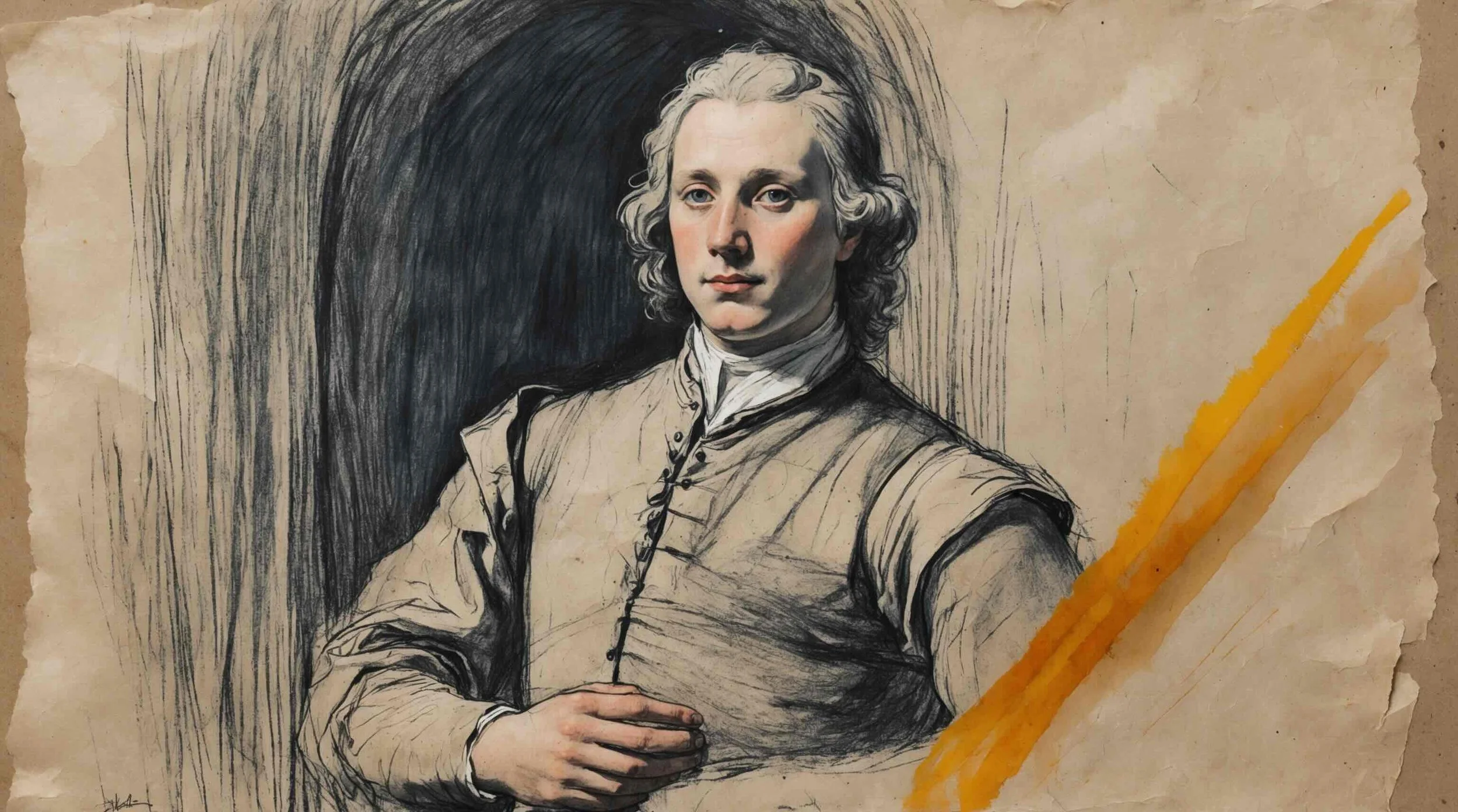
Character Profile – At a Glance
- Role: The middle York brother, between King Edward and Richard. He begins the play under arrest, on his way to the Tower, and does not understand why. He trusts the brother who has arranged it.
- Key Traits: Warm, credulous and easily led. He changed sides during the wars and was forgiven, and he assumes the world works on forgiveness. He has the play’s most beautiful nightmare and its most desperate argument for his life.
- The Core Conflict: Clarence is a guilty man who believes he is innocent. He killed for King Edward at Tewkesbury and broke an oath to Warwick, and he cannot see why either should count against him now. The murderers explain.
- Key Actions: Is escorted to the Tower on the strength of a prophecy about the letter G, and told by Richard that the Queen is to blame (A1S1). Dreams that Richard knocks him overboard and that he drowns, and that in hell Warwick and Prince Edward accuse him of perjury (A1S4). Argues with the two murderers for his life, invoking law, scripture and Richard’s love. Is stabbed, and drowned in a butt of malmsey. Returns as a ghost to curse Richard and bless Richmond (A5S3).
- Famous Quote:
"O, I have passed a miserable night,
So full of fearful dreams, of ugly sights..."
(Act 1, Scene 4) - The Outcome: Murdered in the Tower on Richard’s orders, before the King’s reprieve arrives. His children are left to ask, in A2S2, whether their uncle is really to blame.
Because My Name Is George
Clarence’s first scene is a demonstration of how Richard works, watched from the inside. He is being taken to the Tower under guard, and when his brother asks why, he gives the only answer he has.
Original
Yea, Richard, when I know; but I protest
As yet I do not. But, as I can learn,
He hearkens after prophecies and dreams,
And from the cross-row plucks the letter ‘G’,
And says a wizard told him that by ‘G’
His issue disinherited should be;
And for my name of George begins with ‘G’,
It follows in his thought that I am he.
These (as I learn) and such-like toys as these
Hath moved his Highness to commit me now.
(Act 1, Scene 1)
Shakespeare Retold (Modern Verse)
Yes, Richard, when I know; but I insist
I do not know as yet. But I have heard,
He heeds unusual prophecies and dreams
And, from the alphabet, picks letter ‘G’
Because a wizard told him that a ‘G’
Will stop his kids inheriting the throne;
And since my first name George begins with ‘G’,
He has assumed the saboteur is me.
I’ve learnt that trivialities like these
Have now convinced his Highness to arrest me.
A wizard, a letter of the alphabet, and a king who has started listening to dreams. Clarence thinks it is absurd, and it is. What he does not know, and the audience has just been told, is that the prophecy was planted by the man he is complaining to. Richard sympathises, blames the Queen and her brother, promises to lie for him if need be, and sends him on his way with a private aside about sending his soul to heaven.
The scene sets up everything that follows. Clarence is not stupid; he can see that the prophecy is nonsense. What he cannot see is that his brother is not on his side, because the idea has never occurred to him. The play’s treatment of manipulation and deceit starts here, with a victim who helps the liar by supplying his own explanation for what is happening.
O Lord, Methought What Pain It Was to Drown
A1S4 opens in the Tower, at night, with Clarence telling his keeper about a dream. It is the most famous speech in the play after Richard’s, and it is the one passage where the writing stops being clever and becomes visionary.
Original
Methoughts I saw a thousand fearful wracks;
A thousand men that fishes gnawed upon;
Wedges of gold, great anchors, heaps of pearl,
Inestimable stones, unvalued jewels,
All scatt’red in the bottom of the sea:
Some lay in dead men’s skulls, and in the holes
Where eyes did once inhabit, there were crept
(As ’twere in scorn of eyes) reflecting gems,
That wooed the slimy bottom of the deep,
And mocked the dead bones that lay scatt’red by.
(Act 1, Scene 4)
Shakespeare Retold (Modern Verse)
I thought I saw a thousand wretched shipwrecks;
A thousand men half eaten by the fish;
Big chunks of gold, large anchors, heaps of pearls,
Diamonds and jewels impossible to value,
All scattered on the bottom of the sea.
Some lay in dead men’s skulls, and in the sockets
Where once their eyes had been, there now appeared –
As if to mock one’s eyes – glistening gemstones,
That seemed like they’d seduced the slimy seabed
And mocked the dead bones scattered all around them.
The dream begins with a voyage to Burgundy in Richard’s company, and Richard stumbling and knocking him into the sea. Clarence does not draw the obvious conclusion. His dreaming mind knows what his waking mind refuses: that his brother will be the death of him, and that the fall will look like an accident.
Then the dream goes below the surface, and the sea floor is a treasury of the drowned: gold, anchors, pearls and jewels lodged in the eye sockets of skulls, wooing the slime and mocking the bones. It is the poetry of a man who has looked at death and found it richer and stranger than life. Nothing else in the play sounds like this. It is also, in a play about appearance and reality, a picture of what lies beneath the glittering surface of the York court: wealth resting on dead men.
What Scourge for Perjury?
The dream does not end with drowning. Clarence passes the river of the dead and is met by the two men his crimes wronged most: Warwick, his father-in-law, whom he betrayed, and Prince Edward of Lancaster, whom he helped to kill.
Original
The first that there did greet my stranger soul
Was my great father-in-law, renowned Warwick,
Who spake aloud, "What scourge for perjury
Can this dark monarchy afford false Clarence?"
(Act 1, Scene 4)
Shakespeare Retold (Modern Verse)
The first man there to greet this stranger was
My father-in-law, the great Earl of Warwick,
Who spoke aloud, ‘What punishment for lying
Can this vile king devise for cheating Clarence?’
"False Clarence" is what the dead call him, and the word is exact. In the earlier plays he swore allegiance to Warwick, married his daughter, and then deserted him to rejoin his brothers; at Tewkesbury he was one of the men who stabbed Prince Edward. Lady Anne, that prince’s widow, is his sister-in-law. Clarence knows all of this, and he wakes believing he is in hell.
What follows is the first real moment of conscience and guilt in the play. Clarence prays that God will punish him alone and spare his wife and children; then he asks the keeper to sit by him, and sleeps. It is the prayer of a man who has finally understood what he did, and the play has arranged for the murderers to arrive while he is asleep. Conscience in this play always comes at night, and always too late.
A Begging Prince
When Clarence wakes, there are two men in the room, and he argues with them for a hundred lines. He tries the law: there has been no trial. He tries scripture: thou shalt do no murder. He tries logic: if God wants him punished, God does not need hired help. He tries the truth, which is that his brother sent them, and he gets the wrong brother.
Original
If you are hired for meed, go back again,
And I will send you to my brother Gloucester,
Who shall reward you better for my life
Than Edward will for tidings of my death.
(Act 1, Scene 4)
Shakespeare Retold (Modern Verse)
If you are hired for money, then go back
And see my brother Richard, Duke of Gloucester,
For he will pay you more to keep me living
Than Edward will for hearing of my death.
The murderers tell him that it is Richard who sent them, and Clarence refuses to believe it. Richard wept over him, hugged him, swore with sobs to work for his freedom. "O, do not slander him, for he is kind." The First Murderer’s reply is that Richard is as kind as snow in harvest, and it is one of the play’s cruellest jokes because it is spoken to a man who will be dead in twenty lines.
Clarence’s last argument is the one that nearly works. He turns to the Second Murderer, who has been visibly wavering, and asks which of them would not beg in his position; a begging prince, he says, is a beggar any beggar should pity. The Second Murderer hesitates. The First stabs. The play’s study of language and rhetoric includes this scene as evidence that eloquence can move a man and still not save a life.
"That this play has scenes noble in themselves, and very well contrived to strike in the exhibition, cannot be denied."
— Samuel Johnson, The Plays of William Shakespeare, 1765
Key Quotes
Quote 1
Because my name is George.
(Act 1, Scene 1)
Shakespeare Retold (Modern Verse)
Because my name is George.
Quote Analysis: Five words, and the whole of Clarence’s situation. Richard has asked why he is under guard, and this is the reason: a prophecy that someone whose name begins with G will murder Edward’s heirs. Clarence says it with the flat bewilderment of a man reporting a joke at his own expense. The audience, which has heard Richard plant the prophecy sixty lines earlier, knows two things Clarence does not: that the joke was written by his brother, and that the G is Gloucester.
O Lord, methought what pain it was to drown!
What dreadful noise of waters in my ears!
What sights of ugly death within my eyes!
(Act 1, Scene 4)
Shakespeare Retold (Modern Verse)
Oh Lord, I thought that drowning must be painful!
I’d hear the dreadful noise of tumbling water!
My eyes would see the awful sight of death!
Quote Analysis: The centre of the dream. Clarence has been knocked into the sea by Richard and drowns, and the three lines of exclamation are pure sensation – the pain, the roar of water, the sights of death. Shakespeare gives Clarence the fullest account of dying in the play, and gives it to him as a dream, so that when the real death comes it is over in a few lines. The audience has already drowned with him once. The malmsey-butt is a grim afterthought.
Erroneous vassals, the great King of kings
Hath in the table of his law commanded
That thou shalt do no murder. Will you then
Spurn at his edict, and fulfil a man’s?
(Act 1, Scene 4)
Shakespeare Retold (Modern Verse)
You’ve got that wrong, for God, the King of kings
Has ordered in the ten commandments that
You shan’t commit a murder. So will you then
Ignore his ruling, yet obey a man’s?
Quote Analysis: Clarence’s argument from scripture, and the play’s clearest statement of the conflict between God’s law and a king’s command. The murderers have said the King sent them; Clarence answers that a greater King has forbidden murder, and asks which they will obey. It is a good argument and the murderers cannot answer it, so they change the subject to Clarence’s own record. The exchange is a small trial of the whole play’s politics, in which the divine law is always quoted and never followed.
A begging prince what beggar pities not?
(Act 1, Scene 4)
Shakespeare Retold (Modern Verse)
What beggar won’t side with a begging prince?
Quote Analysis: The last complete line Clarence speaks before he is stabbed. He has just seen pity in the Second Murderer’s face and is appealing to it directly: a prince reduced to begging is a beggar, and beggars pity beggars. It very nearly works. The Second Murderer tells him to look behind him – a warning, or perhaps a distraction – and the First strikes. The Second Murderer then refuses his fee. Clarence’s eloquence has saved one soul in the room, and it was not his own.
Key Takeaways
- The Trusting Brother: Clarence believes Richard loves him until the moment he dies. Every line Richard speaks to him is a lie, and the audience knows it.
- The Dream: His nightmare of drowning is the play’s greatest passage of poetry, and it tells him the truth about Richard that he refuses to hear awake.
- The Guilty Innocent: He is murdered without trial, and he also broke his oath to Warwick and helped kill Prince Edward. The play holds both facts.
- The Argument for Life: He fights the murderers with law, scripture, logic and pity. He moves one of them, and it is not enough.
Study Questions and Analysis
Who is Clarence and why is he sent to the Tower?
George, Duke of Clarence, was the second surviving son of Richard, Duke of York, and therefore the brother between King Edward and Richard. In the Henry VI plays he is the brother who changes sides: angry at Edward’s marriage to Queen Elizabeth, he joins Warwick, marries Warwick’s daughter Isabel, and then abandons Warwick on the eve of battle to return to his family. He is forgiven, and he fights for Edward at Tewkesbury.
In Richard III he is under arrest before the play begins, and the reason is a prophecy. Richard explains it in his opening soliloquy, and then hears Clarence’s own version:
These (as I learn) and such-like toys as these
Hath moved his Highness to commit me now.
(Act 1, Scene 1)
Shakespeare Retold (Modern Verse)
I’ve learnt that trivialities like these
Have now convinced his Highness to arrest me.
The prophecy was Richard’s invention, planted through "drunken prophecies, libels, and dreams", and the audience knows it. Peter Saccio’s Shakespeare’s English Kings (1977) points out that the historical Clarence was executed in 1478 after a real and prolonged quarrel with his brother the King, involving treason charges and a private trial, and that the G prophecy comes from the chronicles rather than from Richard. Shakespeare simplifies: one brother invents a rumour, another believes it, and the third goes to the Tower. The simplification is the play’s method throughout. History supplies the events; Richard supplies the motive.
What is the significance of Clarence’s dream?
It is the play’s first nightmare and the pattern for its last. Before Richard’s night of ghosts in A5S3, Shakespeare gives Clarence a night of drowning and judgement, and the two speeches answer each other across the play. Both men dream of the dead; both wake believing themselves in hell; one repents and one does not.
The dream also tells Clarence the truth. It begins with Richard, and Richard is the cause of the fall:
Methought that Gloucester stumbled, and in falling
Struck me (that thought to stay him) overboard,
Into the tumbling billows of the main.
(Act 1, Scene 4)
Shakespeare Retold (Modern Verse)
I thought that Richard stumbled; as he fell,
I grabbed him, but he hit me overboard
Into the crashing waves upon the sea.
"That thought to stay him": Clarence reached out to steady his brother and was struck overboard. The dreaming mind has understood exactly what is happening in the waking world – that Richard’s stumbles are pushes – and Clarence, on waking, ignores it. When the murderers tell him who sent them, he still says Richard is kind.
Wolfgang Clemen’s A Commentary on Shakespeare’s Richard III (1968) treats the dream as a self-contained piece of tragedy inside the play, a scene with its own rise and fall, and notices how far its imagery reaches beyond anything else in the text. Nicholas Brooke’s Shakespeare’s Early Tragedies (1968) hears in it the young Shakespeare discovering what his verse could do: the underwater treasury of skulls and jewels is the first passage in the histories that a reader might mistake for the later tragedies. The play’s treatment of prophecy and curses is usually a matter of curses; Clarence’s dream is prophecy of a different kind, private, poetic, and ignored.
Is Clarence innocent?
Of the crime he is imprisoned for, entirely; of the crimes his dream accuses him of, not at all. Clarence has done nothing against King Edward’s heirs. But he did desert Warwick after swearing to him, and he did stab Prince Edward at Tewkesbury, and the dead in his dream remember. So, on waking, does he:
Ah, Keeper, Keeper, I have done these things
(That now give evidence against my soul)
For Edward’s sake, and see how he requites me!
(Act 1, Scene 4)
Shakespeare Retold (Modern Verse)
Ah, jailer, jailer, I have done those things
The spirits in my dreams accuse me of,
For Edward’s sake, and look how he repays me!
The admission is complete, and the murderers throw the same things in his face when he appeals to scripture. His answer is the best he can do: that he did it for his brother, that his brother is as guilty, and that if God wants vengeance he will take it publicly and without hired hands. It is a fair point about God and a hopeless point about Richard.
The play is careful to make Clarence guilty and pitiable at once, and the combination is the point. E. M. W. Tillyard’s Shakespeare’s History Plays (1944) read every death in the play as a payment for an earlier crime, and Clarence’s perjury is paid in full; that is the providential view, and the dream supports it. Harold C. Goddard’s The Meaning of Shakespeare (1951) took the harder line that the play’s justice is indistinguishable from its cruelty, and that a man murdered without trial for a crime the King shared is not an example of order restored. Clarence’s question to the murderers – where is the evidence, what jury, what judge? – is one the play never answers. The theme of fate and free will runs through his death: he is punished, and no one who punishes him is just.
How does Richard deceive Clarence, and why does it work?
By telling him what he already believes. Richard does not have to invent Clarence’s suspicion of the Queen’s family; the court is full of it, and Clarence shares it. Richard simply confirms it, blames the Queen and Mistress Shore, and offers himself as a fellow victim:
We are not safe, Clarence, we are not safe.
(Richard, Act 1, Scene 1)
Shakespeare Retold (Modern Verse)
We are not safe, Clarence, we are not safe.
The line seals it: Richard puts himself in the same danger as his brother, so that they are two victims together against a common enemy. It is the oldest trick in the play and Richard uses it on everyone – on Hastings, on Buckingham, on the citizens – but nowhere so purely as here, because Clarence wants to believe it more than anyone.
Stephen Greenblatt’s Tyrant (2018) makes the general point that a tyrant’s rise depends on the willingness of others to believe what suits them, and Clarence is the play’s first and simplest case. Jan Kott’s Shakespeare Our Contemporary (1964) would add that in the world of the histories nobody survives by trusting a brother, and Clarence’s trust is not a virtue but a failure to read the game. Either way the deception works because it is barely a deception. Richard says "I will deliver you, or else lie for you", and he means the second half exactly.
Why do the murderers argue about conscience before they kill him?
Because the scene needs the audience to feel the killing as a choice, and because Shakespeare wanted the word "conscience" in the play long before Richard confronts it. The Second Murderer is stopped by the word "judgement" and spends thirty lines of prose describing conscience as a thing that makes a man a coward, that stops him stealing and swearing and lying, and that is best turned out of doors. Then he steadies himself, and the two of them wake their victim. Clarence, still half in his dream, sees what they are at once:
Your eyes do menace me. Why look you pale?
Who sent you hither? Wherefore do you come?
(Act 1, Scene 4)
Shakespeare Retold (Modern Verse)
Your eyes are scaring me. Why are you pale?
Who sent you here? Why have you come here now?
The comic prose of the murderers and the frightened verse of the prince are set against each other deliberately. The murderers are ordinary men doing a job, and their debate is the play’s way of showing that ordinary men know murder is wrong and do it anyway. When the Second Murderer finally refuses his fee and wishes he had saved the Duke, it is the first act of conscience and guilt in the play that costs anyone anything.
Robert Weimann’s Shakespeare and the Popular Tradition in the Theater (1978) places the murderers in the tradition of the clowns and Vices of the popular stage, who spoke to the audience in prose and brought the high action down to the level of the pit; the debate about conscience is comedy with a body in it. Wolfgang Clemen (1968) notes that the scene’s length – the longest in Act 1 after the wooing – is itself the point: Shakespeare makes the audience wait for the death and listen to the arguments against it, so that when it comes it is felt as a wrong.
What happens to Clarence’s children after his death?
They appear once, in A2S2, and they are the play’s most painful minor characters. The boy and the girl ask their grandmother, the Duchess of York, whether their father is dead, and the boy explains that he knows who is to blame. His uncle Richard told him: the King, provoked by the Queen, imprisoned his father, and Richard wept and kissed him and said he would be a father to him.
The Duchess knows better and says so – Richard is her son, and she says that with a "virtuous visor" he hides "deep vice" – but the children believe their uncle. Their father believed him too. The deception that killed Clarence is passed on to his children in the same scene that reports his death, and Queen Elizabeth enters with her hair down before it can be corrected.
Richard disposes of the children later, in passing. In A4S3 he reports that he has locked up Clarence’s son and married his daughter to a poor man, so that neither can be a threat. Clarence’s ghost, when it comes, curses Richard and blesses Richmond on behalf of "the wronged heirs of York", and the phrase covers his own children as well as Edward’s:
Thou offspring of the house of Lancaster,
The wronged heirs of York do pray for thee.
Good angels guard thy battle! Live and flourish!
(Act 5, Scene 3)
Shakespeare Retold (Modern Verse)
You offspring from the house of Lancaster,
The wronged heirs of the house of York pray for you.
Good angels help your battle! Live and prosper!
Madonne M. Miner’s essay in The Woman’s Part (1980) reads the children’s scene as part of the play’s record of what its politics cost the people who did not choose them. The historical children fared as badly: Clarence’s son, the Earl of Warwick, was imprisoned by Henry VII and executed in 1499, and his daughter Margaret Pole was executed by Henry VIII in 1541. The play does not know this, but its instinct about what happens to the children of the losing side was sound.
What does the drowning in malmsey mean?
The story that Clarence was drowned in a butt of malmsey – a sweet wine from Crete – was current within a few years of his death, and no one knows whether it is true. Shakespeare uses it in the plainest way possible. The First Murderer stabs Clarence, and then, in case the stabs are not enough, announces the barrel:
If all this will not do,
I’ll drown you in the malmsey-butt within.
(First Murderer, Act 1, Scene 4)
Shakespeare Retold (Modern Verse)
And if these stabs don’t kill you,
I’ll drown you in that barrel of sweet wine.
The effect is to make the death both brutal and faintly absurd, which is how most deaths in this play are made to feel. Clarence has just delivered the most eloquent plea for life in Shakespeare, and his reward is to be finished off in a wine cask by a man who wants his fee. It also completes the dream. Clarence dreamt of drowning, and drowned; the play’s treatment of prophecy and curses is exact even when the prophet is the victim.
Clarence’s ghost remembers the manner of it – "washed to death with fulsome wine" – and the phrase has a bitter comedy that the ghosts of the other victims do not attempt. Samuel Johnson, in his 1765 edition, praised the play for scenes "very well contrived to strike in the exhibition" while finding parts of it "shocking", and Clarence’s murder is where the two verdicts meet: it is superb theatre, and it is horrible, and Shakespeare did not think the two were in conflict.