Julius Caesar: Act 4, Scene 2 – Analysis
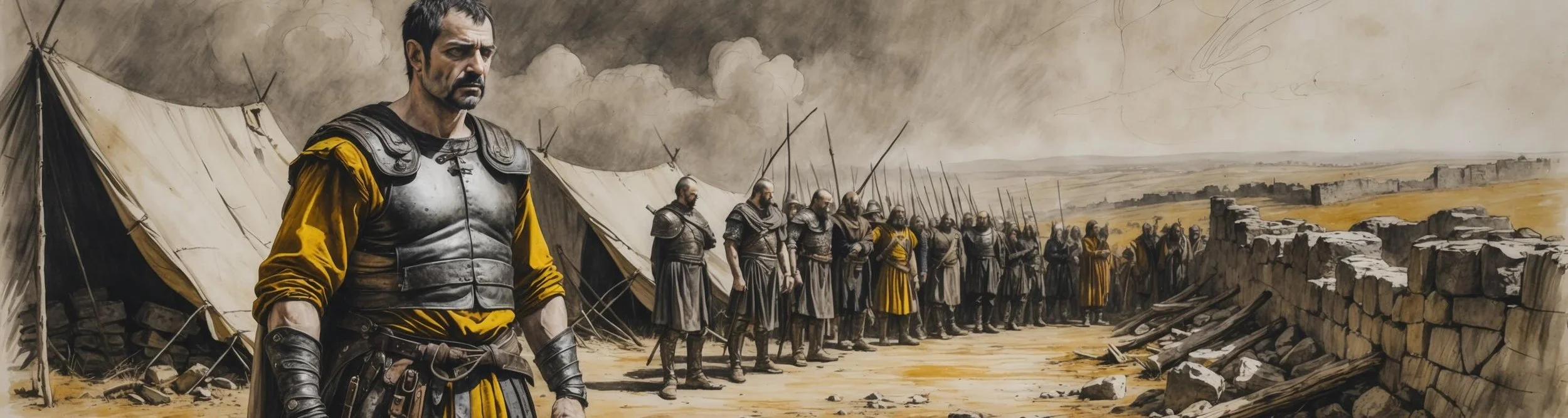
Scene Profile – At a Glance
- Location: A military camp near Sardis, before Brutus's tent.
- What Happens: Brutus's army meets Cassius's. Brutus senses that his friend has grown cold towards him, and when Cassius arrives accusing him of a wrong, Brutus insists they not quarrel in front of the soldiers and leads him into his tent to talk in private.
- Key Characters: Brutus, Cassius, Lucilius, and Pindarus.
- Dramatic Function: It sets up the great quarrel of the next scene, showing the friendship between the two leaders already strained before a word of the argument is heard.
- Famous Quote:
When love begins to sicken and decay,
It useth an enforced ceremony.
(Brutus, Act 4, Scene 2) - Why It Matters: The cooling of the central friendship signals that the conspiracy is falling apart from within, even before the enemy is met in battle.
Scene Summary
Brutus and his soldiers halt outside his tent in the camp near Sardis. He asks Lucilius, whom he had sent to meet Cassius, whether Cassius is near. Lucilius reports that Cassius is at hand, and that his servant Pindarus has come with a greeting from his master.
When Brutus presses Lucilius on how Cassius received him, Lucilius admits that Cassius was polite but not as warm and friendly as he used to be. Brutus recognises the signs of a friendship going cold. As Cassius arrives with his troops, he immediately accuses Brutus of having wronged him. Brutus refuses to quarrel in the open, in front of both their armies, and instead leads Cassius into his tent so they can air their grievances privately.
A Friendship Cooling
The scene's real subject is not military business but the state of a friendship. Brutus questions Lucilius closely about his reception by Cassius, and what he hears is not an open quarrel but something quieter and more worrying: politeness that has lost its warmth. Lucilius reports that Cassius treated him "with courtesy and with respect enough", but without the easy familiarity of old. Brutus reads the warning at once.
Original
Thou hast described
A hot friend cooling: ever note, Lucilius,
When love begins to sicken and decay,
It useth an enforced ceremony.
(Brutus, Act 4, Scene 2)
Shakespeare Retold (Modern Verse)
You have described
A once-warm friendship cooling off. Lucilius,
When friendships start to wane from what they once were,
They do so with a rather strained politeness.
This is one of the play's most quietly truthful observations. Brutus notices that when affection fades, what replaces it is not open hostility but stiff, forced courtesy – the "enforced ceremony" of people going through the motions. He extends the thought with an image of horses that prance and promise much but fail "when they should endure the bloody spur". The lines matter because they show Brutus's emotional intelligence, but also his isolation: he can diagnose the decay of his closest alliance, yet cannot stop it. The conspiracy is unravelling, and he can feel it happening.
Keeping the Quarrel Private
When Cassius arrives, he does not bother with greetings. His first words are an accusation – "Most noble brother, you have done me wrong." Brutus's response is revealing: he refuses to have the argument out where the soldiers can see it.
Original
Before the eyes of both our armies here,
Which should perceive nothing but love from us,
Let us not wrangle: bid them move away;
(Brutus, Act 4, Scene 2)
Shakespeare Retold (Modern Verse)
In front of both our armies watching us,
(And they should witness only love between us,)
We mustn’t fight. Tell them to move away.
Brutus's instinct is sound: a public row between the two leaders would shake the soldiers' confidence at the very moment they need to seem united. He insists the armies should "perceive nothing but love" between their commanders, and moves the dispute inside the tent. It is a leader's calculation, and a decent one – but it also sets the trap for the next scene. Behind closed doors, with no audience to perform for, the two men will say everything they have been holding back, and the quarrel they hide from the troops will nearly destroy them both.
Language and Technique
- Imagery of sickness: Love that "begins to sicken and decay" is described as a kind of illness, making the failing friendship feel like a body losing health.
- Horse imagery: Cassius's coldness is compared to spirited horses that "make gallant show" but "sink in the trial" – all promise, no staying power under pressure.
- Public versus private: Brutus's care that the armies see "nothing but love" sets up the gap between the public face of command and the private bitterness to come.
- Dramatic preparation: The whole scene is a slow build, tightening the tension before the explosion of the quarrel in the next scene.
Key Quotes from Act 4, Scene 2
Quote 1But not with such familiar instances,
Nor with such free and friendly conference,
As he hath used of old.
(Lucilius, Act 4, Scene 2)
Shakespeare Retold (Modern Verse)
But he was not as friendly as before,
Nor amiable or open in discussion
Like how he was before.
Most noble brother, you have done me wrong.
(Cassius, Act 4, Scene 2)
Shakespeare Retold (Modern Verse)
Most noble brother, you have done me wrong.
Then in my tent, Cassius, enlarge your griefs,
And I will give you audience.
(Brutus, Act 4, Scene 2)
Shakespeare Retold (Modern Verse)
Inside my tent, Cassius, explain your griefs,
And I will listen to you.
Key Takeaways
- The friendship is failing: Brutus recognises the cold politeness of a friend who has turned distant, and knows the alliance is in trouble.
- Trouble from within: The conspirators' cause is weakening not from the enemy but from their own falling-out.
- Brutus protects morale: He refuses to quarrel in front of the troops, showing a leader's instinct to keep the army's confidence.
- A deliberate build-up: The scene is a quiet, tense prelude designed to set up the great quarrel of the next scene.
Study Questions and Analysis
What does Brutus mean by "an enforced ceremony"?
Brutus is describing the way friendship behaves when it begins to die. When two people genuinely care for each other, their dealings are easy and unforced. But when affection fades, he observes, what remains is a stiff, formal politeness – the going-through-the-motions of courtesy without the warmth behind it. That is the "enforced ceremony": manners worn like a mask over a feeling that has gone.
There are no tricks in plain and simple faith;
But hollow men, like horses hot at hand,
Make gallant show and promise of their mettle;
(Brutus, Act 4, Scene 2)
Shakespeare Retold (Modern Verse)
There’s no veneer in plain and simple friendships;
But prats, like horses chomping at the bit,
Show-off about their prowess and their strength,
He extends the idea with an image of spirited horses that prance and promise much but collapse "when they should endure the bloody spur" – all show and no substance once tested. The reflection is acute, and a little sad. Brutus is watching his most important friendship turn into exactly this kind of empty performance, and his clear-sightedness about it cannot save it.
Why does Brutus refuse to argue in front of the soldiers?
Brutus is thinking like a commander. An open quarrel between the two leaders of the army, in full view of the troops, would be disastrous for discipline and morale. Soldiers who see their generals at each other's throats lose faith in the cause they are being asked to die for. So Brutus insists the armies should "perceive nothing but love" between him and Cassius, and moves the dispute behind the closed flap of his tent.
It is a sound and responsible decision, and it shows Brutus's seriousness about leadership. But it also has a dramatic purpose. By sealing the quarrel inside the tent, Shakespeare creates a private space where the two men can be utterly honest, dropping every public courtesy. The next scene, freed from any audience the characters must perform for, becomes one of the rawest and most personal in the whole play.
How does this scene prepare for the quarrel in the next scene?
The whole scene is a slow tightening of tension. Nothing is resolved; instead, every detail signals that a confrontation is coming. Lucilius's report of Cassius's coldness, Brutus's gloomy meditation on dying friendships, and Cassius's blunt opening accusation all point the same way. By the time the two men withdraw into the tent, the audience knows a storm is about to break.
This kind of deliberate build-up is part of Shakespeare's structural craft. Rather than launching straight into the famous argument, he spends a short scene establishing that the friendship is already wounded, so that when the quarrel erupts it feels earned rather than sudden. The strained politeness of this scene is the calm before the storm, and it makes the explosion that follows hit harder because we have watched the pressure gather.
What does the cooling of the friendship suggest about the conspiracy?
The most dangerous threat to the conspirators in this part of the play is not Antony's army but their own disunity. Brutus and Cassius killed Caesar in the name of a shared cause, yet here, on the eve of war, that cause can no longer hold their friendship together. The bond that made the assassination possible is visibly fraying.
There is a bitter logic to it. A conspiracy built on idealism and mutual trust is only as strong as the trust itself, and once the deed is done and the practical strains of war set in – money, command, blame – the high principles begin to give way to ordinary human friction. M. W. MacCallum, in Shakespeare's Roman Plays and Their Background (1910), drew attention to how Shakespeare measures the conspirators' decline by the decay of this central relationship. The republic they hoped to save is being lost not only on the battlefield but in the quiet erosion of the friendship that began it.