HomePlaysJulius Caesar → Scene Analysis

Julius Caesar: Scene Analyses

Julius Caesar scene-by-scene analysis covering the whole play – all eighteen scenes across the five acts, from the tribunes scattering the crowd in the opening street to the death of Brutus at Philippi. Each guide retells what happens in plain English, then analyses the scene's key moments, language and techniques, with the most important quotations shown beside their Shakespeare Retold modern verse.

A complete scene-by-scene study guide and revision resource for GCSE, A-Level, AP English, IB, and undergraduate Shakespeare. Ideal for close reading, essay planning, exam preparation, and following how the tragedy is built scene by scene.

Select a scene below to begin.
Julius Caesar Scene Analysis — Frequently Asked Questions

Which Julius Caesar scenes are analysed here?
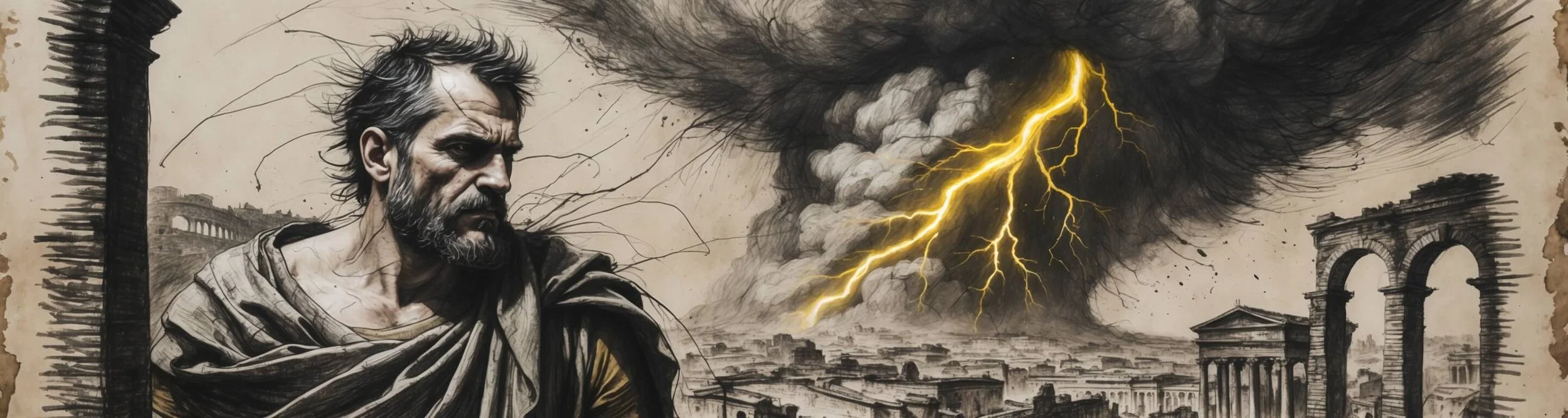
Every scene in the play has its own guide, across five acts. Act 1 runs from Scene 1 (the tribunes scatter the crowd celebrating Caesar) through Scene 2 (the soothsayer's warning and Cassius working on Brutus) to Scene 3 (the storm and the growing conspiracy). Act 2 covers the night before the murder: Scene 1 (Brutus's orchard soliloquy and the conspirators), Scene 2 (Calpurnia's dream), Scene 3 (Artemidorus's warning letter) and Scene 4 (Portia's anxiety). Act 3 is the turning point: Scene 1 (the assassination), Scene 2 (the funeral orations) and Scene 3 (the mob kills Cinna the poet). Act 4 moves to the civil war: Scene 1 (the triumvirs' death-list), Scene 2 (Brutus and Cassius's friendship cooling) and Scene 3 (their quarrel and Caesar's ghost). Act 5 brings the battle of Philippi: Scene 1 (the armies parley), Scene 2 (Brutus's attack order), Scene 3 (the death of Cassius), Scene 4 (the fighting and Lucilius captured) and Scene 5 (the death of Brutus).
What happens in Act 1, Scene 2, where Cassius works on Brutus?
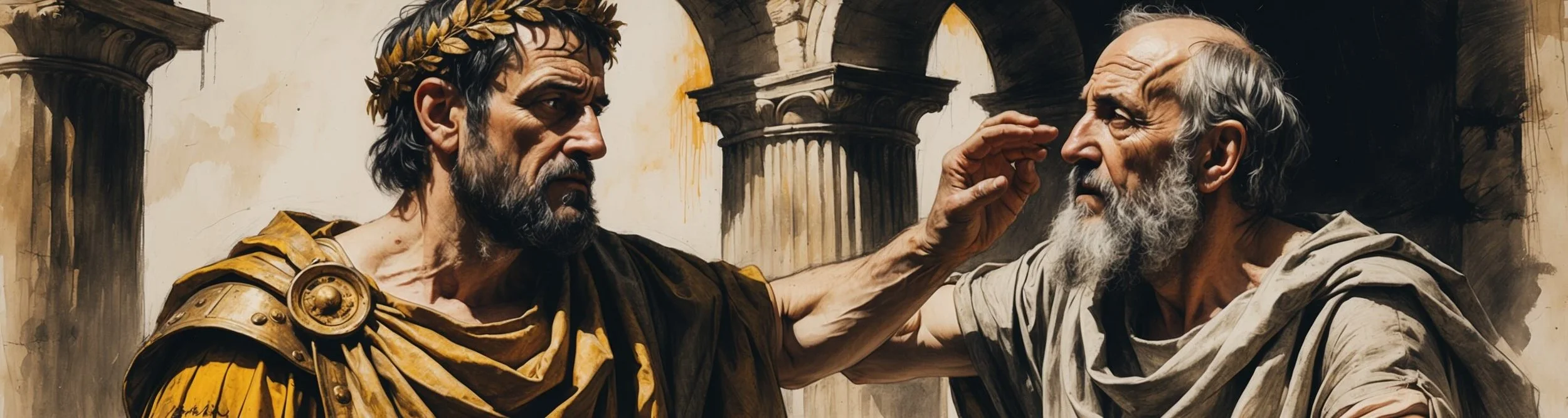
This is the scene where the conspiracy is born. A soothsayer warns Caesar to "beware the ides of March", and Caesar ignores him. Cassius then draws Brutus aside and slowly persuades him to fear Caesar's growing power, telling stories that make Caesar look weak and ordinary. Meanwhile Caesar privately warns Antony that Cassius has a "lean and hungry look" and thinks too much. Casca reports that the crowd offered Caesar a crown three times and he refused it three times. See Julius Caesar Act 1, Scene 2 for the full analysis.
Why is Act 3, Scene 1 the turning point of the play?
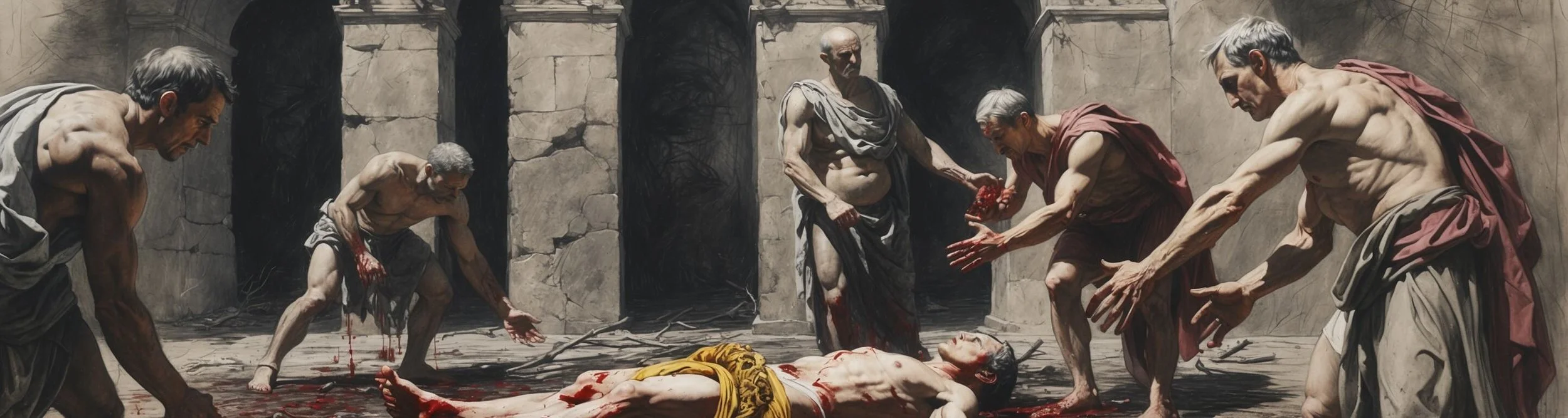
Act 3, Scene 1 is the assassination. Caesar reaches the Senate, ignores the last warnings, and refuses a petition, declaring himself "constant as the northern star". The conspirators then close in and stab him, and Caesar dies recognising his friend among the killers with the words "Et tu, Brute!" The conspirators bathe their hands in his blood, but Antony arrives, makes a wary peace with them, and is left alone to vow revenge and "let slip the dogs of war". From here the play turns from conspiracy to civil war. See Julius Caesar Act 3, Scene 1 for the full analysis.
What are the funeral speeches in Act 3, Scene 2?
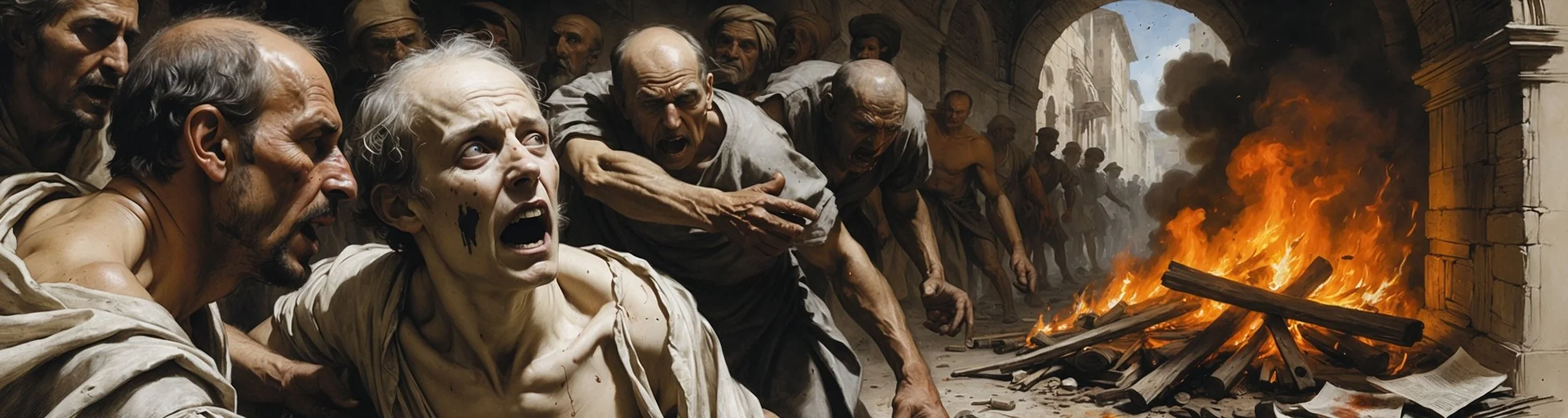
Act 3, Scene 2 is the famous forum scene. Brutus speaks first, in plain prose, explaining that he killed Caesar "not that I loved Caesar less, but that I loved Rome more", and the crowd is satisfied. Then Antony speaks, beginning "Friends, Romans, countrymen, lend me your ears", and slowly turns the same crowd against the conspirators using Caesar's wounds and his will. By the end the people riot and hunt the killers. It is the play's great lesson in the power of rhetoric. See Julius Caesar Act 3, Scene 2 for the full analysis.
What happens in Brutus's orchard in Act 2, Scene 1?
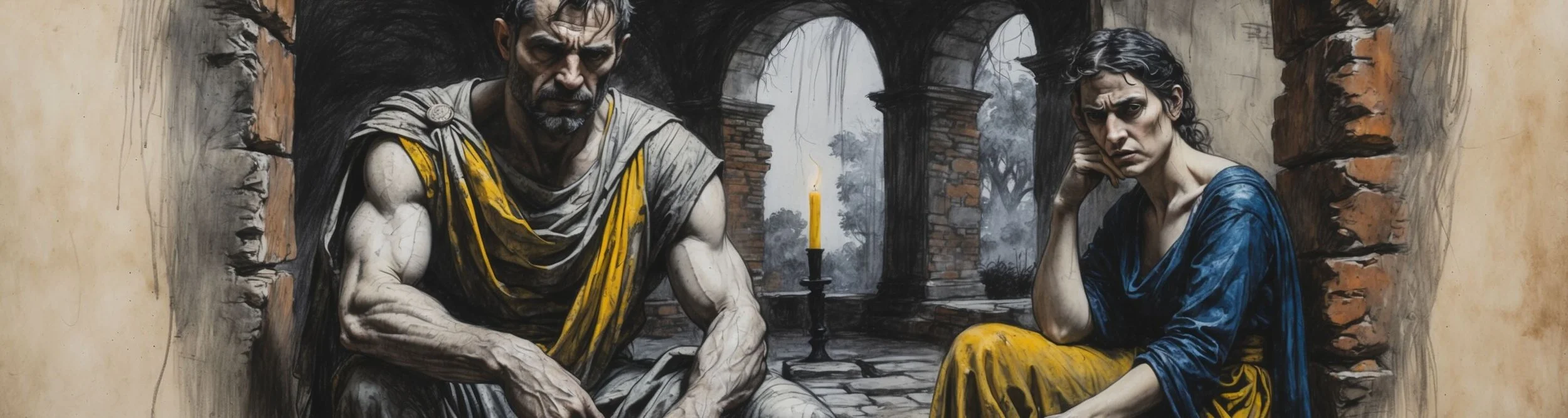
In Act 2, Scene 1 Brutus, alone at night, talks himself into the murder, concluding "It must be by his death". The conspirators then visit him, and he takes charge of the plot: he refuses to make them swear an oath, and he overrules Cassius by deciding to spare Mark Antony. His wife Portia begs him to share what is troubling him. The two decisions Brutus makes here – no oath, and Antony lives – are the choices that will doom the conspiracy. See Julius Caesar Act 2, Scene 1 for the full analysis.
What is Calpurnia's dream in Act 2, Scene 2?
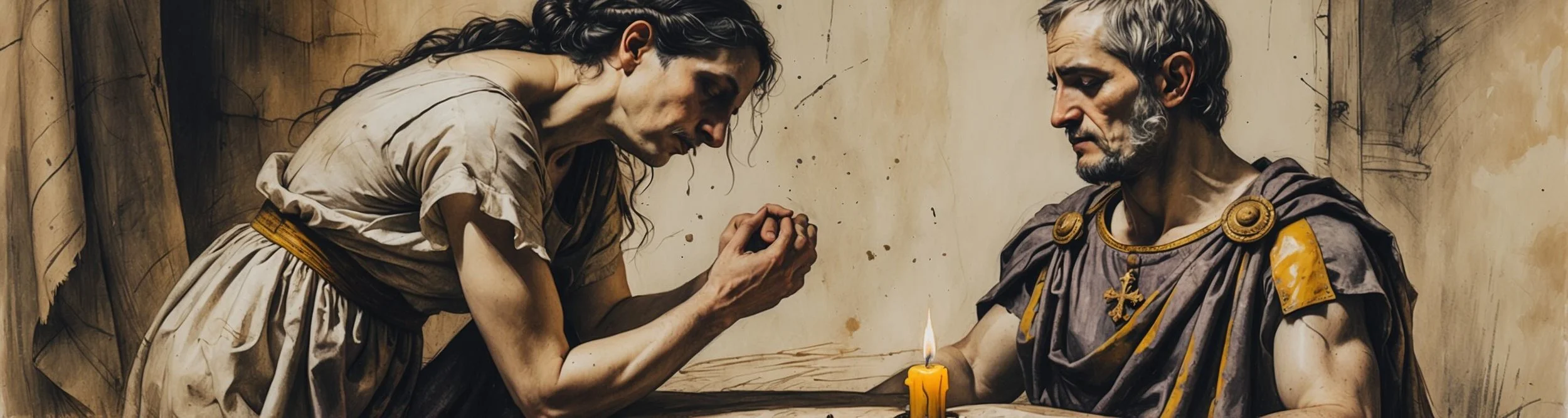
In Act 2, Scene 2 Caesar's wife Calpurnia, frightened by a nightmare and the night's omens, begs him not to go to the Senate. Caesar at first refuses to give in to fear, saying "Cowards die many times before their deaths", but he agrees to stay home to please her. Then Decius Brutus arrives and cleverly reinterprets her dream as a sign of good fortune, and warns that the Senate plans to crown Caesar. Stung, Caesar changes his mind and goes – to his death. See Julius Caesar Act 2, Scene 2 for the full analysis.
What happens in the quarrel scene, Act 4, Scene 3?
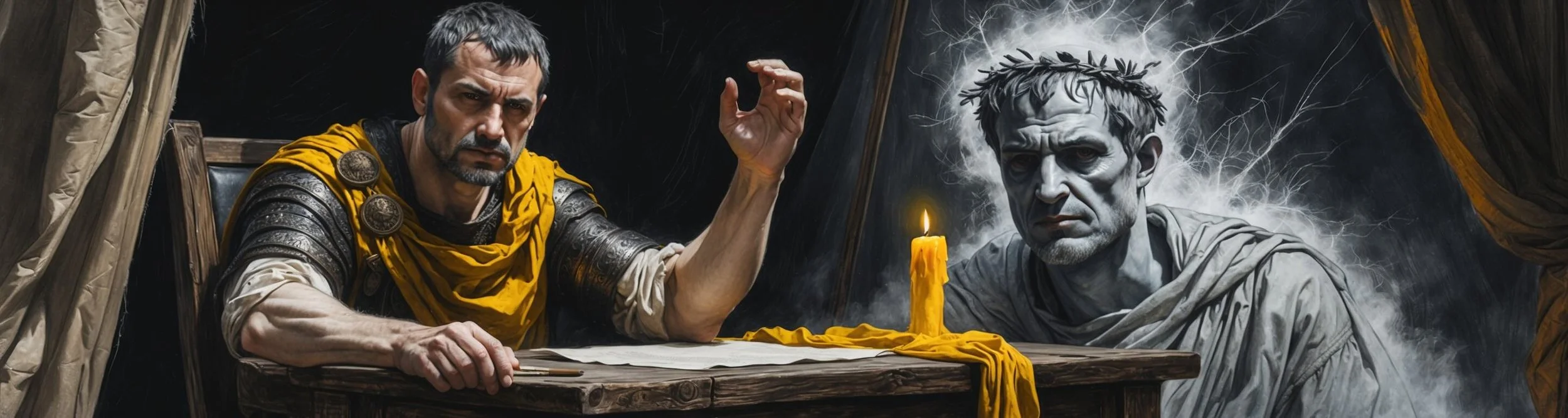
Act 4, Scene 3 is the great quarrel between Brutus and Cassius in the camp near Sardis. They argue bitterly about money and honour, almost break apart, then reconcile, and Brutus reveals that his wife Portia is dead. They debate strategy, and Brutus insists on marching to Philippi with the famous argument that "There is a tide in the affairs of men". That night, as Brutus reads alone, the Ghost of Caesar appears and promises to meet him at Philippi. See Julius Caesar Act 4, Scene 3 for the full analysis.
How does the play end in Act 5, Scene 5?
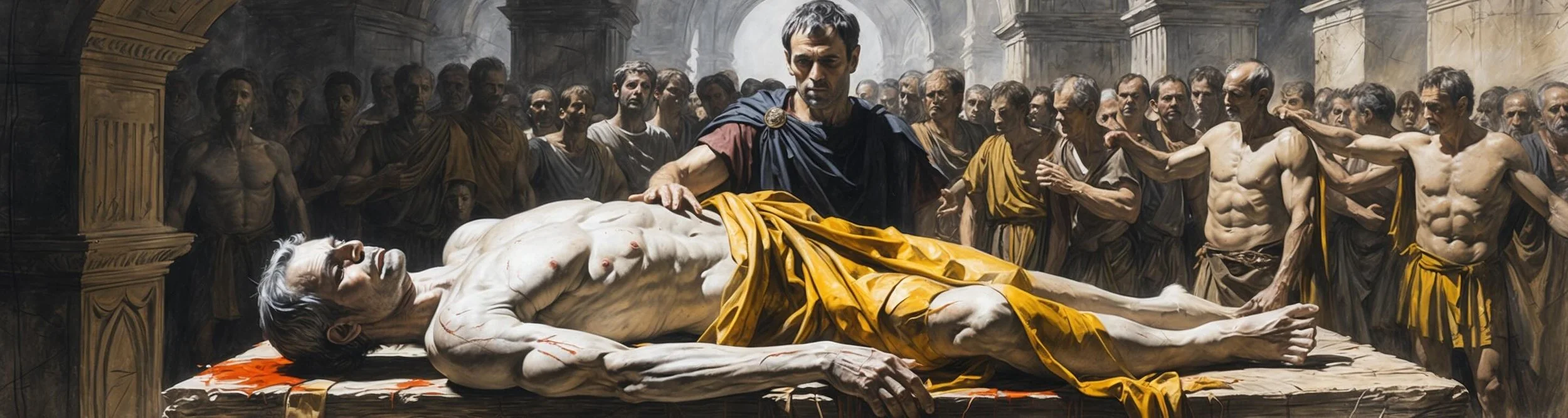
Act 5, Scene 5 is Brutus's death. Defeated at Philippi and haunted by Caesar's ghost, Brutus asks several friends in turn to help him die before finally running onto his own sword held by Strato. Antony and Octavius find his body, and Antony pays him the tribute "This was the noblest Roman of them all", judging that Brutus alone acted for the good of Rome rather than from envy. Octavius orders an honourable burial and closes the play. See Julius Caesar Act 5, Scene 5 for the full analysis.