Julius Caesar: Act 2, Scene 3 – Analysis
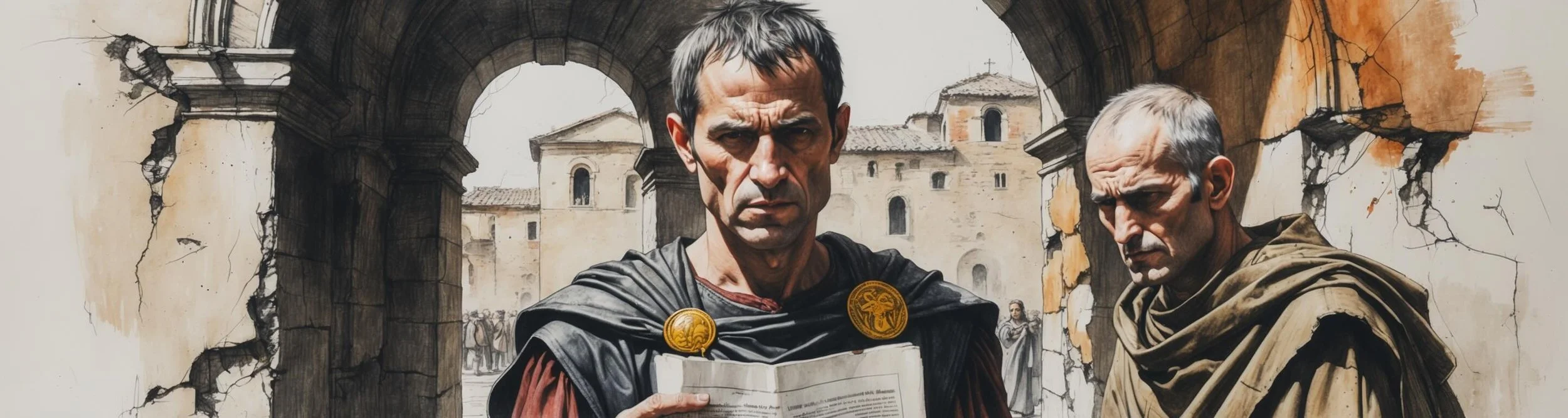
Scene Profile – At a Glance
- Location: A street near the Capitol in Rome, on the morning of the ides of March.
- What Happens: Artemidorus reads aloud a letter he has written warning Caesar of the conspirators by name. He plans to hand it to Caesar as he passes on his way to the Senate.
- Key Characters: Artemidorus (a scholar loyal to Caesar).
- Dramatic Function: A short, tense bridging scene that gives Caesar one more chance of rescue – a warning that names every plotter and could stop the murder cold.
- Famous Quote:
"If thou beest not immortal, look about you: security gives way to conspiracy."
(Artemidorus, Act 2, Scene 3) - Why It Matters: It tightens the suspense to breaking point. The audience knows the warning is true and complete, and watches it travel towards a man too proud to read it.
Scene Summary
On a street near the Capitol, a scholar named Artemidorus stands reading a letter he has written to Caesar. The letter names the conspirators one by one – Brutus, Cassius, Casca, Cinna, Trebonius, Metellus Cimber, Decius Brutus and Caius Ligarius – and warns that they share a single purpose: to kill him.
Artemidorus explains that he will wait here and hand the letter to Caesar as a petitioner when he passes by. He hopes that if Caesar reads it, he may yet survive; if not, fate has sided with the traitors. With that, he takes up his position and waits.
The Warning That Names Them All
This brief scene exists almost entirely to wind the suspense tighter. Artemidorus has somehow learned the whole plot, and his letter is no vague rumour but a precise list of every conspirator and their single shared aim. The audience, who have watched the conspiracy form, recognises that this is the one warning that could actually save Caesar.
Original
There is but one mind in all these men, and it is bent against Caesar. If thou beest not immortal, look about you: security gives way to conspiracy.
(Artemidorus, Act 2, Scene 3)
Shakespeare Retold (Modern Verse)
These men think the same, and want to kill you. If you're not immortal, look around you. Over-confidence allows conspiracies.
The letter's warning is written in prose, plain and urgent, and its final phrase – "security gives way to conspiracy" – is its sharpest point. "Security" here means false confidence, the easy belief that one is safe; and that complacency is exactly the gap through which a conspiracy slips. The line reads almost like a verdict on Caesar's whole behaviour in the previous scene, where his refusal to "look about" him sent him out to the Senate. Artemidorus has diagnosed the fatal flaw precisely, yet he has no power to make Caesar heed it.
If He Reads This, He May Live
Having read the warning, Artemidorus turns to verse to explain his plan and his fears. He will stand in the street and press the letter on Caesar as a humble petitioner, hoping it reaches him in time. His closing couplet frames the whole scene as a single, slender hope held against the weight of fate.
Original
If thou read this, O Caesar, thou mayst live;
If not, the Fates with traitors do contrive.
(Artemidorus, Act 2, Scene 3)
Shakespeare Retold (Modern Verse)
Oh Caesar, if you read this, you may live;
If not, your fate is what those traitors give.
The neat rhyme of "live" and "give" tightens the scene into a single suspended question: will the letter be read? Artemidorus reduces the whole future to a simple condition. If Caesar reads, he lives; if he does not, the "Fates" themselves are working with the traitors. The lines keep the play's debate about destiny alive even here, suggesting that fate and human choice may be the same thing – that Caesar's refusal to read the warning will be both his own decision and the gods' design. For the audience, the effect is unbearable suspense: the means of rescue is in the street, and we will watch in the next scenes whether it ever reaches its target.
Language and Technique
- Prose for the letter, verse for the speaker: The warning is read in plain, urgent prose; Artemidorus then shifts to verse for his own reflection, marking the difference between document and feeling.
- Dramatic irony: The audience knows the letter is completely accurate, which makes watching it fail to reach Caesar almost painful.
- Listing: Naming every conspirator in turn gives the warning weight and precision – this is no vague rumour but exact knowledge.
- Rhyming couplet: The closing "live" / "give" rhyme snaps the scene shut on a single suspended question, heightening the tension.
Key Quotes from Act 2, Scene 3
Quote 1Caesar, beware of Brutus; take heed of Cassius; come not near Casca; have an eye to Cinna, trust not Trebonius: mark well Metellus Cimber:
(Artemidorus, Act 2, Scene 3)
Shakespeare Retold (Modern Verse)
Caesar, beware of Brutus and of Cassius; stay clear of Casca; keep an eye on Cinna; don't trust Trebonius, nor Metellus Cimber.
My heart laments that virtue cannot live
Out of the teeth of emulation.
(Artemidorus, Act 2, Scene 3)
Shakespeare Retold (Modern Verse)
It breaks my heart that goodness cannot live
Without the danger from malicious envy.
Key Takeaways
- A perfect warning: Artemidorus's letter names every conspirator and their exact purpose – the one warning that could save Caesar.
- Suspense is the point: The short scene exists to tighten tension, sending the rescue into the street just before the murder.
- "Security gives way to conspiracy": The letter diagnoses Caesar's fatal flaw – the false confidence that stops him looking out for danger.
- Fate stays in question: Artemidorus frames it all as a single condition – read and live, ignore and die – with the Fates seemingly on the traitors' side.
Study Questions and Analysis
What is the dramatic purpose of this very short scene?
The scene is brief by design, and its purpose is almost entirely to build suspense. By the end of the previous scene Caesar has been talked into going to the Senate, where the conspirators are waiting. Shakespeare now slows the action for a moment to dangle one last chance of rescue in front of the audience: a letter that names every plotter and could stop the murder if Caesar would only read it.
The effect is a deliberate tightening of tension. We are made to hope, against our knowledge of the story, that the warning might get through, and that hope makes the coming assassination more painful. The scene also reinforces a pattern: this is the third warning Caesar has been given, after the soothsayer and Calpurnia's dream, and like the others it will be ignored. Placing it here, so close to the murder, turns the audience into helpless spectators – we can see the rescue, but we already sense it will fail.
Who is Artemidorus and how does he know about the plot?
Artemidorus is presented simply as a man loyal to Caesar – in Shakespeare's source, the Greek historian Plutarch, he is a teacher of rhetoric who had connections among the conspirators and so learned of their plans. Shakespeare keeps him deliberately minor and gives him no backstory in the scene itself; what matters is not who he is but what he knows.
His knowledge is striking precisely because it is so complete. He can name every conspirator and state their single shared aim, which means the plot, for all the conspirators' caution, has leaked. This quietly underlines a theme running through the play: secrets of this size cannot truly be kept, and the very confidence of the plotters leaves gaps. Artemidorus stands for the ordinary loyalty and common sense that might have saved Caesar, and his failure to reach him shows how easily good intentions are defeated by circumstance and by Caesar's own pride.
What does the phrase "security gives way to conspiracy" mean?
The line is the heart of Artemidorus's warning and one of the play's sharpest maxims. "Security" does not mean safety here; it means a false sense of safety – the careless over-confidence of a man who believes nothing can touch him. To "give way to conspiracy" means that this complacency opens the door to plots: the more secure a man feels, the less he watches, and the easier he is to destroy.
Read against the rest of Act 2, the phrase becomes a precise diagnosis of Caesar's downfall. In the previous scene he dismissed his wife's fears, the omens, and the priests' warning, all out of a conviction that "Caesar" was above danger. Artemidorus, without knowing it, has named exactly the flaw that is leading Caesar to the Capitol. The line also carries a general warning that outlives the play: power breeds the very blindness that brings it down. It is the kind of compact, quotable wisdom that has helped keep Julius Caesar alive as a study of how leaders fall.