Julius Caesar: Act 5, Scene 4 – Analysis
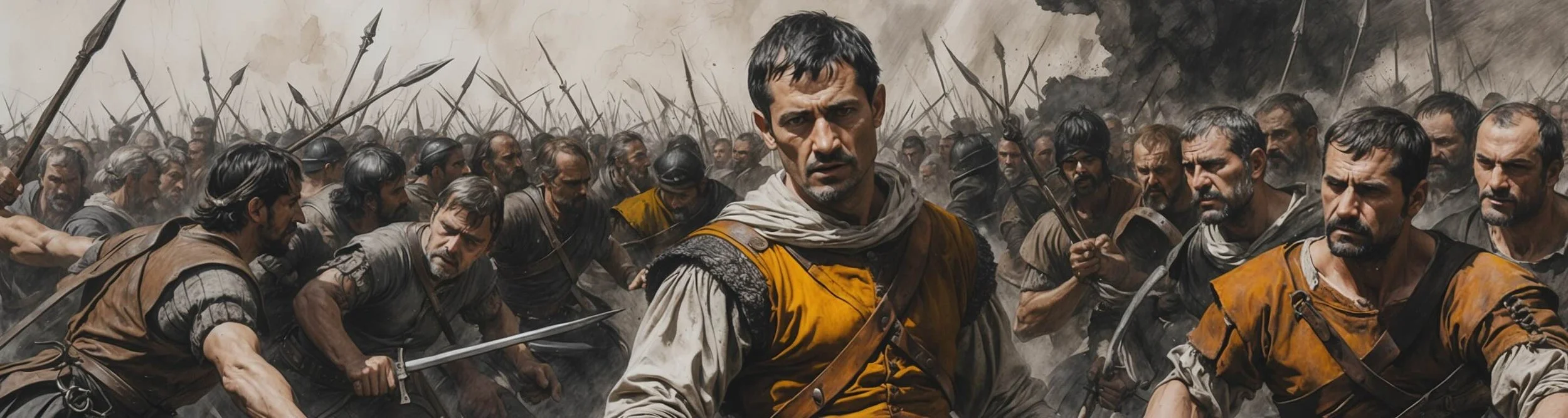
Scene Profile – At a Glance
- Location: Another part of the battlefield at Philippi.
- What Happens: The battle turns against Brutus. Young Cato is killed fighting bravely. Lucilius pretends to be Brutus, is captured, and is then spared and protected by Antony.
- Key Characters: Brutus, Mark Antony, Lucilius, and young Cato.
- Dramatic Function: A short combat scene that shows the cause collapsing while underlining the loyalty Brutus inspires and Antony's respect for him.
- Famous Quote:
"And I am Brutus, Marcus Brutus, I;"
(Brutus, Act 5, Scene 4) - Why It Matters: Lucilius risks death to impersonate Brutus, and Antony's order to protect him shows the strange respect the noble Brutus commands even among his enemies.
Scene Summary
The battle is going badly for the conspirators. Brutus urges his men to keep fighting and rushes off. Young Cato proclaims his name proudly as he fights and is killed. Lucilius, to protect Brutus, calls out that he himself is Brutus and offers a soldier money to kill him on the spot.
The soldiers capture Lucilius alive, believing they have taken Brutus, and send word to Antony. When Antony arrives, Lucilius reveals the truth: he is not Brutus, and Brutus will never be taken alive. Rather than punish the deception, Antony admires it. He orders his men to treat Lucilius with kindness, saying he would rather have such loyal men as friends than enemies, and sends them to find out whether Brutus is alive or dead.
Dying for a Name
The scene opens in the chaos of a losing fight, and its first note is defiant courage. Young Cato, the son of a famous Roman, refuses to hide; he shouts his name across the field as a badge of honour and is cut down for it. His death sets up Brutus's own answering cry of identity.
Original
And I am Brutus, Marcus Brutus, I;
Brutus, my country's friend; know me for Brutus!
(Brutus, Act 5, Scene 4)
Shakespeare Retold (Modern Verse)
And I am Brutus, Marcus Brutus, I!
Brutus, my country's friend! Know that I'm Brutus!
The line is a defiant declaration of self in the middle of defeat. Brutus names himself not as a soldier or a general but as "my country's friend" – the identity he has clung to since the assassination, the man who killed Caesar for Rome rather than for himself. Even as his cause crumbles, he insists on this version of who he is. The repetition of "Brutus" three times has the ring of a man planting his flag, refusing to be anything other than the principled patriot he believes himself to be.
Lucilius and Antony's Respect
The scene's real interest lies in what happens to Lucilius. In an act of pure devotion, he claims to be Brutus so that his master can escape, fully expecting to be killed for it. When the deception is uncovered, Antony's reaction is unexpectedly generous.
Original
This is not Brutus, friend; but, I assure you,
A prize no less in worth: keep this man safe;
Give him all kindness:...
(Antony, Act 5, Scene 4)
Shakespeare Retold (Modern Verse)
This is not Brutus, friend, but I assure you
He is worth capturing. Keep this man safe,
and treat him kindly....
Antony's response tells us a great deal about both men. Lucilius's willingness to die in Brutus's place shows the extraordinary loyalty Brutus inspires – men love him enough to throw away their lives for him. And Antony, the ruthless politician of the forum scene, here reveals a soldier's respect for courage and devotion, declaring he would rather have such men as friends than enemies. Even Brutus's enemies acknowledge the nobility of his cause and his followers, which prepares the ground for Antony's famous tribute over Brutus's body at the play's end.
Language and Technique
- Repetition of names: Cato and Brutus both shout their own names as acts of defiance – in this Roman world, a name is a banner worth dying under.
- Disguise and substitution: Lucilius's claim to be Brutus is a small act of self-sacrifice that tests how much loyalty Brutus commands.
- Contrast: Antony's mercy here sits against his cold cunning in Act 3, showing a fuller, more complex figure.
- Dramatic compression: The scene is brief and fast, cutting between deaths and capture to convey a battle slipping out of the conspirators' hands.
Key Quotes from Act 5, Scene 4
Quote 1I am the son of Marcus Cato, ho!
A foe to tyrants, and my country's friend;
I am the son of Marcus Cato, ho!
(Cato, Act 5, Scene 4)
Shakespeare Retold (Modern Verse)
I am the son of Marcus Cato, ho!
A foe to tyrants, friendly to my country.
I am the son of Marcus Cato, ho!
I dare assure thee that no enemy
Shall ever take alive the noble Brutus:
The gods defend him from so great a shame!
(Lucilius, Act 5, Scene 4)
Shakespeare Retold (Modern Verse)
I must inform you that no enemy
Will ever catch the noble Brutus living.
The gods defend him from so great a shame!
Key Takeaways
- The cause is collapsing: The battle has turned, and young Cato is killed fighting for the republic.
- Loyalty to Brutus: Lucilius risks his life by pretending to be Brutus so his master can escape.
- Antony's respect: Rather than punish the trick, Antony orders Lucilius protected, valuing such loyalty.
- A name worth dying for: Both Cato and Brutus proclaim their identities as acts of defiance against the tyranny they fight.
Study Questions and Analysis
Why does Lucilius pretend to be Brutus?
Lucilius impersonates Brutus to draw the enemy away from his master and give the real Brutus a chance to escape. He fully expects to be killed for it – he even offers a soldier money to kill him at once – so the act is a deliberate self-sacrifice. It is one of several moments in the final act that show the deep personal loyalty Brutus inspires in those around him.
The episode also tells us how Brutus is regarded by his followers. To Lucilius, Brutus is worth dying for, and the dignity of Brutus's name is something to be protected at any cost. This devotion stands in sharp contrast to the way Caesar was abandoned and betrayed by men he trusted. Where Caesar fell among friends who turned on him, Brutus is surrounded by men willing to die in his place, which shapes how we judge the two leaders.
What does Antony's treatment of Lucilius reveal about him?
Antony's response shows a more generous, soldierly side than we saw in the forum. Faced with a man who has just deceived his troops, he does not order revenge; instead he praises the loyalty behind the trick and commands that Lucilius be kept safe and treated with kindness.
This is not Brutus, friend; but, I assure you,
A prize no less in worth: keep this man safe;
Give him all kindness:...
(Antony, Act 5, Scene 4)
Shakespeare Retold (Modern Verse)
This is not Brutus, friend, but I assure you
He is worth capturing. Keep this man safe,
and treat him kindly....
The moment complicates our picture of Antony. The cold tactician who manipulated the mob and coolly marked men for death in Act 4 is also a man who can recognise and honour courage in an enemy. This many-sidedness is typical of Shakespeare's characterisation, and it prepares us for the genuine respect Antony will show over Brutus's body at the play's close. His admiration here suggests that even Brutus's opponents sense the nobility of his cause.
What is the significance of young Cato's death?
Young Cato's death is brief but pointed. He is the son of a famous defender of the republic and the brother of Brutus's wife Portia, and he dies proclaiming his name and his hatred of tyranny rather than fighting anonymously. His end is a miniature version of the larger tragedy: a brave man dying for a doomed cause, choosing honour over survival.
Dramatically, his death also raises the stakes and deepens the gloom before Brutus's own end. The republican side is losing not just the battle but its people, the very "breed" of Romans Brutus mourns in Cassius. By having Cato die shouting his identity just before Brutus does the same, Shakespeare links the two men in a shared spirit of defiance, and reminds us that the values they die for are passing out of the world with them.
How does this scene build towards Brutus's death?
The scene tightens the noose. The battle has clearly turned against the conspirators, Cato is dead, and Brutus is being hunted across the field. Lucilius's confident claim that "no enemy / Shall ever take alive the noble Brutus" effectively predicts the manner of Brutus's end – death by his own hand rather than capture – which arrives in the very next scene.
At the same time, the scene shapes how we will feel about that death. By showing the loyalty Brutus commands and the respect even Antony gives him, Shakespeare ensures that when Brutus finally falls, we see him as a man worth mourning rather than merely a defeated rebel. The groundwork laid here – the devotion, the dignity, the talk of shame and honour – allows Brutus's suicide and Antony's closing tribute to land with their full tragic weight.