Henry V: Act 2, Scene 2 – Analysis
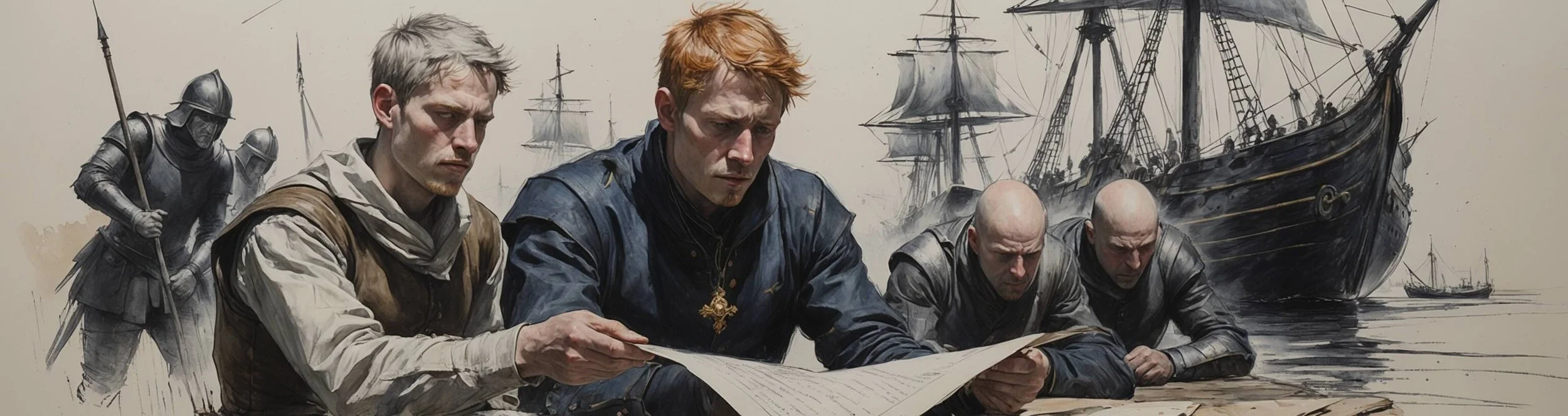
Scene Profile – At a Glance
- Location: A council-chamber at Southampton, on the eve of embarkation.
- What Happens: Three trusted men – Cambridge, Scroop and Grey – have sold the King’s life to France. Henry, who knows everything, lets them argue against mercy for a drunkard – then hands them their own arrest warrants. They die by the severity they recommended.
- Key Characters: King Henry V, Lord Scroop, the Earl of Cambridge, Sir Thomas Grey, Exeter, Bedford and Westmoreland.
- Dramatic Function: The home front purged before the war can sail – and the King’s first display of the stagecraft that will run the campaign: the trap, the performance, the sentence.
- Famous Quote:
"What shall I say to thee, Lord Scroop? Thou cruel,
Ingrateful, savage and inhuman creature!
Thou that didst bear the key of all my counsels,
That knew'st the very bottom of my soul..."
(King Henry V, Act 2, Scene 2) - Why It Matters: The Scroop lament is the play’s one glimpse of Henry personally wounded – betrayal by his “bedfellow” – and the scene’s engineered justice shows exactly how this king converts private injury into public law.
Scene Summary
The nobles know already: the King “hath note of all that they intend”, and the traitors – smooth-faced, wearing allegiance like a crown – are to be taken “by and by”. Exeter marvels at the worst of it: Scroop, the King’s “bedfellow”, cloyed with favours, has sold his sovereign’s life “for a foreign purse”.
Henry enters with the three and sets his trap with a small case: a man who railed against him drunk yesterday is to be freed – “It was excess of wine… and on his more advice we pardon him.” The traitors walk straight in. Scroop: that’s mercy, “but too much security” – punish him. Cambridge and Grey agree: mercy, yes, but after “much correction”. Henry sighs at their “too much love and care of me”, frees the drunkard anyway – if little faults may not be winked at, how shall we look at capital crimes? – and hands the three their commissions. The papers are arrest warrants. Their cheeks turn to paper with them.
The confessions are instant; the King’s answer is the play’s first great aria. The mercy they might have pleaded for they themselves “suppressed and killed”. Cambridge and Grey are despatched in a dozen lines – but Scroop receives sixty: the “cruel, ingrateful, savage and inhuman creature” who bore the key of all his counsels, who knew “the very bottom of my soul” – a betrayal so complete it is “like another fall of man”. The three repent – formally, even joyfully – and are sentenced: the King seeks no personal revenge, but the kingdom’s safety delivers them to her laws. They go guarded to their deaths, and Henry turns to the sea in the same breath: the treason’s discovery proves God clears the way – “Cheerly to sea… No king of England, if not king of France.”
The Trap Set
The scene opens with the audience – like the King – knowing everything, and the traitors alone in the dark.
Original
Nay, but the man that was his bedfellow,
Whom he hath dulled and cloyed with gracious favours,
That he should, for a foreign purse, so sell
His sovereign's life to death and treachery.
(Exeter, Act 2, Scene 2)
Shakespeare Retold (Modern Verse)
It’s strange a man who once was such a close friend,
Someone the king had lavished gifts upon,
Has, for a chunk of foreign cash, sold off
The king’s life, killing him most treasonably.
Shakespeare surrenders surprise on purpose: the Chorus named the three, and the nobles’ opening exchange confirms the interception. What remains is watching – the traitors performing loyalty (“How smooth and even they do bear themselves!”) to a king performing ignorance, two theatres running on one stage. Exeter’s astonishment names the wound that will dominate the scene: not Cambridge’s politics or Grey’s greed, but the “bedfellow” – intimacy itself turned saleable. The word is literal Tudor usage for a trusted companion who shared the royal chamber, and it loads the coming lament: whatever treason means to the state, to Henry it means that the man who knew him slept beside the sale.
The Mercy Test
Henry’s trap is a small act of clemency, offered to men who cannot afford to recommend it.
Original
If little faults, proceeding on distemper,
Shall not be winked at, how shall we stretch our eye
When capital crimes, chewed, swallowed and digested,
Appear before us?
(King Henry V, Act 2, Scene 2)
Shakespeare Retold (Modern Verse)
If petty crimes caused by drunken disorder
Cannot be overlooked, how should we look at
Foul crimes, planned out premeditatedly,
When they arise?
The device is perfect. A drunkard railed against the King; the King pardons him; the traitors – desperate to seem loyal – outbid each other in severity: punish him, lest example breed. They argue against mercy because zealous loyalty is their disguise, and the disguise requires it. Henry’s reply – if little faults may not be winked at, how shall we stretch our eye at capital crimes “chewed, swallowed and digested”? – is the trap closing in plain sight: the sentence describes their own crime a beat before the warrants do. When they then plead for the mercy they voted down, his answer is simply their own words returned: “your own reasons turn into your bosoms, / As dogs upon their masters”. The King has made the traitors sentence themselves – responsibility transferred, as ever, before the blow – and the manoeuvre is the tennis-ball reply, the Harfleur ultimatum and the Williams glove-trick in embryo: Henry’s justice always arrives wearing its victim’s signature.
What Shall I Say to Thee, Lord Scroop?
Cambridge and Grey get a dozen lines of royal anger; Scroop gets sixty of something rawer.
Original
What shall I say to thee, Lord Scroop? Thou cruel,
Ingrateful, savage and inhuman creature!
Thou that didst bear the key of all my counsels,
That knew'st the very bottom of my soul...
(King Henry V, Act 2, Scene 2)
Shakespeare Retold (Modern Verse)
What shall I say to you, Lord Scroop? You cruel,
Ungrateful, inhumane and savage creature!
You were the one I went to for advice;
You knew the very heart and soul of me...
The lament is the play’s one sustained look at Henry’s interior through a wound. Scroop “knew’st the very bottom of my soul” – the man who could almost have “coined me into gold” – and his fall infects trust itself: every dutiful, grave, learned, religious-seeming man is now marked “with some suspicion”, and the revolt is “like another fall of man” – Eden lost a second time. The grief is real, and its scale invites a colder question the play does not silence: the speech mourns, above all, what the betrayal does to Henry – his counsels, his trust, his ability to read men – and it is delivered in public, over a kneeling prisoner, as a masterclass for the watching peers. Even heartbreak, in this king, is also governance: the court that hears the lament will never again wonder what treachery costs.
The Sentence
The judgement, when it comes, is built on the play’s most important distinction – and closes on the war.
Original
Touching our person seek we no revenge;
But we our kingdom's safety must so tender,
Whose ruin you have sought, that to her laws
We do deliver you.
(King Henry V, Act 2, Scene 2)
Shakespeare Retold (Modern Verse)
I do not seek revenge here for myself,
But I must keep my precious kingdom safe,
Which you’ve sought to destroy, hence by her laws
You will be brought to justice.
“Touching our person seek we no revenge” – the man forgives; the office cannot. The kingdom’s safety, “whose ruin you have sought”, delivers the three not to Henry’s anger but to “her laws” – the King positioned as mere conduit between crime and statute, exactly as he positioned Canterbury between conscience and war. The traitors’ scaffold speeches ratify everything – rejoicing at their own prevention, blessing the sentence – and Henry’s pivot is immediate: the discovery proves God “graciously” clears the expedition’s way, every rub smoothed, and the scene that began with treason ends embarking for France on a rhymed vow – “No king of England, if not king of France.” Domestic doubt is not merely removed; it is converted into providential fuel. Nothing this king suffers fails to become an argument.
Language and Technique
- Dramatic irony inverted: The audience and the King share full knowledge from the first line – suspense is traded for the crueller pleasure of watching performers who do not know the play is about them.
- The self-sentencing device: The drunkard’s pardon makes the traitors argue against mercy before pleading for it – judgement engineered so its victims write the verdict.
- Anaphora of betrayal: “Why, so didst thou… Why, so didst thou” – the Scroop lament’s hammering repetitions perform a mind checking every memory of a friend against the fraud.
- Theological escalation: The betrayal is scaled up through devils, temptation and Eden – “another fall of man” – private injury given cosmic dress.
- Person and office split: “Touching our person seek we no revenge” – the sentence’s grammar separates the forgiving man from the punishing crown: the play’s theory of kingship in one line.
Key Quotes from Act 2, Scene 2
Quote 1
Original
The mercy that was quick in us but late,
By your own counsel is suppressed and killed:
You must not dare, for shame, to talk of mercy...
(King Henry V, Act 2, Scene 2)
Shakespeare Retold (Modern Verse)
The mercy that I recently possessed
Has been suppressed and killed by your advice.
You mustn’t even dare to talk of mercy...
Quote Analysis: The trap’s jaws, closing: the mercy that was “quick” – alive – in the King but lately has been “suppressed and killed” by the traitors’ own counsel, and shame forbids them even the word. The logic is airtight and the cruelty exquisite: Henry does not deny them mercy – he demonstrates that they denied it themselves, minutes ago, in front of witnesses. It is the play’s signature move – guilt transferred to its victims – performed for the first time with the stakes at maximum.
Original
And thus thy fall hath left a kind of blot,
To mark the full-fraught man and best indued
With some suspicion.
(King Henry V, Act 2, Scene 2)
Shakespeare Retold (Modern Verse)
And so your fall from grace has left a stain,
Suggesting that a man that seems so flawless
Should be distrusted.
Quote Analysis: The lament’s bleakest bequest: Scroop’s fall leaves “a kind of blot” on the “full-fraught man” – the fully-laden, seemingly complete man – so that perfection itself now invites suspicion. The King is describing the death of his own ability to trust: after Scroop, every virtue reads as possible costume. For a play obsessed with performance, the line cuts deepest – the supreme performer discovering that performance means no one, including him, can ever be certified real again.
Original
For this revolt of thine, methinks, is like
Another fall of man.
(King Henry V, Act 2, Scene 2)
Shakespeare Retold (Modern Verse)
Because this treachery of yours is like
Adam expelled from Eden.
Quote Analysis: The lament’s summit: Scroop’s revolt is “like another fall of man” – Eden lost twice, with Henry’s trust as the garden. The Retold’s “Adam expelled from Eden” makes the allusion explicit. The hyperbole measures the wound – one friend’s treachery scaled to the corruption of the species – and quietly reveals the King’s self-conception: a world in which betraying Henry re-enacts the primal sin is a world in which Henry stands very near God. Grief and majesty, indistinguishable to the last.
Original
Cheerly to sea; the signs of war advance:
No king of England, if not king of France.
(King Henry V, Act 2, Scene 2)
Shakespeare Retold (Modern Verse)
Let’s set to sea, and into war advance:
If king, I’m king of England and of France.
Quote Analysis: The scene’s exit couplet, and the war’s launch-code: cheerly to sea – and the throne itself staked on the outcome: “No king of England, if not king of France.” The line makes the conquest constitutional: France is no longer an ambition but a condition of legitimacy, the crown wagered on the claim. After the treason’s providential clearing, it reads as confidence; remembered at Agincourt, when the wager sits at five-to-one, it reads as the size of the bet.
Key Takeaways
- The traitors sentence themselves: The drunkard’s pardon is a trap: the three argue against mercy, then must beg for it – Henry’s justice arrives signed by its victims.
- Scroop is the real wound: Politics explains Cambridge; nothing but intimacy explains sixty lines of “another fall of man” – the play’s one look at Henry betrayed as a man.
- Person and office are formally split: “Touching our person seek we no revenge” – forgiveness and execution delivered in the same breath, by the same voice.
- Treason becomes providence: The plot’s discovery is instantly read as God clearing the way to France – the King’s gift for converting every event into endorsement.
Study Questions and Analysis
What was the Southampton plot – and does the play tell the whole story?
Historically: a conspiracy of 1415, led by Richard Earl of Cambridge, to assassinate Henry before embarkation – but its real spring was dynastic, not financial. Cambridge’s brother-in-law was Edmund Mortimer, whose claim to the throne (through the line Richard II had recognised) many held better than Lancaster’s; the plot aimed to crown him. The play buries this – the Chorus and Henry speak only of French gold – but leaves one trapdoor open, in Cambridge’s own careful words:
Original
For me, the gold of France did not seduce;
Although I did admit it as a motive
The sooner to effect what I intended...
(Cambridge, Act 2, Scene 2)
Shakespeare Retold (Modern Verse)
For me, I wasn’t tempted by the money,
Although I must admit it helped a bit
To carry out what I’d already planned....
The gold “did not seduce” – it was merely “a motive / The sooner to effect what I intended”: an intention the play lets him take to the scaffold unspoken. The audience of 1599 knew what it was – Cambridge’s grandson became Edward IV, and the Wars of the Roses grew from exactly this claim – and the play’s decision to reduce a dynastic challenge to bribery is itself interpretable: the official story (greed, punished by God’s good king) is simpler than the true one (the Lancastrian title contested from within, eight years into its second reign). For essays on the play’s politics, Cambridge’s two lines are gold: the moment the play admits, almost silently, that its foundation question – whose crown is this? – is still open, and points straight at Henry’s own night-prayer over Richard’s body.
How does Henry trap the traitors – and why this way?
With a staged act of mercy. Knowing everything, he produces a trivial case – a drunk who railed against him – and announces a pardon. The traitors, whose disguise is zealous loyalty, do exactly what the disguise requires:
Original
That's mercy, but too much security:
Let him be punished, sovereign, lest example
Breed, by his sufferance, more of such a kind.
(Scroop, Act 2, Scene 2)
Shakespeare Retold (Modern Verse)
That’s merciful, but also over-risky:
He should be punished, else the precedent
Lets others, with impunity, behave.
Scroop demands punishment “lest example breed”; Cambridge and Grey pile on. Henry overrules them – and hands them papers that turn their cheeks the colour of the pages. The design is threefold. Practically, it convicts them of severity with their own mouths, so their later pleas for mercy die of shame – “your own reasons turn into your bosoms”. Theatrically, it stages the unmasking before the court, making the treason’s punishment a public lesson rather than a private purge. And characteristically, it is the King’s signature in miniature: Henry never simply acts – he constructs situations in which his act arrives pre-justified by his target’s own words. Canterbury owns the war, the Dauphin owns the tennis-ball carnage, Harfleur will be “guilty in defence” – and here, first and cleanest, the traitors own their sentence. The scene is the method’s laboratory demonstration.
Why is the attack on Scroop so long and so personal?
Because Scroop’s crime is different in kind. Cambridge sold politics; Grey sold loyalty; Scroop sold intimacy – the “bedfellow” who “knew’st the very bottom of my soul”, whose betrayal poisons not one plot but the possibility of trust: after him, every dutiful, grave, religious-seeming man carries “a kind of blot… with some suspicion”, and the revolt is “like another fall of man”. The sixty lines are grief doing theology – a friend’s treachery scaled up through devils and Eden until it re-enacts the primal sin.
Harold C. Goddard, in The Meaning of Shakespeare (1951), noted the unspoken irony that gives the lament its strange double edge: the king weeping over a discarded intimacy is the same man who, as the play’s next scene reports, broke Falstaff’s heart with “I know thee not, old man” – the rejecter of one bosom friend undone by the treachery of another, with no sign he hears the rhyme. Whether Shakespeare intends the parallel as indictment or as tragic symmetry is genuinely open – but the placement is his: the Scroop lament and the Hostess’s deathbed report stand in adjacent scenes, and an essay that reads them together – two betrayed intimacies, one mourned in state verse, one in tavern prose – is reading the act as it was built.
Do the traitors’ repentances ring true?
They ring exactly like what they are: the required music of the Tudor scaffold. Grey’s is the most extreme:
Original
Never did faithful subject more rejoice
At the discovery of most dangerous treason
Than I do at this hour joy o'er myself.
Prevented from a damned enterprise...
(Grey, Act 2, Scene 2)
Shakespeare Retold (Modern Verse)
A faithful man has never been so happy
Discovering a plot so treasonous
As I am now, where joy usurps my fate.
I have been stopped from doing something awful...
Rejoicing at his own detection – joy “o’er myself” at being “prevented from a damned enterprise” – with Scroop repenting his fault “more than my death” and Cambridge thanking God for prevention. To modern ears the unanimity sounds engineered; to Shakespeare’s it sounded correct: the public confession, the blessing of the King’s justice, the care of the soul over the body were the period’s prescribed form for dying traitors, familiar from actual executions. The play gains two things from the convention. The sentences can proceed with full ceremony and no residue – the war sails morally clean. And the performance question hums underneath: men whose treason was flawless acting now deliver flawless contrition, and the scene has just taught us (through Scroop’s “blot”) that seeming can never again be trusted. The play does not wink; it simply lets the traitors die in perfect form, in a scene about how perfect form is exactly what deceived everyone.
What does this scene establish about Henry’s kingship?
Its complete operating system, demonstrated once before the war begins. Intelligence first: the King knows all “by interception” before the scene opens – this monarchy is never surprised. Then stagecraft: the trap, the papers, the public unmasking – justice designed as theatre, with the court as audience and the lesson as the point. Then the great separation: “Touching our person seek we no revenge” – the man forgives while the office kills, the same voice doing both without strain. And finally conversion: the treason becomes providence (“God so graciously hath brought to light…”), doubt becomes fuel, and the fleet sails on a couplet that stakes the crown itself on France.
Norman Rabkin, in his 1977 essay Rabbits, Ducks, and Henry V, argued that the play’s Henry is built to sustain two full readings at once, and this scene is the pattern-card: the ideal king – merciful to the drunk, wounded by betrayal, scrupulously legal, providentially blessed – and the total operator – engineering confessions, performing grief to an audience, converting a murder plot into a sailing wind – occupy every line together. Nothing either reading needs is missing; nothing either needs is unambiguous. For essays on kingship, this scene – not Agincourt – is where Henry’s machinery is shown assembled, working, and already impossible to judge singly.