Richard III: Act 3, Scene 1 – Analysis
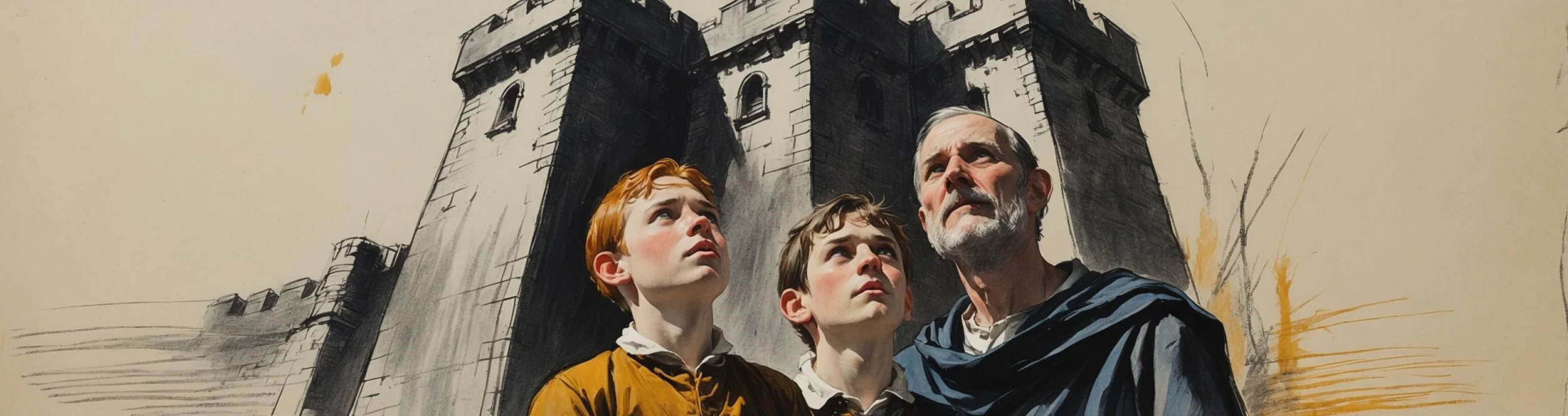
Scene Profile – At a Glance
- Location: London. A street – the young King’s ceremonial entry into the city.
- What Happens: Prince Edward arrives in London and is welcomed by Richard and The Duke of Buckingham. His mother has taken sanctuary with his brother; the Cardinal is persuaded to fetch the boy out. The two princes spar with their uncle and are sent to the Tower. Richard and Buckingham set Catesby to sound Hastings, and Richard promises Buckingham the earldom of Hereford.
- Key Characters: Richard, Duke of Gloucester, The Duke of Buckingham, Edward, Prince of Wales, Richard, Duke of York, Cardinal Bourchier, Lord Hastings, Catesby, the Lord Mayor.
- Dramatic Function: The princes’ only scene – two clever children handed to their uncle in front of the city – and the planning of Hastings’ fall and the reward that will never be paid.
- Famous Quote:
"So wise so young, they say do never live long."
(Richard, Act 3, Scene 1) - Why It Matters: Everything the audience knows of the princes it learns here, and Shakespeare makes them witty, brave and perceptive so that the Tower closes over something worth mourning.
Scene Summary
Trumpets sound and the young Prince Edward enters London with Richard, The Duke of Buckingham, the Cardinal and Catesby. Buckingham welcomes him to his chamber; Richard calls him the sovereign of his thoughts. The Prince says the journey was made heavy by its crosses – he wanted more uncles to welcome him – and Richard tells him that those uncles were dangerous, their words sugared and their hearts poisoned; the Prince replies that God keep him from false friends, but they were none. The Lord Mayor greets him. The Prince asks why his mother and his brother York have not met him, and Hastings arrives with the answer: the Queen has taken sanctuary with the Duke of York and will not let him come.
Buckingham calls it an indirect and peevish course, and asks the Cardinal to persuade the Queen to send the boy – or, if she refuses, Hastings is to pluck him from her arms by force. The Cardinal will not break sanctuary for all the land. Buckingham argues him round: sanctuary is for those who claim it or deserve it, and a child has done neither, so taking him is no breach. The Cardinal yields and goes with Hastings. The Prince asks where he shall stay until his coronation, and Richard advises the Tower. The Prince does not like the Tower, of any place, and asks whether Julius Caesar built it. Buckingham says he began it. The Prince reflects that a truth would live from age to age even if unrecorded, and Richard, aside, observes that the wise so young never live long – and, when asked what he said, that fame lives long without written characters; he is, he tells the audience, moralising two meanings in one word like the old Vice, Iniquity. The Prince speaks of Caesar’s fame and hopes to win back France or die a soldier as he lived a king; Richard, aside, says a forward spring makes a short summer.
The little Duke of York arrives, greets his brother as his dread lord, and turns on his uncle. Richard once said idle weeds grow fast; the Prince has outgrown York, so is the Prince idle? York asks for Richard’s dagger, is promised a greater gift, guesses the sword, is told it is too heavy, and says he would weigh it lightly; when the Prince says their uncle knows how to bear with him, York says his brother means Richard should bear him on his shoulders, like an ape. Buckingham marvels at the boy’s wit. Richard sends the princes to the Tower, where he says their mother will meet them. York does not want to go: he will not sleep quiet there, for fear of his uncle Clarence’s angry ghost, murdered there, his grandmother says. The Prince fears no uncles dead; Richard hopes he fears none that live; and the boys go with heavy hearts.
Alone, Buckingham asks whether the prating York was set on by his subtle mother; Richard calls him a perilous boy, all the mother’s from top to toe. They turn to business. Catesby, sworn to their purpose, is to sound Hastings on Richard’s installation as king, and to summon him tomorrow to the Tower to sit about the coronation – a divided council. Catesby thinks Hastings loves the Prince too much to be won, and that Stanley will do as Hastings does. Richard sends Hastings the good news that his enemies are let blood at Pomfret tomorrow, and a suggestion that he give Mistress Shore an extra kiss. And if Hastings will not yield? Chop off his head. When Richard is king, Buckingham may claim the earldom of Hereford and the late King’s moveables. Buckingham says he will claim the promise; Richard says he will find it yielded with all kindness; and they go to supper to digest their plots.
I Want More Uncles
The scene opens with a welcome and a complaint. The young King has arrived in London and notices at once who is missing: the uncles Richard has just arrested. Richard’s answer is a lesson in reading men, and it is the play’s method described by its practitioner.
Original
Sweet Prince, the untainted virtue of your years
Hath not yet dived into the world’s deceit;
Nor more can you distinguish of a man
Than of his outward show, which, God he knows,
Seldom or never jumpeth with the heart.
(Richard, Act 3, Scene 1)
Shakespeare Retold (Modern Verse)
Because you’re young, you lack experience
And haven’t been exposed to folk who cheat you;
The only way that you can judge a man
Is by the way that man behaves, which God knows
Is almost never how he really is.
Richard tells a child that he is too young to see past a man’s outward show to his heart, and that the two seldom or never agree – which is true, and the man saying it is the proof. The Prince’s reply, that God keep him from false friends but those were none, is the first sign that the boy is not a fool, and the scene builds on it. Edward knows his mother has fled, resents Hastings’ slowness, dislikes the Tower, argues about Julius Caesar and history, and means to win back France or die a soldier. Shakespeare gives him a full character in a hundred lines because the play needs the audience to know what is lost: not a symbol but a boy who could reason. Richard’s asides – so wise so young, they say, do never live long; short summers lightly have a forward spring – are the sentence being passed in proverbs, and the second aside is spoken over the child’s dream of conquering France. The scene’s study of appearance and reality is conducted through a child who is warned, by the deceiver, that appearances deceive.
Two Meanings in One Word
The Prince’s question about the Tower – did Julius Caesar build it, and is that on record or only reported? – starts an exchange about how truth survives, and Richard uses it to tell the audience what kind of stage figure he is.
Original
Thus, like the formal Vice, Iniquity,
I moralise two meanings in one word.
(Richard, Act 3, Scene 1)
Shakespeare Retold (Modern Verse)
Like in old plays, Iniquity was evil,
And like him, I twist meanings of a word.
The Vice was the tempter of the old morality plays, a comic devil who joked with the audience and worked by equivocation, and Iniquity was one of his names. Richard claims the lineage openly: he has just said one thing to the boy and another to the audience out of the same words, and “moralise two meanings in one word” is the technique named. The Prince’s own speech is about permanence – a truth would live from age to age even if unrecorded, Caesar lives in fame though not in life – and it is answered by a man planning his death; the joke is that the boy’s reflections on what outlasts death are the only record he will leave. Buckingham, meanwhile, has argued a Cardinal into breaking sanctuary with a piece of legal sophistry – sanctuary is for those who claim it or deserve it, and a child has done neither – which is the same technique applied to a churchman. The scene’s argument about language is that two meanings in one word is how a crown is taken: from a boy, from a bishop, from a city.
Little Cousin
The Duke of York’s arrival changes the tone. He is younger than his brother, sharper-tongued, and the only character in the play who teases Richard to his face; the exchange over the dagger and the sword is comedy with a knife in it.
Original
YORK: I pray you, uncle, give me this dagger.
RICHARD: My dagger, little cousin? With all my heart.
(Act 3, Scene 1)
Shakespeare Retold (Modern Verse)
YORK: Will you give me your dagger please, dear Uncle?
RICHARD: My dagger, younger nephew? Sure I will.
York asks for the dagger and gets it; asks for the sword and is told it is too heavy; and turns his uncle’s word – little – into a joke about being carried on Richard’s crooked shoulders like an ape. It is the play’s only reference to Richard’s deformity made by a child, and the child gets away with it, for now. Buckingham admires the boy’s wit; Richard, once the princes have gone, calls him a perilous boy, bold, quick, ingenious, forward, capable, and all the mother’s – which from Richard is a death sentence disguised as a compliment. York’s fear of the Tower is the scene’s most chilling moment because it is so precise: he will not sleep quiet there, for fear of his uncle Clarence’s angry ghost, and his grandmother told him Clarence was murdered there. The audience watched the murder. The Prince’s brave reply, that he fears no uncles dead, is capped by Richard’s hope that he fears none that live, and the boys go with heavy hearts to the building that will hold them until Act 4. The scene’s treatment of innocence is unsentimental – the children are clever, cheeky and doomed, and the play makes us like them before it locks the door.
Chop Off His Head
With the children gone, the plotters plan the next removal. Hastings must be sounded, and the answer must be found out without the question being asked; Catesby is the instrument, and the divided council is the trap.
Original
Chop off his head! Something we will determine.
And look when I am king, claim thou of me
The earldom of Herford, and all the moveables
Whereof the King my brother was possessed.
(Richard, Act 3, Scene 1)
Shakespeare Retold (Modern Verse)
Chop off his head! Whatever we decide.
And when I’m king, then you can claim from me
The earldom of Hereford, and all the treasures
That once the King, my brother, had possessed.
Richard’s answer to what happens if Hastings refuses is four words and a shrug – chop off his head, something we will determine – and the casualness is the point: the execution of Act 3, Scene 4 is decided here as an afterthought before supper. The gift to Hastings, the news of his enemies’ deaths and an extra kiss for Mistress Shore, is the bait Catesby will deliver in the next scene, and it is designed to make a man grateful to the person about to kill him. Then the reward. Richard promises Buckingham the earldom of Hereford and the late King’s moveables, Buckingham says he will claim the promise, and Richard says he will find it yielded with all kindness. The audience will hear the claim made in Act 4, Scene 2 and answered with “I am not in the giving vein today”; the promise is planted here so that its breaking can be measured. The partnership is at its most efficient in this scene – a child argued out of sanctuary, a councillor marked for death, a fee agreed – and the play’s study of manipulation has never looked more like ordinary business.
Language and Technique
- The aside as sentence: “So wise so young” and “Short summers”: Richard’s asides pass judgement on the Prince in proverbs, so the audience hears the death sentence as folk wisdom.
- Equivocation named: Richard explains his own double meanings to the audience and names the Vice – the play’s clearest statement of the tradition behind its villain.
- Sophistry: Buckingham’s argument about sanctuary – a child cannot claim it or deserve it, so taking him breaks nothing – is a legal trick that the Cardinal accepts, and it stands for every argument in the play that sounds like law.
- Child’s wit: York’s puns on light and heavy, bear and bear with, little and ape are a small comedy that lets a child say what no adult dares: that his uncle is crooked.
- The Tower as character: The building is discussed, feared and entered: Caesar’s record, Clarence’s ghost, the boys’ heavy hearts all attach to it before the door shuts.
- Business before supper: The scene ends with an execution planned and a fee agreed in the tone of a dinner arrangement – the register of the coup.
Key Quotes from Act 3, Scene 1
Quote 1
God keep me from false friends! – but they were none.
(Prince Edward, Act 3, Scene 1)
Shakespeare Retold (Modern Verse)
God keep me from false friends! But they weren’t false.
Quote Analysis: The Prince’s answer to Richard’s warning about his uncles. He accepts the prayer and rejects its application in one line, and the balance of the line – the prayer, the dash, the correction – shows a mind that will not be managed. It is the first thing that makes Richard notice him.
I do not like the Tower, of any place.
(Prince Edward, Act 3, Scene 1)
Shakespeare Retold (Modern Verse)
Of all the places, I don’t like the Tower.
Quote Analysis: A child’s dislike, and a prophecy. The Prince has not been told what the Tower is for, and the play has: Clarence died there in Act 1 and the boys will die there in Act 4. The flatness of the line – of any place – is what makes it stay in the mind.
So wise so young, they say do never live long.
(Richard, Act 3, Scene 1)
Shakespeare Retold (Modern Verse)
One says, ‘those wise when young do not live long.’
Quote Analysis: The aside that condemns the Prince. It is phrased as a saying, they say, so that Richard can disown it when asked, and it is followed by the substitute line about fame living long without characters. The audience hears both and knows which one is meant.
Marry, my uncle Clarence’ angry ghost.
My grandam told me he was murd’red there.
(Duke of York, Act 3, Scene 1)
Shakespeare Retold (Modern Verse)
The angry ghost of uncle Clarence mainly.
My grandma said that he was murdered there.
Quote Analysis: York’s reason for fearing the Tower is the truth, told to him by his grandmother and known to the audience from Act 1, Scene 4. That a small boy names the murder in front of the murderer, and is sent to the same building, is the scene’s cruellest stroke, and the play delivers it as a child’s fancy.
No doubt, no doubt. O, ’tis a perilous boy,
Bold, quick, ingenious, forward, capable:
He is all the mother’s, from the top to toe.
(Richard, Act 3, Scene 1)
Shakespeare Retold (Modern Verse)
No doubt about it. He’s a dangerous boy,
Bold, quick and clever, cocky and astute:
Exactly like his mother, head to toe.
Quote Analysis: Richard’s private verdict on York, and the reason the boy will not survive. Every adjective is praise – bold, quick, ingenious, forward, capable – and from Richard praise of that kind is a warrant. “All the mother’s” ties the child to the woman he has already defeated, and the sentence is passed.
Key Takeaways
- The princes are people: Edward reasons about history and dreams of France; York teases his uncle about his back. The play makes them real so the Tower can take something real.
- Richard names his own method: The formal Vice, two meanings in one word: the villain tells the audience what tradition he comes from.
- Sanctuary is argued away: Buckingham’s sophistry turns a Cardinal, and the younger prince is fetched from his mother by law.
- Hastings is marked: Catesby is sent to sound him, the divided council is arranged, and the answer to refusal is four words: chop off his head.
- The fee is set: The earldom of Hereford is promised in this scene and refused in Act 4 – the partnership’s terms, agreed before supper.
Study Questions and Analysis
Why does Richard send the princes to the Tower?
Ostensibly because it is the royal residence where kings traditionally lodged before their coronation, and Richard offers it as counsel: a day or two of repose at the Tower, then wherever the Prince pleases. In practice it is a prison with a royal apartment, and the play has already shown Clarence murdered in it. Once both boys are inside, Richard controls the succession – as the Scrivener and the citizens will shortly discover – and once he is king, the Tower is where Tyrrel’s men find them asleep.
If I may counsel you, some day or two
Your Highness shall repose you at the Tower;
Then where you please, and shall be thought most fit
For your best health and recreation.
(Richard, Act 3, Scene 1)
Shakespeare Retold (Modern Verse)
If I may guide you, spend a day or two
To rest your royal self within the Tower;
Then, after that, wherever you believe
To be the best for health and recreation.
The scene makes the boys resist. Edward does not like the Tower of any place, and York will not sleep quiet there for fear of Clarence’s ghost; both go because the Lord Protector will have it so. Historically the princes were lodged in the Tower in May and June 1483 and were last seen there that summer; the play compresses the timing but keeps the fact that they entered it under their uncle’s guidance. A student can use the scene to show how the play’s power works through custom: the Tower is offered as an honour and used as a cage, and the boys are polite enough to accept the honour.
What does “So wise so young, they say do never live long” mean?
Richard says it aside after the Prince has argued, cleverly, that a true thing would be remembered from age to age even if it were never written down. The line is a proverb – precocious children die young – and Richard uses it as a private sentence of death on his nephew: the boy is too clever, and he will not be allowed to grow up. When the Prince asks what he said, Richard substitutes a harmless line about fame living long without written characters, and then tells the audience that he is playing the old Vice, moralising two meanings in one word.
So wise so young, they say do never live long.
(Richard, Act 3, Scene 1)
Shakespeare Retold (Modern Verse)
One says, ‘those wise when young do not live long.’
The aside is one of the play’s most quoted lines because it is so economical: a compliment, a folk saying, and a murder plan in eight words. It also tells the audience how to hear everything Richard says to the boys – every courtesy has a second meaning, and the second meaning is the true one. Charles Lamb, reviewing a performance in 1802, called unstrained mirth a prime feature of Richard’s character; this aside is the mirth at its most unstrained, a joke shared with the audience over a child’s head. The Prince’s own speech about Caesar’s fame outlasting his life is answered in kind by history: the boy is remembered, and the play is part of why.
Who wins the argument about sanctuary, and why does it matter?
Buckingham does, and the argument is a small model of how the play’s coup works. The Queen has taken the younger prince into sanctuary at Westminster, where church law protects anyone from arrest. Cardinal Bourchier refuses to violate the privilege for all the land. Buckingham argues that sanctuary belongs to those whose deeds have deserved it or who have the wit to claim it, that a child has done neither, and that removing him therefore breaks no privilege – he has heard of sanctuary men, but never of sanctuary children. The Cardinal says Buckingham has overruled his mind for once, and goes to fetch the boy.
Oft have I heard of sanctuary men,
But sanctuary children never till now.
(Buckingham, Act 3, Scene 1)
Shakespeare Retold (Modern Verse)
I’ve heard of many men in sanctuary,
But, until now, I’ve never heard of children.
The argument is clever and hollow, and the Cardinal’s surrender shows a churchman persuaded by a lawyer’s joke into handing a child to the man who will kill him. The episode is historical – Cardinal Bourchier did persuade Elizabeth Woodville to give up the Duke of York in June 1483 – and More records the debate about sanctuary; Shakespeare gives Buckingham the winning sophistry so that the audience can hear the coup’s method in the open. For an essay on language and rhetoric, the exchange is a compact example of argument used to dissolve a protection rather than to find a truth.
Why does Shakespeare make the princes so witty?
So that their deaths will cost something. The historical princes were twelve and nine and have no recorded personalities; Shakespeare gives Edward a philosophical turn – questions about Caesar, records and fame, and an ambition to win back France – and York a comedian’s tongue, with puns on light and heavy and a joke about riding on his crooked uncle’s shoulders. The children see more than the adults around them: Edward knows his uncles were not false friends, and York knows what happened to Clarence in the Tower.
The wit also sharpens the irony. Every clever thing the boys say is heard by the man who has decided they will not grow up, and Richard’s asides convert their brightness into evidence for the sentence – so wise so young, a perilous boy, all the mother’s. Buckingham’s admiration for York’s sharp-provided wit is the courtier’s version of the same verdict. Samuel Johnson, in his 1765 edition, found the play’s scenes noble in themselves and some parts shocking; the princes’ scene is where the two qualities meet, because the nobility of the children is what makes the shock of Act 4 possible.
What is arranged at the end of the scene?
Three things. Catesby is sent to sound Hastings on whether he will support Richard’s installation as king, without asking the question directly – if Hastings is warm, tell him everything; if he is cold, break off and report. Hastings is to be summoned to the Tower tomorrow for a council on the coronation, while a second, divided council meets elsewhere – the arrangement Stanley will fear in the next scene. And Richard asks Catesby to sweeten the approach with news that Hastings’ enemies die at Pomfret tomorrow, and a joke about Mistress Shore.
And as it were far off, sound thou Lord Hastings
How he doth stand affected to our purpose,
And summon him tomorrow to the Tower
To sit about the coronation.
(Buckingham, Act 3, Scene 1)
Shakespeare Retold (Modern Verse)
And, loosely theorising, sound out Hastings
To see if he’s supportive of our plan,
And then invite him to the Tower tomorrow
To sit in council on the coronation.
Then the contingency and the fee. If Hastings will not yield, chop off his head; and when Richard is king, Buckingham may claim the earldom of Hereford and the late King’s goods. The scene ends with supper and plots to digest. Everything planned here happens: Catesby sounds Hastings in Act 3, Scene 2, Hastings refuses and is beheaded in Act 3, Scene 4, and Buckingham claims his earldom in Act 4, Scene 2 and is refused. The audience is given the whole programme in advance, which is the play’s characteristic pleasure – the plans are shown, and the interest is in watching people walk into them.