Richard III: Act 2, Scene 4 – Analysis
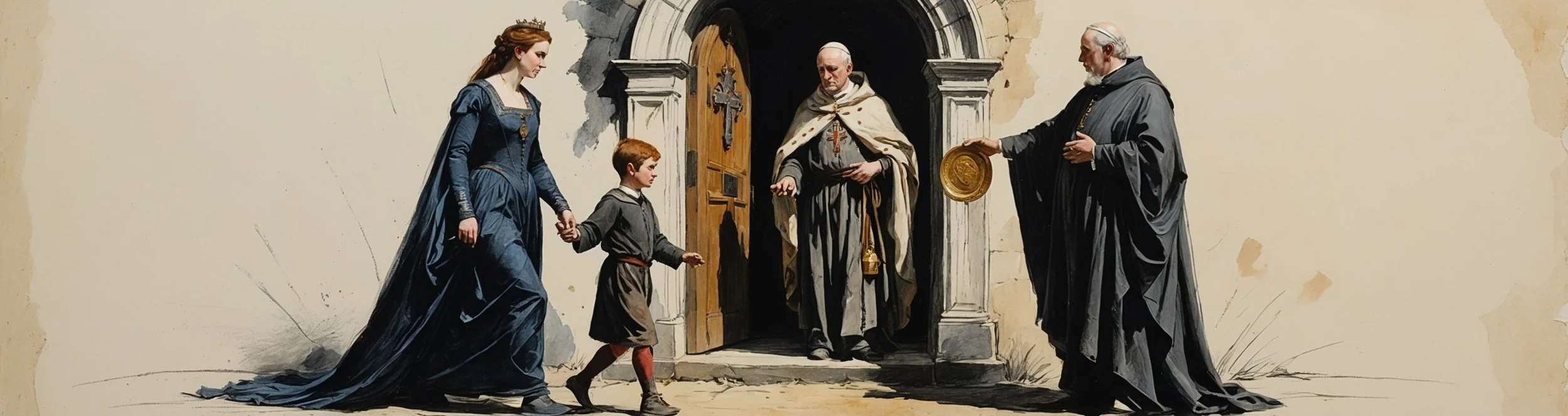
Scene Profile – At a Glance
- Location: London. The palace.
- What Happens: Queen Elizabeth, the Duchess of York, the young Duke of York and the Archbishop wait for the Prince. York repeats a joke about his uncle’s growth. A messenger brings word that Rivers, Grey and Vaughan have been arrested by Richard and The Duke of Buckingham; Elizabeth takes York into sanctuary.
- Key Characters: Queen Elizabeth, the Duchess of York, Richard, Duke of York, the Archbishop of York, a Messenger.
- Dramatic Function: The scene in which the coup reaches the women: the queen’s protectors are gone in one line of news, and she runs for the church with her younger son.
- Famous Quote:
"The tiger now hath seized the gentle hind..."
(Queen Elizabeth, Act 2, Scene 4) - Why It Matters: The Duchess’s speech on the wars is the play’s first look back over the whole cycle of civil war, and Elizabeth’s flight to sanctuary sets up the sanctuary argument of Act 3.
Scene Summary
The Archbishop of York reports the Prince’s progress towards London – Stony Stratford last night, Northampton tonight. The Duchess of York longs to see him and hopes he has grown; Queen Elizabeth has heard that her younger son York has almost overtaken his brother. York would rather not have it so: at supper once, when Rivers spoke of his growth, his uncle Gloucester said that small herbs have grace and great weeds grow apace, and York has not wanted to grow fast since. The Duchess observes that the saying did not hold in the man who made it – Richard was the wretchedest thing when he was young, and slow-growing, so by his own rule he should be gracious. She hopes he is, but lets mothers doubt.
York adds a flout he could have made: they say his uncle grew so fast he could gnaw a crust at two hours old, while York was two years getting a tooth. Who told him? His uncle’s nurse – who, the Duchess says, died before York was born. Elizabeth calls him a parlous boy, too shrewd, and warns that pitchers have ears. A messenger enters with news that grieves him to report: Rivers, Grey and Sir Thomas Vaughan have been sent as prisoners to Pomfret by the mighty dukes, Gloucester and The Duke of Buckingham, for an offence the messenger does not know.
Elizabeth sees the ruin of her house: the tiger has seized the gentle hind, tyranny begins to jut upon the innocent and aweless throne, and she sees, as in a map, the end of all. The Duchess looks back over the wrangling days she has lived through – her husband dead for the crown, her sons tossed up and down, and now, the wars won, the conquerors making war on themselves, brother to brother, blood to blood – and asks to die rather than look on more death. Elizabeth takes York to sanctuary; the Duchess will go with her; the Archbishop gives up the Great Seal he keeps and conducts them there.
Great Weeds Do Grow Apace
The scene opens in a nursery register – a grandmother hoping a boy has grown – and the boy’s chatter turns out to contain the play’s argument. Richard’s saying about herbs and weeds is a joke at a child’s expense that the child has taken to heart.
Original
Grandam, one night as we did sit at supper,
My uncle Rivers talked how I did grow
More than my brother. "Ay," quoth my uncle Gloucester,
"Small herbs have grace, great weeds do grow apace."
And since, methinks I would not grow so fast,
Because sweet flow’rs are slow and weeds make haste.
(Duke of York, Act 2, Scene 4)
Shakespeare Retold (Modern Verse)
Grandma, one night when I was sat at supper,
My uncle Rivers spoke of how I’d grown
More than my brother. ‘Yes,’ said uncle Gloucester,
‘Small herbs grow gracefully, yet weeds grow fast.’
And since then, I’ve not wanted to grow fast,
Because sweet flowers grow slow and weeds grow swiftly.
The proverb says that graceful things grow slowly and weeds fast, and Richard used it to tease York for growing; York has since decided he would rather be a herb. The Duchess turns the saying on its author: Richard was slow-growing and wretched as a child, so by his own rule he should be gracious, and she hopes he is – but mothers may doubt. It is the first time the play lets Richard’s mother speak about him, and the doubt is the whole of her later curse in miniature. York’s second joke, about the crust gnawed at two hours old, repeats the legend of Richard born with teeth that the Duchess will not confirm – the nurse who supposedly told it died before York was born, which means the child has heard it from someone in the household and cannot say who. Elizabeth’s warning that pitchers have ears is a mother’s alarm at a boy who repeats what he hears in a house where hearing is dangerous. The scene’s early treatment of appearance and reality is domestic: a family comparing notes on a member they all suspect.
The Tiger and the Hind
One messenger, three lines of news, and the queen’s position collapses. Rivers, Grey and Vaughan – her brother, her son and her friend – are on their way to Pomfret, arrested by the two dukes for an offence nobody can name.
Original
Ay me! I see the ruin of my house:
The tiger now hath seized the gentle hind;
Insulting tyranny begins to jut
Upon the innocent and aweless throne.
Welcome destruction, blood, and massacre!
I see (as in a map) the end of all.
(Queen Elizabeth, Act 2, Scene 4)
Shakespeare Retold (Modern Verse)
Why me! I see the downfall of my family:
The tiger has attacked the gentle deer,
And tyranny has started to encroach
Upon the weak and innocent young king.
Here come destruction, blood, and massacres!
Like on a map, I see where this will end.
Elizabeth’s response is a prophecy, and it is accurate in every particular. The tiger has seized the hind; tyranny is beginning to jut – to thrust itself – upon a throne that is innocent and aweless, a child’s; destruction, blood and massacre are welcomed because they are coming anyway; and she sees the end of all as clearly as a map. The Duchess’s speech that follows is longer and older. She has watched the whole civil war – her husband the Duke of York killed for the crown, her sons Edward, Clarence and Richard tossed up and down, victory won and then the victors turning on one another, brother to brother, blood to blood, self against self. It is the play’s first summary of the history it is finishing, and it is spoken by the only character who has lived all of it. Her prayer – end this damned spleen, or let me die – is refused; she has an act of grief still to come. The queen’s decision to take York into sanctuary is the practical answer, and the play will show, in Act 3, Scene 1, how easily it is undone. The Archbishop’s surrender of the Great Seal to a fleeing queen is the state’s own admission that it has changed hands. The scene’s contribution to the design of power is to show a coup from the point of view of the people who have just lost.
Language and Technique
- The child’s proverb: Herbs and weeds: a nursery saying carries the scene’s judgement on Richard, and the Duchess turns it back on him – slow-growing, therefore by his own rule gracious.
- Family legend: The crust gnawed at two hours old: the story of Richard born with teeth is repeated by a child and half-denied by his grandmother, so the monster is built from gossip.
- Pitchers have ears: Elizabeth’s proverb makes the palace a place where children must not repeat what they hear – the fear is domestic before it is political.
- Beast fable: Tiger and hind: Elizabeth’s image makes the coup an act of nature, a predator taking its prey, which is how the powerless experience it.
- The map: “I see, as in a map, the end of all”: foresight presented as a diagram, so that the future is something already drawn.
- Retrospect: The Duchess’s speech surveys the whole civil war in ten lines – husband, sons, conquerors turning on themselves – and gives the scene its historical depth.
Key Quotes from Act 2, Scene 4
Quote 1
He was the wretched’st thing when he was young,
So long a-growing and so leisurely
That if his rule were true, he should be gracious.
(Duchess of York, Act 2, Scene 4)
Shakespeare Retold (Modern Verse)
He was an awful, wretched child when young,
And took so long to grow up at his own pace,
That if his rule were true, he should be lovely.
Quote Analysis: The Duchess on her son’s childhood: wretched, slow, leisurely. The logic is a joke – if weeds grow fast, then a slow child must be a herb – and the joke fails, as she knows. “Let mothers doubt” is the line she adds, and the doubt will become a curse in Act 4.
A parlous boy! Go to, you are too shrewd.
(Queen Elizabeth, Act 2, Scene 4)
Shakespeare Retold (Modern Verse)
A cunning boy! Enough, you are too clever.
Quote Analysis: Elizabeth’s alarm at her younger son. “Parlous” is perilous – a dangerous child – and Richard will use the same word of him in Act 3, Scene 1. The mother says it in fear for the boy; the uncle will say it as a reason to remove him.
Insulting tyranny begins to jut
Upon the innocent and aweless throne.
Welcome destruction, blood, and massacre!
(Queen Elizabeth, Act 2, Scene 4)
Shakespeare Retold (Modern Verse)
And tyranny has started to encroach
Upon the weak and innocent young king.
Here come destruction, blood, and massacres!
Quote Analysis: The queen’s prophecy at the moment of the arrests. “Jut” is a physical word – a thing thrusting itself forward – and “aweless” means a throne that inspires no awe because a child sits on it. The welcome to destruction is not despair but recognition: she knows the sequence, and it starts here.
Make war upon themselves, brother to brother,
Blood to blood, self against self. O, preposterous...
(Duchess of York, Act 2, Scene 4)
Shakespeare Retold (Modern Verse)
Start fighting with themselves, brother to brother,
A family feud of infighting. It’s awful...
Quote Analysis: The Duchess’s summary of the play’s history and its coming action. Three phrases, each smaller than the last – brother, blood, self – so the civil war contracts from a family quarrel to a man at war with himself, which is what the last act will show in Richard’s tent.
Key Takeaways
- A child repeats the household’s fears: York’s jokes about herbs, weeds and teeth are the family’s suspicion of Richard, spoken by the only member who is not afraid to say it.
- Mothers may doubt: The Duchess’s first words about her son are a hope and a doubt; the doubt grows into Act 4’s curse.
- The coup arrives as news: Three lines from a messenger remove the queen’s brother, son and friend; the offence is never named.
- Sanctuary is the answer: Elizabeth takes York to the church – and Act 3 will show how the church is talked into giving him back.
- The old war remembered: The Duchess’s retrospect makes the play’s action the last chapter of a story that began with her husband’s death.
Study Questions and Analysis
What does the story about Richard’s teeth mean?
Young York repeats a piece of family legend: his uncle Gloucester grew so fast that he could gnaw a crust at two hours old. It is a version of the story, found in the Tudor chronicles, that Richard was born with teeth – a sign, in the period’s thinking, of unnatural and monstrous character. Richard himself refers to it in Henry VI, Part 3, and the Duchess in this play will later say he was a torment from the cradle. York offers it as a joke he could have made to score off his uncle’s teasing about his growth.
His nurse? Why, she was dead ere thou wast born.
(Duchess of York, Act 2, Scene 4)
Shakespeare Retold (Modern Verse)
His nurse? Why, she was dead before you were born.
The Duchess’s response is the interesting part: she asks who told him, York names Richard’s nurse, and the Duchess says the nurse died before York was born. The boy cannot say where the story came from, which means it is simply in the air of the household – everyone knows it, nobody owns it. Elizabeth’s warning that pitchers have ears turns the joke serious: in this palace, a child who repeats what people say about the Duke of Gloucester is in danger, and York’s shrewdness will be the reason Richard calls him perilous in Act 3. The scene builds Richard’s monstrousness out of gossip and proverb rather than out of anything he does, which is how reputations work.
Why does Elizabeth take York into sanctuary?
Because the messenger’s news tells her that the coup has begun and that her family are its first targets. Rivers is her brother, Grey her son, Vaughan a trusted servant of the Prince; all three were escorting the young king to London, and Richard and Buckingham have arrested them on the road and sent them to Pomfret Castle for an unnamed offence. Elizabeth reads the arrests correctly – the tiger has seized the hind – and does the one thing available to a queen with no army: she takes her younger son into the protection of the church, where he cannot lawfully be seized.
Come, come, my boy, we will to sanctuary.
(Queen Elizabeth, Act 2, Scene 4)
Shakespeare Retold (Modern Verse)
We will take sanctuary in the abbey.
Sanctuary at Westminster was a real refuge; Elizabeth Woodville had used it before, in 1470, and used it again in 1483 with her daughters and the Duke of York. The play keeps the flight and then, in Act 3, Scene 1, shows Buckingham arguing the Cardinal into fetching the boy out, on the grounds that a child can neither claim nor deserve sanctuary. Elizabeth’s precaution is therefore correct and useless, which is the position of every decent character in the play. The Archbishop’s decision to give her the Great Seal – the instrument of government – and conduct her to the church is a sign of how completely authority has passed to the dukes.
What does the Duchess of York’s speech about the wars tell us?
It is the play’s first backward look, and it comes from the person best placed to give it. The Duchess is the widow of Richard, Duke of York, who was killed in 1460 fighting for the crown his sons then won; she has watched Edward, Clarence and Richard rise and fall through the wars, and now that the house of York has conquered, she watches the conquerors turn on one another – brother to brother, blood to blood, self against self. Her plea is to die rather than see more of it.
My husband lost his life to get the crown,
And often up and down my sons were tossed
For me to joy and weep their gain and loss...
(Duchess of York, Act 2, Scene 4)
Shakespeare Retold (Modern Verse)
My husband died when fighting for the crown,
And fortune undulated for my sons
So that I cheered then cried from wins and losses...
The speech compresses the three parts of Henry VI into a few lines and gives this play its place at the end of the sequence. It also predicts the play’s shape: the phrase “self against self” describes what Richard will do to his own family and, in Act 5, to himself. E. M. W. Tillyard, in Shakespeare’s History Plays (1944), read the whole cycle as the working out of a providential pattern begun with the deposition of Richard II; the Duchess’s speech is the moment a character inside the play sees the pattern and names its cost. Her request to die is refused, and she has the curse of Act 4 still to speak.
Why is the scene so short, and what does it achieve?
Seventy-eight lines is enough for its two jobs. The first is domestic: to let the audience see the queen’s family at home, with a grandmother, a mother and a clever child, before the coup destroys it. The second is structural: to deliver the news of the arrests, which the audience has known were coming since Act 2, Scene 2, and to move the queen and the younger prince into sanctuary so that Act 3 can begin with the older prince arriving in London alone.
The scene also establishes York as a character. His jokes here – about herbs and weeds, and the crust at two hours old – are the same wit he will turn on Richard’s face in Act 3, Scene 1, and the two mothers’ reactions (a grandmother’s indulgence, a mother’s alarm) set up the audience to fear for him. For an essay on the play’s women, the scene is a useful starting point: three generations in one room, all of whom understand what Richard is, and none of whom can stop him. Their instrument, when they have one, will be the curse, and it is not yet in their hands.