Richard III: Act 3, Scene 2 – Analysis
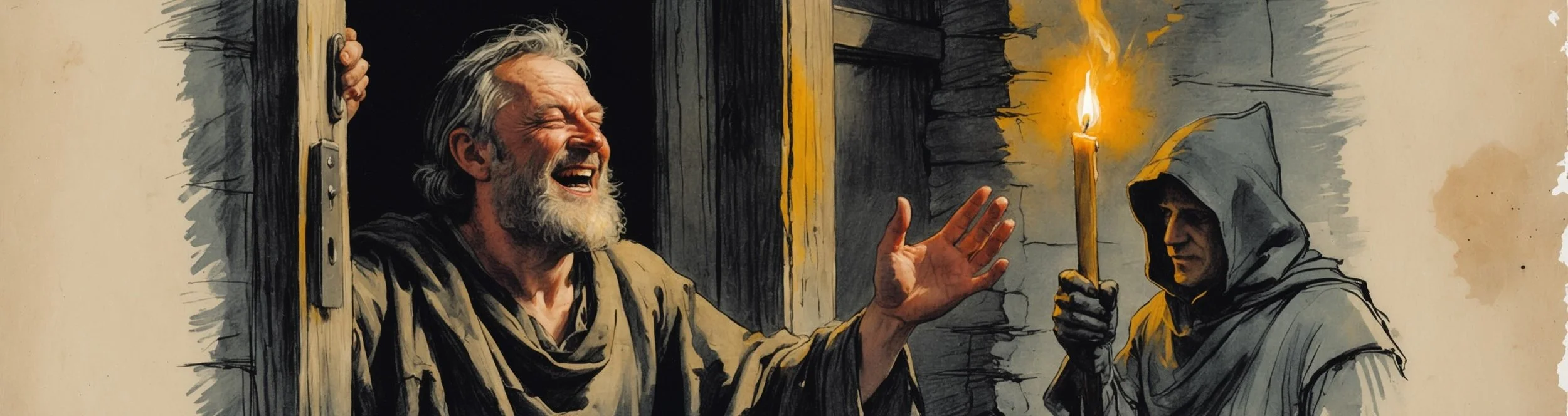
Scene Profile – At a Glance
- Location: Before Lord Hastings’ house, at four in the morning.
- What Happens: A messenger from Stanley wakes Hastings with a dream of the boar and a warning about two councils; Hastings laughs it off. Catesby sounds him on Richard’s claim to the crown and is refused. Stanley, a pursuivant, a priest and The Duke of Buckingham pass by; Hastings, sure of his safety, sets off to the Tower and dinner.
- Key Characters: Lord Hastings, Stanley’s messenger, Catesby, Lord Stanley, a Pursuivant, Sir John the priest, The Duke of Buckingham.
- Dramatic Function: The scene that makes Hastings certain so that the next one can kill him: every warning is delivered and every warning is dismissed.
- Famous Quote:
"To fly the boar before the boar pursues..."
(Hastings, Act 3, Scene 2) - Why It Matters: Shakespeare gives Hastings a whole scene of confidence before his death, so that the audience watches a man walk to the block by way of his own good humour.
Scene Summary
Hastings is woken at four by a messenger from Lord Stanley. Stanley has dreamt that the boar razed off his helm; he has heard that two separate councils are to be held, and fears what is decided at one may make them both rue at the other; he proposes that they ride north together at once. Hastings sends him back: the councils are nothing to fear – he and Stanley attend one, his good friend Catesby the other, and nothing can pass that touches them without his knowing; Stanley’s fears are shallow, his dreams are the mockery of unquiet sleep, and to fly the boar before it pursues would only make it chase them. Let Stanley come with him to the Tower, where he will see the boar use them kindly.
Catesby arrives early, with news of a reeling world that will not stand upright until Richard wears the garland. The crown? asks Hastings; he will have his own head cut from his shoulders before he sees the crown so foully misplaced. Catesby says Richard hopes for his support and has sent him good news: the queen’s kindred die today at Pomfret. Hastings is no mourner for that – they were always his enemies – but he will not give his voice on Richard’s side to bar his master’s heirs, to the death. He expects to laugh, within a year, at having outlived those who set King Edward against him, and to send a few more packing within a fortnight. Catesby observes that it is a vile thing to die when men are unprepared, and, aside, that they account Hastings’ head upon the bridge.
Stanley comes, still uneasy about the separate councils. Hastings says his life was never so precious to him as now, and asks whether he would be so triumphant if he did not know the state secure; Stanley replies that the lords at Pomfret were jocund too when they rode from London, and prays he proves a needless coward. They set off for the Tower. On the way Hastings meets a pursuivant – a messenger-officer – whom he last met when he was being taken to the Tower himself as a prisoner, and tells him, in confidence, that his enemies die today and he was never in better state; he gives him money for a drink. A priest, Sir John, greets him, and Hastings promises him a payment for his last sermon. The Duke of Buckingham passes, asks why Hastings is talking to a priest when his friends at Pomfret are the ones who need one, and, told that Hastings will stay for dinner at the Tower, adds under his breath: and supper too, though thou knowest it not.
The Boar and the Dream
The scene begins with the play’s clearest warning, delivered before dawn, and the man who receives it goes back to being pleased with himself. Stanley’s dream is the first of the prophecies Hastings will list on his way to the block.
Original
And for his dreams, I wonder he’s so simple
To trust the mock’ry of unquiet slumbers.
To fly the boar before the boar pursues
Were to incense the boar to follow us,
And make pursuit where he did mean no chase.
Go, bid thy master rise and come to me,
And we will both together to the Tower,
Where he shall see the boar will use us kindly.
(Hastings, Act 3, Scene 2)
Shakespeare Retold (Modern Verse)
And of his dreams, I find it juvenile
Believing in the threats dreamt in a dream.
To run away before Gloucester has chased us
Would anger him and make him follow us
In hot pursuit, although he didn’t plan to.
Go wake your master up and bring him here,
And we will go together to the Tower,
Where he will see that Gloucester treats us kindly.
Hastings’ argument against fleeing is not stupid; it is worldly. Running from the boar would provoke a chase where none was meant, and a man in favour has more to lose by panic than by staying put. The trouble is that the boar does mean a chase, and the audience knows it, because Richard told them so in Act 1. The scene is built on this gap. Stanley – who will survive the play by exactly the caution Hastings mocks – dreams true; Hastings, who prides himself on reading faces, reads the dream as a nervous man’s fancy and calls his fears shallow, without instance. “Where he shall see the boar will use us kindly” is the line the next scene will answer with an axe. The play’s argument about fate and free will is unusually clear here: the warning is given, the choice is free, and the wrong choice is made for reasons that sound like sense.
Sounding Hastings
Catesby’s early visit is an interview with a fixed result. Richard wants to know whether Hastings will back him for the crown, and Catesby is to find out without saying so; Hastings answers before the question is finished.
Original
I’ll have this crown of mine cut from my shoulders
Before I’ll see the crown so foul misplaced.
(Hastings, Act 3, Scene 2)
Shakespeare Retold (Modern Verse)
I’ll have my own head cut off from my shoulders
Before I see the crown misplaced so badly.
The pun on crown – his head, the king’s crown – is Hastings’ death warrant, and he speaks it as a joke. He is loyal to Edward’s children and says so twice, to the death; and at the same time he is delighted that the queen’s kinsmen are dying at Pomfret, expects to laugh at their tragedy within a year, and means to send some more packing within a fortnight. Shakespeare makes him a mixed case on purpose – honest about the crown, vindictive about his enemies, and blind to the fact that the man arranging his enemies’ deaths is measuring him for his own. Catesby’s two asides are the scene’s cold water: it is a vile thing to die unprepared, and they account his head upon the bridge. The play’s picture of manipulation here is patient rather than brilliant – a servant with a question, an honest man with a boast, and a conclusion reported to Richard in the next scene in Hastings’ own words.
The Pursuivant and the Priest
The last third of the scene is a procession of small encounters on the way to the Tower, and each one is a warning Hastings turns into a compliment to himself. Stanley, a messenger-officer, a priest and Buckingham pass, and Hastings talks to all of them about how well things are going.
Original
The lords at Pomfret, when they rode from London,
Were jocund, and supposed their states were sure,
And they indeed had no cause to mistrust;
But yet you see how soon the day o’ercast.
(Stanley, Act 3, Scene 2)
Shakespeare Retold (Modern Verse)
When riding out, the locked-up lords at Pomfret
Were jovial, and thought their status safe,
And even had no reason to be fearful;
But yet you see how quickly storm clouds gather.
Stanley’s comparison is exact: the men dying today were confident too, and the day clouded over quickly. Hastings answers with the pursuivant, whom he met once before on the way to the Tower as a prisoner, and to whom he now confides, with a coin, that his enemies die today and he was never in better state – a boast to a stranger that he will remember on the block as the thing he most regrets. The priest is greeted with a promise of payment next Sabbath, which is a man arranging his religion for a future he does not have. Then Buckingham, who knows the plan, makes the scene’s cruellest joke: Hastings needs no shriving, his friends at Pomfret do; and when Hastings says he will stay dinner at the Tower, Buckingham adds supper too, though thou knowest it not. The audience knows. The scene’s study of appearance and reality is conducted entirely through Hastings’ good mood, which every other character on stage can see is a mistake.
Language and Technique
- Prophetic dream: Stanley’s boar razing the helm is the play’s shorthand for Richard, and the dream is told and dismissed in the same speech – warning and blindness in one exchange.
- The crown pun: “This crown of mine cut from my shoulders”: Hastings’ head and the king’s crown share a word, and the joke is the sentence he will receive.
- Asides: Catesby’s two asides let the audience hear the verdict while Hastings hears only courtesy – the play’s usual gap between what is said and what is meant.
- Accumulating omens: Dream, two councils, Pomfret, the priest, the pursuivant: the scene stacks the warnings so that Hastings can list them in Act 3, Scene 4 as things he ignored.
- Dinner and supper: Buckingham’s aside turns a meal into a death: Hastings expects dinner at the Tower and will get supper too, which is the play’s way of saying he will not come out.
Key Quotes from Act 3, Scene 2
Quote 1
He dreamt the boar had rased off his helm.
(Messenger, Act 3, Scene 2)
Shakespeare Retold (Modern Verse)
He dreamt the Duke of Gloucester chopped his head off.
Quote Analysis: The dream in one line. The boar is Richard’s badge, the helm is Stanley’s head, and razing is what happens to Hastings within the day. Stanley dreams for both of them and acts on it; Hastings hears it for both and does not.
Tell him his fears are shallow, without instance...
(Hastings, Act 3, Scene 2)
Shakespeare Retold (Modern Verse)
Tell him his fears are baseless and unfounded...
Quote Analysis: Hastings’ verdict on Stanley, and the scene’s most complete mistake in six words. “Without instance” means without evidence; the evidence is arriving in the next scene with an axe, and the man who called the fears shallow will call himself too fond.
But I shall laugh at this a twelvemonth hence,
That they which brought me in my master’s hate,
I live to look upon their tragedy.
(Hastings, Act 3, Scene 2)
Shakespeare Retold (Modern Verse)
But I will laugh at this a year from now,
For those who made King Edward so detest me,
I’ve witnessed die in tragic circumstances.
Quote Analysis: Hastings’ boast about outliving his enemies is spoken to the servant of the man who will kill him before dinner. “A twelvemonth hence” is the play’s grim joke about timing: he has a few hours. The pleasure he takes in others’ tragedy is what makes his own hard to pity and easy to understand.
And supper too, although thou know’st it not....
(Buckingham, Act 3, Scene 2)
Shakespeare Retold (Modern Verse)
And supper too, though you don’t know it yet.
Quote Analysis: Buckingham’s aside completes Hastings’ line about staying dinner at the Tower, and it is the scene’s epitaph. The joke is a courtier’s, private and pleased with itself, and it tells the audience that the council of the next scene is already decided.
Key Takeaways
- Every warning is delivered: Stanley’s dream, the two councils, Catesby’s hint, the pursuivant, the priest: Hastings is told, five ways, and thanks everyone.
- Honest and doomed: Hastings will not back Richard for the crown, and says so; his loyalty is the reason he must die and the thing the play respects in him.
- Confidence as blindness: He reads Richard’s kindness in the boar’s face and calls Stanley’s fears shallow – the mistake the council scene will punish.
- The asides know: Catesby and Buckingham speak the sentence in asides while Hastings jokes about dinner; the audience hears both.
Study Questions and Analysis
What is Stanley’s dream, and why does Hastings ignore it?
Stanley has dreamt that the boar – Richard’s heraldic badge – razed off his helmet, which is a dream of being beheaded by Richard, and he sends a messenger before dawn proposing that he and Hastings ride north at once. Hastings dismisses the dream as the mockery of unquiet slumbers, argues that fleeing the boar would only provoke it, and points out that he has a friend, Catesby, at the other council; nothing can happen without his knowledge. He proposes instead that they go to the Tower together and see how kindly the boar treats them.
To fly the boar before the boar pursues
Were to incense the boar to follow us,
And make pursuit where he did mean no chase.
(Hastings, Act 3, Scene 2)
Shakespeare Retold (Modern Verse)
To run away before Gloucester has chased us
Would anger him and make him follow us
In hot pursuit, although he didn’t plan to.
He ignores it because he thinks he knows better, and the scene is careful to make his reasons plausible. A great lord who ran from a rumour would look guilty; Richard has shown him nothing but favour; the queen’s party, his real enemies, are being destroyed that very day. The dream is the first of the omens Hastings will recite in Act 3, Scene 4, and its dismissal is the play’s clearest example of a character exercising free will against a true prophecy. Stanley, who took the dream seriously, lives to hand Richmond the crown.
What does Catesby want from Hastings?
To find out, for Richard, whether Hastings will support him in taking the crown. Catesby is Richard’s agent and Hastings’ friend, and he approaches the question sideways – a reeling world that will not stand upright until Richard wears the garland – so that Hastings can either take the hint or refuse it. Hastings refuses it at once and completely: he would rather have his head cut off than see the crown misplaced, and he will not bar his master’s heirs to the death. Catesby reports the answer to Richard in the council scene in almost those words.
But that I’ll give my voice on Richard’s side
To bar my master’s heirs in true descent,
God knows I will not do it, to the death!
(Hastings, Act 3, Scene 2)
Shakespeare Retold (Modern Verse)
But if you are suggesting I’ll join Richard
And overthrow my master’s lineage,
God knows I’d rather die than see that happen!
What Hastings does not notice is that the good news Catesby brings – the queen’s kindred die today at Pomfret – is a gift from Richard designed to make him grateful, and that Catesby’s remark about dying unprepared is a warning he has been told in confidence he will not need. The scene shows Richard’s method at second hand: a friend asks a question, an honest man answers it, and the honesty is fatal. Catesby’s aside that they account his head upon the bridge tells the audience that the sounding was never a real test. Historically Catesby was Hastings’ own man, a lawyer who betrayed him to Richard; the play keeps the betrayal and gives it a friendly face.
Why is Hastings so cheerful?
Because from where he stands the morning is the best of his life. His enemies – the queen’s brother and son, who had him imprisoned in the Tower under Edward – are being executed; the Protector has sent him the news as a favour; his own place seems secure, and he expects to add to the list of the dead within a fortnight. He says as much to a messenger-officer he meets on the road, gives him money for a drink, promises a priest payment for a sermon, and tells Buckingham he will stay for dinner at the Tower. The scene lets his good mood run for a hundred lines.
The cheerfulness is the point of the scene. Shakespeare needs Hastings certain so that the council scene can be a fall, and he makes the certainty out of things that are true – the enemies really are dying, Richard really has been kind – so that the audience can see how a sensible man walks into the trap. The pleasure Hastings takes in his enemies’ deaths also complicates the sympathy: he is loyal to the princes and vindictive to the queen’s family, honest about the crown and pleased by an execution. William Hazlitt, in Characters of Shakespear’s Plays (1817), called Richard a princely hypocrite, and Hastings is the victim who never suspects the hypocrisy because he shares some of its appetites.
What is the significance of the pursuivant and the priest?
They are the last two warnings, and Hastings turns both into occasions for boasting. The pursuivant is a messenger-officer whom Hastings last met when he was being taken to the Tower as a prisoner by the queen’s allies; meeting him again on the way to the same Tower, Hastings tells him that those enemies die today and that he is in better state than ever. On the block, in the next scene, this is the thing he most regrets – having told the pursuivant, too triumphantly, of his enemies’ deaths and his own security. The priest, Sir John, is greeted with a promise of payment next Sabbath; Buckingham’s joke that Hastings has no shriving work in hand is the play telling him he needs confession now.
Both encounters are Shakespeare’s inventions, layered onto More’s account of the omens – the dream, the stumbling horse – to give Hastings a full morning of chances. The technique is the play’s usual one: the audience is given knowledge the character lacks, and watches him spend the knowledge he has on the wrong conclusions. For an essay on appearance and reality, the scene is useful because nothing in it is a lie; every fact Hastings hears is true, and the truth is what deceives him.