Richard III: Act 4, Scene 5 – Analysis
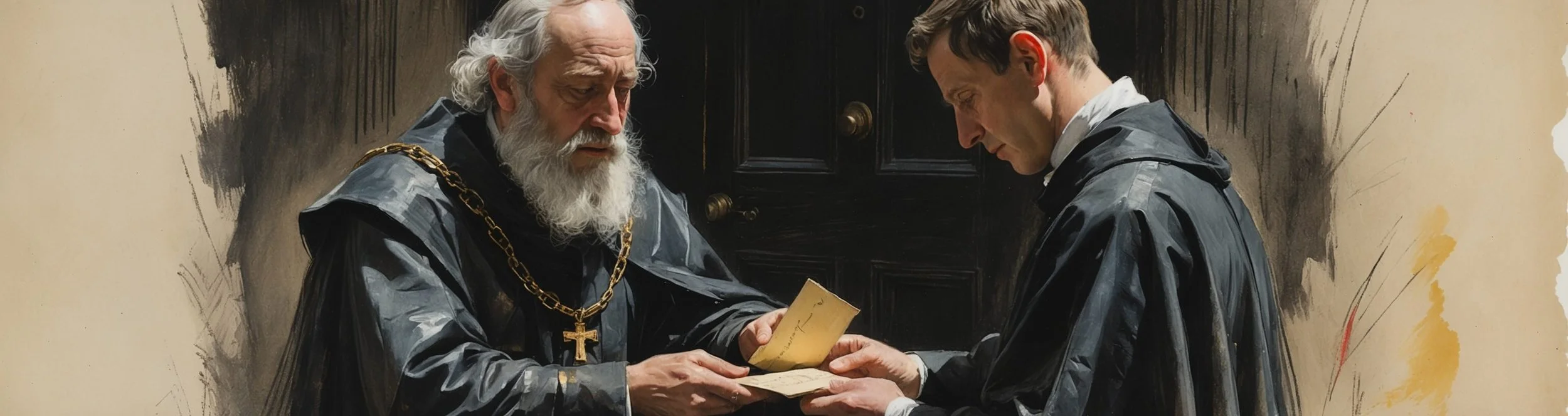
Scene Profile – At a Glance
- Location: Lord Stanley’s house.
- What Happens: Stanley sends the priest Sir Christopher Urswick to Richmond with two messages: he cannot yet help because Richard holds his son George hostage, and the Queen has consented to Richmond marrying her daughter Elizabeth.
- Key Characters: Lord Stanley, Sir Christopher Urswick.
- Dramatic Function: A messenger scene that resolves the two plots of Act 4 at once – the hostage that paralyses Stanley and the marriage that will end the play.
- Famous Quote:
"If I revolt, off goes young George’s head..."
(Stanley, Act 4, Scene 5) - Why It Matters: Twenty-one lines tell the audience that Richard’s wooing of Elizabeth’s daughter has failed and that the Tudor marriage is already agreed – the war is lost before it is fought.
Scene Summary
Lord Stanley gives Sir Christopher Urswick a message for Richmond. His son George is penned up in the sty of the deadly boar – held by Richard – and if Stanley openly revolts, the boy’s head comes off; that fear is what keeps him from sending help now. He sends his regards, and adds a second message: the Queen has heartily consented that Richmond should marry her daughter Elizabeth.
Stanley asks where Richmond is – at Pembroke or Haverfordwest, in Wales – and who has joined him: Sir Walter Herbert, Sir Gilbert Talbot, Sir William Stanley, Oxford, Pembroke, Sir James Blunt, Rhys ap Thomas with a valiant crew, and many more, all marching towards London unless they are fought on the way. Stanley sends Urswick back with a letter that will explain the rest of his mind, and the scene ends.
The Sty of the Deadly Boar
Stanley’s message is a confession of paralysis. He has a son in Richard’s keeping and cannot move without killing him, and he says so in the play’s favourite image for Richard: the boar, and its sty.
Original
That in the sty of the most deadly boar
My son George Stanley is franked up in hold;
If I revolt, off goes young George’s head;
The fear of that holds off my present aid.
(Stanley, Act 4, Scene 5)
Shakespeare Retold (Modern Verse)
That deadly boar has kept within his pig sty
My son George Stanley and he can’t escape.
If I revolt, he’ll chop off George’s head;
The fear of that prevents me helping him.
“Franked up” is a farming word – penned like an animal for fattening – and it puts George Stanley inside the boar’s own enclosure, a child kept as livestock. The image tells the audience what Richard’s rule has come to: not persuasion, not even fear of the axe in the abstract, but a hostage in a pen. Stanley’s four lines set up the entire Bosworth plot – the threat before the battle, the visit to Richmond’s tent by night, the refusal to come, the order to behead the boy, Richmond’s first question after the victory – and they do it in the voice of a careful man who has calculated exactly how little he can afford to do.
The Queen Hath Heartily Consented
The second message is a single line, and it decides the play. The last time the audience saw Elizabeth, Richard had finished wooing her for her daughter and called her a relenting fool as she left. Stanley reports the result.
Original
Withal say that the Queen hath heartily consented
He should espouse Elizabeth her daughter.
(Stanley, Act 4, Scene 5)
Shakespeare Retold (Modern Verse)
Additionally, say that the Queen agreed
That Richmond weds Elizabeth, her daughter.
“Heartily” is the word that matters. Elizabeth has not been trapped or worn down; she has consented with a whole heart, and to the other man. The scene therefore answers the question Act 4, Scene 4 left open – did Richard win the wooing? – and answers it in the negative, offstage, in one line from a man who was not in the room. That is characteristic of the play’s last act: the great performances stop working, and the news arrives as reports. The marriage that Stanley names is the union of the roses Richmond will proclaim at the end, and it has been arranged by the woman Richard thought he had beaten. The roll of names that follows – Herbert, Talbot, William Stanley, Oxford, Pembroke, Blunt, Rhys ap Thomas – is the sound of a country changing sides.
Language and Technique
- The boar’s sty: Richard as a pig and his prison as a pen: “franked up” turns the hostage into livestock, and the image will return in Richmond’s speech at Tamworth.
- News by report: Nothing happens on stage; everything has happened elsewhere. The scene is built from messages, which is how the play shows Richard losing control of events.
- One decisive word: “Heartily” settles Act 4’s wooing in a single adverb – the queen chose freely, and chose Richmond.
- The roll of names: A list of seven supporters and “many other of great name” gives the rebellion weight without a battle: the audience hears an army assembling.
Key Quotes from Act 4, Scene 5
Quote 1
If I revolt, off goes young George’s head;
The fear of that holds off my present aid.
(Stanley, Act 4, Scene 5)
Shakespeare Retold (Modern Verse)
If I revolt, he’ll chop off George’s head;
The fear of that prevents me helping him.
Quote Analysis: The plainest statement of Stanley’s dilemma, in the plainest verse. “Off goes young George’s head” borrows Richard’s own idiom – off with his head – and applies it to a child, which is what the threat is. Stanley does not pretend to courage he cannot afford; the play respects the calculation, and rewards it in Act 5.
Withal say that the Queen hath heartily consented
He should espouse Elizabeth her daughter.
(Stanley, Act 4, Scene 5)
Shakespeare Retold (Modern Verse)
Additionally, say that the Queen agreed
That Richmond weds Elizabeth, her daughter.
Quote Analysis: The play’s quietest turning point. Richard’s second great wooing, the mirror of his first with Anne, has failed, and the audience learns it from a third party in a line of business. The consent is the queen’s revenge and the country’s future in one sentence.
And towards London do they bend their power...
(Urswick, Act 4, Scene 5)
Shakespeare Retold (Modern Verse)
And all that power has set a course for London...
Quote Analysis: Urswick’s closing line points the rebel army at the capital and adds the condition that decides the ending: unless they are fought on the way. They will be, at Bosworth, and the play now has its destination.
Key Takeaways
- A hostage explains Stanley: His son is penned in the boar’s sty; every hesitation at Bosworth follows from these four lines.
- Richard’s wooing has failed: Elizabeth has heartily consented to Richmond – the outcome of Act 4, Scene 4, delivered offstage.
- The country changes sides: A list of names and a direction of march tell the audience the rebellion is real and growing.
- Reports replace performances: Richard’s great scenes are over; from here the play moves by message and muster.
Study Questions and Analysis
Why can’t Stanley help Richmond openly?
Because Richard is holding his son. Lord Stanley is Richmond’s stepfather – the second husband of Margaret Beaufort, Richmond’s mother – and Richard, who suspects where his loyalty lies, has kept young George Stanley in his custody as security. In Act 4, Scene 4 Richard told Stanley to leave his son behind when he went to raise troops, and warned him to keep his heart firm or else the boy’s head would be at risk. Stanley’s message here explains the consequence: he cannot revolt without killing his child.
That in the sty of the most deadly boar
My son George Stanley is franked up in hold;
If I revolt, off goes young George’s head...
(Stanley, Act 4, Scene 5)
Shakespeare Retold (Modern Verse)
That deadly boar has kept within his pig sty
My son George Stanley and he can’t escape.
If I revolt, he’ll chop off George’s head...
The dilemma runs to the end of the play. At Bosworth Stanley visits Richmond’s tent by night to promise what help he dares, refuses Richard’s summons in the morning, and hears the order for George’s execution given and overtaken by the battle. Richmond’s first question after the victory is whether George is alive. Historically, the Stanleys’ late intervention at Bosworth decided the battle, and Shakespeare turns that manoeuvre into a story about a father protecting a son – which is also the play’s last variation on its theme of children in the power of a tyrant.
What does the Queen’s consent mean for the play?
It means Richard has lost the wooing scene. In Act 4, Scene 4 he spent two hundred lines persuading Queen Elizabeth to give him her daughter, and she appeared to yield; he called her a shallow, changing woman as she left. Stanley’s line reports the truth: she has consented, heartily, to Richmond. The daughter – Elizabeth of York – will become Richmond’s queen in the marriage he announces at the end of the play, and their union of the houses of York and Lancaster was the foundation of the Tudor dynasty under which Shakespeare wrote.
So the line settles both a scene and a dynasty. Critics disagree about what Elizabeth intended in the wooing scene – whether she was tricked, was stalling, or was playing Richard as he had played Anne – and this scene is the evidence for the last reading: whatever she said to Richard, she had already chosen the other man, or chose him immediately after. A student writing on the women of the play can use Stanley’s one line to argue that Elizabeth is the one character who beats Richard at his own game of manipulation.
Who are the men named as joining Richmond?
Historical figures, taken from the chronicles, and named to give the rebellion a weight the stage cannot show. Sir Walter Herbert and Sir Gilbert Talbot were Welsh-border gentry; Sir William Stanley was Lord Stanley’s brother, whose charge at Bosworth was the decisive moment of the real battle; the Earl of Oxford was the veteran Lancastrian commander who leads Richmond’s vanguard in Act 5; Jasper Tudor, Earl of Pembroke, was Richmond’s uncle; Sir James Blunt appears in the Bosworth scenes; and Rhys ap Thomas was the Welsh magnate whose support let Richmond march through Wales.
Shakespeare keeps the names because the audience knew some of them and because a list sounds like an army. Richmond is at Pembroke or Haverfordwest – he landed at Milford Haven in August 1485 – and the army is marching towards London, which fixes the geography for Act 5: Tamworth, Leicester, Bosworth. The scene is functional, and its function is to make the ending believable before the play stages it.