Richard III: Act 5, Scene 2 – Analysis
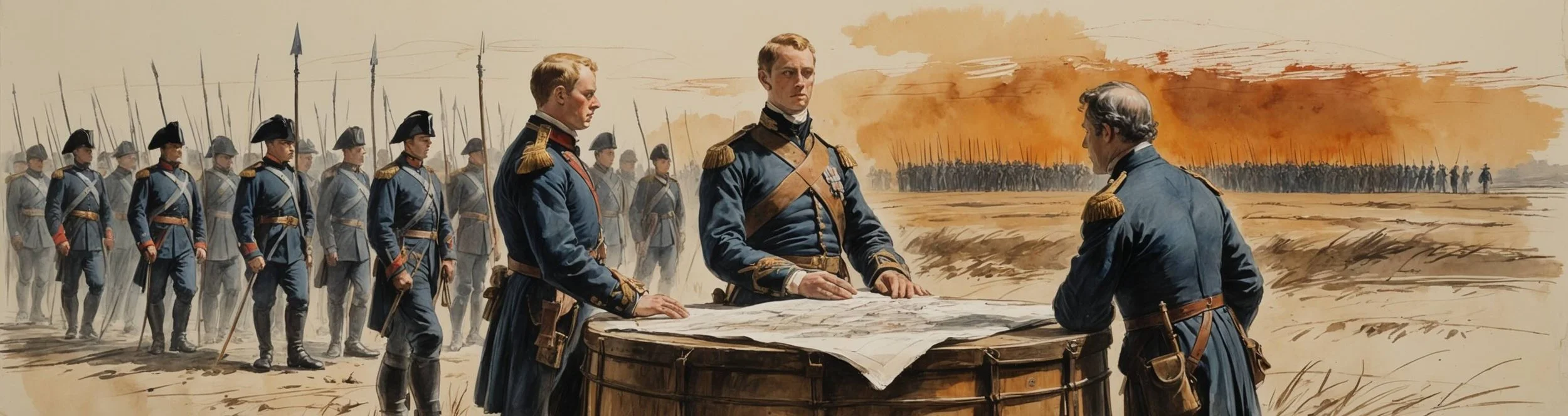
Scene Profile – At a Glance
- Location: The rebel camp near Tamworth, a day’s march from Bosworth.
- What Happens: Richmond addresses his captains: they have marched unopposed into the heart of England, Stanley has sent encouragement, and the boar is near Leicester. Oxford, Herbert and Blunt agree that Richard’s friends are friends only for fear.
- Key Characters: Richmond, the Earl of Oxford, Sir James Blunt, Sir Walter Herbert.
- Dramatic Function: Richmond’s introduction as a speaker. Twenty-four lines establish the rescuer’s voice – God, country and the hunting of a beast – before the two camps are set side by side.
- Famous Quote:
"True hope is swift and flies with swallow’s wings,
Kings it makes gods, and meaner creatures kings."
(Richmond, Act 5, Scene 2) - Why It Matters: The play needs the audience to accept Richmond quickly, and this scene does it by giving him the moral language Richard has spent four acts mocking.
Scene Summary
Richmond enters with his captains, drums and colours, and speaks to them as fellows in arms and friends who have been bruised under the yoke of tyranny. They have marched into the bowels of the land without opposition, and Lord Stanley – his stepfather – has sent lines of comfort. He describes Richard as a wretched, bloody, usurping boar that has spoiled the country’s fields and drinks its blood, and places him near Leicester, one day’s march from Tamworth. In God’s name, he says, march on to reap the harvest of perpetual peace by one bloody trial of war.
The captains answer in single lines. Oxford says that every man’s conscience is a thousand men against a guilty murderer; Herbert is sure Richard’s friends will come over to them; Blunt says Richard has no friends except those who fear him, and they will desert him when he needs them most. Richmond takes it all as advantage, and closes with a couplet: true hope flies on swallow’s wings, and makes kings gods and lesser men kings.
The Usurping Boar
Richmond’s first real speech is a piece of public rhetoric, and it works by turning the enemy into an animal. The boar was Richard’s heraldic badge, and Stanley dreamt of it in Act 3; here it becomes a wild pig eating England.
Original
The wretched, bloody, and usurping boar,
That spoiled your summer fields and fruitful vines,
Swills your warm blood like wash and makes his trough
In your embowelled bosoms – this foul swine...
(Richmond, Act 5, Scene 2)
Shakespeare Retold (Modern Verse)
The boar that stole this land unlawfully,
That wrecked your summer fields and fertile vineyards,
That gargles with your blood and makes a trough
By disembowelling you – that rotten pig...
The image is physical and disgusting on purpose: a pig at a trough, swilling warm blood like slop, the trough made in the bodies of the men listening. It is also a hunting speech – the boar is in the centre of the isle, a day’s march away, and the army is the hunt. Richmond speaks the language of harvest and vineyard for England and of swill and trough for Richard, and the division is the play’s providential argument made into pictures. What he does not do is speak about himself. Richard’s speeches are always about Richard; Richmond’s are about God, friends and the land, and that plainness is the whole characterisation.
Friends for Fear
The captains’ replies are short and sound like a chorus, and they say the thing the play has been demonstrating since Act 4: a tyrant has no friends, only people who have not yet found it safe to leave.
Original
He hath no friends but what are friends for fear...
(Blunt, Act 5, Scene 2)
Shakespeare Retold (Modern Verse)
He has no friends except those friends that fear him...
Blunt’s couplet is a prophecy that Act 5, Scene 3 fulfils – Richard asks Ratcliffe whether his friends will prove true, and Stanley refuses to come. Oxford’s line before it, that every man’s conscience is a thousand men against a guilty homicide, states the scene’s arithmetic: Richard has three soldiers to Richmond’s one, and Richmond has conscience, which the play is about to show weighing more. Richmond’s closing couplet turns hope into wings and promotion – kings made gods, lesser creatures made kings – which is exactly what is about to happen to him.
Language and Technique
- The boar: Richard’s badge turned into a beast at a trough: the play’s most sustained animal image, built from swill, blood and bowels so that killing him sounds like pest control.
- Harvest against slaughter: Summer fields and fruitful vines for England, a bloody trial for the war: Richmond’s speech pairs a farming image with a fighting one and promises the second will buy the first.
- The chorus of captains: Three replies of one or two lines each, all agreeing: the scene stages consent, so the audience hears Richmond’s cause confirmed by other voices.
- Closing couplet: The rhyme on wings and kings ends the scene on a lift – hope as a swallow – and sets the confident tone Richard’s camp will lack in the next scene.
Key Quotes from Act 5, Scene 2
Quote 1
Every man’s conscience is a thousand men...
(Oxford, Act 5, Scene 2)
Shakespeare Retold (Modern Verse)
Each guiltless man is worth a thousand men...
Quote Analysis: Oxford’s single couplet is the scene’s argument. Conscience is a multiplier: a man who knows he is right fights as a thousand, and a guilty homicide’s army fights as fewer than it counts. The next scene tests the claim in Richard’s tent, where his conscience turns out to have a thousand tongues rather than a thousand soldiers.
In God’s name cheerly on, courageous friends,
To reap the harvest of perpetual peace
By this one bloody trial of sharp war.
(Richmond, Act 5, Scene 2)
Shakespeare Retold (Modern Verse)
In God’s name, let’s march happily, brave friends,
So we’ll achieve an ever-lasting peace
By fighting once in this ferocious war.
Quote Analysis: The order to march, and Richmond’s characteristic move: violence justified as farming. The war is a single bloody trial, an ordeal to be endured once; the reward is a harvest, and a perpetual one. It is the promise the Tudor audience believed had been kept, and the play lets Richmond make it without irony.
True hope is swift and flies with swallow’s wings,
Kings it makes gods, and meaner creatures kings.
(Richmond, Act 5, Scene 2)
Shakespeare Retold (Modern Verse)
True hope flies fast upon a swallow’s wings;
Kings rise to God-like status, folk to kings.
Quote Analysis: A couplet that sounds like a proverb and works as a prediction. Hope with swallow’s wings is fast and light, the opposite of the lead the ghosts will lay in Richard’s bosom; and the second line is Richmond’s own future – a meaner creature about to be made a king. The modern verse keeps the promotion in the rhyme.
Key Takeaways
- Richmond speaks for the first time: A short scene gives the rescuer his voice: God, friends, country and a beast to be hunted.
- Richard becomes the boar: His own badge is turned into an animal eating England – the play’s harshest image of tyranny.
- Friends for fear: The captains predict what Act 5 proves: Richard’s followers stay only until it is safe to go.
- Conscience as arithmetic: Every man’s conscience is a thousand men – the scene’s answer to Richard’s numerical advantage.
Study Questions and Analysis
Why does Richmond call Richard a boar?
Because the boar was Richard’s badge – the white boar was his personal emblem, and the play has already used it in Stanley’s dream of Act 3, Scene 2, where the boar razed off Hastings’ helmet. Richmond takes the emblem and makes it literal: a wild pig rooting up England’s fields and vineyards, drinking the blood of its people like swill, making its trough in their bodies. The speech turns the king into vermin so that killing him becomes a public service rather than a rebellion.
The wretched, bloody, and usurping boar,
That spoiled your summer fields and fruitful vines...
(Richmond, Act 5, Scene 2)
Shakespeare Retold (Modern Verse)
The boar that stole this land unlawfully,
That wrecked your summer fields and fertile vineyards...
The move matters politically. Richmond is a rebel marching against an anointed king, and Tudor audiences were taught that rebellion was a sin; the boar image, like the ghosts in the next scene, is part of the play’s case that Richard was never a lawful king at all but a beast to be hunted. E. M. W. Tillyard, in Shakespeare’s History Plays (1944), took this providential framing as the play’s main business, with Richmond as heaven’s instrument; whatever one makes of that, the speech shows the frame being built in the open.
What does “Every man’s conscience is a thousand men” mean?
Oxford is answering the numbers. Richard’s army is three times Richmond’s, and Oxford’s couplet says that a man fighting with a clear conscience against a known murderer is worth a thousand: the moral advantage outweighs the numerical one. It is a commonplace of the period – right makes might – and the play puts it in a captain’s mouth so that it sounds like military judgement rather than a sermon.
The line also sets up the next scene with some precision. In Act 5, Scene 3 Richard wakes to find that his conscience has a thousand tongues, every one condemning him, and he tells Ratcliffe that shadows have frightened him more than ten thousand soldiers could. Oxford’s thousand and Richard’s thousand are the same figure seen from the two camps: conscience multiplies the good side and divides the guilty one. A student writing on conscience and guilt can use the two scenes as a matched pair.
What is this scene for, and could it be cut?
It is often cut, and the play survives it, but it does a job the next scene cannot do alone. Richmond has appeared only in Act 4, Scene 5 by report and in a few lines; before the great double scene at Bosworth the audience needs to hear him speak at length and to hear his followers agree with him. Twenty-four lines supply a voice – plain, pious, public – and a consensus, so that when the ghosts bless him the blessing lands on someone we have met.
It also fixes the geography and the timetable: Tamworth, Leicester, one day’s march, Stanley’s letter of comfort. Shakespeare took these from the chronicles and kept them because the ending of the play depends on the audience believing in Stanley’s position between the armies. The scene is functional, and the couplet about swallow’s wings is its one flourish; the play saves its poetry for the tents.