Twelfth Night: Act 2, Scene 1 – Analysis
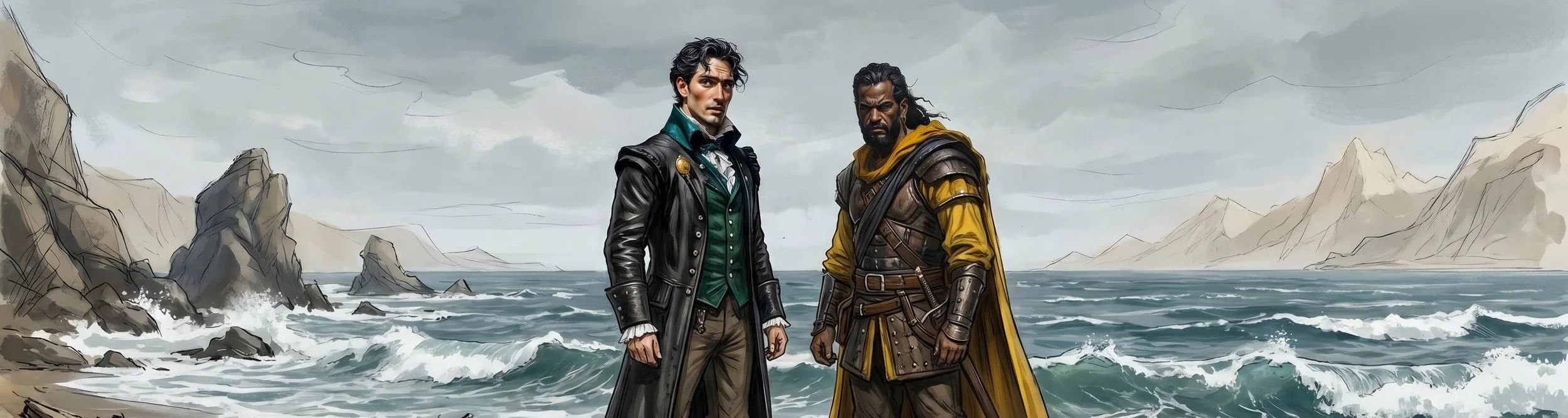
Scene Profile – At a Glance
- Location: The sea-coast of Illyria.
- What Happens: Sebastian, who survived the shipwreck, prepares to travel on alone, believing his twin sister Viola has drowned. His rescuer Antonio, who loves him deeply, insists on following him to Orsino's court despite the danger.
- Key Characters: Sebastian and Antonio.
- Dramatic Function: It reveals that Sebastian is alive, planting the twin who will eventually untangle the play's love-knot, and introduces Antonio's devoted attachment to him.
- Famous Quote:
"But, come what may, I do adore thee so,
That danger shall seem sport, and I will go."
(Antonio, Act 2, Scene 1) - Why It Matters: The audience now knows Sebastian lives, even though Viola does not. This single fact guarantees the comedy a happy ending and makes the later confusion of the twins possible.
Scene Summary
On the coast of Illyria, Sebastian tells Antonio, the man who rescued him from the sea, that he means to travel on alone. He fears his bad luck will rub off on his new friend, and he is too sad to make good company.
Sebastian explains who he is, revealing that he is the twin brother of a sister he believes drowned in the same storm. Moved, Antonio asks to come with him as his servant. Sebastian gently refuses and leaves for Orsino's court. Alone, Antonio decides he loves Sebastian too much to stay behind and resolves to follow, even though he has dangerous enemies there.
Sebastian's Grief and Bad Luck
The scene opens on a man weighed down by loss. Sebastian believes his twin sister has drowned, and he speaks of his own fortune as something dark and catching, a curse he does not want to pass on to the friend who saved him.
Original
By your patience, no. My stars shine darkly over me: the malignancy of my fate might perhaps distemper yours; therefore I shall crave of you your leave that I may bear my evils alone.
(Sebastian, Act 2, Scene 1)
Shakespeare Retold (Modern Verse)
If you don't mind, then no, for Lady Luck's unkind to me right now. I'd hate my luck to rub off on you. And, therefore, I beg you take your leave and I'll suffer alone.
Sebastian's grief mirrors his sister's. Like Viola, he has lost a twin to the sea, and like the play's other mourners he speaks of fate as a force that rules him. But where Olivia shut herself away to grieve, Sebastian wants only to spare others his trouble. His courtesy here – refusing help so as not to burden a friend – is the first sign of the decent, open nature that will make him so easy to mistake for the equally honest Viola.
Antonio's Devotion
If Sebastian wants to be alone, Antonio wants only to stay close. He offers to serve Sebastian, is refused, and then, left by himself, resolves to follow anyway – straight into a court full of his enemies.
Original
I have many enemies in Orsino's court,
Else would I very shortly see thee there.
But, come what may, I do adore thee so,
That danger shall seem sport, and I will go.
(Antonio, Act 2, Scene 1)
Shakespeare Retold (Modern Verse)
I've enemies in Count Orsino's court;
If not, I'd see you there again quite soon.
But, whatever the outcome, I adore you,
And though there's danger, I will go there for you.
Antonio's feeling is the strongest, plainest love in the scene. He says he "adores" Sebastian and that danger will feel like sport if it means being near him. The depth of this devotion has prompted much discussion, but on stage it works first as pure selfless loyalty: a man who will risk his life simply to be with the person he loves. It also raises the stakes, because Antonio is heading into real peril for Sebastian's sake.
Key Quotes from Act 2, Scene 1
Quote 1He left behind him myself and a sister, both born in an hour: if the heavens had been pleased...
(Sebastian, Act 2, Scene 1)
Shakespeare Retold (Modern Verse)
Now, when he died, he left me and my sister, both born an hour apart. How now I wish...
If you will not murder me for my love, let me be your servant.
(Antonio, Act 2, Scene 1)
Shakespeare Retold (Modern Verse)
If, for my love, you will not murder me, then let me be your servant.
If you will not undo what you have done, that is, kill him whom you have recovered, desire it not.
(Sebastian, Act 2, Scene 1)
Shakespeare Retold (Modern Verse)
If you will not undo your saving of me – that is, you'll kill the one you rescued – then don't ask me.
Language and Technique
- Prose and verse: The conversation runs in plain prose, but Antonio's final, heartfelt vow to follow Sebastian lifts into rhyming verse, marking it as the emotional peak of the scene.
- Imagery of fate: Sebastian calls his luck "stars" that "shine darkly", picturing his misfortune as something written in the heavens and beyond his control.
- Hyperbole: Antonio says refusal would "murder" him and that danger will "seem sport", exaggerated language that measures the size of his love.
- Dramatic irony: Sebastian mourns a drowned sister the audience knows is alive, so his grief carries a hope he cannot feel.
- Rhyming couplet: The scene ends on a neat rhyme ("so" / "go"), a tidy close that sends Antonio off after Sebastian and the plot forward.
Key Takeaways
- Sebastian lives: The scene reveals that Viola's twin survived the wreck, guaranteeing the play a happy ending.
- The twins mirror each other: Sebastian, like Viola, mourns a lost twin and speaks of being ruled by fate.
- Antonio's love: Antonio adores Sebastian so deeply that he will follow him into a court full of enemies.
- Danger ahead: Antonio's hidden risk in Orsino's court sets up his later capture and the play's tensest moments.
- Plot machinery: A short, quiet scene quietly arms the comedy with the twin needed to resolve everything.
Study Questions and Analysis
Why is it important that we learn Sebastian is alive?
This short scene exists chiefly to deliver one piece of information: Sebastian, Viola's twin, survived the shipwreck. Viola does not know it, and neither did the audience for certain until now. By telling us before any of the characters find out, Shakespeare changes how we watch the rest of the play.
The knowledge is what makes the comedy comfortable. The love-triangle set up in the previous act – Olivia loving the disguised Viola – looks impossible, but we now hold the key to its solution. When Olivia later mistakes Sebastian for Cesario, we are not alarmed but delighted, because we can see the muddle untangling. Placing this scene here lets the audience enjoy the confusion that follows as comic irony rather than genuine threat.
How does Sebastian mirror his sister Viola?
Shakespeare builds the twins as deliberate reflections of each other. Both have survived the same wreck, both believe the other has drowned, and both respond to grief with action rather than collapse. Where Olivia shuts herself away to mourn, the twins keep moving and meeting the world.
They also share a tone. Sebastian's courtesy, his reluctance to burden Antonio, and his talk of fate all echo Viola's manner in earlier scenes. This careful matching is practical as well as thematic: because the two are so alike in speech and bearing, the audience readily accepts that other characters will confuse them. The likeness that drives the plot's comic errors is established here, before the twins are ever seen together.
What is the nature of Antonio's love for Sebastian?
Antonio's feeling is the most intense in the scene. He saved Sebastian from the sea, offers to serve him, and finally resolves to follow him into danger because he "adores" him. The language is the language of love, and the depth of it is unmistakable.
Critics differ on how to read it. Many modern readers and productions see a clear homoerotic devotion, an attachment that the comedy's marriages will eventually leave out in the cold. Stephen Greenblatt, in his 1988 Shakespearean Negotiations, has influentially explored how Shakespeare's comedies handle desire that does not fit the neat pairing-off of the endings. Others read the bond as the intense same-sex friendship idealised in the period, more comradeship than romance. The play leaves room for both: what is certain is that Antonio loves Sebastian enough to risk his life, and that this love will later cost him dearly.
Why does Antonio decide to follow Sebastian despite the danger?
Sebastian refuses Antonio's company twice, once gently arguing that to court danger would waste the life Antonio rescued. Antonio accepts the refusal to his face, but the moment he is alone he reverses it. He admits he has "many enemies" in Orsino's court, yet decides that being near Sebastian matters more than his own safety.
The decision does two jobs at once. It measures the size of Antonio's love – he will treat real danger as "sport" for Sebastian's sake – and it plants a threat that the play will later cash in. When Antonio is recognised and arrested in Illyria, the peril named here becomes real, and his loyalty is repaid with what looks like betrayal when the disguised Viola fails to know him. This quiet closing couplet is therefore both a portrait of devotion and a piece of careful plotting.