HomePlaysTwelfth Night → Scene Analysis

Twelfth Night: Scene Analyses

Twelfth Night scene-by-scene analysis covering the whole play – all eighteen scenes across the five acts, from Orsino's "If music be the food of love" to Feste's closing song in the rain. Each guide retells what happens in plain English, then analyses the scene's key moments, language and techniques, with the most important quotations shown beside their Shakespeare Retold modern verse. A complete scene-by-scene study guide and revision resource for GCSE, A-Level, AP English, IB, and undergraduate Shakespeare. Ideal for close reading, essay planning, exam preparation, and following how the comedy of love, disguise and mistaken identity is built scene by scene. Select a scene below to begin.
Twelfth Night Scene Analysis — Frequently Asked Questions

Which Twelfth Night scenes are analysed here?
Every scene in the play has its own guide, across five acts. Act 1 introduces the lovers: Scene 1 (Orsino's "If music be the food of love" and Olivia's vow of mourning), Scene 2 (Viola shipwrecked, disguising herself as Cesario), Scene 3 (Sir Toby, Sir Andrew and Maria begin the comic subplot), Scene 4 (Cesario sent to woo Olivia, while Viola secretly loves Orsino) and Scene 5 (Feste, Malvolio, and Olivia falling for Cesario). Act 2 tangles the knot: Scene 1 (Sebastian is alive, saved by Antonio), Scene 2 (the ring, and Viola's realisation that Olivia loves her), Scene 3 (the late-night revelry, "cakes and ale", and Maria's plot), Scene 4 (Orsino and Cesario on love and music) and Scene 5 (the box-tree scene and the forged letter). Act 3 brings things to a head: Scene 1 (Olivia openly declares her love), Scene 2 (Sir Andrew is goaded into a duel), Scene 3 (Antonio lends Sebastian his purse) and Scene 4 (yellow stockings, the cowards' duel, and Antonio's arrest). Act 4 races toward resolution: Scene 1 (Sebastian mistaken for Cesario), Scene 2 (Feste as Sir Topas torments Malvolio) and Scene 3 (Sebastian's secret betrothal to Olivia). Act 5 is the finale: Scene 1 (the twins reunited, Viola unmasked, Malvolio's revenge, and Feste's closing song).
What happens in Act 1, Scene 1, the "If music be the food of love" scene?
This is the play's opening. Duke Orsino, sick with love for the countess Olivia, listens to music and feeds his own longing, beginning with the famous line "If music be the food of love, play on". His messenger Valentine returns to report that Olivia will see no suitors: she has vowed to mourn her dead brother for seven years, veiled like a nun. The scene sets up the two stuck households – a court of love-melancholy and a house of grief – that the disguised Viola will soon shake up. See Twelfth Night Act 1, Scene 1 for the full analysis.
Why does Olivia fall in love with Cesario in Act 1, Scene 5?
In Act 1, Scene 5 the disguised Viola, sent as Orsino's messenger "Cesario", finally gets past Olivia's gate. Instead of repeating Orsino's tired praises, she speaks plainly and wittily, and promises to "make me a willow cabin at your gate" and call out Olivia's name. This honesty and energy are completely unlike the suitors Olivia has shut out, and by the end of the scene she has fallen for the messenger rather than the master. It is the moment the love-triangle of Orsino, Olivia and Viola snaps into place. See Twelfth Night Act 1, Scene 5 for the full analysis.
What is the "cakes and ale" scene, Act 2, Scene 3?
Act 2, Scene 3 is the great late-night party. Sir Toby Belch, Sir Andrew Aguecheek and Feste drink and sing into the small hours until Malvolio storms in to scold them for their noise. Sir Toby throws back the famous retort: "Dost thou think, because thou art virtuous, there shall be no more cakes and ale?" Stung by Malvolio's snobbery, Maria devises her revenge – the forged letter that will trick him – and the gulling plot is born. The scene pits festive fun against killjoy self-importance, a clash at the heart of the comedy. See Twelfth Night Act 2, Scene 3 for the full analysis.
What happens in the box-tree letter scene, Act 2, Scene 5?
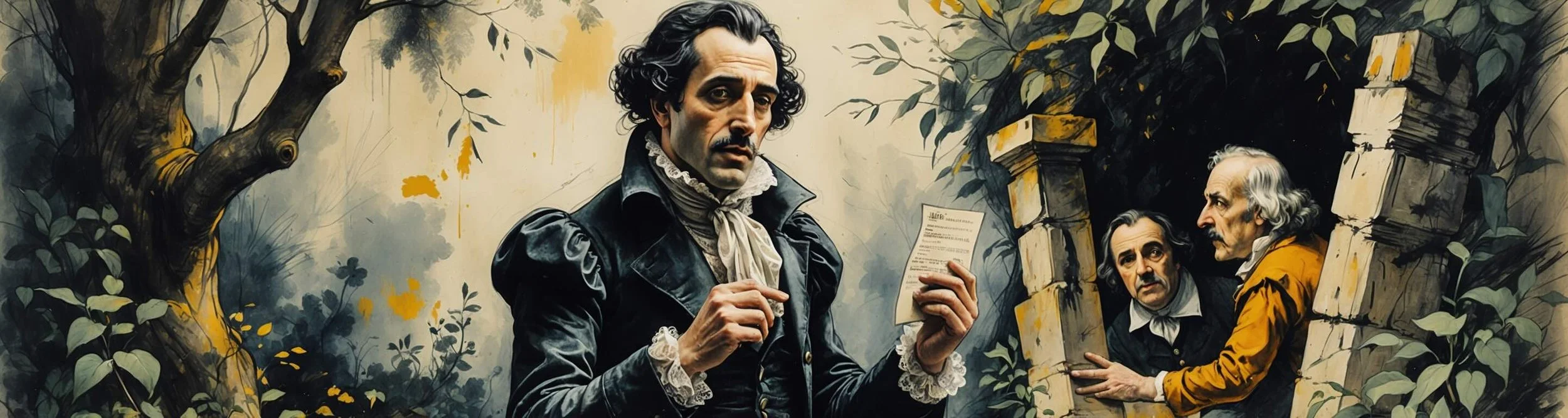
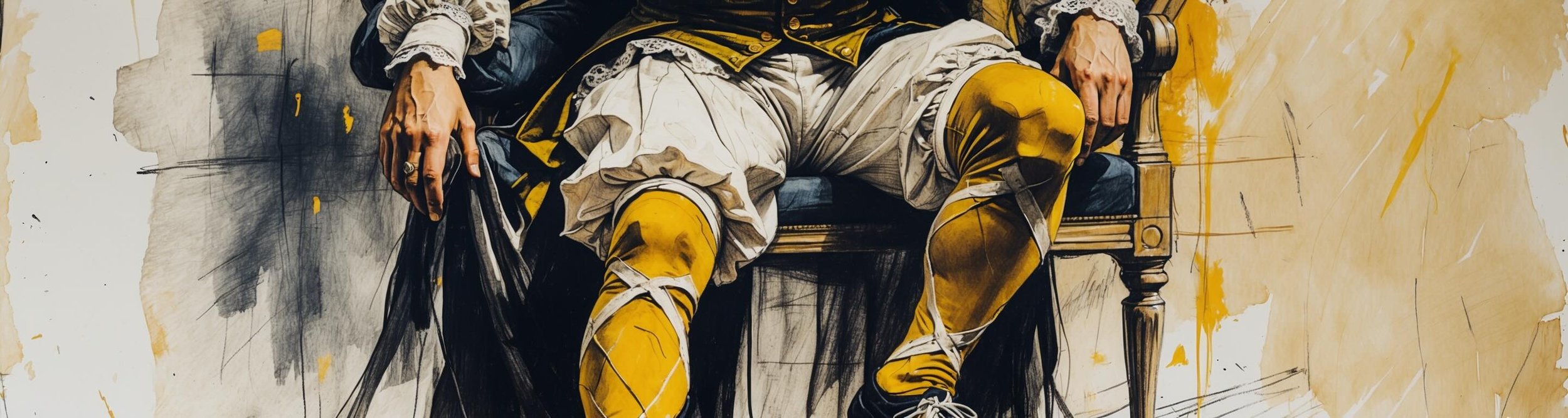
Act 2, Scene 5 is the play's most famous comic scene. Maria drops a forged letter in the garden, written in Olivia's hand, while Sir Toby, Sir Andrew and Fabian hide behind a box-tree to watch. Malvolio, already dreaming of marrying his mistress, finds it and reads its flattery as proof that Olivia loves him – "some are born great, some achieve greatness, and some have greatness thrust upon 'em". The letter orders him to smile, wear yellow stockings and go cross-gartered. His vanity does the rest. See Twelfth Night Act 2, Scene 5 for the full analysis.
What happens with the yellow stockings and the duel in Act 3, Scene 4?
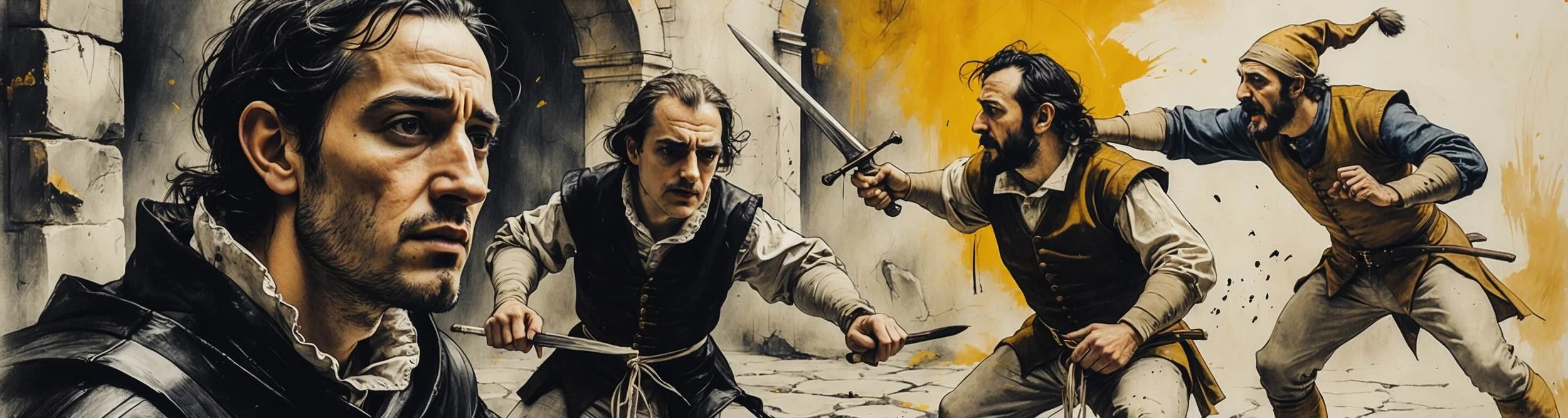
Act 3, Scene 4 is the longest scene in the play and brings several plots together. Malvolio appears before a baffled Olivia smiling, in yellow stockings and cross-gartered, exactly as the forged letter instructed; she thinks he has gone mad and he is shut away in a dark room. Meanwhile Sir Toby tricks the cowardly Sir Andrew and the disguised Viola into a duel neither wants. Then Antonio, mistaking Cesario for Sebastian, steps in and is arrested – and when he calls the stranger "Sebastian", Viola dares to hope her brother is alive. See Twelfth Night Act 3, Scene 4 for the full analysis.
What is the Sir Topas scene, Act 4, Scene 2?
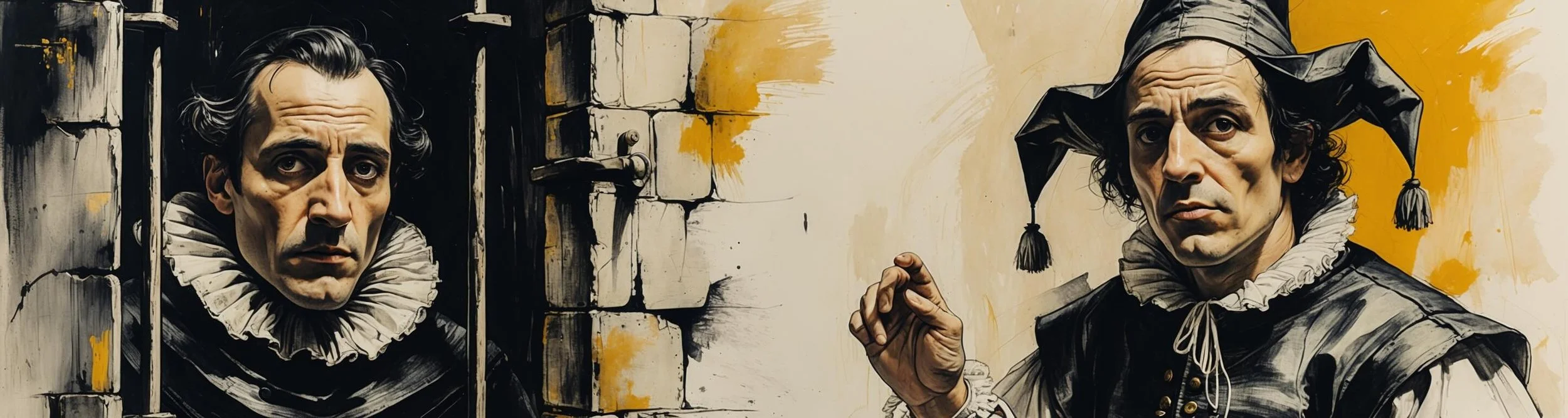
In Act 4, Scene 2 Feste disguises his voice as a priest, "Sir Topas", to visit the imprisoned Malvolio in a dark room. He teases and torments him, insisting the steward is mad and that the dark room is full of light, while Malvolio desperately protests that he is sane. The scene is very funny but also uncomfortable: the joke on Malvolio has gone far enough to feel cruel, and many readers find the comedy turning sour here. See Twelfth Night Act 4, Scene 2 for the full analysis.
How does Twelfth Night end in Act 5, Scene 1?
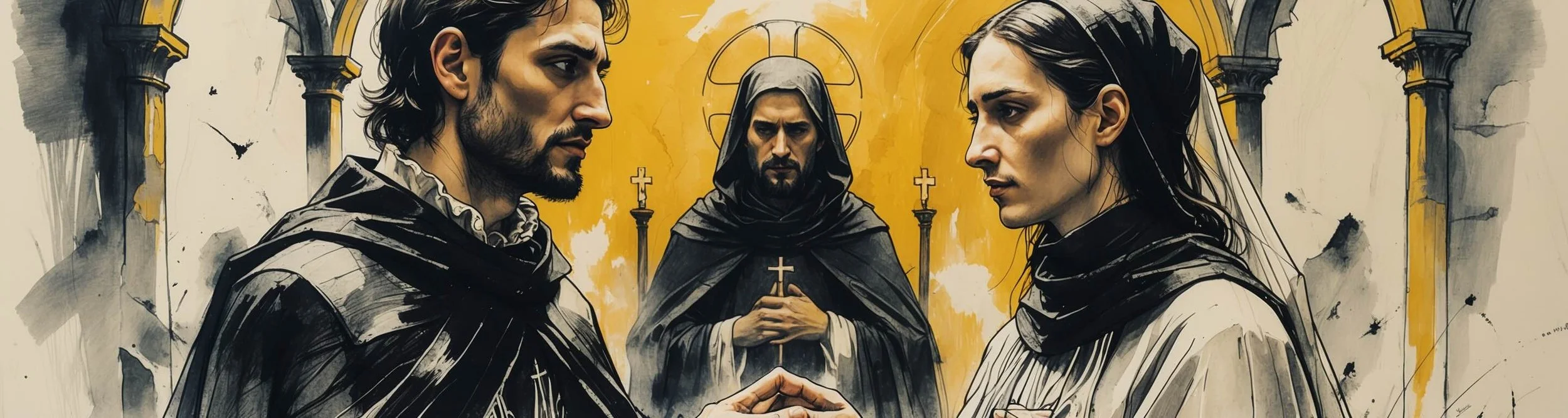
Act 5, Scene 1 is the finale, where every confusion is untangled. Antonio accuses Cesario of betrayal, Olivia claims Cesario as her new husband, and Orsino is furious – until Sebastian arrives and the twins stand face to face: "One face, one voice, one habit, and two persons". Viola's disguise is revealed, Sebastian is married to Olivia, and Orsino turns his love to Viola. Malvolio is freed, learns he was tricked, and storms off vowing "I'll be revenged on the whole pack of you", leaving Feste to close the play with a song. See Twelfth Night Act 5, Scene 1 for the full analysis.