Twelfth Night: Act 3, Scene 4 – Analysis
Scene Profile – At a Glance
- Location: Olivia's garden and house in Illyria.
- What Happens: Malvolio appears in yellow stockings, cross-gartered and grinning, convinced Olivia loves him; she thinks him mad and has him shut away. Sir Toby goads Sir Andrew and the disguised Viola into a cowardly duel, which Antonio interrupts before being arrested.
- Key Characters: Malvolio, Olivia, Maria, Sir Toby, Sir Andrew, Fabian, Viola and Antonio.
- Dramatic Function: The play's longest scene and its comic centre of gravity. It pays off the gulling of Malvolio, stages the duel that the disguise plot has been building towards, and turns the action when Antonio names Sebastian.
- Famous Quote:
"'And some have greatness thrust upon them.'"
(Malvolio, Act 3, Scene 4) - Why It Matters: It is the hinge of the whole play. The trick against Malvolio reaches its cruel height, and Antonio's mention of "Sebastian" gives Viola the first real hope that her drowned brother is alive.
Scene Summary
In her garden, Olivia sends for Malvolio, hoping his sober manner will steady her own lovesick mood. Maria warns that he is behaving very strangely. Malvolio arrives transformed: dressed in yellow stockings, cross-gartered, smiling and quoting the forged letter back at his mistress. Olivia, baffled, decides he has gone mad and tells her people to look after him before she leaves to meet the returning messenger.
Left alone, Malvolio reads every word and gesture as proof that Olivia adores him. Sir Toby, Maria and Fabian then close in, pretending to treat him as a man possessed by the devil. He rejects them with contempt, and they resolve to take their joke further: they will bind him and shut him in a dark room as a lunatic.
Meanwhile Sir Andrew has written a challenge to the young messenger he sees as his rival. Sir Toby decides not to deliver the silly letter but to terrify both men with invented reports of each other's ferocity. He warns the disguised Viola that a deadly opponent awaits her, and tells the trembling Andrew the same. Both would gladly avoid the fight, but Toby forces them to draw.
At this moment Antonio arrives, mistakes Viola for Sebastian, and steps in to defend "his" friend. Officers appear and arrest Antonio on Orsino's old charge. Needing money, he asks Viola for the purse he lent Sebastian; she, knowing nothing of it, denies him, and Antonio is led away bitterly accusing "Sebastian" of ingratitude. Viola, hearing her brother's name, dares to hope he survived the shipwreck. Toby, Andrew and Fabian dismiss her as a coward, and Andrew runs off to beat her.
Yellow Stockings, Cross-Gartered
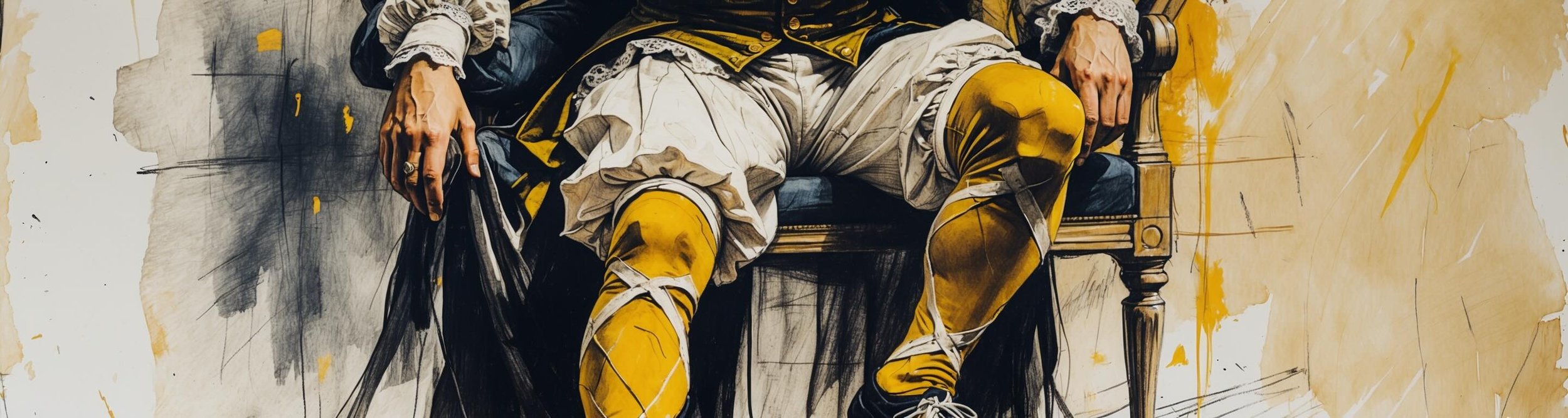
The scene's first great comic set-piece is Malvolio's entrance. Following the forged letter to the letter, he arrives smiling, his legs encased in the yellow stockings and criss-cross garters Olivia is supposed to admire. He believes he is dazzling her; in fact he looks ridiculous. The gap between how he sees himself and how everyone else sees him is the engine of the comedy.
Original
Not black in my mind, though yellow in my legs.
(Malvolio, Act 3, Scene 4)
Shakespeare Retold (Modern Verse)
There's nothing wrong, although my legs are yellow.
Malvolio answers Olivia's worried questions with knowing little hints, certain that the two of them share a secret. The yellow of his stockings, which he wears as a love-token, is the colour of jealousy and folly – and Olivia, of course, never wrote the letter at all. Everything he treats as proof of her favour is really evidence of how completely he has been fooled. Shakespeare lets the audience enjoy the dramatic irony: we know the joke; Malvolio is its last person to discover it.
Midsummer Madness
Olivia cannot make sense of her steward's behaviour. The cool, censorious man she relied on is suddenly grinning, kissing his hand and talking in riddles. She reaches for the only explanation that fits and pronounces him out of his wits.
Original
Why, this is very midsummer madness.
(Olivia, Act 3, Scene 4)
Shakespeare Retold (Modern Verse)
It seems you've suddenly gone quite insane.
"Midsummer madness" is exactly the diagnosis the plotters need. By deciding Malvolio is ill, Olivia unknowingly hands him over to his tormentors: she asks that he be "looked to" and cared for, which gives Sir Toby the perfect cover to lock him away. Malvolio, hearing the same words, reads them as tenderness. The scene turns the comedy darker here – what looks like concern is the doorway to his imprisonment.
Bound in a Dark Room
With Olivia gone, the tricksters reveal how far they mean to take their game. Treating Malvolio as a man possessed, they decide to confine him as a lunatic. The fun curdles into something close to cruelty.
Original
Come, we'll have him in a dark room and bound.
(Sir Toby, Act 3, Scene 4)
Shakespeare Retold (Modern Verse)
Let's tie him up and leave him in a dark room.
A dark room and physical restraint were the standard Elizabethan "treatment" for madness, so Sir Toby is proposing to put Malvolio through a genuine ordeal. He admits openly that this is for "our pleasure and his penance". The audience laughs, but Shakespeare plants a real unease: the steward's vanity has earned him mockery, yet the punishment now reaching for him is harsher than the crime. This is the seed of the discomfort many feel at the play's end, when Malvolio storms off vowing revenge.
The Cowards' Duel
The scene's other great comic engine is the duel that neither duellist wants. Sir Toby, purely for sport, persuades the timid Sir Andrew and the disguised Viola that each faces a bloodthirsty killer. Viola's terror is real, and laced with a secret only the audience shares.
Original
Pray God defend me! A little thing would
make me tell them how much I lack of a man.
(Viola, Act 3, Scene 4)
Shakespeare Retold (Modern Verse)
Dear God, defend me! If the slightest thing
occurs, I must reveal I'm not a man.
The joke is doubled by Viola's disguise. She is frightened of being hurt, but even more frightened that fear will expose her: a single slip and the whole company will learn she is no man at all. Shakespeare wrings comedy from the standoff of two reluctant fighters, while Viola's aside reminds us how precarious her position has become. The duel that the gender disguise has been building towards finally arrives, and the heroine can neither fight nor confess.
Antonio's Arrest
The comedy is broken open by Antonio, who rushes in to defend the person he believes is Sebastian. Almost at once the officers arrive and arrest him on Orsino's old charge. Penniless, he turns to "Sebastian" for the purse he lent – and is met by a blank stranger's face.
Original
Will you deny me now?
Is't possible that my deserts to you
Can lack persuasion? Do not tempt my misery,
Lest that it make me so unsound a man
As to upbraid you with those kindnesses
That I have done for you.
(Antonio, Act 3, Scene 4)
Shakespeare Retold (Modern Verse)
Will you disown me now?
How can you, after all I've done for you,
Not help me out? Don't make me more upset
In case I'm forced to do an awful thing
Reminding you of all the acts of kindness
I've done for you.
Antonio's pain is genuine and entirely undeserved. To him, the friend he saved from the sea and loaded with money is now coldly refusing to know him. Viola, of course, has never met him and cannot help. The mistaken identity that has driven the play's comedy here produces real grief: Shakespeare lets the disguise plot wound someone for the first time. Antonio's sense of betrayal is the price of all the confusion, and it gives the scene a sudden, sobering depth.
"He Named Sebastian"
As Antonio is dragged off, he cries out his friend's name in despair. For Viola, that single word changes everything. She has believed her twin drowned; now she dares to hope the resemblance the stranger saw is no accident.
Original
He named Sebastian: I my brother know
Yet living in my glass; even such and so
In favour was my brother, and he went
Still in this fashion, colour, ornament,
For him I imitate: O, if it prove,
Tempests are kind and salt waves fresh in love.
(Viola, Act 3, Scene 4)
Shakespeare Retold (Modern Verse)
He said Sebastian. I see my brother
When looking in the mirror. There's no other
Whose face was just like mine; he wore his clothes
The same as these, in colour, shape and pose,
For I would copy him. Oh, prove it so
That storms are kind and waves did let him go.
Viola sees her brother every time she looks in a glass, because she has modelled her disguise on him. Antonio's mistake is therefore the best news she could receive: if a stranger took her for Sebastian, then Sebastian must be alive and nearby. The speech turns the scene's mistaken identity from a source of pain into a source of hope, and quietly sets up the reunion that will resolve the whole play. The rhyming couplets give her dawning hope a lift of music.
Language and Technique
- Dramatic irony: Malvolio reads every sign as love because he does not know the letter is forged – the audience knows, so his confidence is funny rather than convincing.
- Colour symbolism: The yellow stockings he wears as a love-token traditionally suggest jealousy and folly, so his costume mocks him before he says a word.
- Prose for comedy: Malvolio's gulling and the duel are written in prose, the everyday register of the play's funny scenes, while the emotional verse returns for Antonio and Viola.
- Mistaken identity: Antonio's certainty that Viola is Sebastian drives both his arrest scene and Viola's new hope – one confusion, two opposite effects.
- Rhyming couplets: Viola ends the scene in rhyme, lifting her speech out of the chaos and giving her hope a sense of shape and resolve.
- Comic exaggeration: Sir Toby's invented descriptions of each "deadly" fighter pile up wild claims to terrify two men who are equally harmless.
Key Quotes from Act 3, Scene 4
Quote 1I am as mad as he,
If sad and merry madness equal be.
(Olivia, Act 3, Scene 4)
Shakespeare Retold (Modern Verse)
We're both equally mad,
If being madly happy's being sad.
O, ho! do you come near me now?
(Malvolio, Act 3, Scene 4)
Shakespeare Retold (Modern Verse)
Well, do you get me now?
I am one that had rather go with sir priest than sir knight: I care not who knows so much of my mettle.
(Viola, Act 3, Scene 4)
Shakespeare Retold (Modern Verse)
I'm more a churchman than a bitter fighter, and I don't care who knows I am a coward.
But O how vile an idol proves this god
Thou hast, Sebastian, done good feature shame.
In nature there's no blemish but the mind;
None can be called deformed but the unkind:
Virtue is beauty, but the beauteous evil
Are empty trunks o'erflourished by the devil.
(Antonio, Act 3, Scene 4)
Shakespeare Retold (Modern Verse)
But oh, how awful has my hero proven!
Sebastian, you've pilloried your good looks.
There's nothing bad in nature, but the mind;
For nothing's bad except being unkind.
Now beauty's beautiful, but evil beauty
Is just an empty shell, the devil's duty.
Prove true, imagination, O, prove true,
That I, dear brother, be now ta'en for you!
(Viola, Act 3, Scene 4)
Shakespeare Retold (Modern Verse)
Oh, my imagination, please be true,
That I, dear brother, he assumed was you!
Key Takeaways
- Malvolio's humiliation: His yellow stockings and grinning hints make him absurd, and his certainty that Olivia loves him is wholly mistaken.
- Comedy turns cruel: Olivia's belief that he is mad lets the plotters bind him in a dark room, a punishment harsher than his vanity deserves.
- The cowards' duel: Sir Toby tricks two unwilling fighters into drawing, and Viola's terror nearly gives away her disguise.
- Antonio's arrest: Mistaking Viola for Sebastian, Antonio is denied the purse he lent and led away feeling betrayed.
- Viola's hope: Hearing the name "Sebastian", she dares to believe her brother survived the shipwreck.
- The play's turning point: The longest scene pays off the Malvolio plot and sets the reunion of the twins in motion.
Study Questions and Analysis
Why does Malvolio wear yellow stockings and cross-garters?
He wears them because the forged letter, which he believes Olivia wrote, told him to. The letter instructs him to appear in yellow stockings, "cross-gartered", and to smile constantly, knowing that Olivia in fact dislikes all three. The joke is that he is following careful instructions designed to make him look as foolish as possible in front of the very woman he is trying to impress.
The costume is also rich in meaning. Yellow was associated with jealousy and with folly, so the colour silently comments on Malvolio's self-deluded ambition. By dressing him as a grinning, gaudy lover, Shakespeare turns the steward's social climbing into pure visual comedy: the man who prided himself on gravity and decorum now parades as the household's clown.
How does the scene present the gulling of Malvolio – funny or cruel?
It is both, and the balance has divided readers for centuries. On stage the entrance is reliably hilarious: the pompous steward grinning, kissing his hand and quoting the letter at a bewildered Olivia. Yet the moment Sir Toby decides to bind him and shut him "in a dark room" as a madman, the comedy edges towards genuine persecution – Elizabethan treatment for lunacy was frightening and real.
C. L. Barber, in his 1959 Shakespeare's Festive Comedy, reads the play as a holiday release of misrule in which mockery of a kill-joy like Malvolio is part of the festive pattern. Other critics are less comfortable: many modern productions play the dark-room scenes as disturbing, and audiences increasingly sympathise with a man punished out of all proportion to his vanity. The scene works precisely because Shakespeare lets both responses stand – we laugh, and then we begin to wince.
What does "midsummer madness" mean, and why does Olivia say it?
"Midsummer madness" refers to the old belief that the heat of midsummer could send people temporarily insane – the same idea behind the chaos of A Midsummer Night's Dream. Olivia uses the phrase when she cannot otherwise explain why her sober steward is suddenly grinning and talking nonsense. To her, madness is the only diagnosis that fits.
The line matters because of its consequences. By deciding Malvolio is ill, Olivia asks for him to be "looked to" and cared for – which hands him straight to his tormentors. It also chimes with the scene's wider interest in madness: Olivia has already called her own lovesickness a kind of madness, and the whole play treats love as a sweet derangement. Malvolio is simply the household member whose "madness" is staged for laughs.
How does Shakespeare create comedy in the duel between Viola and Sir Andrew?
The humour comes entirely from the gap between reputation and reality. Neither Viola nor Sir Andrew wants to fight, and both are terrified, but Sir Toby feeds each of them lurid lies about the other's deadliness. He tells Viola her opponent has killed three men; he tells Andrew the youth is a devil. Two cowards are thus driven towards a duel that exists only in Sir Toby's mischief.
Viola's disguise sharpens the joke. She is frightened not just of being hurt but of being exposed: as she says in an aside, a little thing would reveal "how much I lack of a man". The audience enjoys a layer of irony nobody on stage can see – that the fearsome "youth" is a woman who would faint at a sword. The scene mocks the whole cult of masculine honour, showing how easily empty reputation can be manufactured out of words alone.
Why is Antonio's arrest such an important moment?
It is the point where the comedy of mistaken identity first causes real harm. Antonio steps in to defend the person he believes is Sebastian, is arrested on Orsino's old charge, and then asks "Sebastian" for the purse he lent – only to be denied by a stranger's face. His cry, "Will you deny me now?", is the voice of genuine betrayal.
The moment matters structurally and emotionally. Structurally, it confirms for the audience that Sebastian is alive and in Illyria, setting up the twins' reunion. Emotionally, it shows Shakespeare willing to let the disguise plot wound an innocent man: Antonio has done nothing but love and help, and is repaid, as he thinks, with cold ingratitude. The scene's laughter is suddenly shadowed by a man's real grief.
How does the scene give Viola hope about her brother?
As Antonio is led away he calls out the name "Sebastian", and Viola realises he must have mistaken her for someone who looks exactly like her. Since she modelled her disguise on her twin – she sees her brother whenever she looks in a mirror – the only person she could be confused with is Sebastian himself.
Her response, "Prove true, imagination", is a prayer that her guess is right and that her brother survived the storm. This is the scene's emotional turn: the same misunderstanding that has just devastated Antonio becomes the first ray of hope Viola has had since the shipwreck. Shakespeare threads the comedy's machinery and its feeling together, using one confusion to deliver pain to one character and joy to another.
What does Antonio's speech about beauty and the mind add to the play?
Wounded by what he sees as Sebastian's betrayal, Antonio declares that "none can be called deformed but the unkind" and that "virtue is beauty" – the only real ugliness is moral, and a fair face hiding a cruel heart is an empty shell. It is a surprisingly weighty meditation for a comedy, and it lands on the play's central theme: the gap between how things appear and how they truly are.
The speech gains its power from dramatic irony. Antonio is condemning a person who has done nothing wrong, since the figure he addresses is really Viola, not Sebastian. Shakespeare lets a minor character voice a serious moral idea while being completely mistaken about the situation, so the lines work both as genuine wisdom and as a reminder of how blinding appearances can be. It is a small example of the play's habit of folding real feeling into its comedy of errors.
Why is Act 3, Scene 4 considered the turning point of the play?
It is the longest scene in Twelfth Night and it brings several plots to a head at once. The gulling of Malvolio reaches its climax and tips into the cruelty of his confinement; the duel that the disguise plot has been promising finally happens; and, most importantly, Antonio's arrest confirms that Sebastian is alive and abroad in Illyria.
From here the play's energy shifts from creating confusion to resolving it. Viola's hope, Antonio's accusation and Sebastian's presence in the city all point towards the reunion and the unravelling of every disguise. Everything that the comedy has tangled in the first three acts is, after this scene, poised to come undone. That combination of comic climax and structural pivot is why the scene is so often singled out as the play's centre of gravity.