Twelfth Night: Act 3, Scene 1 – Analysis
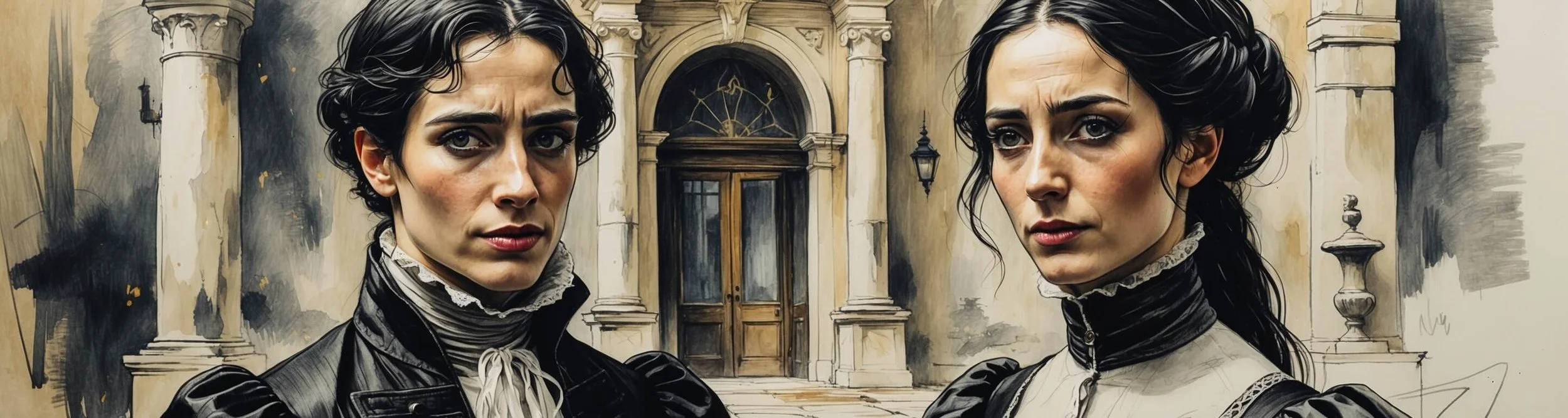
Scene Profile – At a Glance
- Location: The garden at Olivia's house.
- What Happens: Viola, disguised as Cesario, trades wit with the clown Feste, then is shown in to Olivia. Olivia drops all pretence and openly declares her love, which Cesario gently but firmly refuses.
- Key Characters: Viola (as Cesario), Feste, Olivia, with Sir Toby Belch, Sir Andrew Aguecheek and Maria briefly present.
- Dramatic Function: The scene that brings the love-triangle into the open. Olivia's confession to a disguised woman tightens the play's central knot of mistaken desire.
- Famous Quote:
"Cesario, by the roses of the spring,
By maidhood, honour, truth and every thing,
I love thee so, that, maugre all thy pride,
Nor wit nor reason can my passion hide."
(Olivia, Act 3, Scene 1) - Why It Matters: Olivia, who once vowed years of mourning, now begs a servant to love her. The scene shows how completely Viola's disguise has overturned everyone's feelings.
Scene Summary
In Olivia's garden, Viola, still disguised as the page Cesario, meets Feste the clown. The two spar in a quick exchange of word-play, with Feste turning every phrase inside out. Viola tips him and reflects, once he leaves, on how much skill it takes to play the fool well.
Sir Toby Belch and Sir Andrew Aguecheek appear and usher Cesario toward the house. Olivia then enters with Maria and quickly sends the others away so she can be alone with the young messenger.
Cesario tries to plead Orsino's case, but Olivia will not hear it. She admits she sent the ring after him as a trick and confesses, with growing openness, that she has fallen in love. Cesario answers in riddles – "I am not what I am" – without revealing the truth.
Olivia finally abandons all restraint and declares her love outright, swearing by everything she holds dear. Cesario refuses her as kindly as possible, insisting that no woman will ever be mistress of his heart. As the scene closes, Olivia asks the youth to come again, still hoping his feelings might change.
The Wit of Feste
The scene opens not with romance but with word-play. Feste, the household clown, meets Cesario and the two duel in language, each trying to outdo the other in cleverness. Feste's trade is twisting meaning, and he plays with words as easily as a juggler with balls.
Original
A sentence is but a cheveril glove to a good wit: how quickly the wrong side may be turned outward!
(Feste, Act 3, Scene 1)
Shakespeare Retold (Modern Verse)
A funny sentence is just like a glove; one can invert it quickly inside-out.
Feste compares a sentence to a soft kid-leather glove that can be turned inside out in a moment, which is exactly what he does to every remark. The image is light, but it points at one of the play's deeper concerns: language can be twisted, and so can identity. In a comedy where a woman is dressed as a man and a steward is fooled by a letter, the slipperiness of words is no small matter.
Wise Enough to Play the Fool
Once Feste has gone, Viola is left alone to think. Her short speech is generous and shrewd, recognising that a good clown is not a simpleton but a careful observer who reads people and times his jokes to suit them.
Original
This fellow is wise enough to play the fool;
And to do that well craves a kind of wit:
He must observe their mood on whom he jests,
The quality of persons, and the time,
(Viola, Act 3, Scene 1)
Shakespeare Retold (Modern Verse)
This chap is smart enough to act the fool,
And acting well requires intelligence.
He must assess the mood of those he mocks,
The type of person, and the time of day,
Viola's praise of Feste is also, quietly, a description of her own situation. She too is performing a role, reading the people around her and choosing her words with care to keep her disguise intact. The speech draws a neat line between wise folly and foolish wisdom, and reminds us that in this play the cleverest characters are often the ones pretending to be something they are not.
Olivia's Confession
The mood shifts when Olivia clears the stage to be alone with Cesario. Having vowed years of mourning, she now cannot stop herself loving a servant of the man she has rejected. Her confession comes out in stages, until at last she abandons all dignity and speaks plainly.
Original
Cesario, by the roses of the spring,
By maidhood, honour, truth and every thing,
I love thee so, that, maugre all thy pride,
Nor wit nor reason can my passion hide.
(Olivia, Act 3, Scene 1)
Shakespeare Retold (Modern Verse)
Cesario, by roses of the spring,
Virginity, my truth, and everything,
I love you so, despite all of your pride,
Although I try, I can't my passion hide.
The rhyming couplets give Olivia's declaration the formal weight of a vow, swearing by spring, by honour, by everything she values. There is real courage in it, since a noblewoman openly courting a page turns the usual order of wooing upside down. The tragedy of the moment is that her honesty is wasted: the "man" she loves is a woman, and her passion can never be returned. Viola's own feelings for Orsino make the irony sharper still.
Language and Technique
- Prose for the clown, verse for love: Feste's banter runs in quick prose, while Olivia's confession rises into rhymed verse – the form itself marks the shift from joking to feeling.
- Word-play and puns: Feste's "cheveril glove" turns meaning inside out, showing how language can be bent and how unstable truth is in this world.
- Dramatic irony: Olivia pours out love to a woman in disguise, so every tender line carries a meaning she cannot see.
- Rhyming couplets: Olivia and Cesario fall into couplets as the feeling intensifies, giving the exchange the polish of a love poem.
- Riddling speech: Cesario's "I am not what I am" hides the truth in plain sight, a half-confession that protects the disguise.
Key Quotes from Act 3, Scene 1
Quote 1A sentence is but a cheveril glove to a good wit: how quickly the wrong side may be turned outward!
(Feste, Act 3, Scene 1)
Shakespeare Retold (Modern Verse)
A funny sentence is just like a glove; one can invert it quickly inside-out.
This fellow is wise enough to play the fool;
And to do that well craves a kind of wit:
He must observe their mood on whom he jests,
The quality of persons, and the time,
(Viola, Act 3, Scene 1)
Shakespeare Retold (Modern Verse)
This chap is smart enough to act the fool,
And acting well requires intelligence.
He must assess the mood of those he mocks,
The type of person, and the time of day,
Then think you right: I am not what I am.
(Viola, Act 3, Scene 1)
Shakespeare Retold (Modern Verse)
You've got that right. I am not who you think.
Cesario, by the roses of the spring,
By maidhood, honour, truth and every thing,
I love thee so, that, maugre all thy pride,
Nor wit nor reason can my passion hide.
(Olivia, Act 3, Scene 1)
Shakespeare Retold (Modern Verse)
Cesario, by roses of the spring,
Virginity, my truth, and everything,
I love you so, despite all of your pride,
Although I try, I can't my passion hide.
Key Takeaways
- The triangle in the open: Olivia loves Cesario, Cesario (Viola) loves Orsino, and Orsino loves Olivia – a knot this scene pulls tight.
- Feste's wit matters: The clown's word-play opens the scene and points at the play's slippery sense of meaning and identity.
- Olivia's reversal: The woman who vowed years of mourning now begs a page to love her, showing how disguise overturns feeling.
- Riddling honesty: Cesario tells the truth in disguise – "I am not what I am" – without ever being understood.
- Dramatic irony: Every tender word Olivia speaks lands on a woman, so the audience feels what she cannot.
Study Questions and Analysis
What is the purpose of the opening exchange between Viola and Feste?
The duel of wit between Cesario and Feste does several jobs at once. On the surface it is entertainment, a display of quick word-play that opens the scene lightly before the emotional weight of Olivia's confession. But it also introduces one of the play's central ideas: that words, like Feste's "cheveril glove", can be turned inside out, and that meaning is never quite stable.
It also draws a careful comparison between the two characters. Viola admires Feste's skill, recognising that playing the fool well "craves a kind of wit". Both are performers – Feste by profession, Viola by necessity – and both rely on reading others to survive. Critics often note that Feste functions as the play's licensed truth-teller, and his presence here frames Viola's own honest-yet-disguised position. The exchange, then, is not idle banter but a thematic overture to the scene's deeper play with identity and truth.
Why does Olivia fall in love with Cesario?
Olivia is drawn to Cesario partly because the youth refuses to flatter her. Where Orsino sends extravagant declarations of love, Cesario speaks plainly, even bluntly, and that honesty cuts through the performance of grief Olivia has wrapped herself in. There is also something in Viola's androgynous presence – a woman playing a man – that many readers find central to the attraction. Cesario combines a young man's boldness with a sensitivity Olivia does not find in conventional suitors.
The deeper point is about release. Olivia has shut herself away to mourn a dead brother, and her sudden, headlong love is the comedy's way of breaking that self-imposed prison. C. L. Barber, in his 1959 Shakespeare's Festive Comedy, reads the play as a movement from restraint into liberating feeling, and Olivia's reversal is a clear example: the icy mourner becomes the most ardent wooer on the stage. That her love is misdirected at a disguised woman is the joke, but the energy of it is real.
How does Olivia declare her love to Cesario?
Olivia's declaration is remarkable for its directness. After trying to hide her feelings behind talk of Orsino's ring and her own honour, she finally casts off all restraint and swears her love by everything she holds sacred:
By maidhood, honour, truth and every thing,
I love thee so, that, maugre all thy pride,
Nor wit nor reason can my passion hide.
(Act 3, Scene 1) **Shakespeare Retold (Modern Verse)**
Cesario, by roses of the spring,
Virginity, my truth, and everything,
I love you so, despite all of your pride,
Although I try, I can't my passion hide.
The rhyming couplets lend the speech the formality of an oath, and the act of a noblewoman openly wooing a servant reverses the usual rules of courtship. It is bold and a little shocking, and Shakespeare lets us admire her honesty even as we see its futility. The "man" she is courting is a woman, so her passion, however sincere, is aimed at someone who can never return it.
What does Cesario mean by "I am not what I am"?
On the surface, Cesario is simply telling Olivia that she has misjudged the situation. But the line is a perfect example of the play's habit of truth-telling through riddle. Viola is literally not what she appears: she is a woman dressed as a man, a servant who is really a gentlewoman. The phrase admits the deception while keeping it hidden, since Olivia hears only a modest deflection.
The line belongs to the play's wider exploration of identity and disguise. Almost no one in Twelfth Night is straightforwardly what they seem – Viola is Cesario, Malvolio imagines himself a count, Feste plays the fool while speaking sense. Viola's words also reveal her own strain: she is decent and dislikes deceiving a woman who has done her no wrong, and the riddle is the closest she can come to honesty without breaking her disguise. It is a small, sad moment of conscience inside a comic scene.
How does this scene develop the play's love triangle?
This is the scene that brings the triangle fully into the open. Until now, Olivia's growing interest in Cesario has been hinted at; here she states it plainly, begging the youth to love her. That completes the circle of mismatched desire: Orsino loves Olivia, Olivia loves Cesario, and Cesario – who is really Viola – loves Orsino. Each character is chasing someone who cannot return their love.
The disguise is what makes the knot impossible to untie by ordinary means. Viola cannot accept Olivia without revealing herself, and she cannot reveal herself without betraying her position with Orsino. The scene therefore raises the dramatic tension while keeping the comedy intact, since the audience can see exactly why every character is stuck. It will take the arrival of Viola's twin, Sebastian, to resolve what this scene so neatly tangles, and the energy of Olivia's confession here is what powers the play toward that ending.