
Home → Plays → A Midsummer Night’s Dream → Scene Analysis
A Midsummer Night’s Dream: Scene Analyses
A Midsummer Night's Dream scene-by-scene analysis covering the whole play – all nine scenes, from Theseus's wedding countdown and the law of Athens to the workmen's Pyramus and Thisbe and Puck's plea for the audience's hands.
Each guide retells what happens in plain English, then analyses the scene's key moments, language and techniques, with the most important quotations shown beside their Shakespeare Retold modern verse.
A complete scene-by-scene study guide and revision resource for GCSE, A-Level, AP English, IB, and undergraduate Shakespeare.
Ideal for close reading, essay planning, exam preparation, and following how one night in the wood turns a father's law, a fairy quarrel and a weaver's rehearsal into three weddings.
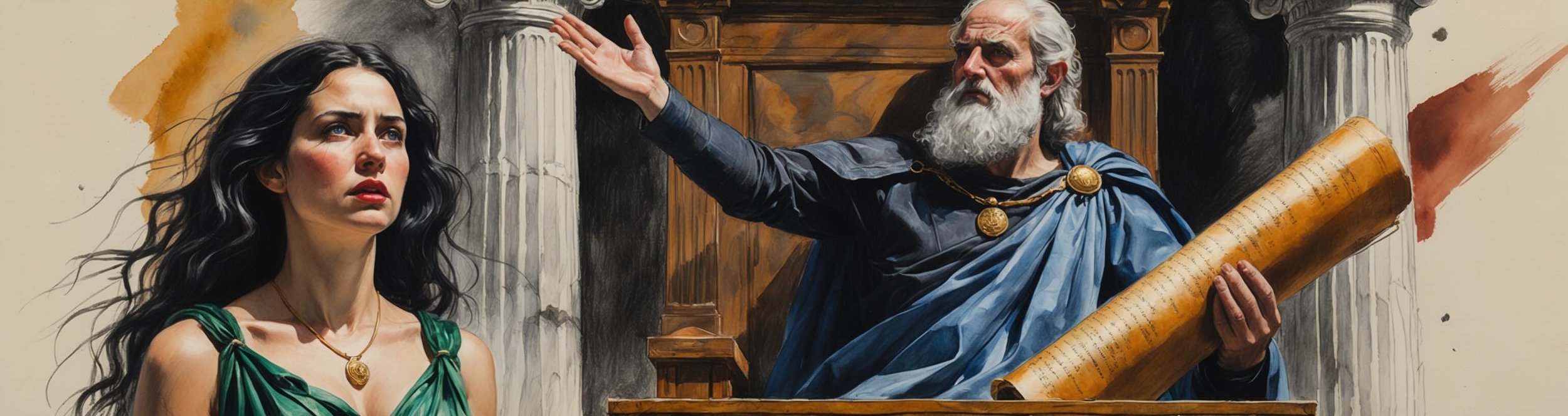
A Midsummer Night’s Dream: Act 1, Scene 1 – Analysis
A duke counts the days to his wedding, a father claims his daughter as property, and four lovers make plans for the wood.
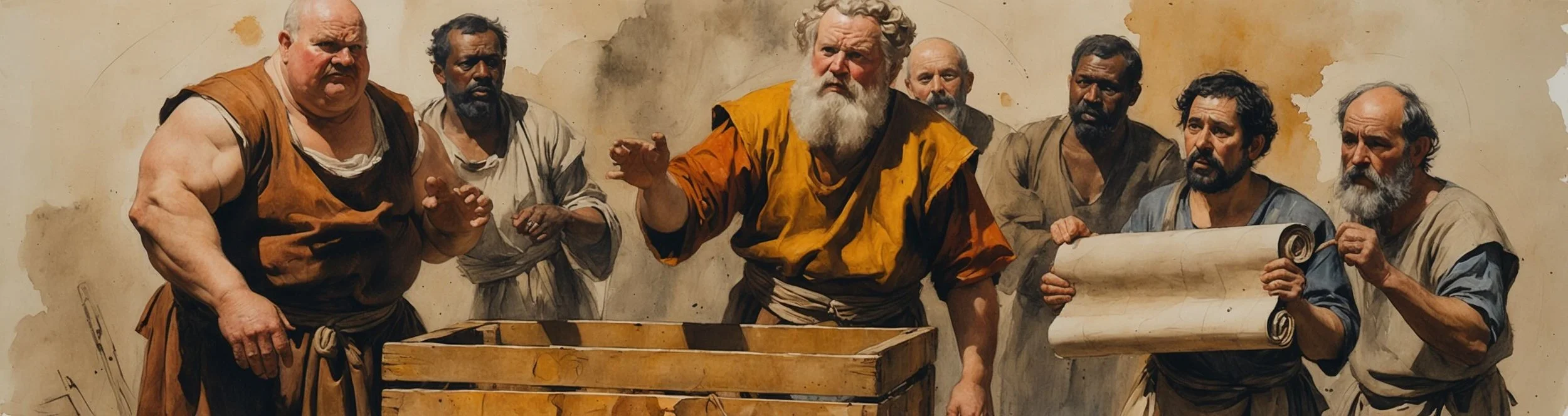
A Midsummer Night’s Dream: Act 1, Scene 2 – Analysis
Six workmen cast a tragedy for the duke's wedding, and a weaver wants to play the lover, the lady and the lion.
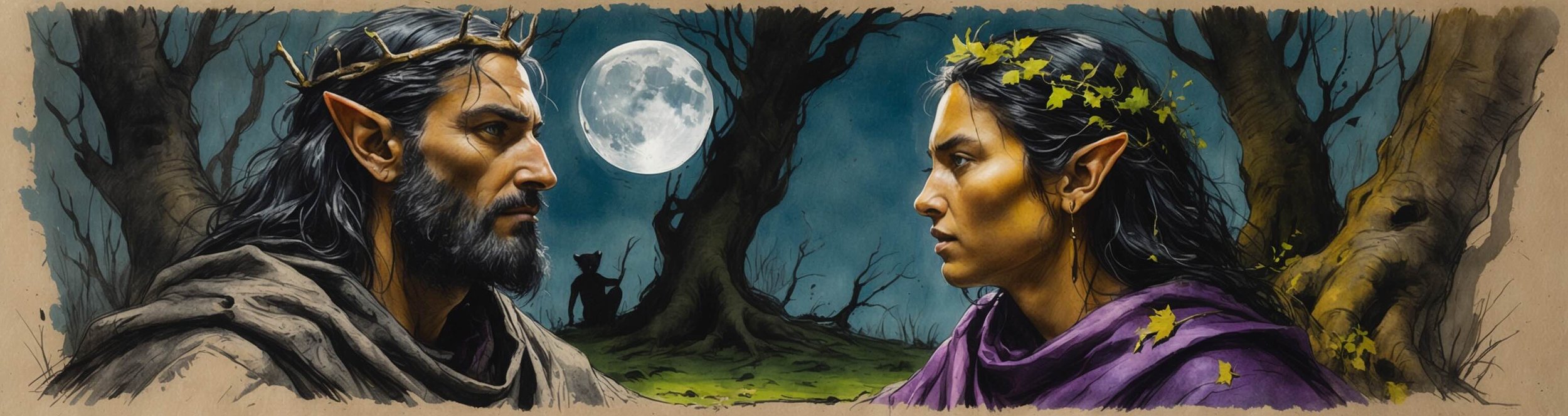
A Midsummer Night’s Dream: Act 2, Scene 1 – Analysis
The fairies arrive: a king and queen at war over a child, a flower struck by Cupid's arrow, and a woman who calls herself a spaniel.
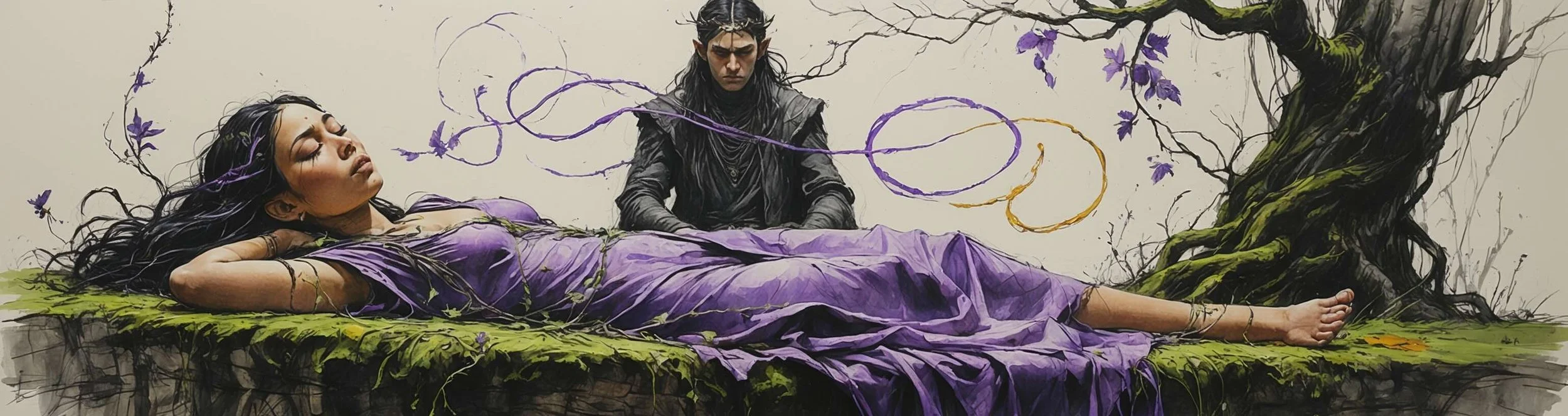
A Midsummer Night’s Dream: Act 2, Scene 2 – Analysis
A lullaby, a charm, the wrong Athenian anointed, and a lover who wakes up certain that reason has changed his mind.
A Midsummer Night’s Dream: Act 3, Scene 1 – Analysis
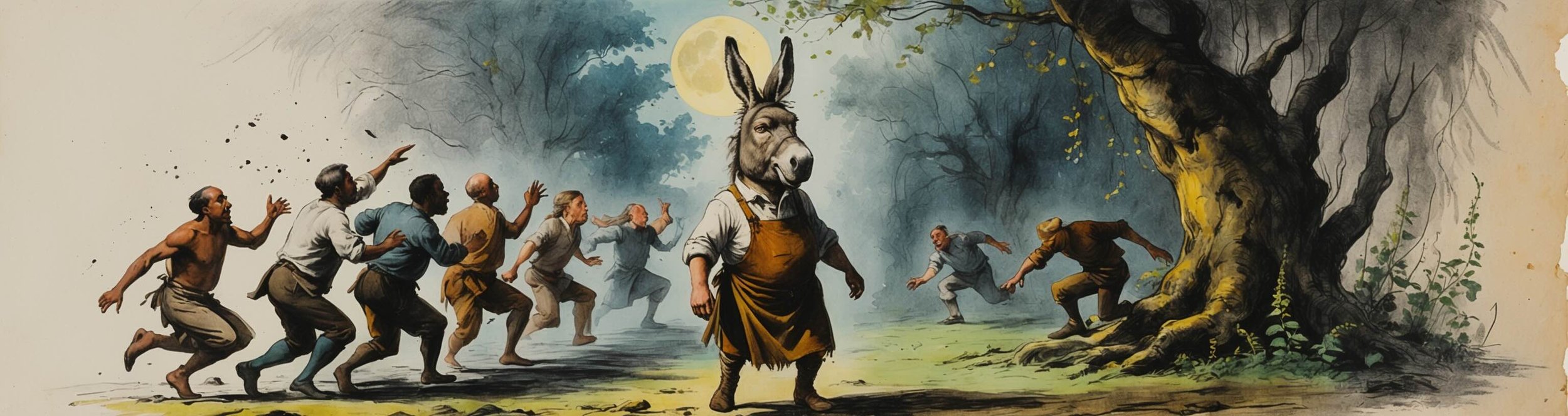
A rehearsal, a donkey's head, a song sung to keep off fear, and a fairy queen who wakes and calls the singer an angel.
A Midsummer Night’s Dream: Act 3, Scene 2 – Analysis
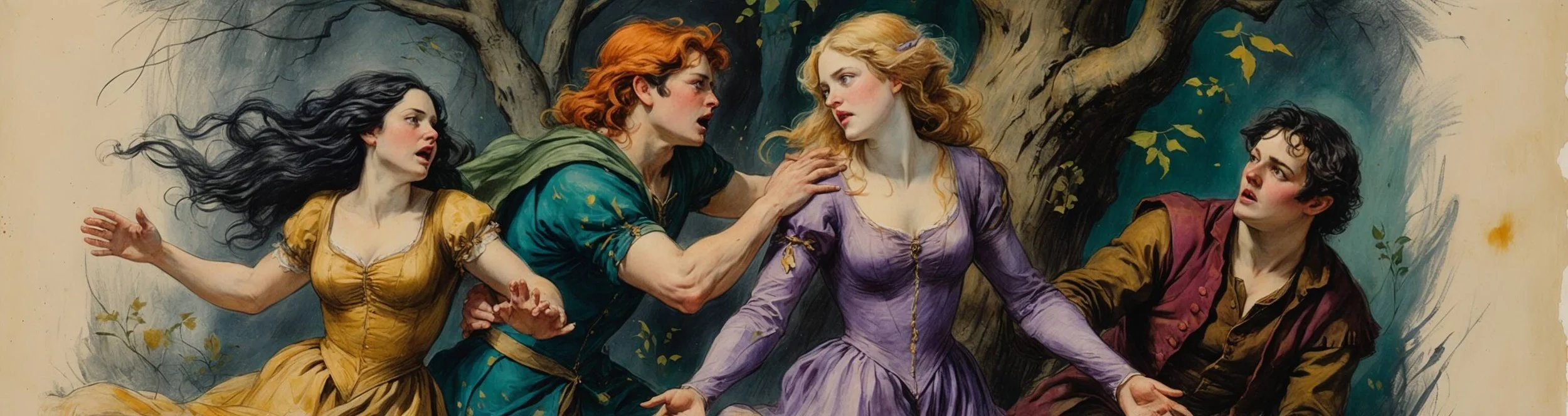
Two men love one woman, two friends become enemies, and a fairy sits down to watch before he sorts the sleepers into pairs.
A Midsummer Night’s Dream: Act 4, Scene 1 – Analysis
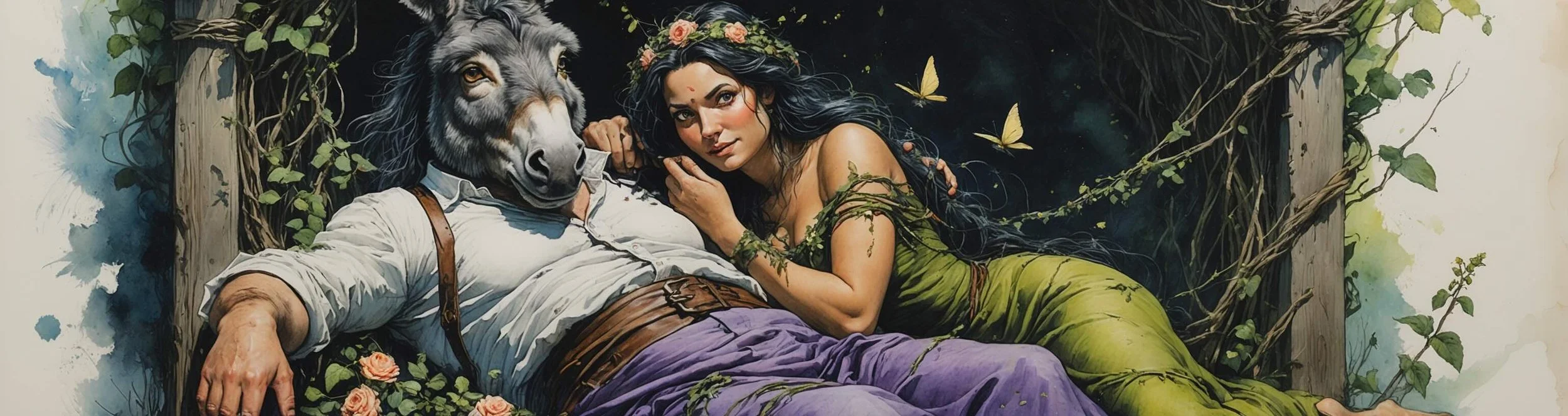
A fairy queen wakes from loving an ass, a duke overrules a father, four lovers agree to call it a dream, and a weaver plans a ballad.
A Midsummer Night’s Dream: Act 4, Scene 2 – Analysis
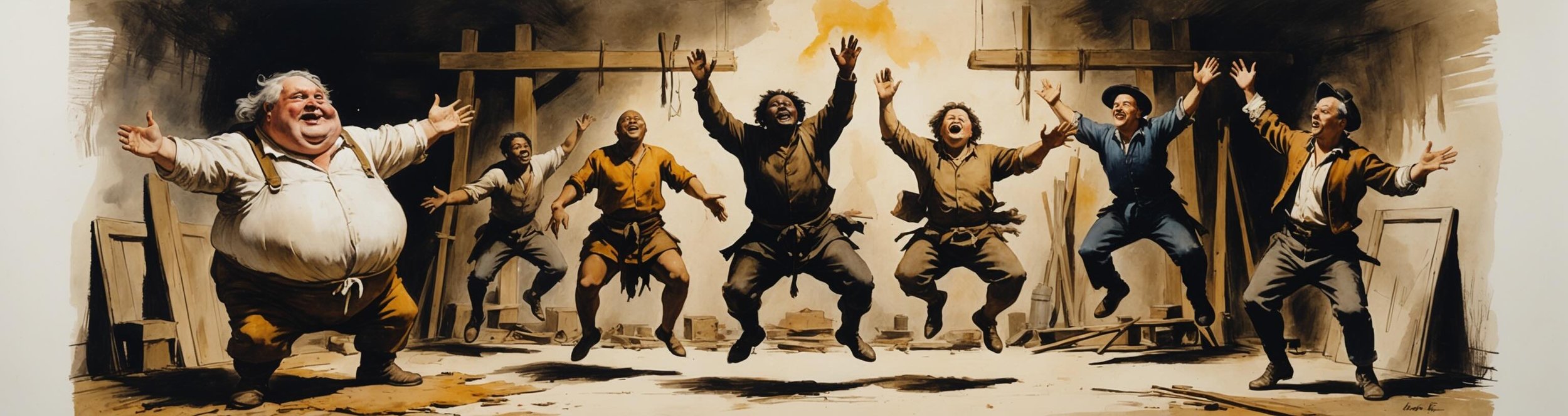
The workmen count what they have lost in sixpences, and their leading man walks in with a secret and a list of orders.
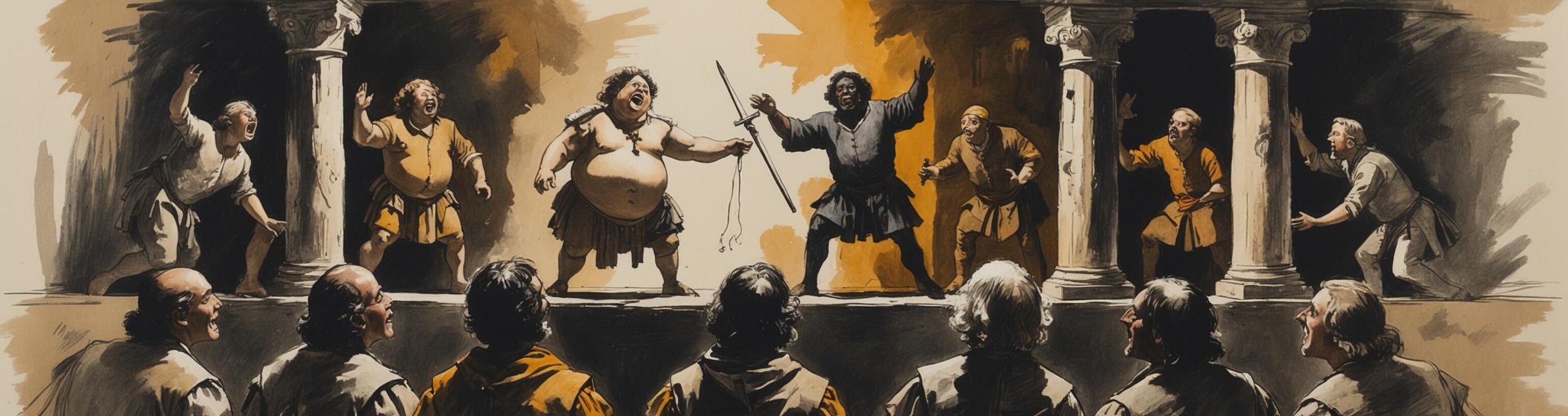
A Midsummer Night’s Dream: Act 5, Scene 1 – Analysis
A duke explains away the night, a court heckles a tragedy, and the fairies bless the beds before Puck asks the audience to call it a dream.
A Midsummer Night's Dream Scene Analysis – Frequently Asked Questions
Which scenes of A Midsummer Night's Dream are analysed here?
Every scene in the play has its own guide – nine scenes across five acts. Act 1 covers Scene 1 (Theseus's wedding, Egeus's demand and the lovers' plan to flee) and Scene 2 (the workmen casting Pyramus and Thisbe). Act 2 covers Scene 1 (the fairy quarrel, the magic flower and Helena's spaniel speech) and Scene 2 (Puck's mistake and Hermia's dream). Act 3 covers Scene 1 (Bottom's ass head and Titania in love) and Scene 2 (the four lovers' quarrel). Act 4 covers Scene 1 (the waking of the queen, the lovers and Bottom) and Scene 2 (Bottom's return to the workmen). Act 5 is a single scene: Scene 1 (Pyramus and Thisbe, the fairies' blessing and Puck's epilogue). The scenes are very uneven: Act 3, Scene 2 runs to nearly five hundred lines and Act 4, Scene 2 to forty, and each guide is sized to its scene.
What happens in Act 1, Scene 1, and what is the law of Athens?
The play opens with Theseus counting the four days to his wedding with Hippolyta, the Amazon queen he won by conquest – "Hippolyta, I wooed thee with my sword" – and turns at once into a trial. Egeus demands that his daughter Hermia marry Demetrius; Theseus tells her that to her father she is "a form in wax", to be kept or destroyed, and that the law gives her a choice of Demetrius, a convent or death. Hermia and Lysander plan to elope through the wood, and Helena, who loves Demetrius, decides to betray the plan to him. The guide shows that Shakespeare invented the death penalty to state paternal power at full strength, reads Lysander's "The course of true love never did run smooth" as a young man enjoying his own misery, and treats Helena's soliloquy – "Love looks not with the eyes, but with the mind" – as the play's thesis, delivered before any fairy has touched anyone by the character least able to act on it. See A Midsummer Night's Dream Act 1, Scene 1 for the full analysis.
Who are the mechanicals, and what happens when they cast their play?
Six Athenian tradesmen – Quince the carpenter, Bottom the weaver, Flute the bellows-mender, Snout the tinker, Snug the joiner and Starveling the tailor – meet in Act 1, Scene 2 to cast a play of Pyramus and Thisbe for the duke's wedding. Bottom is given Pyramus and asks for Thisbe and the lion as well – "Let me play the lion too" – promising to roar "as gently as any sucking dove"; Flute objects to playing a woman because he has a beard coming; and the company worries that a real roar would frighten the ladies and get them all hanged. The guide reads the scene as the play's first commentary on itself: the workmen's tragedy is the lovers' story with the ending the fairies will prevent, and their fear of the audience is the play's own question about what a theatre can ask people to believe. Samuel Johnson's remark that Bottom "is for engrossing every part" is the starting point for the Bottom question. See A Midsummer Night's Dream Act 1, Scene 2 for the full analysis.
What is the quarrel between Oberon and Titania, and what is the magic flower?
Act 2, Scene 1 brings on the fairies. Puck is recognised as Robin Goodfellow, the hobgoblin of English folklore; Oberon and Titania meet – "Ill met by moonlight, proud Titania" – and quarrel over an Indian boy she has adopted and he wants as his page. Titania answers his accusations with the longest speech in the play, "These are the forgeries of jealousy", describing the floods, rotted harvests and confused seasons their quarrel has caused. Oberon tells Puck how Cupid's arrow, aimed at "a fair vestal throned by the west" – almost certainly Elizabeth I – missed and struck a flower whose juice makes the sleeper love the first creature it sees. He then overhears Helena begging Demetrius to treat her as his spaniel – "I am your spaniel" – and, moved, orders Puck to anoint the Athenian's eyes. The guide covers the changeling, the votaress, the compliment to the Queen and "I know a bank where the wild thyme blows", and shows that the fairy king's kindness to Helena is what sets the whole confusion going. See A Midsummer Night's Dream Act 2, Scene 1 for the full analysis.
Why does Puck anoint the wrong man, and what is Hermia's dream?
In Act 2, Scene 2 Oberon squeezes the flower on the sleeping Titania, and Puck, told to find a disdainful youth in Athenian clothes, finds Lysander asleep apart from Hermia – she has made him keep a proper distance – and takes the distance as proof that he is the churl. Anointed, Lysander wakes to Helena and explains that reason has led him to prefer her: "The will of man is by his reason swayed; And reason says you are the worthier maid". Helena is sure she is being mocked; Lysander curses the sleeping Hermia and follows Helena; and Hermia wakes from the play's only real dream, "Methought a serpent eat my heart away", which is exactly what is happening a few yards away. The guide shows that the mistake is honest, that the spell changes what a man loves and leaves his reasoning intact, and, following Peter Holland, that Hermia's nightmare is the one dream in a play whose other dreams all happened. See A Midsummer Night's Dream Act 2, Scene 2 for the full analysis.
Why does Bottom get an ass's head, and why does Titania fall in love with him?
In Act 3, Scene 1 the workmen rehearse beside the sleeping fairy queen and solve the problems of the lion, the moonlight and the wall by explaining every illusion away. Puck follows Bottom into the thicket and sends him back with the head of an ass; his friends flee – "Thou art translated" – and Bottom, who cannot see the head, sings to show he is not afraid. The song wakes Titania, whose eyes carry the flower's juice, and she loves him on first sight. Bottom's reply, that "reason and love keep little company together" nowadays, is the sanest sentence spoken in the wood. The guide reads the rehearsal as the play's debate about theatre, Bottom's refusal to run as the reason he alone goes all the way into the fairy world, and Titania's love as a queen's command rather than a fool's whim. See A Midsummer Night's Dream Act 3, Scene 1 for the full analysis.
What happens in the lovers' quarrel, and what does "Lord, what fools these mortals be" mean?
Act 3, Scene 2 is the longest scene and the play's climax. Oberon finds that Puck anointed the wrong man and charms Demetrius himself, so both men now love Helena and neither loves Hermia; Puck settles down to watch – "Lord, what fools these mortals be". Helena believes both men, and then Hermia, have conspired to mock her, and reminds Hermia of their childhood friendship, "Like to a double cherry, seeming parted", in a speech spoken as the friendship ends. The quarrel turns to height and colouring – "And though she be but little, she is fierce" – and the men go off to fight, until Puck fogs the wood, wears them out and lays all four down in the right pairs with the country proverb "Jack shall have Jill". The guide follows the scene's sequence, weighs the double cherry against the ending that has no use for it, and shows that Puck's famous line is spoken by the one who caused the muddle and is enjoying it. See A Midsummer Night's Dream Act 3, Scene 2 for the full analysis.
How does the night end, and what is Bottom's Dream?
Act 4, Scene 1 wakes everyone. Oberon, who has taken the changeling boy from his enchanted queen, releases her; Titania wakes – "My Oberon! What visions have I seen! Methought I was enamoured of an ass" – and is shown Bottom asleep beside her. Theseus and Hippolyta find the lovers asleep, Demetrius declares that his love for Hermia has melted like snow, and Theseus overrules the father in a line, "Egeus, I will overbear your will", without explaining why. The lovers agree to call the night a dream; Bottom wakes alone and tries to say what happened – "I have had a most rare vision" – garbles St Paul, and plans a ballad called Bottom's Dream, "because it hath no bottom". Act 4, Scene 2, the shortest scene in the play, returns him to the workmen, who have been mourning him in sixpences a day; he refuses to tell them a word and announces that "our play is preferred". The guides note that Demetrius is never released from the spell, that Titania is never told what happened, and that Bottom alone admits the night was past the wit of man to say. See A Midsummer Night's Dream Act 4, Scene 1 for the full analysis. See A Midsummer Night's Dream Act 4, Scene 2 for the full analysis.
What happens in Act 5, and what is Puck's epilogue?
Act 5, Scene 1 is the wedding night. Theseus dismisses the lovers' story – "The lunatic, the lover and the poet" – and Hippolyta answers that four matching accounts grow to "something of great constancy". The court chooses the workmen's Pyramus and Thisbe and heckles it through Wall, Lion and Moonshine to Pyramus's long death – "Now die, die, die, die, die" – and Thisbe's; Theseus's defence of the actors, "The best in this kind are but shadows", gives the play its word for itself. At midnight the couples go to bed, Oberon and Titania bless the house and the children to be born in it, and Puck, alone with a broom, asks the audience to think it all a dream: "If we shadows have offended". The guide reads the lunatic-lover-poet speech against its own irony, shows that the bad play is the lovers' story told as tragedy, and takes Puck's epilogue as the play handing its reality to the audience. See A Midsummer Night's Dream Act 5, Scene 1 for the full analysis.