
Home → Plays → The Tempest → Themes
The Tempest: Scene Analysis
The Tempest scene-by-scene analysis covering the whole play – all nine scenes and the Epilogue, from the storm that opens it to Prospero's plea for the audience's applause.
Each guide retells what happens in plain English, then analyses the scene's key moments, language and techniques, with the most important quotations shown beside their Shakespeare Retold modern verse.
A complete scene-by-scene study guide and revision resource for GCSE, A-Level, AP English, IB, and undergraduate Shakespeare. Ideal for close reading, essay planning, exam preparation, and following how the play moves in a single afternoon from a shipwreck to forgiveness.
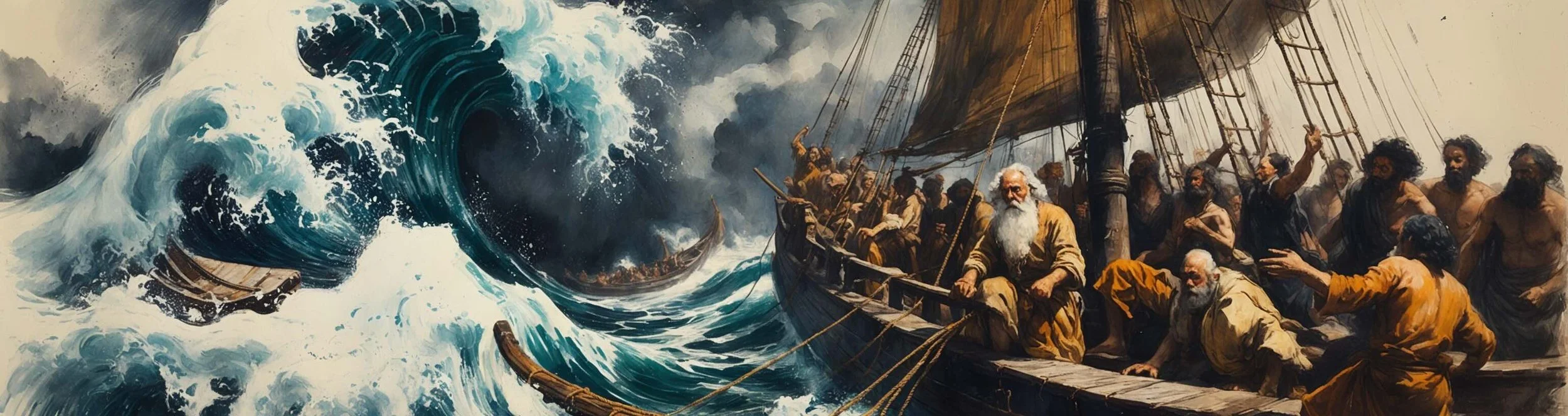
The Tempest: Act 1, Scene 1 – Analysis
A ship splits in a storm, and the sea outranks a king.
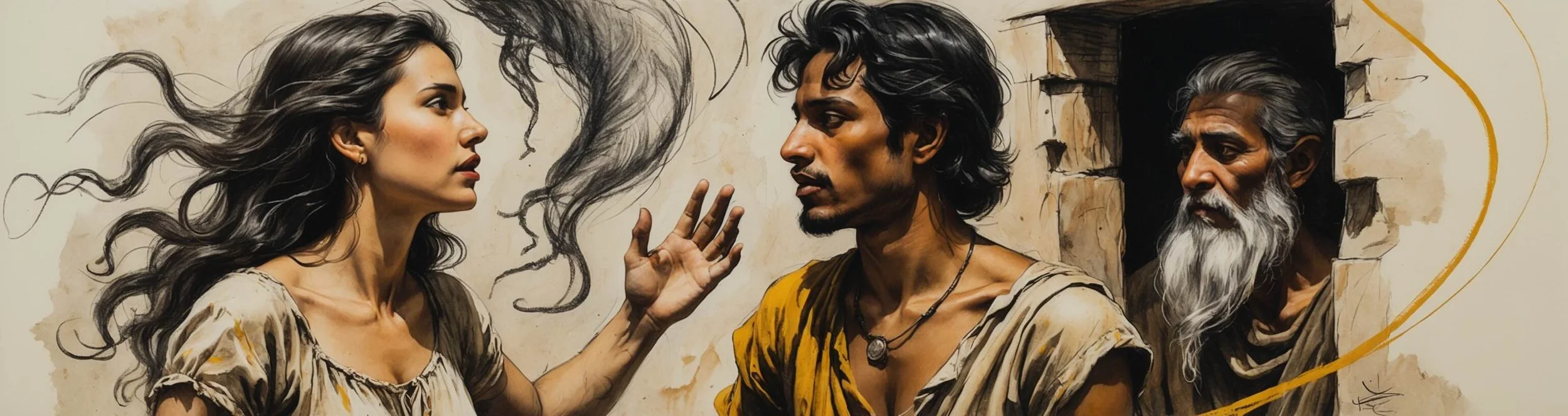
The Tempest: Act 1, Scene 2 – Analysis
Prospero tells his daughter the truth, bargains with a spirit, quarrels with a monster, and arranges a marriage.
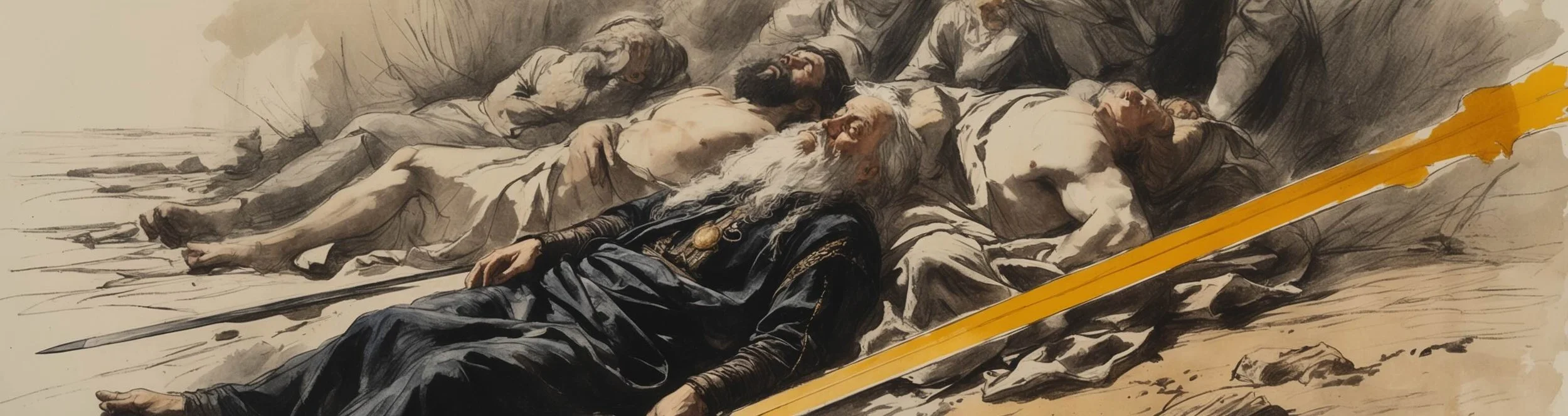
The Tempest: Act 2, Scene 1 – Analysis
A dream of the perfect commonwealth, and a plot to murder a sleeping king.
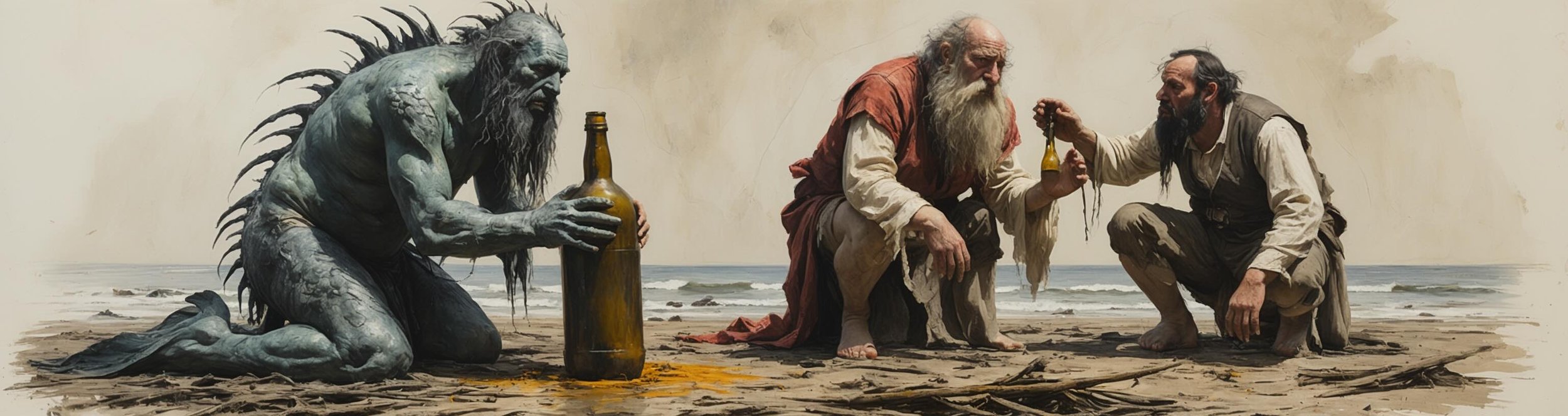
The Tempest: Act 2, Scene 2 – Analysis
A monster, a fool and a drunk under one cloak, and a new god who comes with a bottle.
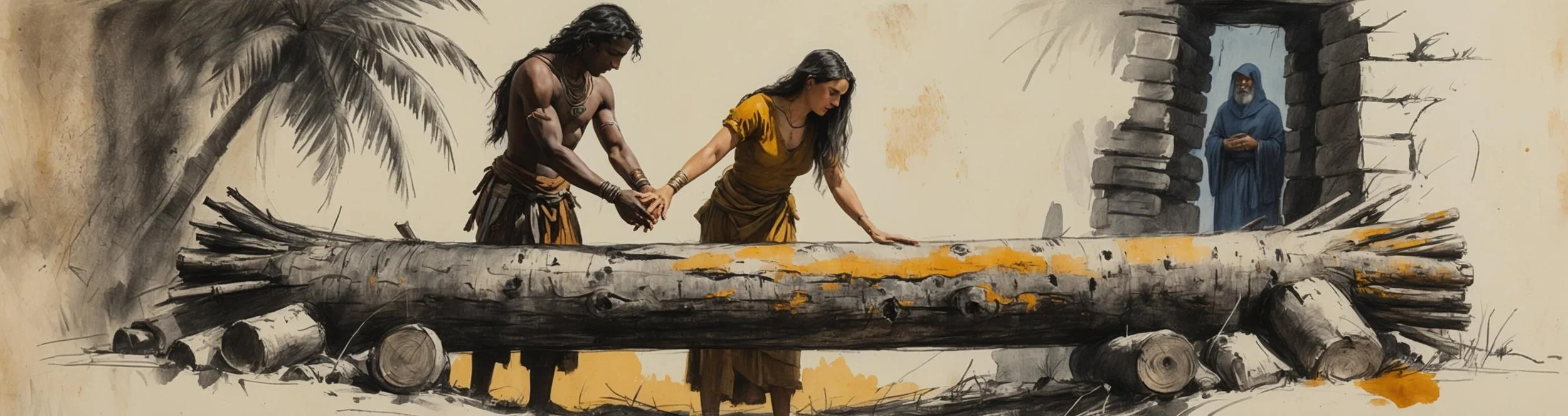
The Tempest: Act 3, Scene 1 – Analysis
A prince carries logs for love, a princess proposes, and her father watches his plan succeed.
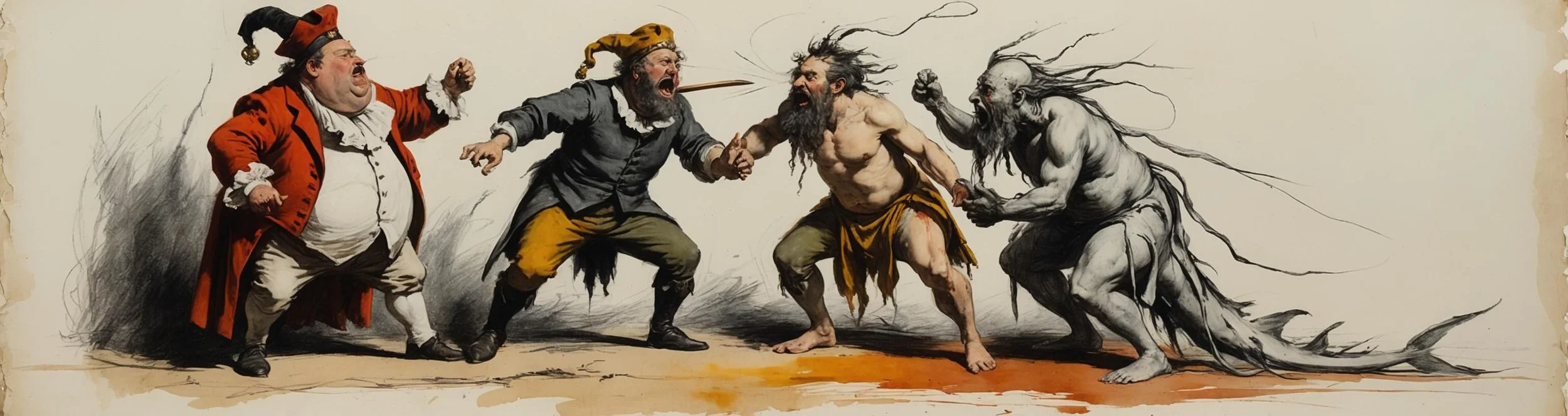
The Tempest: Act 3, Scene 2 – Analysis
A plan to cut a magician's throat, and the most beautiful speech in the play, from the same mouth.
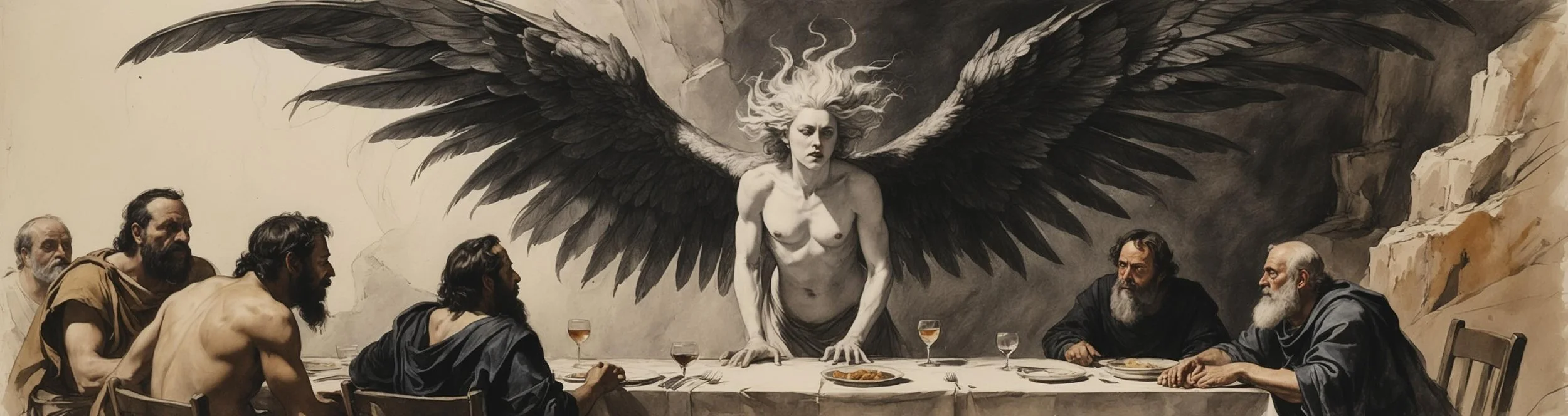
The Tempest: Act 3, Scene 3 – Analysis
A feast that vanishes, a harpy that accuses, and a king who hears his crime in the thunder.
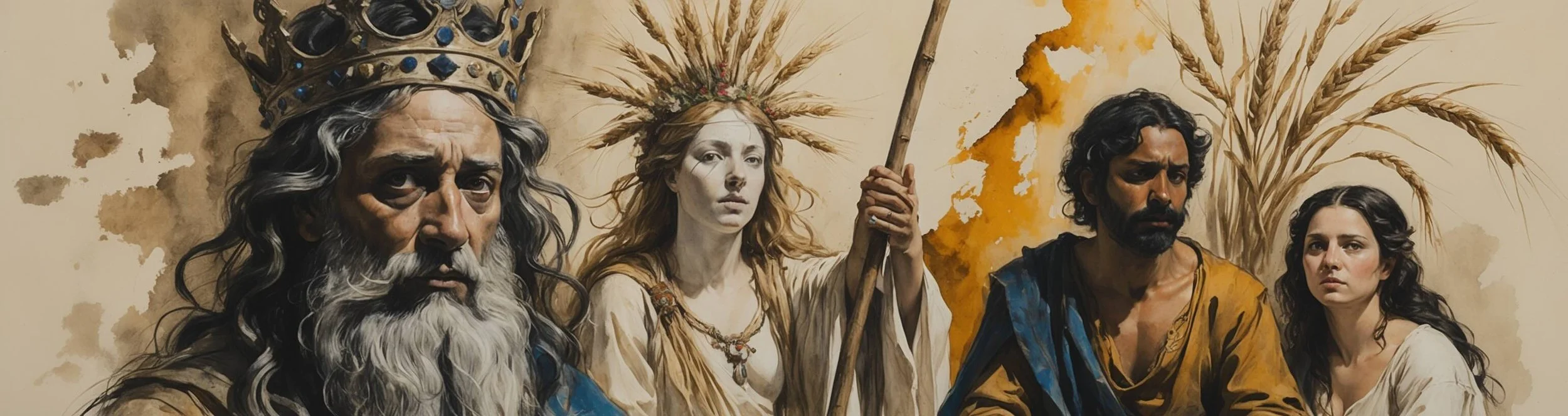
The Tempest: Act 4, Scene 1 – Analysis
A wedding masque dissolves into the play's most famous speech, and a murder plot ends in a wardrobe.
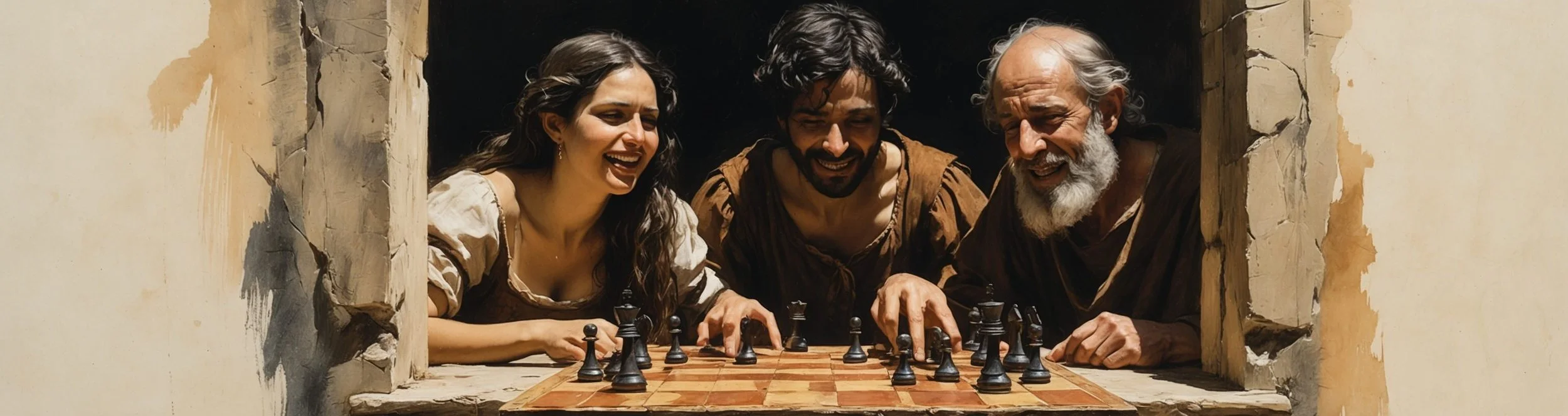
The Tempest: Act 5, Scene 1 – Analysis
A magician chooses forgiveness, drowns his book, and sets his spirit free.
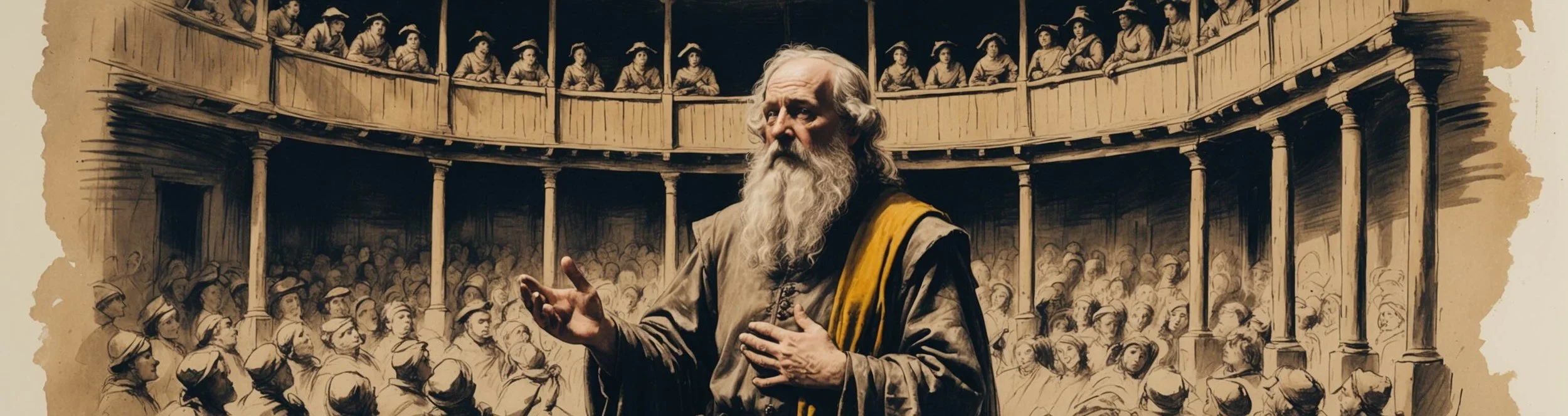
The Tempest: Epilogue – Analysis
The magician without his magic asks the audience to set him free.
The Tempest Scene Analysis – Frequently Asked Questions
Which scenes of The Tempest are analysed here?
Every scene in the play has its own guide – nine scenes across five acts, plus the Epilogue, ten in all. Act 1 covers Scene 1 (the storm and the Boatswain's defiance of the king) and Scene 2 (Prospero's story, Ariel, Caliban and the meeting of Ferdinand and Miranda). Act 2 covers Scene 1 (Gonzalo's commonwealth and Antonio's plot against the sleeping king) and Scene 2 (Caliban, Trinculo and Stephano under one cloak). Act 3 covers Scene 1 (the log-carrying and Miranda's proposal), Scene 2 (Caliban's plot to murder Prospero and the isle full of noises) and Scene 3 (the vanishing banquet and the harpy's three men of sin). Act 4 is a single scene: Scene 1 (the betrothal, the masque and the revels speech). Act 5 is a single scene: Scene 1 (the rarer action, the drowned book, forgiveness and the brave new world). The Epilogue, Prospero's twenty-line plea to the audience, has its own guide.
What happens in the storm scene, Act 1, Scene 1?
A ship is breaking up, and the King of Naples and his court get in the way of the crew trying to save it. The Boatswain orders them below and, when Gonzalo asks him to remember who is aboard, asks in return "What cares these roarers for the name of king" – the waves do not care about rank. The mariners give up, Antonio curses the crew, the ship is heard splitting – "We split, we split, we split!" – and Gonzalo ends the scene wishing for an acre of barren ground. The guide reads the scene as the play's first argument about power, which the sea wins, and shows how each courtier's response to the wreck is his character in brief. It also notes what the next scene will do to this one: reveal that the whole storm was staged and nobody drowned. See The Tempest Act 1, Scene 1 for the full analysis.
What happens in Act 1, Scene 2, the longest scene in the play?
Almost everything is set up here. Prospero tells Miranda that the wreck was his work and no one was hurt, then tells her who they are: he was Duke of Milan until his brother Antonio, to whom he had left the government while he studied – "Me, poor man, my library Was dukedom large enough" – conspired with the King of Naples to set him and his infant daughter adrift. Ariel reports the storm performed to the letter, "Not a hair perished", and asks for the promised liberty; Prospero answers with the story of the witch Sycorax and a threat. Caliban claims the island – "This island's mine, by Sycorax my mother" – and Prospero counters with the attempted rape of Miranda; Caliban's reply is that all he got from language is "I know how to curse". Then Ariel sings Ferdinand up the beach with "Full fathom five thy father lies", the lovers fall for each other at first sight as Prospero planned, and he makes Ferdinand a prisoner to test him. The guide follows the scene as five movements, weighs Prospero's half-admission of blame for his own fall, sets Caliban's title deed beside Prospero's answer without refereeing, and explains why the Shakespeare Retold text gives the "Abhorred slave" speech to Prospero rather than Miranda. See The Tempest Act 1, Scene 2 for the full analysis.
What is Gonzalo's commonwealth, and what is Antonio's plot in Act 2, Scene 1?
Two things happen among the courtiers. First, Gonzalo tries to cheer the grieving king by imagining the island as a commonwealth with no trade, law, letters, wealth, work or king – "I' the commonwealth I would by contraries" – while Antonio and Sebastian heckle every line and land the obvious hit: "Yet he would be king on't". The guide traces the speech to Montaigne's essay on the cannibals and explains why the play lets the mockery stand. Then Ariel's music puts the court to sleep, and Antonio talks Sebastian into murdering his brother Alonso by removing every obstacle in turn – Ferdinand drowned, Claribel too far away in Tunis, so that "what's past is prologue". Asked about his conscience, he says he does not feel it: "This deity in my bosom: twenty consciences" could stand between him and Milan and melt. The guide shows how the temptation replays the usurpation of Milan in front of the audience, and how Ariel's intervention keeps the victims alive so that they can be forgiven. See The Tempest Act 2, Scene 1 for the full analysis.
What happens when Caliban meets Stephano and Trinculo?
Act 2, Scene 2 begins the comic plot. Caliban, cursing Prospero, hides from a stranger under his cloak; the stranger is Trinculo, the king's jester, who cannot decide whether the thing on the ground is "A man or a fish" and thinks first of what it would fetch in England. When the storm returns he crawls under the cloak too – "misery acquaints a man with strange bed-fellows". Stephano, the drunken butler, finds a four-legged monster with two voices, gives it wine, and gains a worshipper: Caliban decides the man with the bottle is a god and leads the pair off singing "Freedom, hey-day" in the same breath as "a new master". The guide reads the scene as a parody of everything serious in the play – discovery, worship, mastery, freedom – and as the third plot for power, with a bottle for a sword. In Act 3, Scene 2 the same three plan Prospero's murder in detail – "First to possess his books" – and Caliban, mid-plot, delivers the play's most beautiful speech about the island's music, "Be not afeard; the isle is full of noises", ending "I cried to dream again". Samuel Taylor Coleridge, lecturing in 1811, called Caliban a noble being whose images are all drawn from nature, and that scene is the evidence. See The Tempest Act 2, Scene 2 for the full analysis.
Where is the love story, and how does Miranda propose?
Act 3, Scene 1, the one scene in the play in which nobody threatens anybody. Ferdinand is carrying logs as Prospero's test and finding the work light because Miranda watches him do it – he calls himself "this patient log-man". She offers to carry the logs herself, tells him her name against her father's orders, and then, putting aside what she calls bashful cunning, proposes: "I am your wife, if you will marry me". Ferdinand accepts, and Prospero, watching unseen, blesses the match and goes back to his book. The guide reads the scene as the play's study of service turned into love, explains why Miranda's directness comes from having never seen a courtship, and looks at the father who has got exactly what he planned and notes that it is not the same as being surprised by it. See The Tempest Act 3, Scene 1 for the full analysis.
What is the banquet scene, and who are the three men of sin?
Act 3, Scene 3. The exhausted courtiers have given up the search for Ferdinand when strange shapes bring in a feast and invite them to eat; as they reach for it, thunder sounds, Ariel descends as a harpy, and the table vanishes. Ariel names Alonso, Antonio and Sebastian – "You are three men of sin, whom Destiny" – as men the sea has spat out because they are unfit to live, tells them their swords are useless, and charges them with the crime against Prospero: lingering ruin will follow unless they repent. Alonso hears his guilt in the thunder – "Methought the billows spoke and told me of it" – and goes to drown himself beside his son; the other two draw their swords on the air. The guide reads the scene as Prospero's revenge at full strength, watched from above with satisfaction, and shows why it works on exactly one of the three men, which decides the shape of Act 5. See The Tempest Act 3, Scene 3 for the full analysis.
What happens in Act 4, Scene 1, and what does "Our revels now are ended" mean?
Prospero gives Miranda to Ferdinand with a stern warning against lust before the wedding, then stages a masque in which the goddesses Iris, Ceres and Juno bless the couple with harvest and long life. In the middle of the dance he remembers Caliban's plot, stops the show in anger, and calms the alarmed Ferdinand with the play's most famous speech: the actors were spirits and have melted into air, and so will the towers, palaces, temples and the great globe itself – "We are such stuff / As dreams are made on". The guide reads the speech as the recovery of a man whose control has just slipped, not as serenity, and notes that Prospero admits in the next breath that his old brain is troubled. It then follows the trap for the conspirators: Prospero calls Caliban "A devil, a born devil, on whose nature" on which nurture will never stick, hangs gaudy clothes on a line, and sets spirit hounds on the three when Stephano and Trinculo stop to loot the wardrobe. See The Tempest Act 4, Scene 1 for the full analysis.
How does The Tempest end, and what is the rarer action?
In Act 5, Scene 1 Ariel describes the charmed courtiers and says that if it were human its affections would become tender – "Mine would, sir, were I human" – and Prospero decides in that moment that "the rarer action is / In virtue than in vengeance". He renounces his magic in a speech borrowed from Ovid's Medea, promising to break his staff and "I'll drown my book", releases the court, forgives Alonso, forgives Antonio without receiving a word in return, and reclaims Milan. He then draws a curtain on Ferdinand and Miranda at chess; Miranda cries "O brave new world", and her father answers "'Tis new to thee". The ship is found whole, the conspirators are pardoned – "this thing of darkness I / Acknowledge mine" – Caliban promises to seek for grace, Prospero says that in Milan "Every third thought shall be my grave", and Ariel is set free. Frank Kermode's Arden edition (1954) read the ending as the triumph of Prospero's art and reason; the guide holds that reading open against Antonio's silence, and follows the scene's five movements from the decision to the release. See The Tempest Act 5, Scene 1 for the full analysis.
What is the Epilogue, and is it Shakespeare's farewell?
Twenty lines of rhymed couplets spoken by Prospero alone after the play has ended. His charms are gone – "Now my charms are all o'erthrown" – and the man who held everyone captive is now confined by the audience's spell, unless their applause fills his sails and carries him home. The last couplet turns clapping into pardon: as they would want their own crimes forgiven, "Let your indulgence set me free". The guide reads the speech as the play's final reversal, with the vocabulary of imprisonment used by Prospero of himself, and takes up the four-hundred-year-old question of whether the magician's farewell to his art is Shakespeare's farewell to the stage – a reading G. Wilson Knight pressed in The Crown of Life (1947) and the play neither confirms nor forbids. See The Tempest Epilogue for the full analysis.