HomePlaysMacbeth→ Scene Analysis

Macbeth: Scene Analysis

Macbeth scene-by-scene analysis covering the whole play – all twenty-eight scenes across the five acts, from the Witches meeting in thunder on the heath to the death of the tyrant and the crowning of Malcolm. Each guide retells what happens in plain English, then analyses the scene's key moments, language and techniques, with the most important quotations shown beside their Shakespeare Retold modern verse. A complete scene-by-scene study guide and revision resource for GCSE, A-Level, AP English, IB, and undergraduate Shakespeare. Ideal for close reading, essay planning, exam preparation, and following how the tragedy is built scene by scene.

Select a scene below to begin.
Macbeth Scene Analysis — Frequently Asked Questions

Which Macbeth scenes are analysed here?
Every scene in the play has its own guide, across five acts. Act 1 runs from Scene 1 (the Witches meet on the heath) through Scene 2 (the bleeding sergeant's report and Cawdor's title), Scene 3 (the three prophecies), Scene 4 (Malcolm named heir), Scene 5 (Lady Macbeth's "unsex me"), Scene 6 (Duncan arrives at Inverness) to Scene 7 ("If it were done" and the persuasion). Act 2 covers the murder: Scene 1 (the dagger soliloquy), Scene 2 (Duncan killed, "sleep no more"), Scene 3 (the Porter and the discovery) and Scene 4 (the unnatural omens). Act 3 is the tyrant's turn: Scene 1 (Banquo's murder ordered), Scene 2 ("scorpions" in the mind), Scene 3 (Banquo killed, Fleance escapes), Scene 4 (the banquet and Banquo's ghost), Scene 5 (Hecate) and Scene 6 (Lennox's irony). Act 4 turns the tide: Scene 1 (the apparitions and the show of kings), Scene 2 (the murder of Macduff's family) and Scene 3 (Malcolm tests Macduff in England). Act 5 brings the fall: Scene 1 (Lady Macbeth sleepwalks), Scene 2 (the rebel lords), Scene 3 ("I have lived long enough"), Scene 4 (Birnam Wood is cut), Scene 5 (the "Tomorrow" soliloquy), Scene 6 (the assault begins), Scene 7 (Macbeth kills Young Siward) and Scene 8 (Macbeth's death and Malcolm crowned).
What happens in Act 1, Scene 3, where the Witches meet Macbeth?
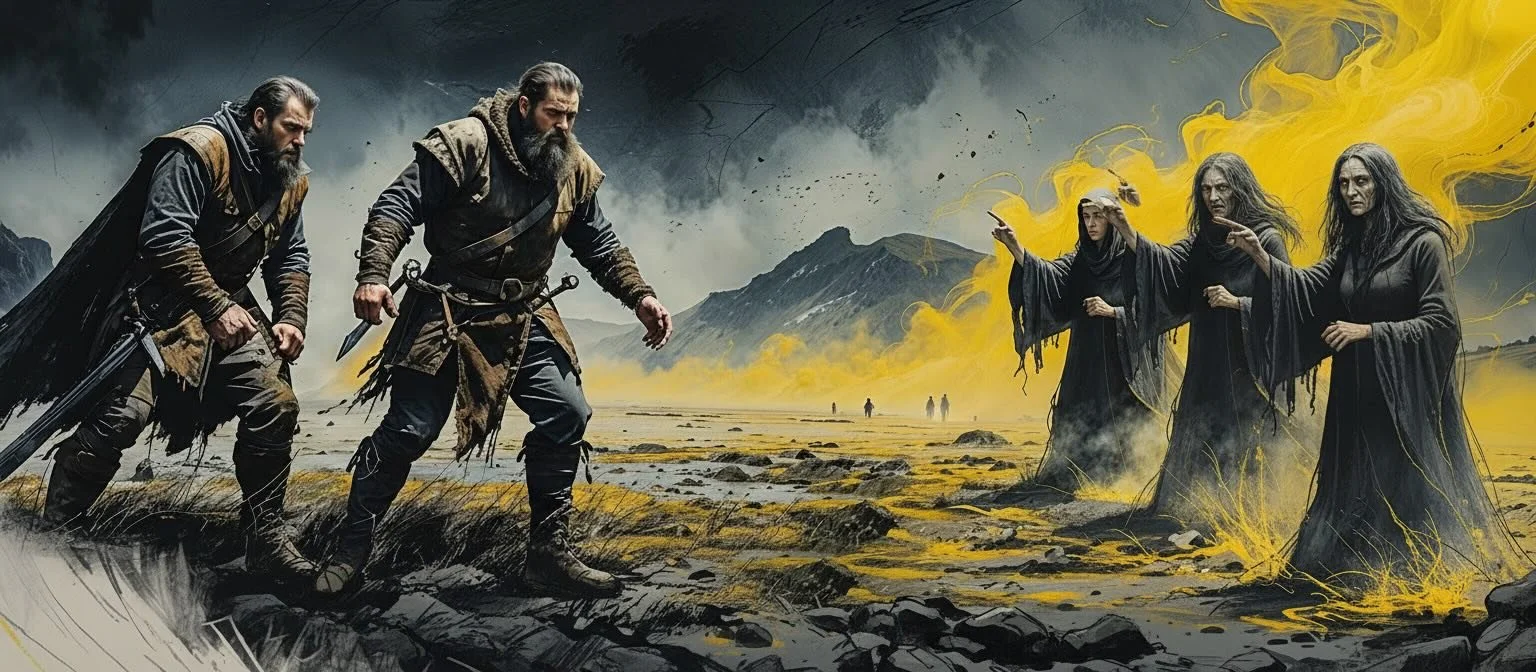
This is the scene that sets the tragedy in motion. The three Witches stop Macbeth and Banquo on the heath and greet Macbeth with three titles: Thane of Glamis, Thane of Cawdor, and "king hereafter". They promise Banquo that his children will be kings, even though he will not be one himself. Moments later Ross arrives and announces that Macbeth has indeed been made Thane of Cawdor, so one prophecy comes true at once. From this point Macbeth's mind turns to the crown, and to murder. See Macbeth Act 1, Scene 3 for the full analysis.
Why is Act 1, Scene 5 with Lady Macbeth so important?
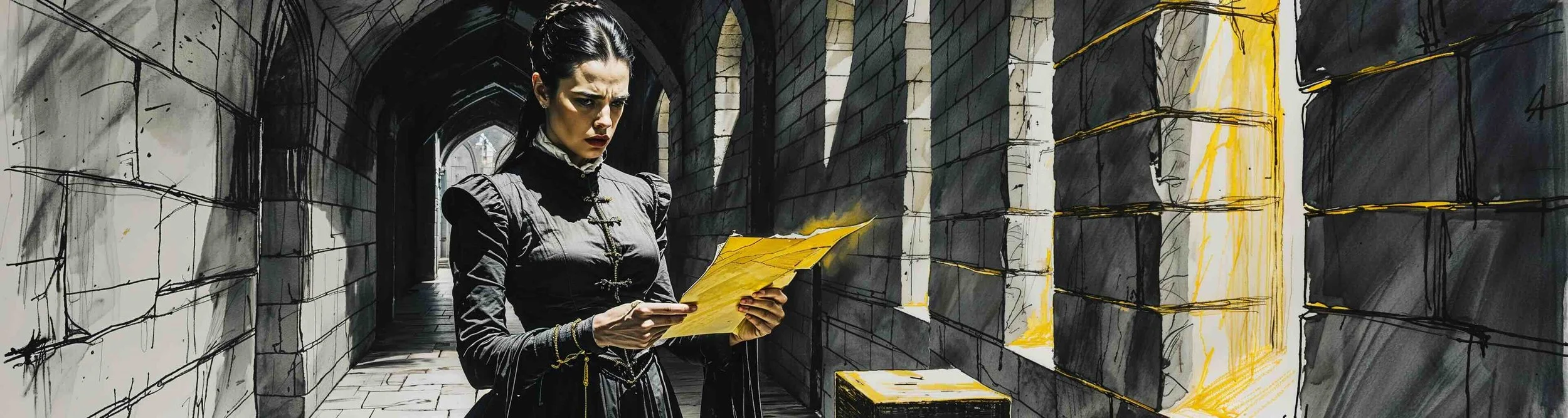
Act 1, Scene 5 introduces Lady Macbeth. She reads a letter from her husband describing the prophecies, and instantly decides Duncan must die. Fearing Macbeth is "too full o' the milk of human kindness" to do it, she calls on dark spirits to "unsex" her and fill her with cruelty. When Macbeth arrives, she takes charge, telling him to "look like the innocent flower, but be the serpent under't". It is the scene where she is at her most powerful and most frightening. See Macbeth Act 1, Scene 5 for the full analysis.
What is the "If it were done" scene, Act 1, Scene 7?
Act 1, Scene 7 is the turning point before the murder. Alone, Macbeth weighs up killing Duncan in a famous soliloquy beginning "If it were done when 'tis done" and talks himself out of it, admitting he has only "vaulting ambition" to drive him on. He tells his wife they will not go ahead. Lady Macbeth then attacks his courage and his manhood, calls him a coward, and lays out the plan to drug the guards. By the end he is resolved again. See Macbeth Act 1, Scene 7 for the full analysis.
What happens in the dagger scene, Act 2, Scene 1?
In Act 2, Scene 1 Macbeth, waiting for the signal to kill Duncan, sees a dagger floating in the air pointing the way to the king's chamber. He cannot tell whether it is real or "a dagger of the mind", a hallucination born of his guilt and fear. The vision shows how far his imagination has run ahead of him. A bell rings, the signal from Lady Macbeth, and he goes to commit the murder. See Macbeth Act 2, Scene 1 for the full analysis.
What is the Porter scene in Act 2, Scene 3?
Act 2, Scene 3 opens with the drunken Porter, who imagines himself as the keeper of the gate of hell and jokes with the audience while knocking sounds offstage. His comedy comes straight after the murder and gives the audience a moment to breathe before the horror returns. Macduff arrives, discovers Duncan's body, and the household erupts. Macbeth kills the two guards, claiming grief, and Duncan's sons Malcolm and Donalbain flee the country, which makes them look guilty. See Macbeth Act 2, Scene 3 for the full analysis.
What happens at the banquet in Act 3, Scene 4?
Act 3, Scene 4 is the famous banquet scene. Just after Macbeth learns that Banquo is dead but Fleance has escaped, the ghost of Banquo appears at the feast and sits in Macbeth's place. Only Macbeth can see it, and he panics in front of all his lords. Lady Macbeth tries to cover for him, but the evening collapses and the guests are sent away. Shaken, Macbeth decides to visit the Witches again to learn his future. See Macbeth Act 3, Scene 4 for the full analysis.
What are the apparitions in Act 4, Scene 1?
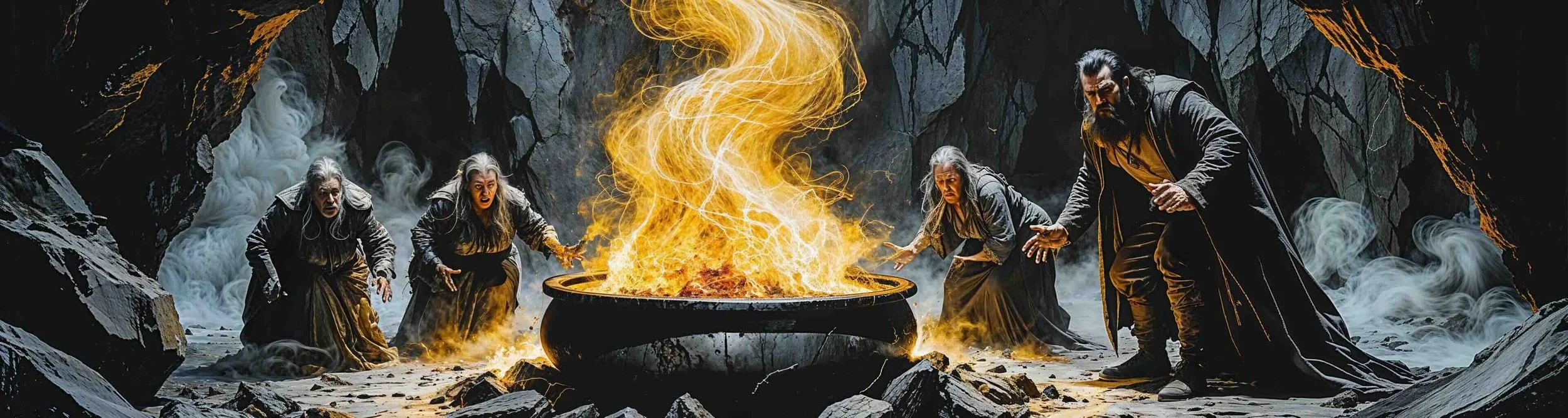
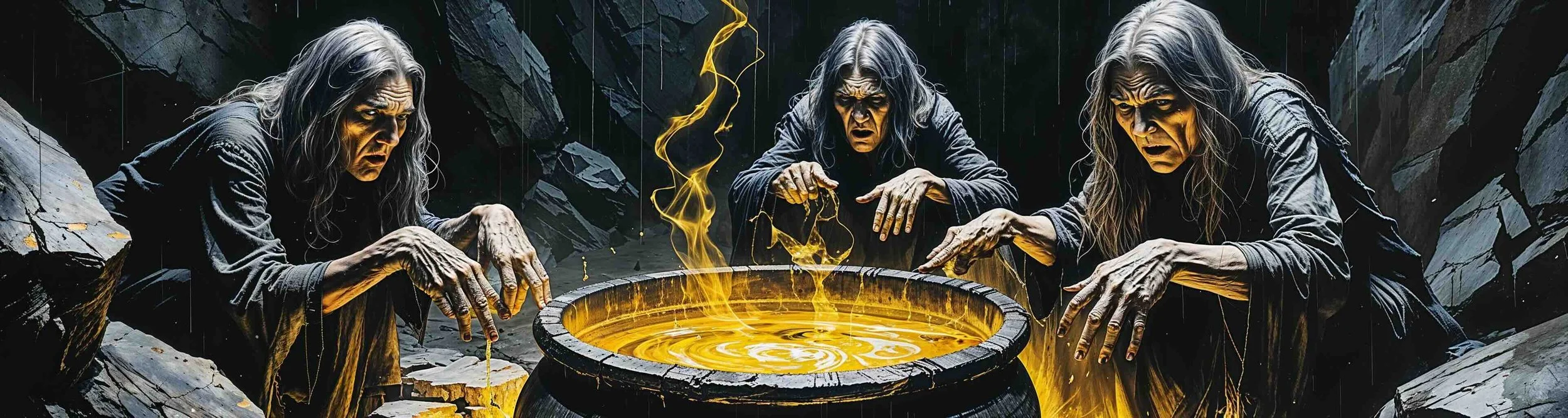
Act 4, Scene 1 is the second Witches scene, beginning with the famous chant "Double, double toil and trouble". The Witches conjure three apparitions for Macbeth. They warn him to beware Macduff, tell him that "none of woman born" shall harm him, and promise he will not be beaten until "Birnam Wood" comes to Dunsinane. He feels safe, until a vision of eight kings shows him that Banquo's descendants will rule after all. The promises sound comforting but are really traps. See Macbeth Act 4, Scene 1 for the full analysis.
What happens when Lady Macbeth sleepwalks in Act 5, Scene 1?
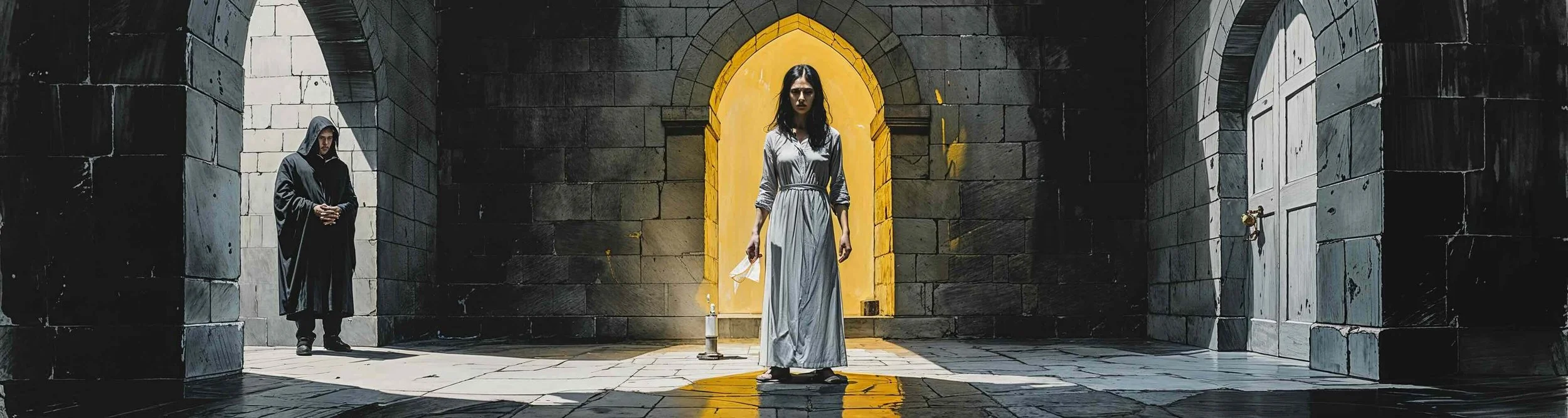
Act 5, Scene 1 shows how far Lady Macbeth has fallen. A doctor and a waiting-gentlewoman watch her sleepwalk at night, rubbing her hands as if washing them and crying "Out, damned spot!" In her sleep she relives the murders and cannot get the imagined blood off her hands, sighing that "all the perfumes of Arabia will not sweeten this little hand". The woman who once seemed fearless is now destroyed by guilt. See Macbeth Act 5, Scene 1 for the full analysis.
What is the "Tomorrow" speech in Act 5, Scene 5?
Act 5, Scene 5 contains Macbeth's most famous soliloquy. Hearing that his wife is dead, he responds not with grief but with a bleak speech beginning "Tomorrow, and tomorrow, and tomorrow", concluding that life is "a tale told by an idiot, full of sound and fury, signifying nothing". Moments later a messenger reports that Birnam Wood appears to be moving towards the castle, and Macbeth realises the Witches' promises are turning against him. See Macbeth Act 5, Scene 5 for the full analysis.
How does the play end in Act 5, Scene 8?
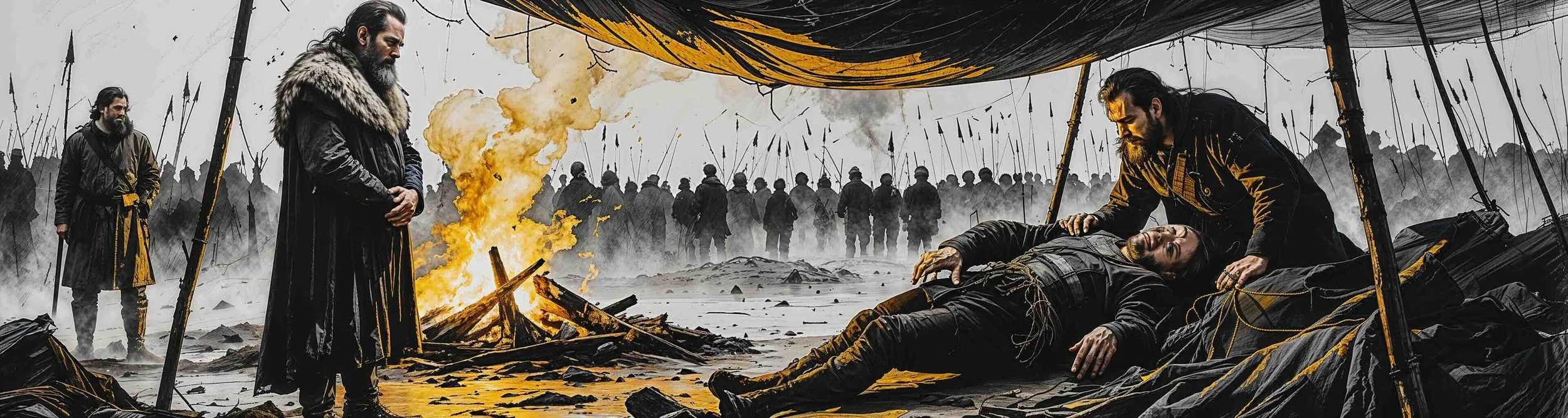
Act 5, Scene 8 is the final confrontation. Macbeth, still trusting that no man "of woman born" can kill him, faces Macduff, who reveals he was "from his mother's womb untimely ripped" – born by caesarean, not naturally born. The last prophecy collapses, and Macduff kills Macbeth in combat. Macduff carries in the tyrant's head, and Malcolm, Duncan's son, is hailed as the new King of Scotland, restoring order to the country. See Macbeth Act 5, Scene 8 for the full analysis.